Russia has voiced strong concern over Japan's escalating military expansion, labeling it a catalyst for regional instability.
The remarks from Russian Foreign Ministry spokeswoman Maria Zakharova came following the Japanese upper house's approval of a supplementary budget on Tuesday, which sets the country's defense expenditure for the 2025 fiscal year at a record high of approximately 11 trillion yen (around 70.63 billion U.S. dollars).
This budget marks the 13th consecutive annual increase in Japan's military spending, with a near 60 percent surge over the past five years.
When asked by a reporter from China Global Television Network (CGTN), Zakharova reaffirmed Russia's clear and consistent stance.
"Russia's position on this issue is well-known. Our stance on such matters has always been clear and comprehensive. Russia has noted the dangers of Japan's accelerated remilitarization, including its soaring defense spending. We have also documented the consistent actions taken by Japanese officials, who use the so-called 'threats' from the Democratic People's Republic of Korea (DPRK), China, and even Russia as a pretext to dismantle the pacifist restrictions of the postwar Constitution and build military capabilities that are essentially offensive in nature. I have consistently emphasized that such irresponsible policies make Japan a catalyst for tensions in East Asia and the wider Asia-Pacific region. We have systematically conveyed our position to the Japanese side through both diplomatic and public channels," she said.
(Footage from: https://mid.ru/ru/press_service/video/posledniye_dobavlnenniye/2066924/#24)
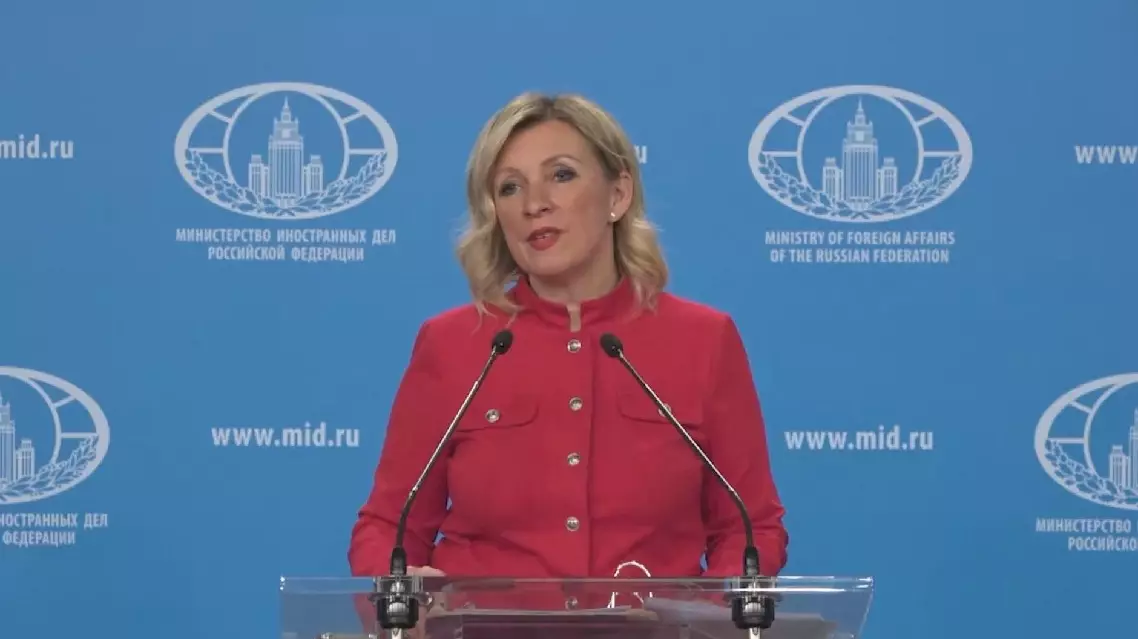
Russia warns of rising tensions as Japan's upper house greenlights major defense spending hike
China's development has never been a "threat" to anyone but the source of growth advancing common development of all countries, Foreign Ministry spokesman Lin Jian said at a regular press conference in Beijing on Friday.
Some Western media and think tanks are peddling so-called "China Shock 2.0," saying that "China is achieving fast development in high-tech sectors such as renewable energy and AI and relies on foreign markets to absorb its overcapacity, thus reducing the market share of developed countries and sending more serious shock waves to the global economy compared with the era of traditional manufacture industry," while there are foreign commentators saying that the "China Shock 2.0" argument ignores the genuine innovation occurring within the Chinese industrial ecosystem and that Chinese export is the exact booster of the global economy that is needed in the turbulent period and more indispensable than ever.
Commenting on that, Lin said: "From the world's factory to the world's market and innovation powerhouse, China's development is achieved through strong performance driven by innovation and brings tangible cooperation opportunities and space to the world. High-quality Chinese products represented by the 'old three' of textiles, furniture and home appliances have stabilized the global industrial and supply chain, lowered the living cost of global consumers and eased the inflationary pressure worldwide. China's green production capacity represented by the 'new three' of electric vehicles, batteries and solar panels has bridged the gap between supply and demand in global green development and bolstered the global energy transition and low-carbon development. Moreover, China's high-tech products represented by the 'new new three' of robots, AI and innovative drugs have broken high-tech barriers and monopoly and enabled people in more countries to access affordable new technologies," said the spokesman.
"Openness and cooperation bring about progress and win-win result. China's development has never been a 'threat' to anyone but the source of growth advancing common development of all countries. What really creates 'shocks' to the world has never been the innovation of Chinese companies and efficiency of Chinese industrial capacity, but protectionist moves of setting up barriers, decoupling and severing industrial and supply chains. China will stay committed to high-standard opening up, defend the multilateral trading system and provide more certainty and new impetus to the world economy with its own steady development," said Lin.
China's development never a threat: FM spokesman