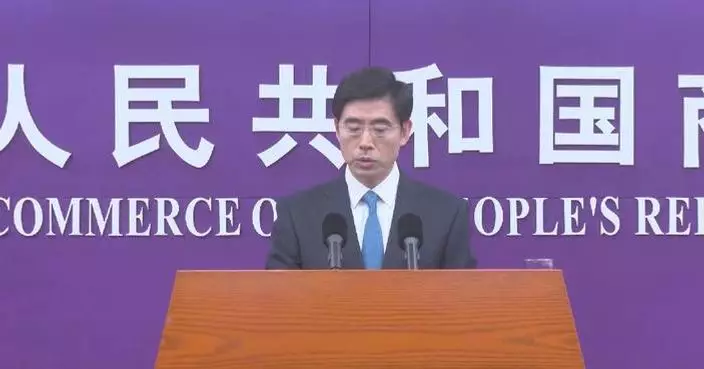
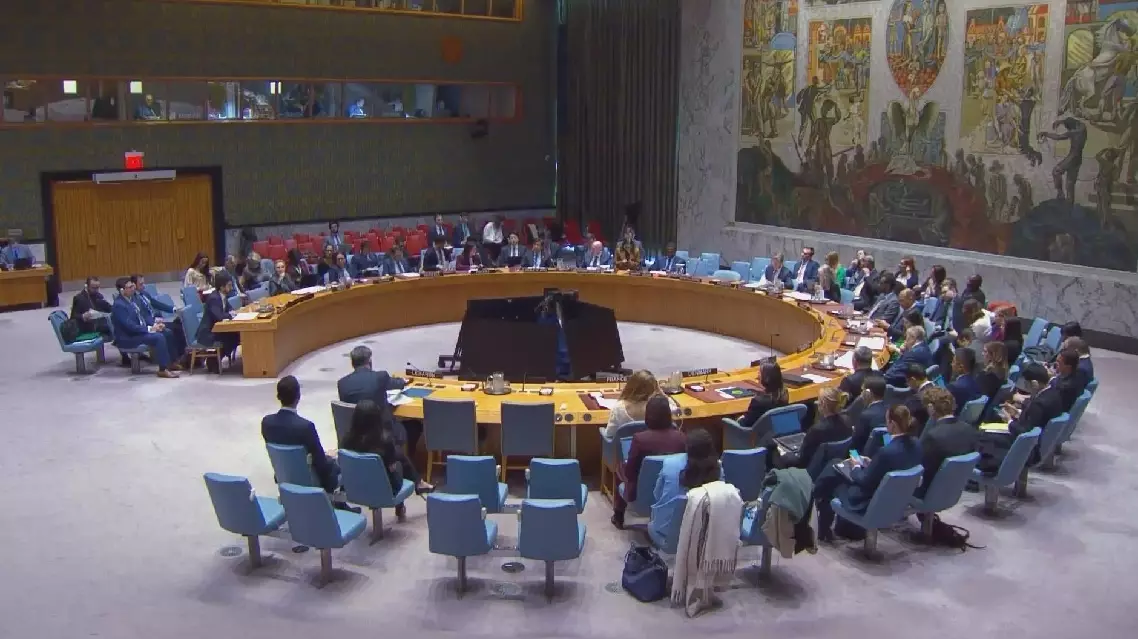
China's Permanent Representative to the United Nations (UN) Fu Cong said on Thursday that more efforts are needed to advance Syria's political transition process, maintain zero tolerance for terrorism, and jointly address the terrorist threat.
Despite positive developments, the overall situation in Syria remains complex and fragile, Fu said at a meeting of the UN Security Council on the situation in the Middle East.
Fu pointed out at the meeting that over the past year, with support from the international community, positive changes have emerged in the Syrian society.
He emphasized that, in accordance with UN Security Council Resolution 2254, efforts should be made to uphold the "Syrian-led, Syrian-owned" principle to advance an inclusive political transition.
Meanwhile, the situation in Syria remains complex and fragile, with prominent ethnic tensions, a severe counter-terrorism landscape, and multiple humanitarian challenges.
The presence of Israeli forces in the buffer zone and their attacks on Syrian targets have heightened regional tensions. The activities of a large number of foreign terrorist fighters pose a serious threat to peace and security in Syria and the wider region.
"Recent terrorist attacks in Homs and Idlib, Syria, made alarm bells ring once again. We call on the Syria's transitional government to fulfill its counter-terrorism obligations and take all effective measures to firmly crack down on all international terrorist organizations listed by the UN Security Council, including the Eastern Turkistan Islamic Movement (ETIM)," said Fu.
Fu stressed that all countries should uphold a zero-tolerance position on terrorism, oppose selective counter-terrorism and double standards, and handle the delisting from counter-terrorism related sanctions prudently.
China stands ready to continue working with the international community to play a constructive role in helping Syria achieve security, stability, and development at an early date.
While over two million internally displaced persons and more than 1.3 million refugees have returned to their homes in Syria, humanitarian needs remain severe due to housing destruction, inadequate public services, and security risks, according to Joyce Msuya, United Nations Assistant Secretary-General for Humanitarian Affairs and Deputy Emergency Relief Coordinator.
It is essential to de-escalate conflicts, scale up assistance, promote the easing of sanctions, seize the window of opportunity for political transition, and support Syria's recovery and reconstruction, she urged.
China calls for political transition, stresses zero-tolerance for terrorism in Syria