Skip to Content Facebook Feature Image

Forecasters issue rare weather warning as strong gusts fuel wildfire threats in Colorado

News

Forecasters issue rare weather warning as strong gusts fuel wildfire threats in Colorado
News

News

Forecasters issue rare weather warning as strong gusts fuel wildfire threats in Colorado

2025-12-20 08:47 Last Updated At:08:50

The National Weather Service on Friday issued a rare warning for part of Colorado's Front Range as hurricane-force winds and tinder dry conditions boosted the threat of wildfire across several counties, while flood warnings were issued in Oregon as rivers there swelled from heavy rain.

It marked another day of severe weather in parts of the United States, with forecasters issuing warnings for everything from more wintry weather bearing down on North Dakota to red flag warnings in Nebraska and Texas and flood warnings from Washington south into California.

More Images
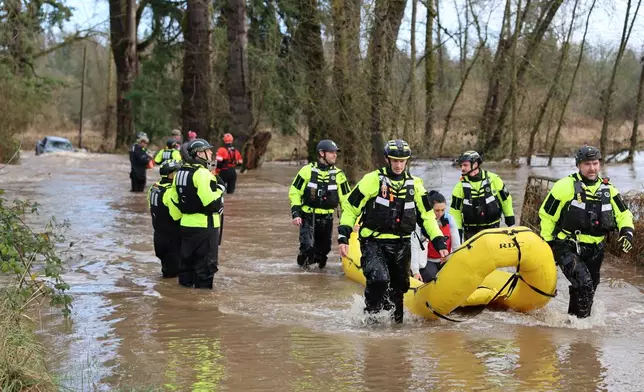
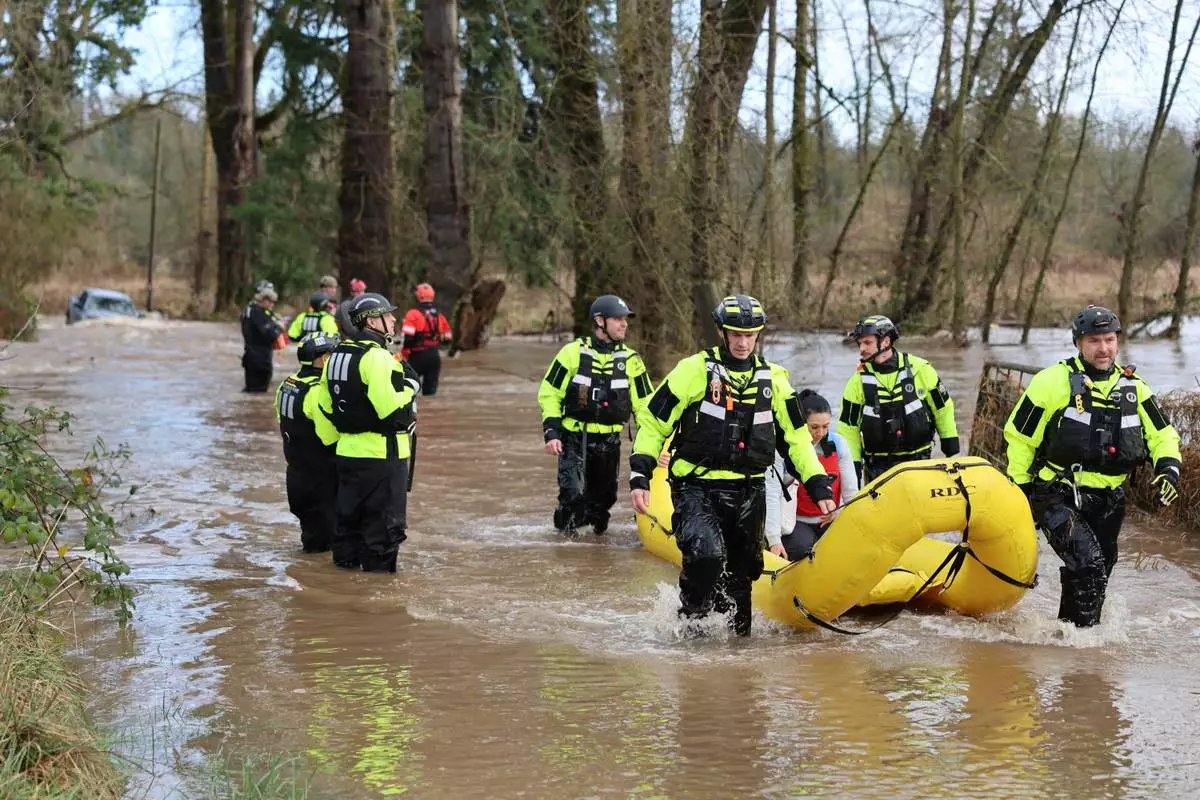
In this photo provided by Clackamas Fire District, rescuers use an inflatable raft to save a family whose car was trapped in floodwaters on a roadway in Molalla, Ore., Friday, Dec. 19, 2025. (Clackamas Fire District via AP)
In this photo provided by Clackamas Fire District, rescuers use an inflatable raft to save a family whose car was trapped in floodwaters on a roadway in Molalla, Ore., Friday, Dec. 19, 2025. (Clackamas Fire District via AP)

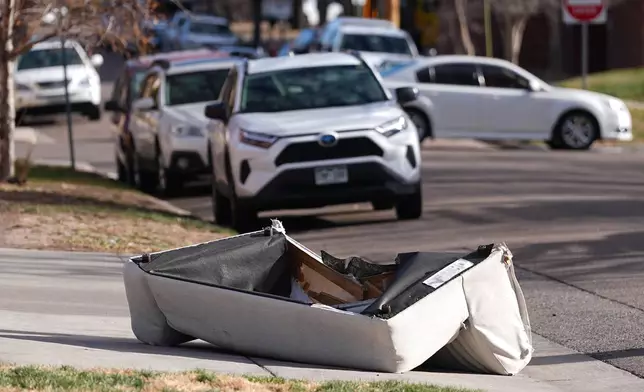
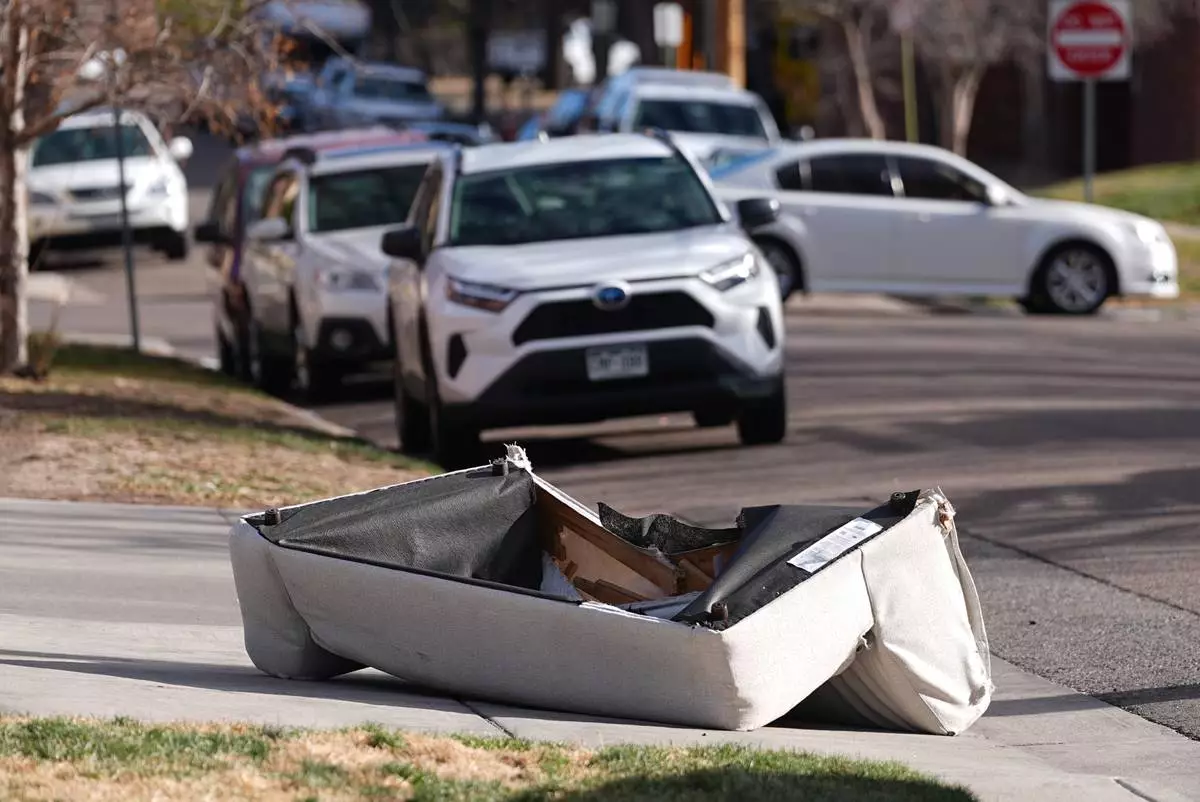
A couch that was blown off the balcony of a high-rise condominium building sits crumpled after falling to the street as hurricane-force winds whipped through the area Thursday, Dec. 18, 2025, in Denver. (AP Photo/David Zalubowski)
A couch that was blown off the balcony of a high-rise condominium building sits crumpled after falling to the street as hurricane-force winds whipped through the area Thursday, Dec. 18, 2025, in Denver. (AP Photo/David Zalubowski)

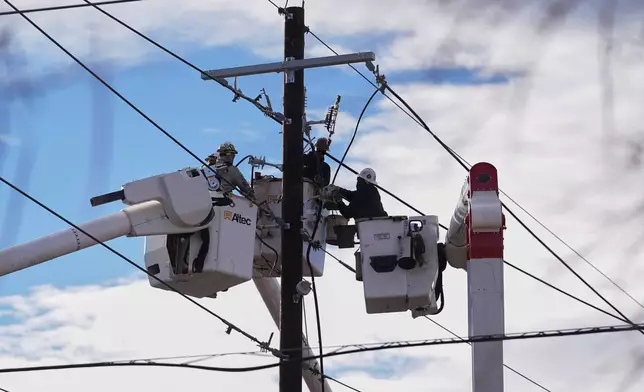
Xcel Energy workers toil to repair power lines on a street closed after hurricane-force winds whipped through the metropolitan area and interrupted service to residents Thursday, Dec. 18, 2025, in Denver. (AP Photo/David Zalubowski)
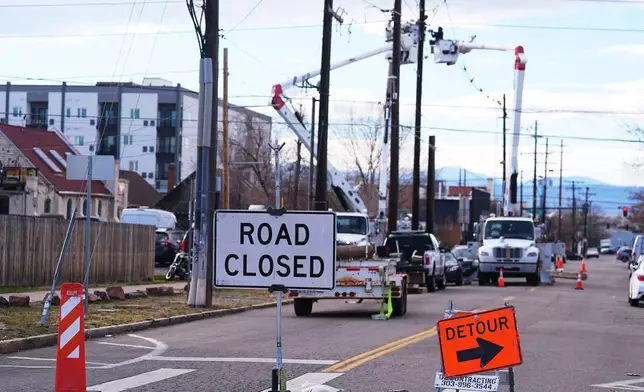
Xcel Energy workers toil to repair power lines on a street closed after hurricane-force winds whipped through the metropolitan area and interrupted service to residents Thursday, Dec. 18, 2025, in Denver. (AP Photo/David Zalubowski)

Xcel Energy workers work to repair power lines on a street closed after hurricane-force winds whipped through the metropolitan area and interrupted service to residents, Thursday, Dec. 18, 2025, in Denver. (AP Photo/David Zalubowski)

Xcel Energy workers work to repair power lines on a street closed after hurricane-force winds whipped through the metropolitan area and interrupted service to residents, Thursday, Dec. 18, 2025, in Denver. (AP Photo/David Zalubowski)

Most notable was the “particularly dangerous situation” fire weather warning issued in Colorado on Friday morning, a first for this western state. PDS warnings are reserved for the most severe scenarios, and in this case it was fueled by forecasters' concerns that extreme combinations of strong winds, super low humidity and critically dry fuels could lead to life-threatening fire danger.

“We don't really want people to panic because that doesn't help anything, but we want people to be prepared,” said Jennifer Stark, the meteorologist in charge of the weather service office in Boulder. She noted that it is the peak windy season for the area.

By late afternoon, a high wind warning was still in place for the foothills and adjacent plains. Winds would gradually weaken after sunset, forecasters said.

A gust of 105 mph (169 kph) was recorded Friday at the National Center for Atmospheric Research in Boulder. The wind toppled trees and took down power lines around the region, and authorities shared images of dust storms as they urged people to stay off the roads.

Tens of thousands of customers were without power as Xcel Energy carried out another public safety power shut-off to prevent further fire risks. The utility warned that unplanned outages resulting from wind damage were expected to significantly exceed the number of customers affected by the preventive shutoffs.

In Nederland, a town in the Rocky Mountain foothills, Matt Arlen helped stock shelves in a grocery store that was without power on Friday, one day after a burst of “panic shopping” in response to extreme weather.

“We’re used to kind of high winds,” he said. “It’s more the power outage affecting people up here that don’t have fire places” for heat at home.

Still, the combination of winds and dry weather were on Arlen’s mind in a region that can be prone to wildfire. The 2021 Marshall Fire destroyed more than 1,000 homes in the nearby suburbs of Boulder.

“The only thing is, we haven’t had a lot of snow,” said the pricing coordinator at B&F Mountain Market.

In Wellington, a town of 11,000 residents on a notoriously windy stretch of the Colorado plains near the Wyoming state line, public library tech Elaine Ringland said the wind was on everyone’s mind. At home, she used a generator during a blackout Wednesday and Thursday to keep a fridge running and a freezer from defrosting.

“I can tell you right now, our flag is standing straight out," she said Friday. “We’re prepared if we have to close down the library. Our town is watching it, and they’re in touch with the power company.”

In Ringland’s home neighborhood, winds bent trees and tossed around shingles and tumbleweeds.

Meanwhile in northwestern Oregon, National Weather Service forecasters said they expected widespread river flooding to continue following heavy rains.

In the rural city of Sheridan some 50 miles southwest of Portland, a 52-year-old man died after driving past road-closure signs onto a road covered with high water, the Yamhill County Sheriff’s Office said. A 911 caller saw a man get out of the car and into the water after the vehicle had been swept away by the current. His body was located by a drone and recovered by a rescue team and a resident, the sheriff’s office said.

Clackamas County, which spans some Portland suburbs and part of Mount Hood and the Cascade Range, earlier sent “go now” evacuation notices to 300 residences, county spokesperson Scott Anderson said. Some of the most significant flooding occurred on the Sandy, Clackamas and Molalla rivers, with authorities performing rescues throughout the night, he said. By later Friday, some of those evacuation notices had been lifted.

Among those rescued was a family of six who got stuck in their car after trying to drive on a flooded roadway, said Clackamas Fire District spokesperson Lynsey Amundson. Elsewhere, authorities used an inflatable raft to rescue a man from his home, she said.

In northern California, forecasters were expecting a Pineapple Express, a stronger atmospheric river that originates in the tropics near Hawaii, to arrive around Christmas Eve. That forecast brought hope to ski resort operators that much-anticipated precipitation will extend into the Sierra Nevada, where very little snow has fallen this season.

Associated Press writers Claire Rush in Portland, Oregon, and Morgan Lee in Santa Fe, New Mexico, contributed to this report.
In this photo provided by Clackamas Fire District, rescuers use an inflatable raft to save a family whose car was trapped in floodwaters on a roadway in Molalla, Ore., Friday, Dec. 19, 2025. (Clackamas Fire District via AP)
In this photo provided by Clackamas Fire District, rescuers use an inflatable raft to save a family whose car was trapped in floodwaters on a roadway in Molalla, Ore., Friday, Dec. 19, 2025. (Clackamas Fire District via AP)

A couch that was blown off the balcony of a high-rise condominium building sits crumpled after falling to the street as hurricane-force winds whipped through the area Thursday, Dec. 18, 2025, in Denver. (AP Photo/David Zalubowski)

A couch that was blown off the balcony of a high-rise condominium building sits crumpled after falling to the street as hurricane-force winds whipped through the area Thursday, Dec. 18, 2025, in Denver. (AP Photo/David Zalubowski)

Xcel Energy workers toil to repair power lines on a street closed after hurricane-force winds whipped through the metropolitan area and interrupted service to residents Thursday, Dec. 18, 2025, in Denver. (AP Photo/David Zalubowski)
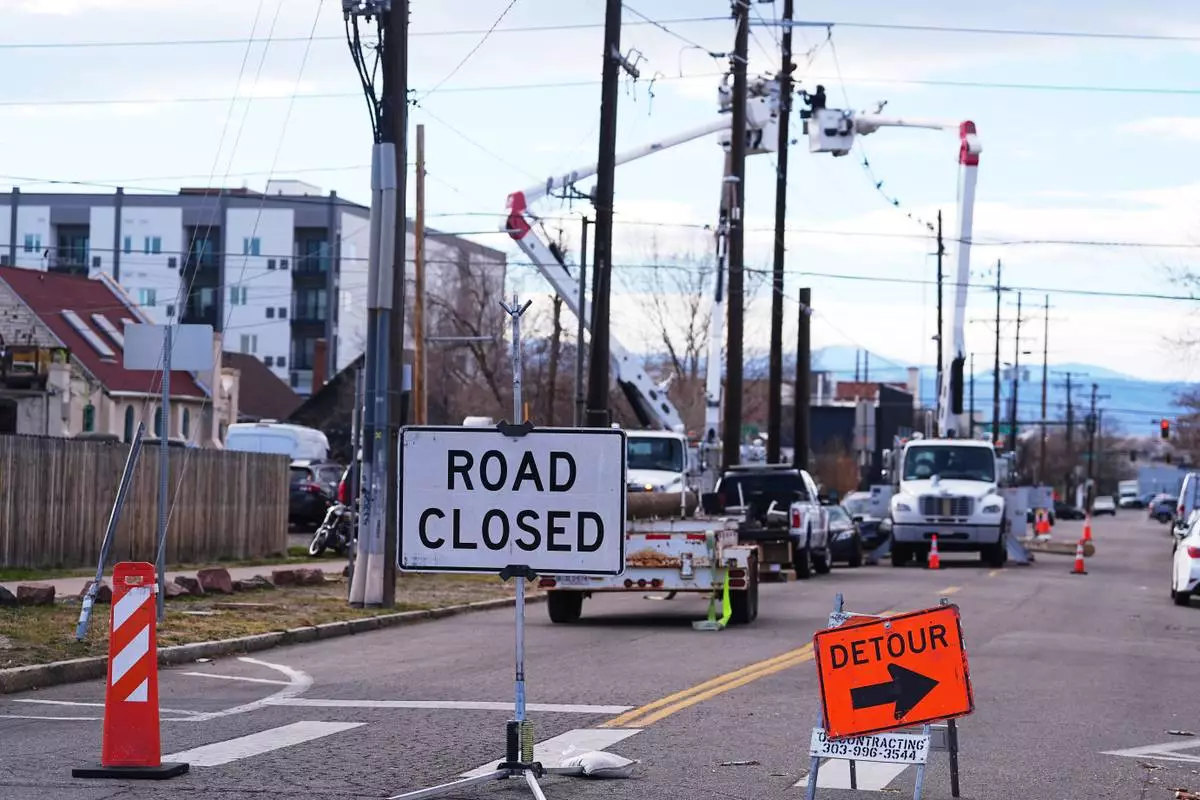
Xcel Energy workers toil to repair power lines on a street closed after hurricane-force winds whipped through the metropolitan area and interrupted service to residents Thursday, Dec. 18, 2025, in Denver. (AP Photo/David Zalubowski)

Xcel Energy workers work to repair power lines on a street closed after hurricane-force winds whipped through the metropolitan area and interrupted service to residents, Thursday, Dec. 18, 2025, in Denver. (AP Photo/David Zalubowski)
Xcel Energy workers work to repair power lines on a street closed after hurricane-force winds whipped through the metropolitan area and interrupted service to residents, Thursday, Dec. 18, 2025, in Denver. (AP Photo/David Zalubowski)

WASHINGTON (AP) — U.S. forces have boarded an oil tanker previously sanctioned for smuggling Iranian crude oil in Asia, the Pentagon said Tuesday, as it puts into place a global warning to track down vessels tied to Tehran.

U.S. forces “conducted a right-of-visit maritime interdiction” of the M/T Tifani “without incident,” the Pentagon said on social media.

The tanker was captured in the Bay of Bengal — between India and Southeast Asia — and it was carrying Iranian oil, according to a U.S. defense official who spoke on condition of anonymity to discuss an ongoing military operation. The military will decide in the next four days what to do with the vessel, such as tow it back to the U.S. or turn it over to another country, the official said.

It's the latest move by the U.S. to stop any ship tied to Iran or those suspected of carrying supplies that could help its government, from weapons and oil to metals and electronics. The tanker was seized before President Donald Trump announced that the U.S. was extending a tenuous ceasefire in the Iran war at mediator Pakistan’s request but was keeping the blockade in place.

The tanker is the second vessel linked to Iran that has been interdicted by the U.S. military. The U.S. Navy attacked and seized an Iranian-flagged cargo ship on Sunday that it said had tried to evade its blockade of Iranian ports, with Trump saying an American destroyer blew a hole in the ship’s engine room.

The Pentagon on social media described the Tifani as “stateless” despite it being a Botswana-flagged vessel.

“As we have made clear, we will pursue global maritime enforcement efforts to disrupt illicit networks and interdict sanctioned vessels providing material support to Iran — anywhere they operate,” the Pentagon announcement said, echoing previous statements from Trump administration officials. “International waters are not a refuge for sanctioned vessels.”

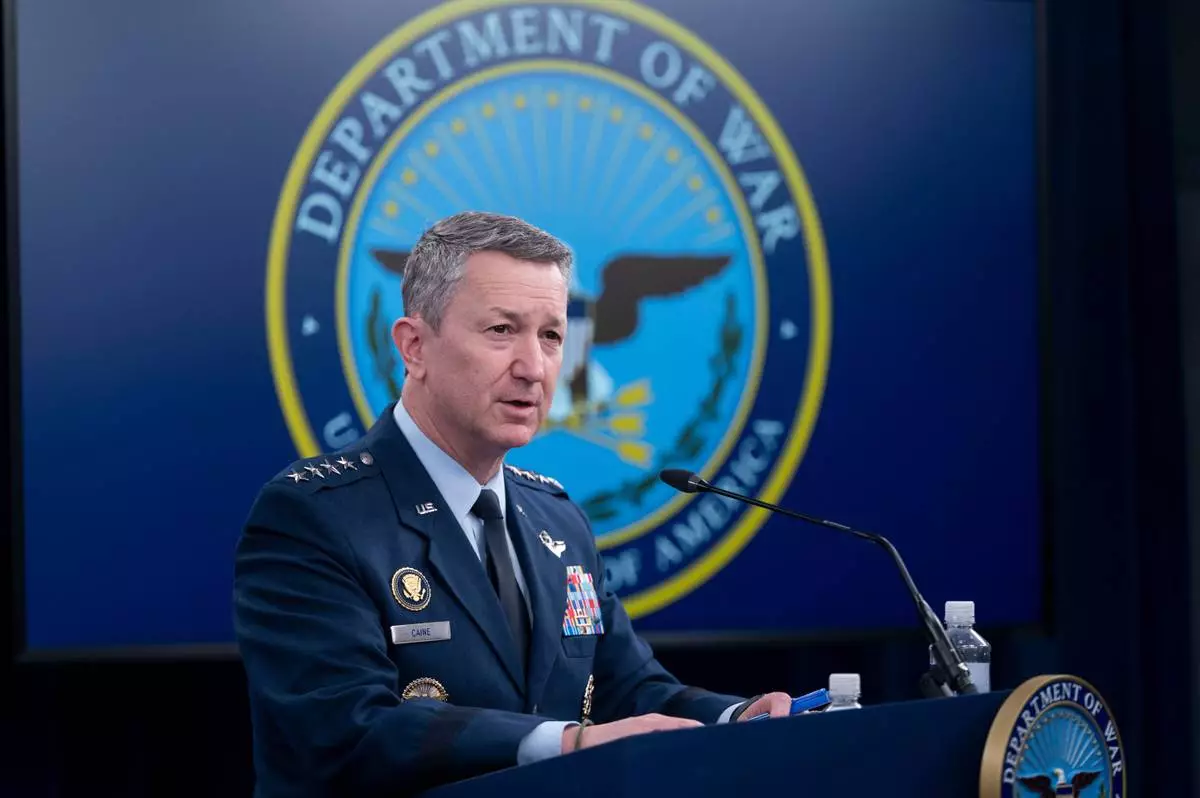
Gen. Dan Caine, chairman of the Joint Chiefs of Staff, said last week that the enforcement actions would extend beyond Iranian waters and the area under control of U.S. Central Command.

U.S. forces in other areas of responsibility, he told reporters at the Pentagon, “will actively pursue any Iranian-flagged vessel or any vessel attempting to provide material support to Iran.” He specifically pointed to operations in the Pacific and said the U.S. would target vessels that left before the blockade began outside the Strait of Hormuz, a crucial waterway for energy and other shipments.

The military also detailed an expansive list of goods that it considers contraband, declaring that it will board, search and seize them from merchant vessels “regardless of location.” A notice published Thursday says any “goods that are destined for an enemy and that may be susceptible to use in armed conflict” are “subject to capture at any place beyond neutral territory.”

The U.S. military’s actions against Iranian-linked vessels, namely the attack over the weekend on the cargo ship named the Touska, have raised questions about the two-week ceasefire.

The U.S. and Iran are operating in “an awkward space where the law doesn’t give you a clean yes-or-no answer” on whether the ceasefire was violated, said Jason Chuah, a law professor at the City University of London and the Maritime Institute of Malaysia.

“The United States seems to take the line that the conflict never fully switched off — that is there is still a state of armed conflict,” Chuah said. “By saying that, it can keep doing things like enforcing a blockade and even using limited force at sea.”

Iran is treating the ceasefire as a pause on all hostile acts, Chuah said.

Iranian Foreign Minister Abbas Araghchi on Tuesday called the U.S. blockade a breach of the ceasefire and said “striking a commercial vessel and taking its crew hostage is an even greater violation.” In a letter, Iran's U.N. Mission asked the U.N. Security Council and U.N. chief António Guterres to condemn the U.S. for seizing the Touska and its crew.

The U.S. earlier had instituted a blockade against sanctioned oil tankers linked to Venezuela but had never fired on those vessels.

Blockades and even limited attacks on vessels can be lawful in wartime, with merchant vessels becoming legitimate targets if they contribute to military actions, carry contraband or are incorporated into enemy logistics, Chuah said.

It's harder to prove that a ship such as the Touska is realistically contributing to military action against the U.S., Chuah said.

“The whole dispute really turns on a deceptively simple question: Did the ceasefire actually suspend the right to use force?” Chuah said. “If it did, then firing on vessels or seizing them is very hard to square with the United Nations Charter.”

Mark Cancian, a retired Marine colonel and a senior defense adviser with the Center for Strategic and International Studies, said a violation of the ceasefire is up for interpretation because there were no defined terms.

“Trump announced it. The Iranians agreed. But there’s no formal agreement,” Cancian said. “So whether it broke the ceasefire or not depends on your perspective. ... Nothing was written down.”

Michael O’Hanlon, a defense and foreign policy analyst at the Brookings Institution, said the U.S. did not violate the ceasefire because it was limited to bombing Iran, not the blockade.

“We agreed to stop dropping bombs on them, and that’s the basic thing they wanted,” O’Hanlon said, adding that the U.S. still had to enforce the blockade “if you’re going to make it mean anything.”

AP writer Farnoush Amiri at the United Nations contributed to this report.

Chairman of the Joint Chiefs of Staff Gen. Dan Caine speaks to members of the media during a press briefing at the Pentagon, Thursday, April 16, 2026 in Washington. (AP Photo/Kevin Wolf)

Chairman of the Joint Chiefs of Staff Gen. Dan Caine speaks to members of the media during a press briefing at the Pentagon, Thursday, April 16, 2026 in Washington. (AP Photo/Kevin Wolf)

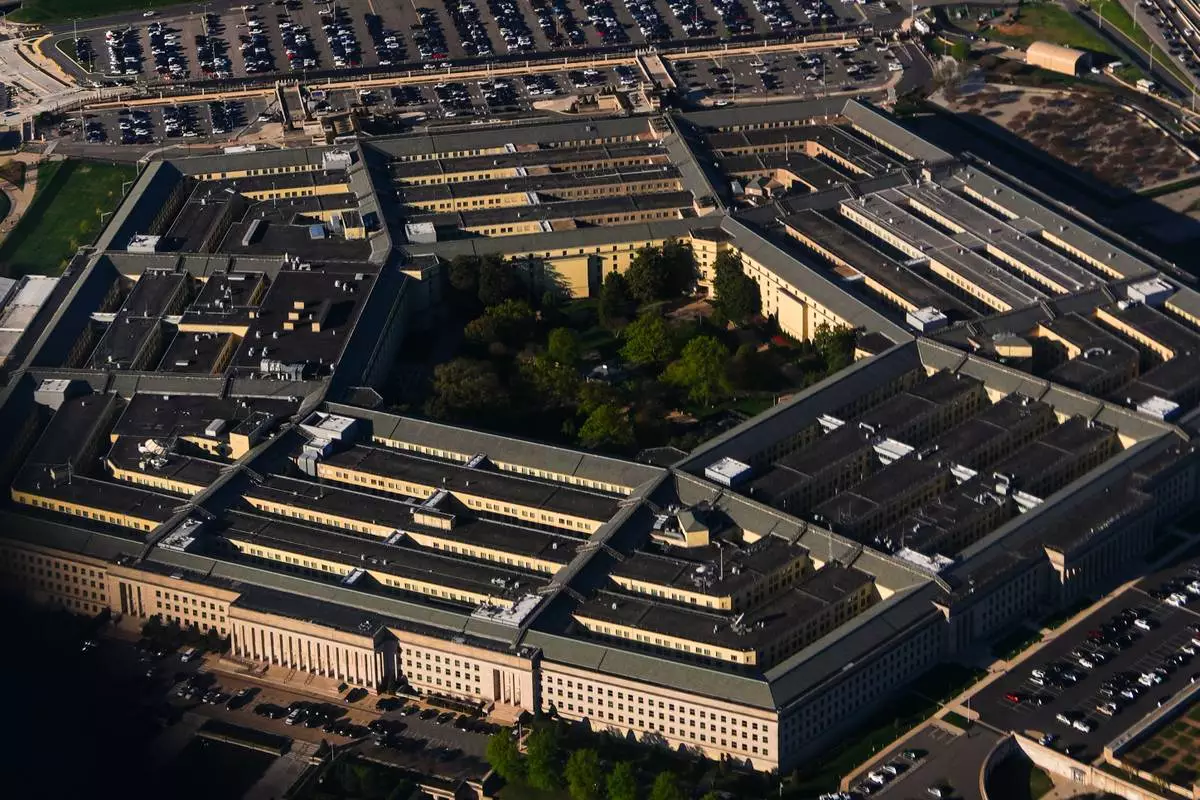
The Pentagon is seen from an airplane, Tuesday, April 7, 2026, in Washington. (AP Photo/Julia Demaree Nikhinson)

The Pentagon is seen from an airplane, Tuesday, April 7, 2026, in Washington. (AP Photo/Julia Demaree Nikhinson)

Recommended Articles