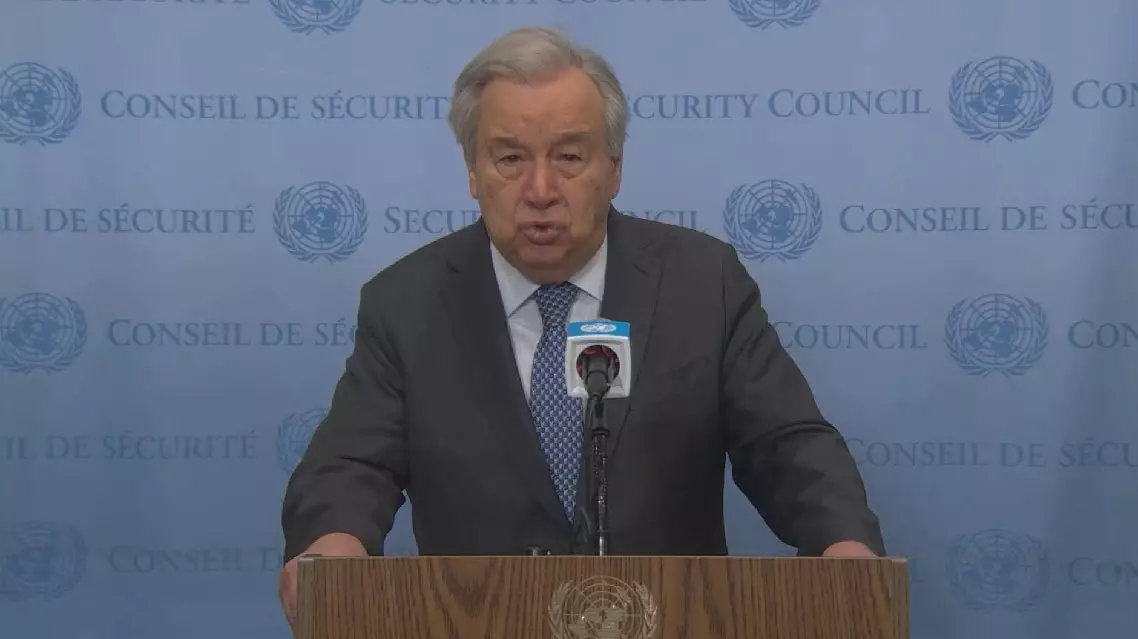
UN Secretary-General Antonio Guterres on Friday urged a "truly durable" ceasefire with unimpeded humanitarian aid access for Gaza, while warning that the overall humanitarian situation in the war-torn enclave remains fragile despite some improvements.
Guterres said at a press encounter that clean water is reaching more communities, some health facilities have reopened, and in the wake of the winter storms, the international community acted immediately to provide support.
However, Guterres warned that about 1.6 million people in the Gaza Strip, or more than 75 percent of the population, would face extreme levels of acute food insecurity and critical malnutrition risks.
Since October, the UN has done everything possible to keep lifelines open, but needs are growing faster than aid can get in, he said.
"We need a truly durable ceasefire, and we need more crossings, the lifting of restrictions on critical items, the removal of red tape, safe routes inside Gaza, sustained funding, and unimpeded access, including for NGOs," said Guterres.
Meanwhile, Guterres warned that the situation in the West Bank is also rapidly deteriorating, with Palestinians facing multiple threats including escalating violence by settlers, land confiscation, forced demolition of homes, and increasingly stringent restrictions on movement. In the north, tens of thousands of people have already been displaced due to Israeli military operations.
Guterres stressed that the international law, including international humanitarian law and international human rights law, must be upheld across the Occupied Palestinian Territory, including East Jerusalem.
Guterres also said the International Court of Justice's Advisory Opinion of Oct. 22, 2025 clearly stated that Israel is under the obligation to allow and facilitate humanitarian aid, to cooperate with the United Nations in carrying out its mandates, and to respect the privileges and immunities of the United Nations and its personnel, including in times of armed conflict.
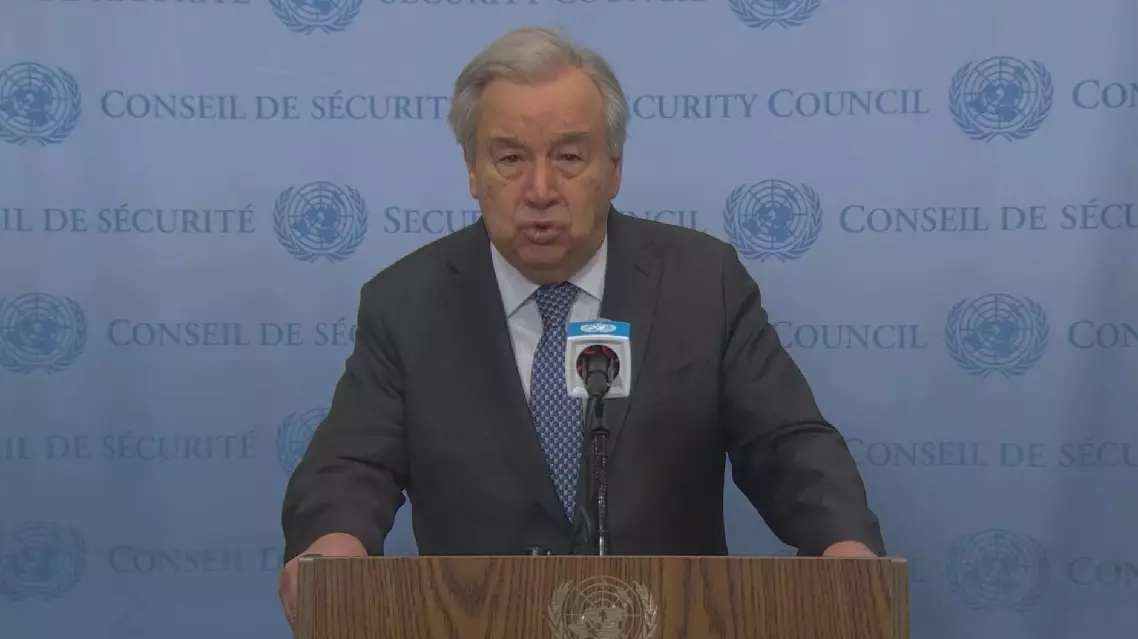
UN chief urges "truly durable" ceasefire with unimpeded humanitarian access for Gaza
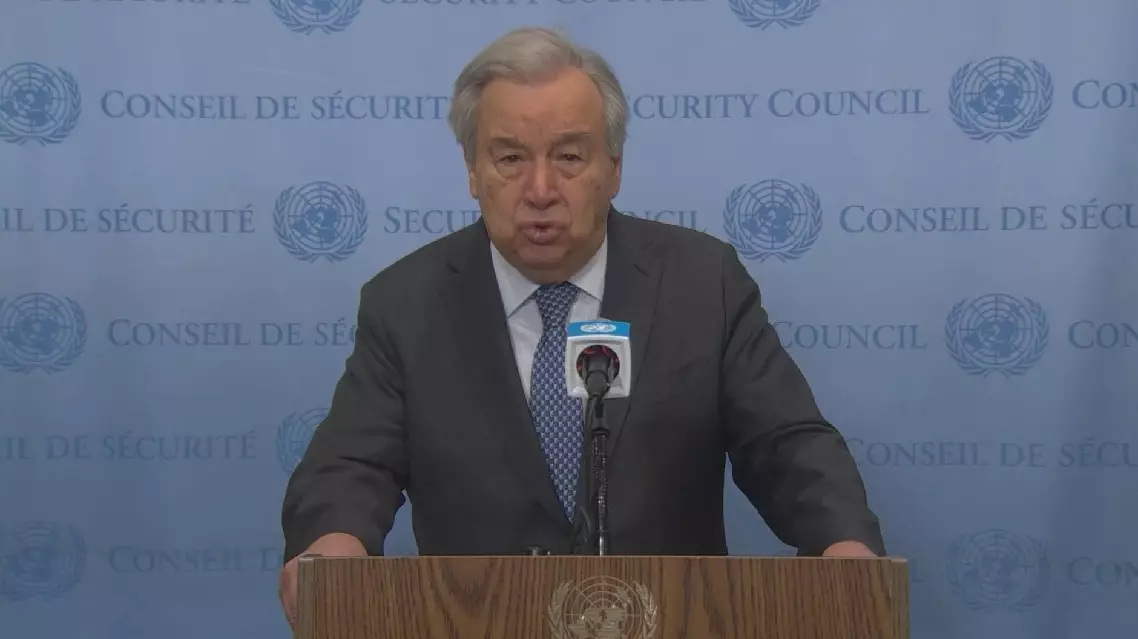
UN chief urges "truly durable" ceasefire with unimpeded humanitarian access for Gaza
UN chief urges "truly durable" ceasefire with unimpeded humanitarian access for Gaza