Skip to Content Facebook Feature Image

Southern China's first pumped-storage power station begins operation in Guangxi

China

China

China

Southern China's first pumped-storage power station begins operation in Guangxi

2025-12-20 17:21 Last Updated At:21:47

The first two units of south China's inaugural pumped-storage power station in Guangxi Zhuang Autonomous Region commenced operation on Friday, capable of converting 500,000 cubic meters of water energy into 600,000 kilowatt-hours (kWh) of clean electricity per hour -- enough to power 100,000 households for a day.

The commissioning of these two generating units will provide the power grid with an additional 1.2 million kilowatts of regulation capacity, supporting the large-scale grid connection of wind and solar power in Guangxi and increasing the share of clean energy.

With a total investment of approximately 8 billion yuan (about 1.14 billion U.S. dollars), the pumped-storage power station in Guangxi's Nanning City is equipped with four generating units, with the remaining two scheduled to be brought online soon.

"The second batch of two units at the pumped-storage power station has entered its final preparation phase to ensure full commissioning by the end of this month. Once completed, the station will be able to generate and deliver up to 2.5 billion kilowatt-hours of clean energy annually, reducing carbon dioxide emissions by approximately 2.2 million tonnes," said Dai Xiong, deputy general manager of the Nanning pumped-storage project department of China Southern Power Grid.

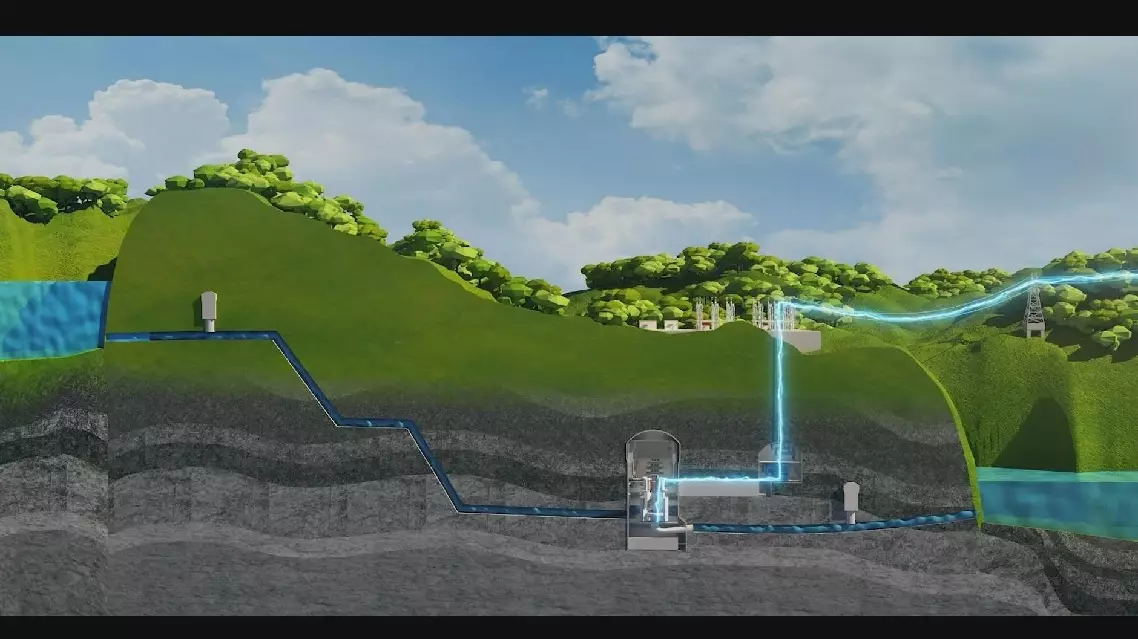
The operational principle of a pumped-storage power station is to use surplus electricity to pump water from the base of a mountain to a reservoir at the top. When renewable energy output is insufficient, stored water is released downhill to generate electricity via hydraulic turbines, thereby stabilizing supply.

Functioning like a giant power bank, the station will help stabilize the grid connection of wind, solar, and other renewable energy sources.

To date, China's installed pumped-storage capacity has exceeded 64 million kilowatts, providing robust support for the large-scale, high-quality development of new energy.
Southern China's first pumped-storage power station begins operation in Guangxi

Southern China's first pumped-storage power station begins operation in Guangxi

Ronny Herman de Jong, a Dutch-American survivor of Japanese-run internment camps in Southeast Asia during World War II, has recounted the atrocities committed by the Japanese Imperial Army against women and children, urging the Japanese government to issue a formal apology to the victims and survivors.

Born in 1938 on the island of Java in the then Dutch East Indies (now Indonesia), de Jong was just a toddler when Japanese forces invaded in 1942.

Along with her mother and younger sister, she was forcibly interned in a concentration camp for women and children, where they endured nearly four years of starvation, disease, and brutal treatment, narrowly escaping death on multiple occasions.

"In the women's camps, they would put bamboo sticks under the fingernails. They put burning cigarette butts on women's breasts. That did not happen to my mom, but it happened to a lot of the people. They were severely maltreated. Even little babies were just killed. In the end, there were so many deaths. The mortality rate on Java [Island] was more than 10 times normal, and there were no longer coffins provided anymore. People that died just had to be taken out of the camp and dumped into a big pit that the women had to have dug, or they were just dumped over the fence," de Jong recounted.

After the war, her family emigrated to the United States. Decades later, she published a book based on her mother's secret diary -- smuggled out of the camp -- which chronicled their harrowing ordeal.

First released in Canada in 1992, the book met with significant resistance in Japan. According to de Jong, a Japanese journalist in Canada who had agreed to translate the work was later murdered, halting efforts to bring the account to Japanese readers.

To this day, de Jong stressed that Japan has never issued a formal apology to the victims or survivors of its wartime aggression across Asia.

"Japan has never offered an apology to any of the survivors or victims. Now, Japan is starting to change their democracy by changing that Article 9 [of the Japanese Constitution] that says Japan should not have any armed forces ever again that can start war. And now, the [Japanese] prime minister is trying to change that by reinforcing the Japanese arms," she said.

In 2001, de Jong realized how little the world knew about the Japanese-run internment camps in Southeast Asia during WWII. Declassified documents from the U.S. National Archives revealed a chilling plan: Japanese authorities had intended to systematically exterminate all remaining camp internees beginning in September 1945, just weeks after Japan announced its unconditional surrender.

Since then, de Jong has dedicated herself to compiling testimonies from WWII veterans and former child internees, publishing more books to ensure this history is never forgotten nor denied.

"What I want to say to the generations of now and to come, you have to remember this war -- the Second World War in the Pacific. It was the most cruel and expensive war ever. That is not a war that you can say 'oh, it did not happen'. It does not. That is not true. You have to remember this war," she said.

Concentration camp survivor recounts Japanese army's atrocities during WWII

Concentration camp survivor recounts Japanese army's atrocities during WWII

Recommended Articles