SYDNEY (AP) — The Australian state of New South Wales is proposing to ban public displays of Islamic State group flags or extremist symbols after a mass shooting driven by antisemitism killed 15 people at Sydney's Bondi Beach.
Under draft laws to be debated by the state Parliament, publicly displaying the IS flag or symbols from other extremist groups will be offenses punishable by up to two years in prison and fines.
The state’s premier, Chris Minns, also said chants of “globalize the intifada” will be banned and police would be given greater powers to demand protesters remove face coverings at demonstrations.
“Hate speech or incitement of hatred has no place in our society,” Minns said Saturday.
The Arabic word intifada is generally translated as “uprising.”
While pro-Palestinian demonstrators say the slogan describes the worldwide protests against the war in Gaza, Jewish leaders say it inflames tensions and encourages attacks on Jews.
“Horrific, recent events have shown that the chant ‘globalize the intifada’ is hate speech and encourages violence in our community,” Minns told reporters. “You’re running a very risky racket if you’re thinking of using that phrase.”
New South Wales politicians are expected to debate the reforms on Monday after the premier recalled parliament.
Police said Sunday's attack, targeting a Hanukkah celebration on Australia's most famous beach, was “a terrorist attack inspired by (the) Islamic State " group. Police said they found two homemade IS flags in the vehicle used by the two suspects.
Prime Minister Anthony Albanese has pledged to introduce measures to curb radicalization and hate, including broadening the definition of hate speech offenses for preachers and leaders who promote violence, and toughening punishments for such crimes. The proposals would also designate some groups as hateful, and allow judges to consider hate as an aggravating factor in cases of online threats and harassment.
Albanese has also announced plans to tighten Australia's already strict gun laws.
The prime minister, who joined the Jewish community at Sydney's Great Synagogue on Friday, said “the spirit of our Jewish Australian community is completely unbreakable.”
“Australia will not allow these evil antisemitic terrorists to divide us,” he told reporters. “No matter how dark things were, and continue to be, light will triumph.”
Authorities said the country will hold a National Day of Reflection on Sunday, the final day of Hanukkah, in honor of the victims. Flags will be flown at half-mast from all official buildings, and Albanese will join others at Bondi on Sunday to observe a minute of silence at 6:47 p.m., the time when police received the first reports of gunfire.
Police said one of the suspects, Sajid Akram, was shot dead on Sunday. His son, Naveed Akram, 24, remains in custody in a New South Wales hospital. He has been charged with 59 offences, including murder and committing a terrorist act, and police are reviewing the evidence against him.
The attack has raised questions about whether Australian Jews are sufficiently protected from rising antisemitism.
Australia has 28 million people, including about 117,000 who are Jewish. Antisemitic incidents, including assaults, vandalism, threats and intimidation, surged more than threefold in the country during the year after Hamas attacked Israel on Oct. 7, 2023, and Israel launched a war on Hamas in Gaza in response, the government’s Special Envoy to Combat Antisemitism Jillian Segal reported in July.
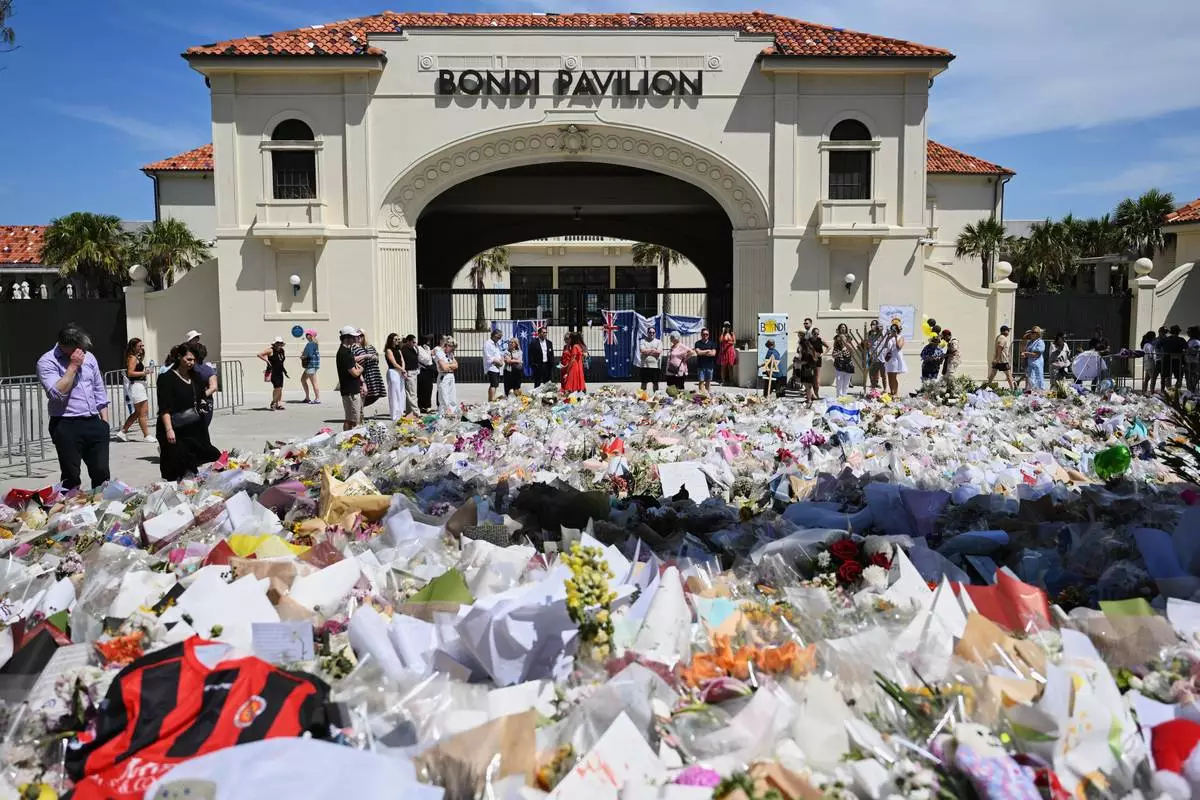
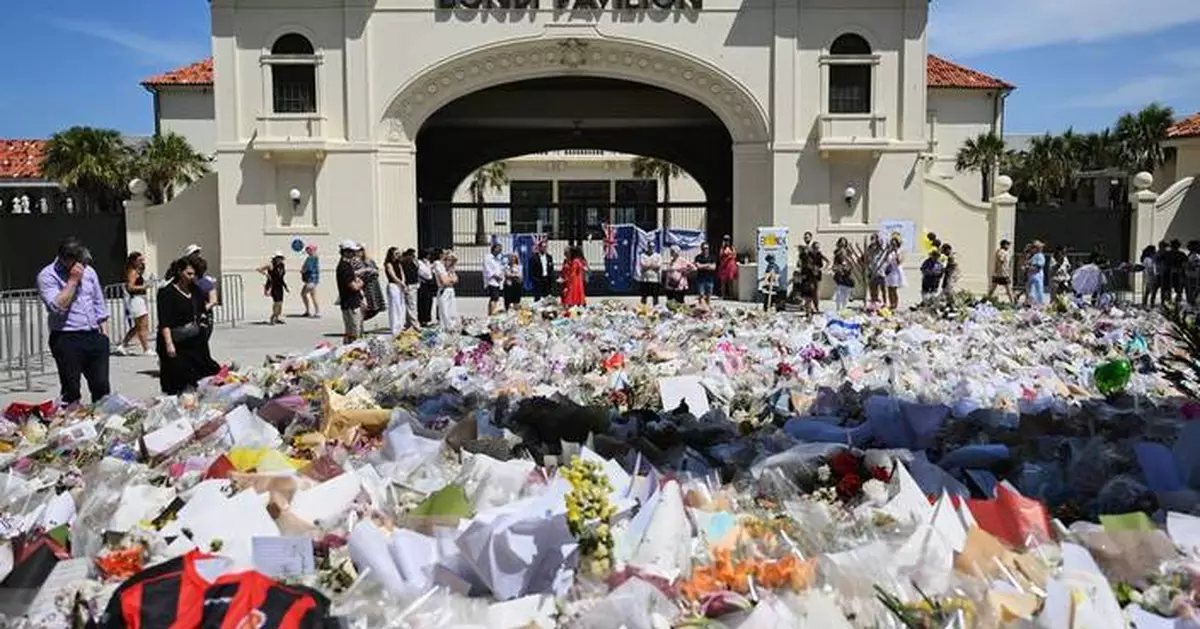
Floral tributes outside Bondi Pavilion at Bondi Beach in Sydney, Thursday, Dec. 18, 2025. (AP Photo/Steve Markham)