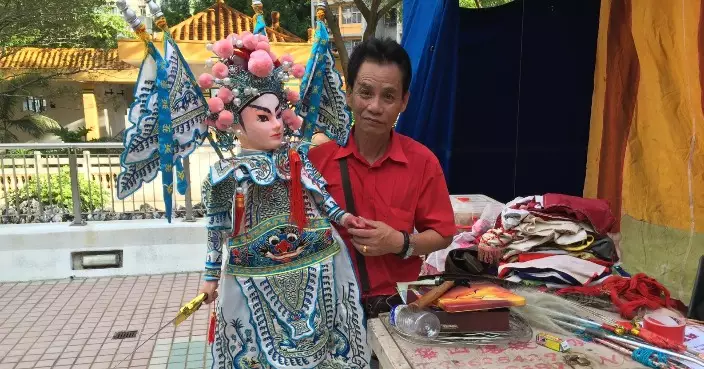
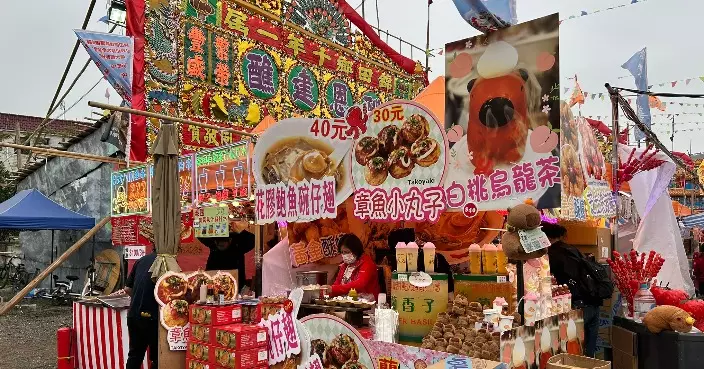
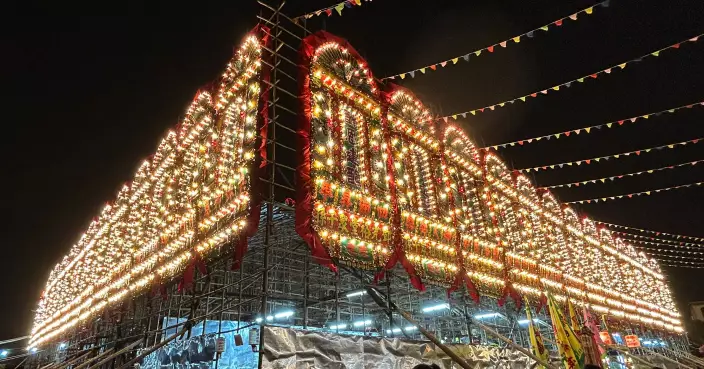
At the site of the Kam Tin Ten-Yearly Thanksgiving Festival, a group of "actors and actresses" dressed in splendid costumes are making gestures and moving nimbly to portray the joys and sorrows of the protagonists in the play. If you step closer, you will find the actors on the stage are not real people, but hand puppets instead. Behind the stage of this impressive performance is the only remaining hand puppet Cantonese opera troupe in Hong Kong - "Waa Saan Traditional Puppet Cantonese Opera Troupe".
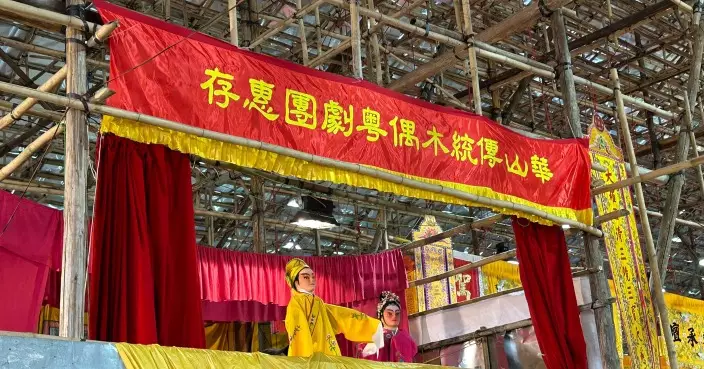
The stage performance of "Waa Saan Traditional Puppet Cantonese Opera Troupe", Photo by Bastille Post
With the passage of time, puppet Cantonese opera has gradually been replaced by one acted by real people, putting this traditional art form at risk of disappearing. Nevertheless, Mr. Chan Kam To, the nearly 80-year-old troupe leader, and his elderly troupe fellows are still striving to preserve the glory of this traditional folk culture in modern times.
Click to Gallery
The stage performance of "Waa Saan Traditional Puppet Cantonese Opera Troupe", Photo by Bastille Post
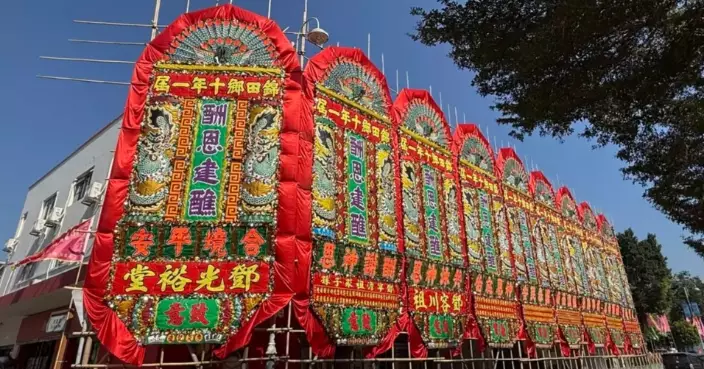
The poster of the troupe's performance at the Kam Tin Ten-Yearly Thanksgiving Festival, Photo source: Kam Tin Rural Committee
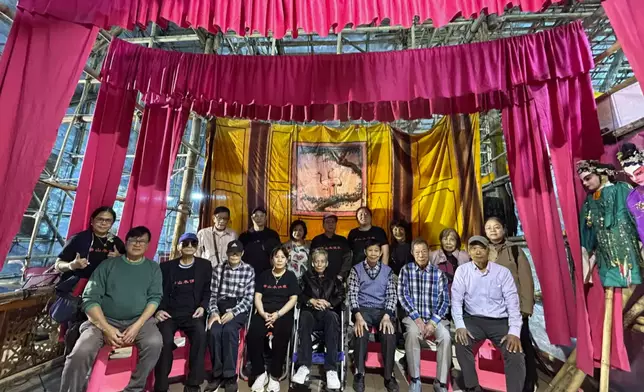
Mr. Chan Kam To (fifth from the left, front row) and the troupe members, Photo by Bastille Post
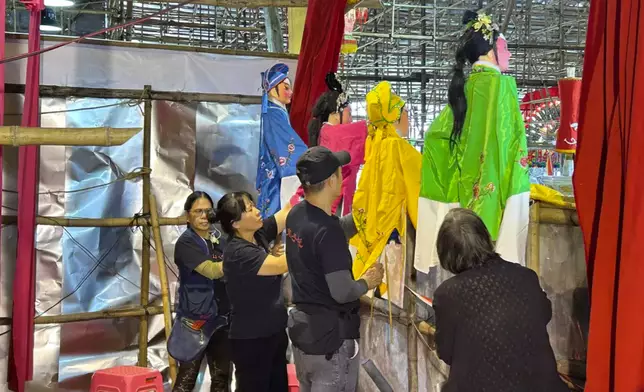
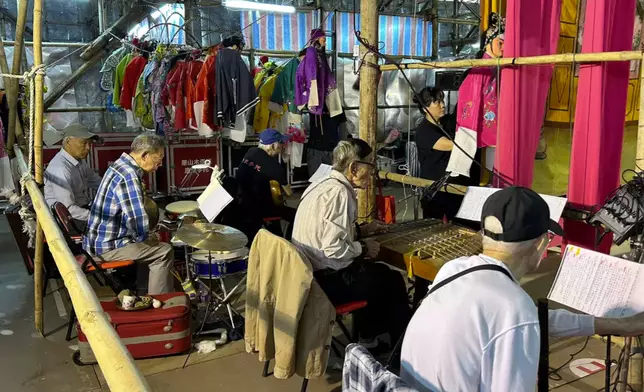
The puppeteers behind the stage, Photo by Bastille Post
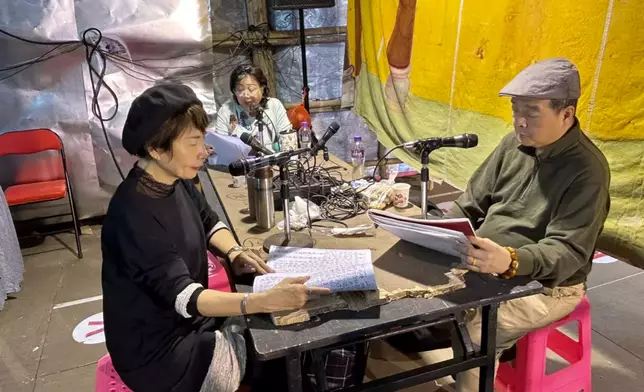
The vocalists behind the stage, Photo by Bastille Post
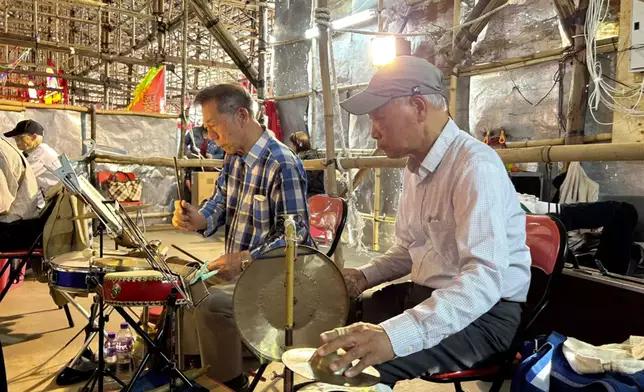
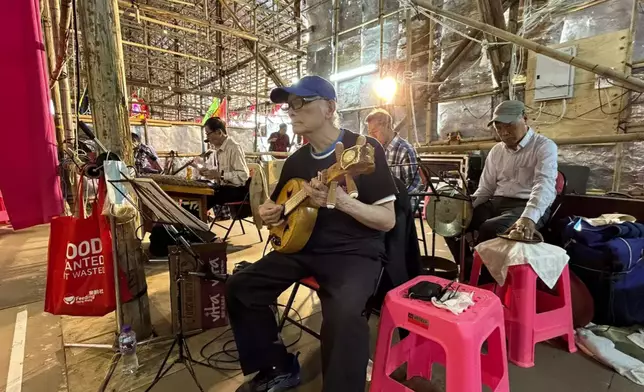
The instrumental performers behind the stage, Photo by Bastille Post
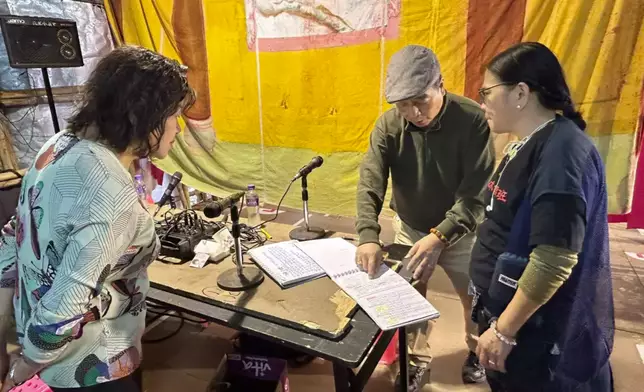
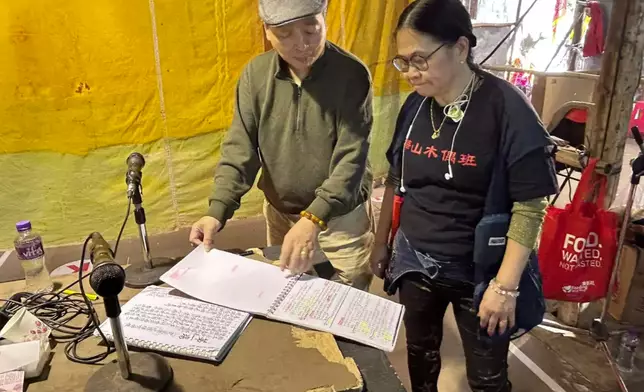
The troupe members would seize every second to actively discuss how to better convey the plots and the protagonist's emotions of the play, Photo by Bastille Post
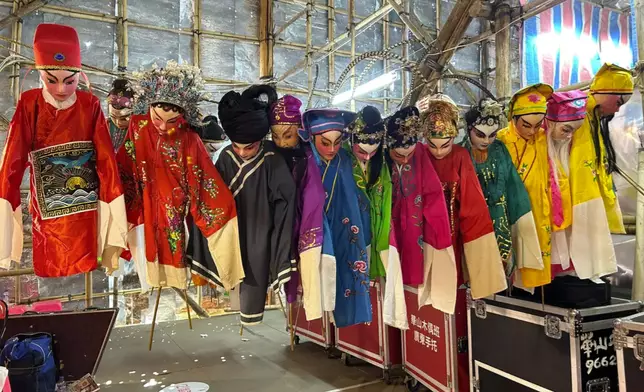
The puppets of the troupe, Photo by Bastille Post
Most of the troupe members are in their seventies or eighties, Photo by Bastille Post
The troupe members still persist in inheriting puppet Cantonese opera culture even in their twilight years, Photo by Bastille Post
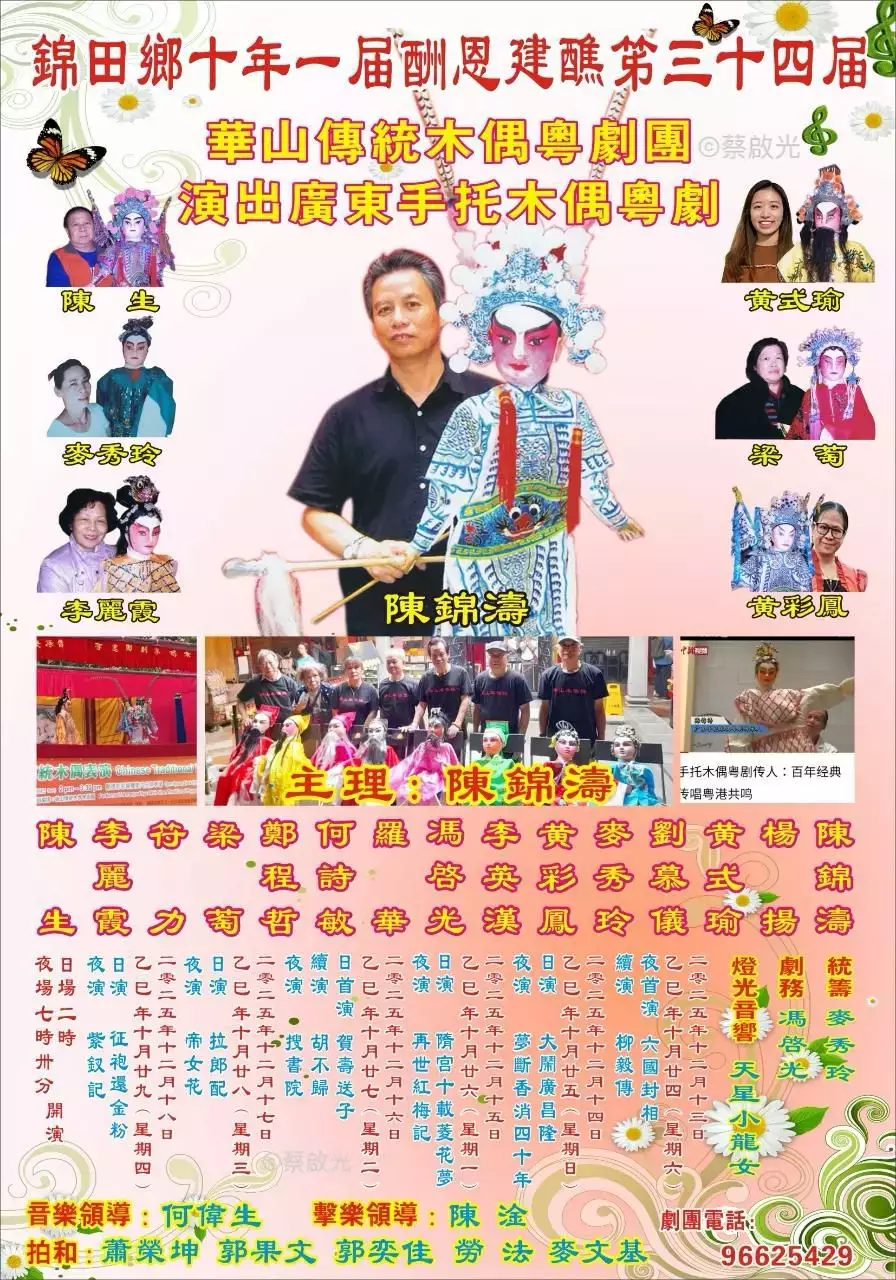
The poster of the troupe's performance at the Kam Tin Ten-Yearly Thanksgiving Festival, Photo source: Kam Tin Rural Committee
Giving up the Stable Job of Public Servant to Pursue the Dream of Inheriting Puppet Opera Culture
Mr. Chan Kam To has performed puppet Cantonese opera for over 60 years. Recalling his decision to choose this art form as his life career at a young age, Mr. Chan said that he had never regretted this choice.
In the interview, Mr. Chan said that he had developed a strong interest in hand-held puppets and Cantonese opera under the influence of his father. With his love for traditional art forms, he actively learned various performance skills after becoming an apprentice of the puppet Cantonese opera performance. "You need to learn different kinds of performance skills from your mentor." Whether it's manipulating puppets, singing, playing musical instruments, or even writing scripts and composing, he is well-versed in all the above aspects.
Although he once had the chance of choosing to work as a public servant, who can earn a stable salary and a decent position, when entering the workforce, the words that a friend told him finally made him decide to follow his inner voice and choose puppet Cantonese opera as his life career. "Kam To, if you want to become a public servant, you still have the chance of making such a choice in the future. But there aren't many professionals engaged in puppet Cantonese opera performance in Hong Kong. Since you are an all-around artist in this field, you should really try to do more of what you like at a young age. Why not consider setting up your own puppet Cantonese opera troupe in Hong Kong?"
Under the suggestion of his friend, Mr. Chan gathered some enthusiasts who were also passionate about puppet Cantonese opera and established the "Waa Saan Traditional Puppet Cantonese Opera Troupe", kicking off the artistic pursuit of the troupe members.
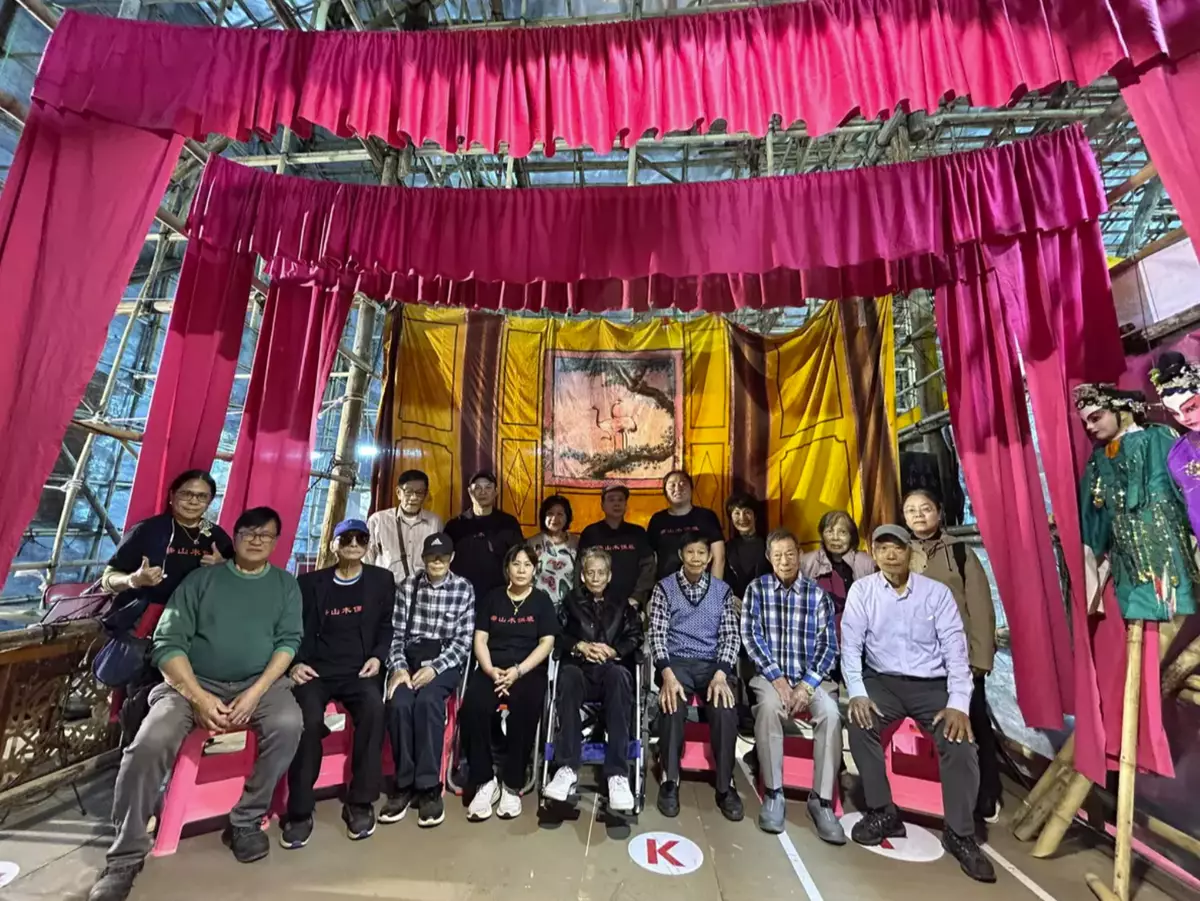
Mr. Chan Kam To (fifth from the left, front row) and the troupe members, Photo by Bastille Post
Keeping Striving for Excellence, Aiming to Provide High-Quality Puppet Cantonese Opera to the Audience
As an important performance event at the worship ceremonies for Gods, puppet Cantonese opera has always played a role in thanking deities for their blessings and entertaining spirits. Although the Cantonese opera performed by real people have gradually replaced the puppet performance at the religious occasions of worship ceremonies, temple consecration, etc. with the development of Hong Kong society, there have still been some local villagers who believe in the exorcism power of puppets and keep the tradition of performing puppet Cantonese opera before the start of real people performance at the worship ceremonies. Nevertheless, such opportunities have been decreasing in modern times, making puppet Cantonese opera gradually become a sunset industry.
Though facing such a difficult situation, the "Waa Saan Traditional Puppet Cantonese Opera hasn't given up the passion of inheriting this traditional art form. The troupe members choose to keep striving for excellence day after day on this niche artistic path, seizing the few performance opportunities to present high-quality puppet Cantonese opera to the audience.
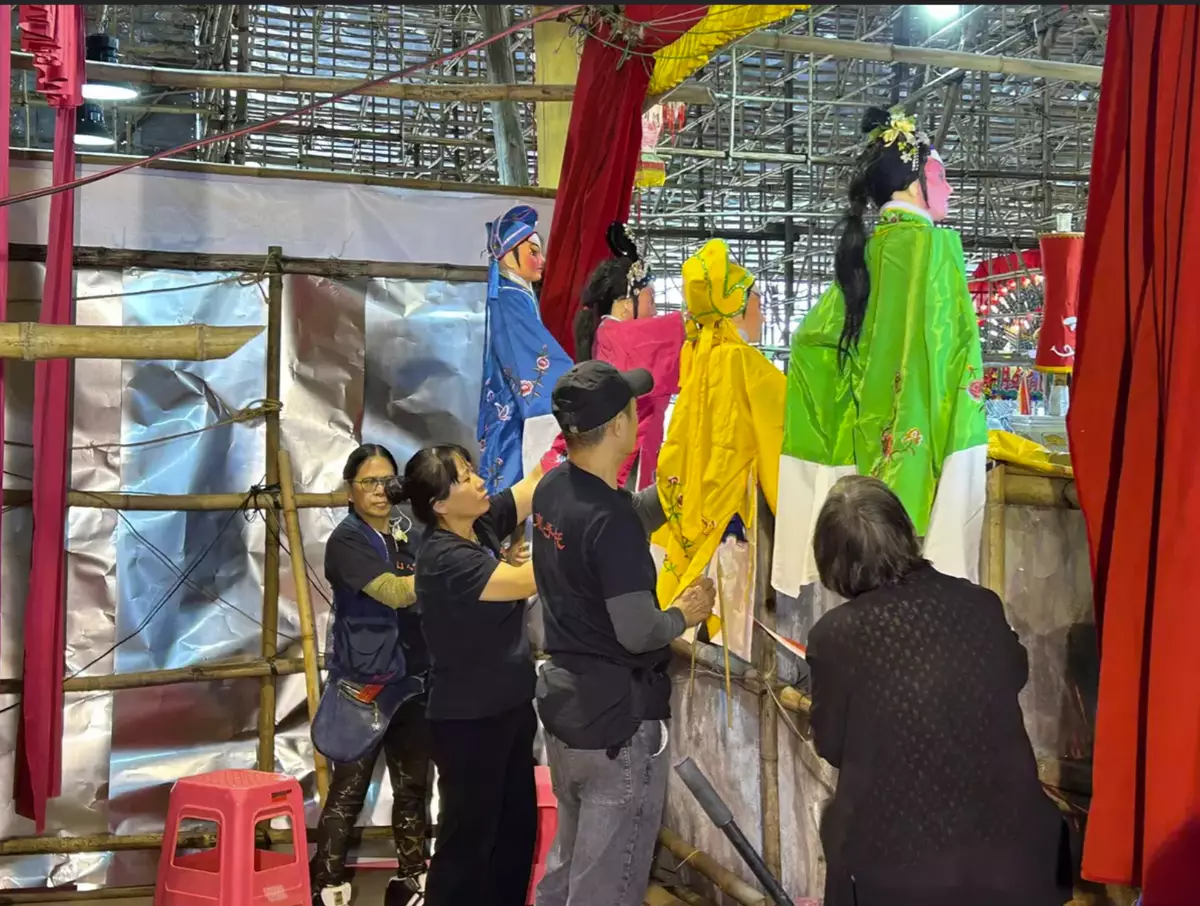
The puppeteers behind the stage, Photo by Bastille Post

The vocalists behind the stage, Photo by Bastille Post
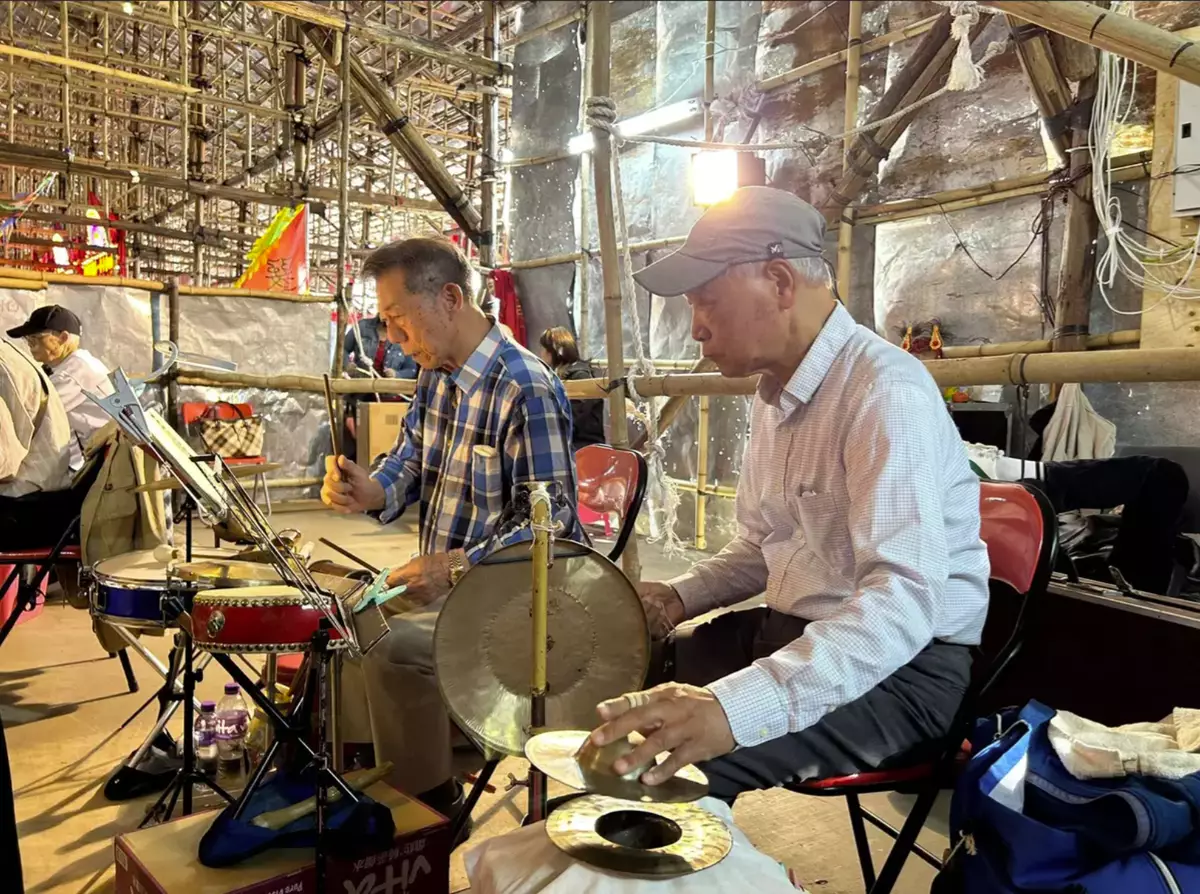
The instrumental performers behind the stage, Photo by Bastille Post
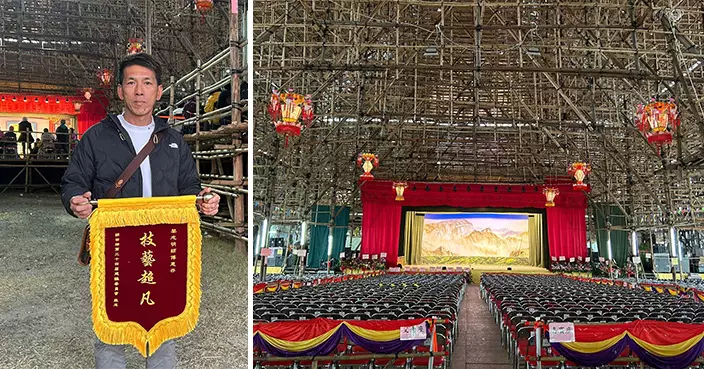
Mr. Chan mentioned that the troupe has participated in the Kam Tin Ten-Yearly Thanksgiving Festival four times, and this year marks his fifth time to take part in the performance of the festival. In order to meticulously prepare for this year's performance, everyone in the troupe has made tremendous efforts. At the performance site, although Mr. Chan had to stay in bed behind the stage due to his recent physical discomfort, he still kept a close eye on the troupe members and promptly offered specific suggestions for improvement on their performance effects.
As for the troupe members, they have also devoted themselves wholeheartedly during the festival performance. No matter it's the break of each performance, or the leisure time for lunch and dinner, they would seize every second to actively discuss how to better convey the plots and the protagonist's emotions of the play to the audience via manipulating puppets, singing and playing musical instruments, allowing them to feel the artistic charm of puppet Cantonese opera.
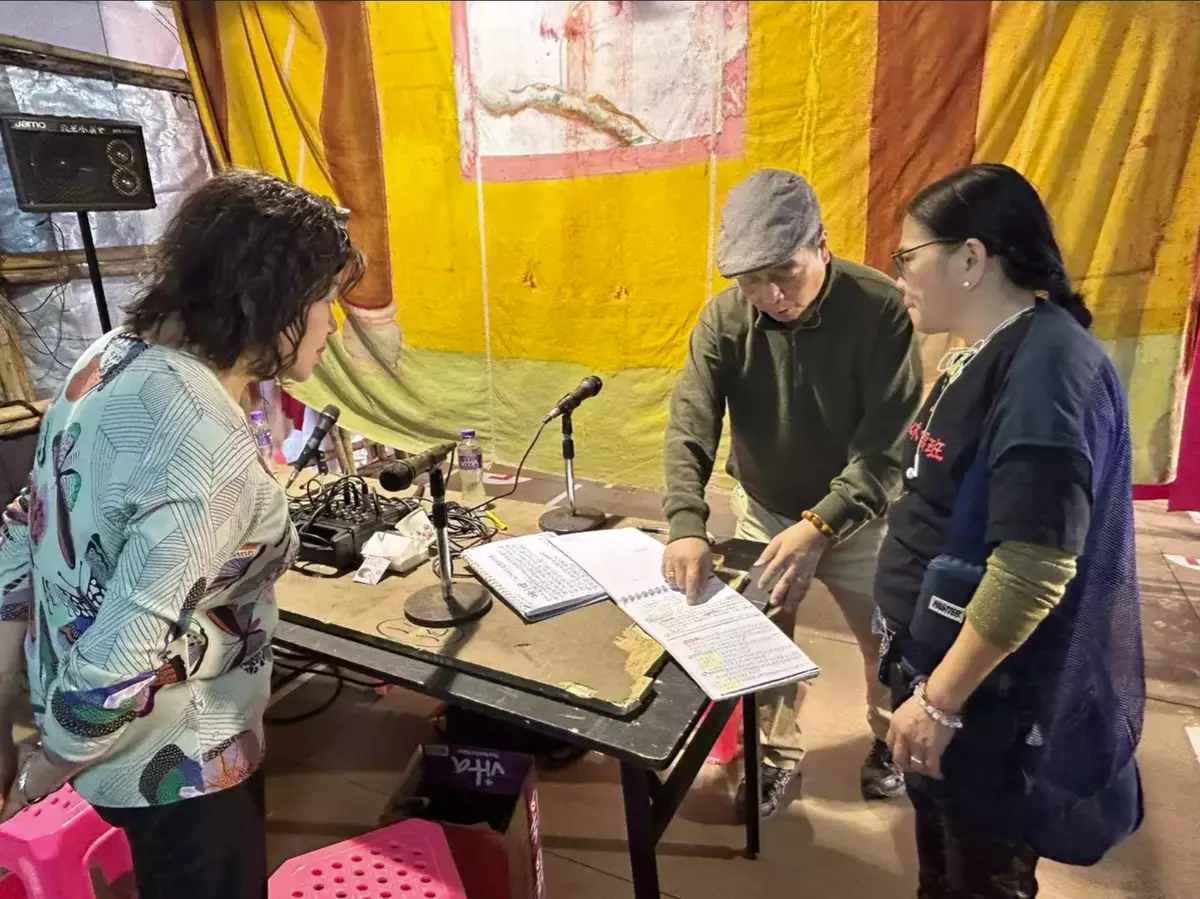
The troupe members would seize every second to actively discuss how to better convey the plots and the protagonist's emotions of the play, Photo by Bastille Post
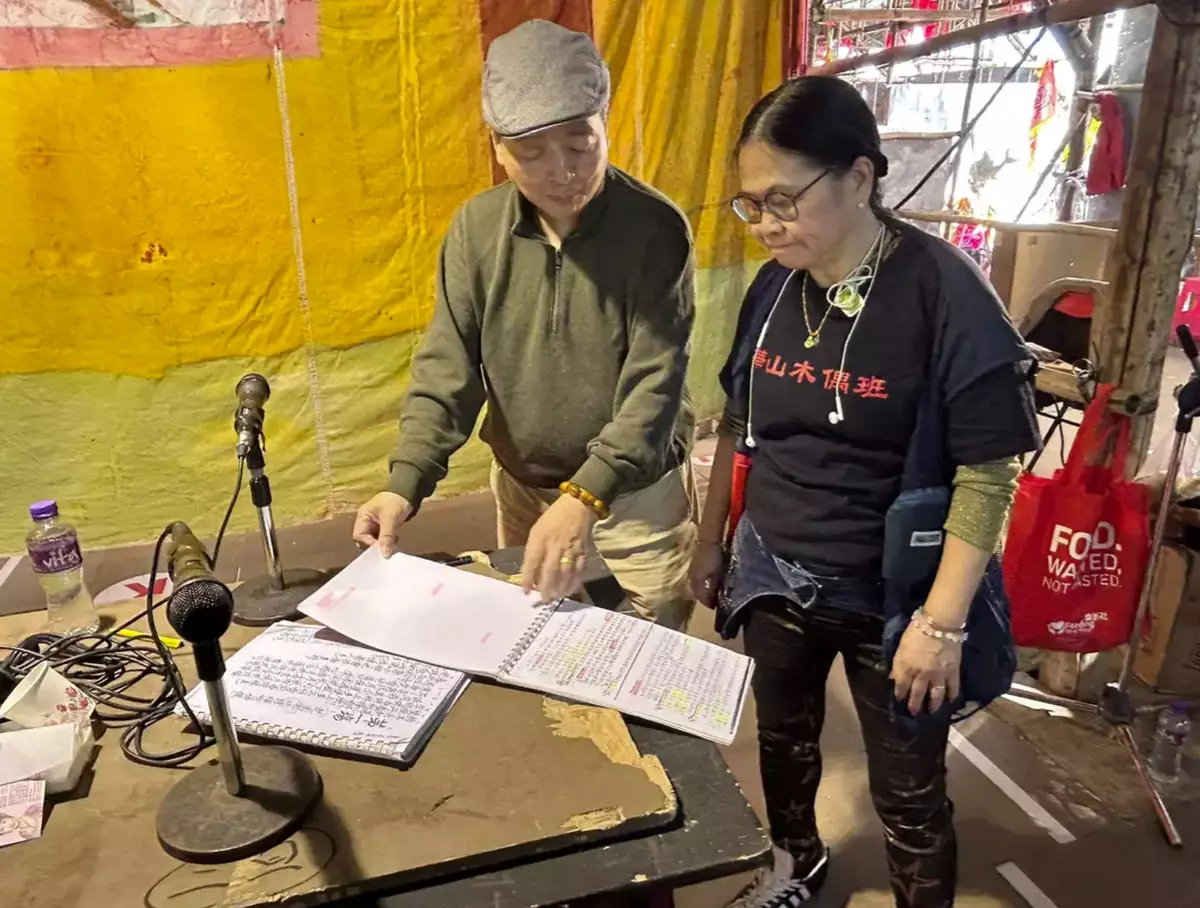
Photo by Bastille Post
The Difficult Road Ahead for the Sunset Industry: Hard to Earn a Stable Salary and Find Young Apprentices
Puppet Cantonese opera once occupied an important position in the worship ceremonies to the gods. However, with the development of society, the puppet opera has gradually become marginalized under the popularization of the Cantonese opera performance by real actors and actresses.
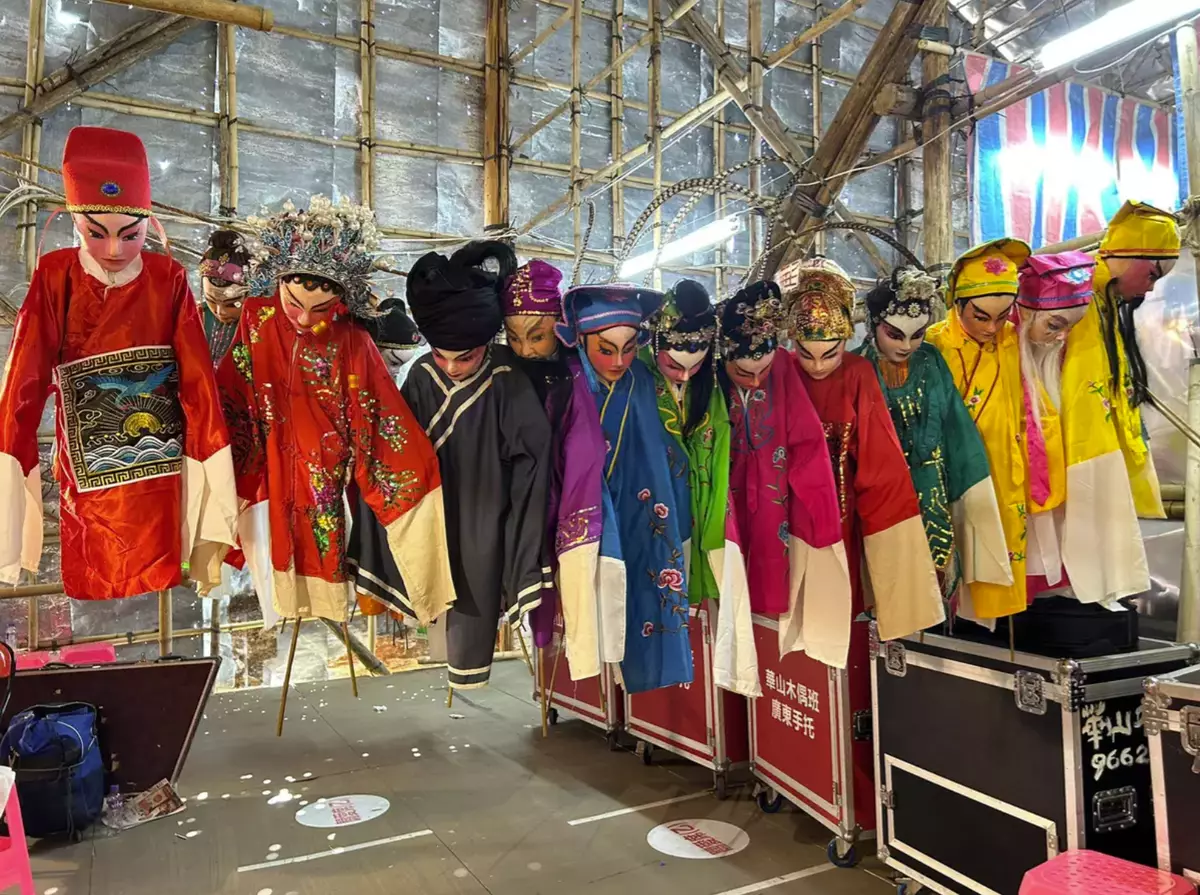
The puppets of the troupe, Photo by Bastille Post
Ms. Lau Mou Yee, the vocalist of the troupe, mentioned, "It's hard to make a living in our industry." With only few performances available each year, it has become extremely difficult for the troupe members to earn a stable salary. She said, "If you can't make a living, it would be very difficult to attract young people to enter this industry."
Nowadays, this group of young people, who once bravely pursued the dream of inheriting puppet Cantonese opera, have all become elderly. As for them, the youngest member has already turned over forty, while most of them are in their seventies or eighties. Facing the predicament of a lack of successors, Mr. Chan Kam To couldn't help but sigh, "The puppet Cantonese opera would disappear in the future." Indeed, this heavy prophecy not only reveals the difficulty of puppet Cantonese opera, but also expresses the feelings of all the artists of traditional art forms.
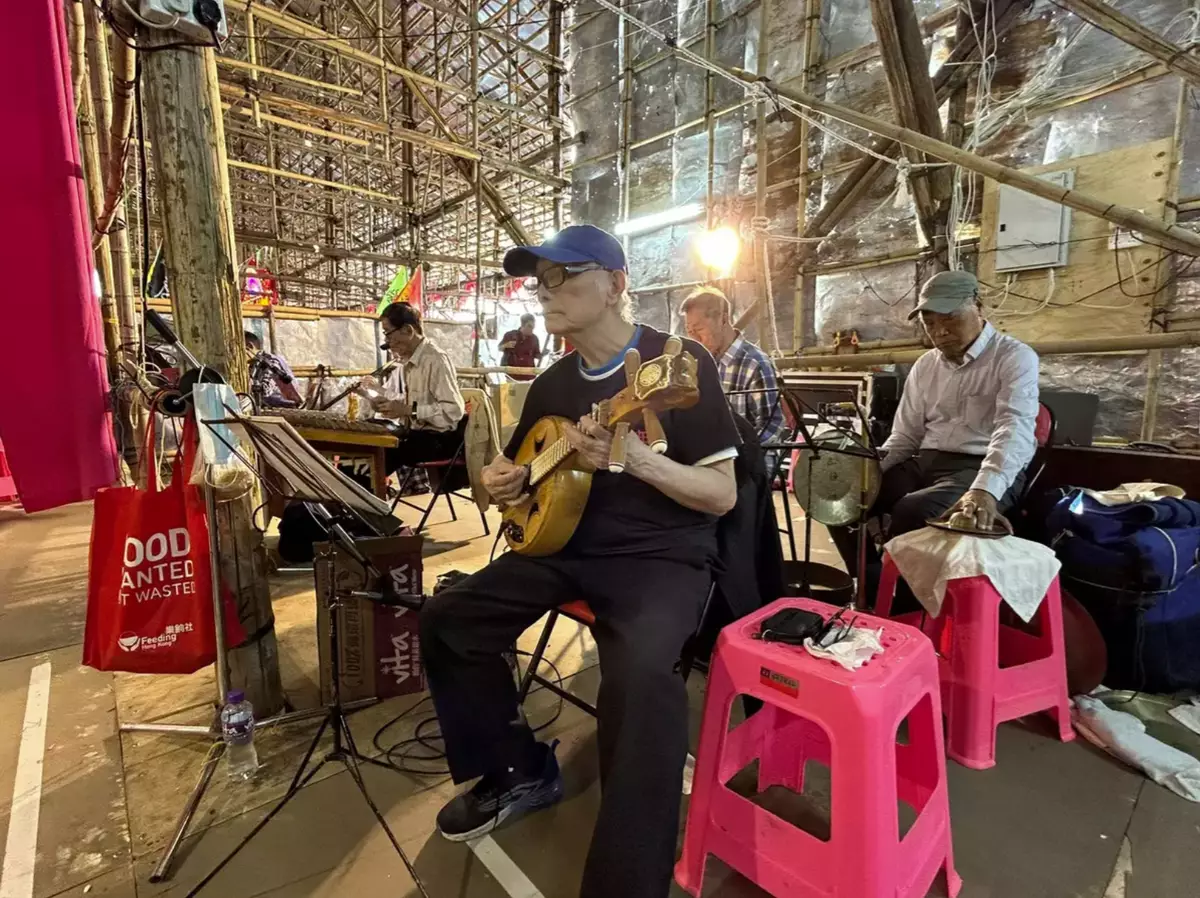
Most of the troupe members are in their seventies or eighties, Photo by Bastille Post
The Persistence of Inheriting Traditional Culture Even in the Twilight Years
Although facing the dilemma of future development, the troupe members have still persisted in pursuing their artistic passion. In addition to seizing each precious performance opportunity, they have also been more actively promoting the culture of puppet Cantonese opera to the schools in Hong Kong in recent years. For them, perhaps they will no longer be able to perform on the stage at the next Kam Tin Ten-Yearly Thanksgiving Festival, but as long as they can plant one more seed in the hearts of the young generation and let the youth discover the glamour of this traditional art form, there will be more hope for the continuation of this disappearing art in the future.
"Do our best to pass on this traditional art." At the site of the Kam Tin festival, the troupe members have not only performed the stories of traditional Cantonese opera, but also a life anthem about love and perseverance. Persisting in inheriting puppet Cantonese opera to awaken more people to appreciate the beauty of traditional folk culture, such a sincere wish would be the motivation for these elderly to stick to their artistic dream even in their twilight years and such an industry predicament.
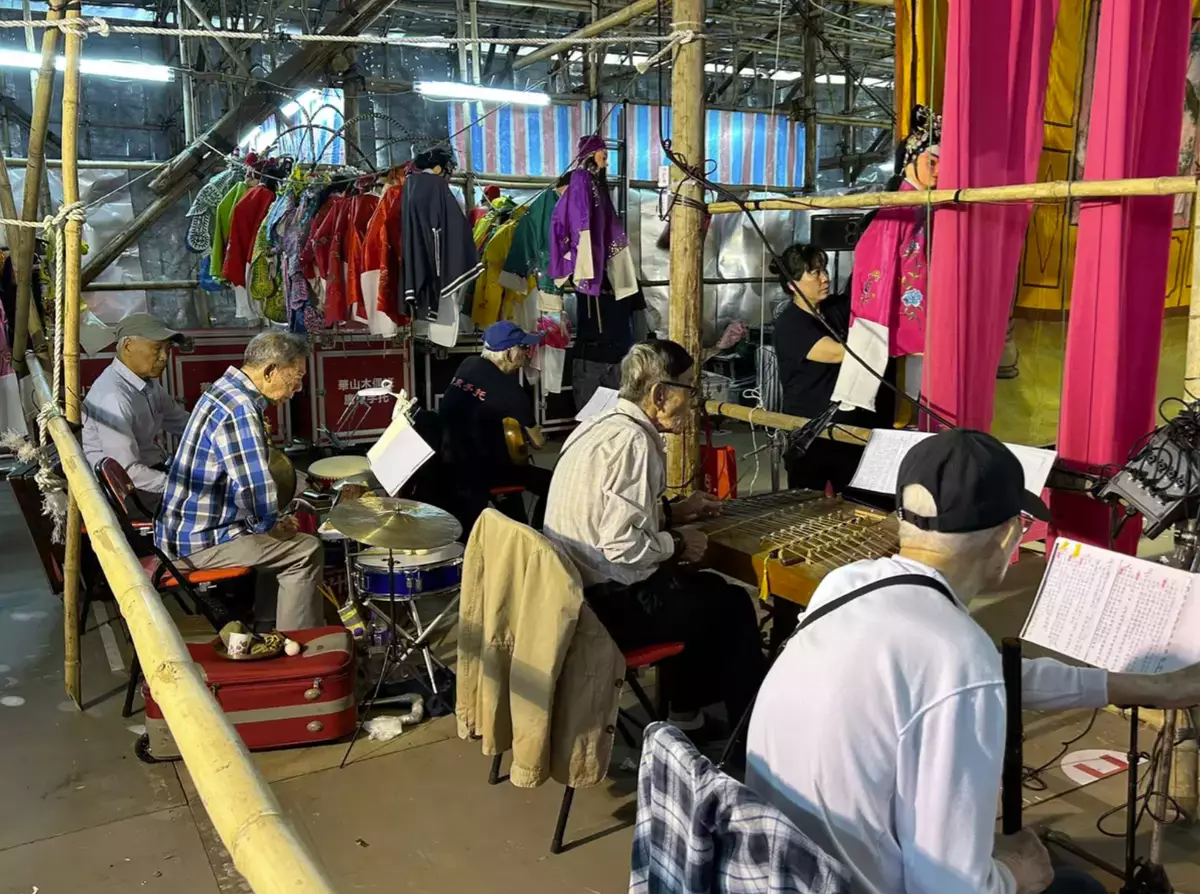
The troupe members still persist in inheriting puppet Cantonese opera culture even in their twilight years, Photo by Bastille Post
Leung Sing Por, Hong Kong's legendary "King of Comic Roles," drew the curtain on his life 45 years ago, yet his artistic legacy endures in the hearts of Hong Kong's audiences. Neither a "handsome young lead" nor a conventional "leading man," he nonetheless became a household name, dominating Hong Kong's film, television, and Cantonese opera stages for over three decades. His comedic style, particularly his signature impromptu "baau tou" (improvisation), has become classic. A renowned Hong Kong scholar of Cantonese opera noted that traces of this very technique can even be found in the performances of contemporary comedy icon Stephen Chow.
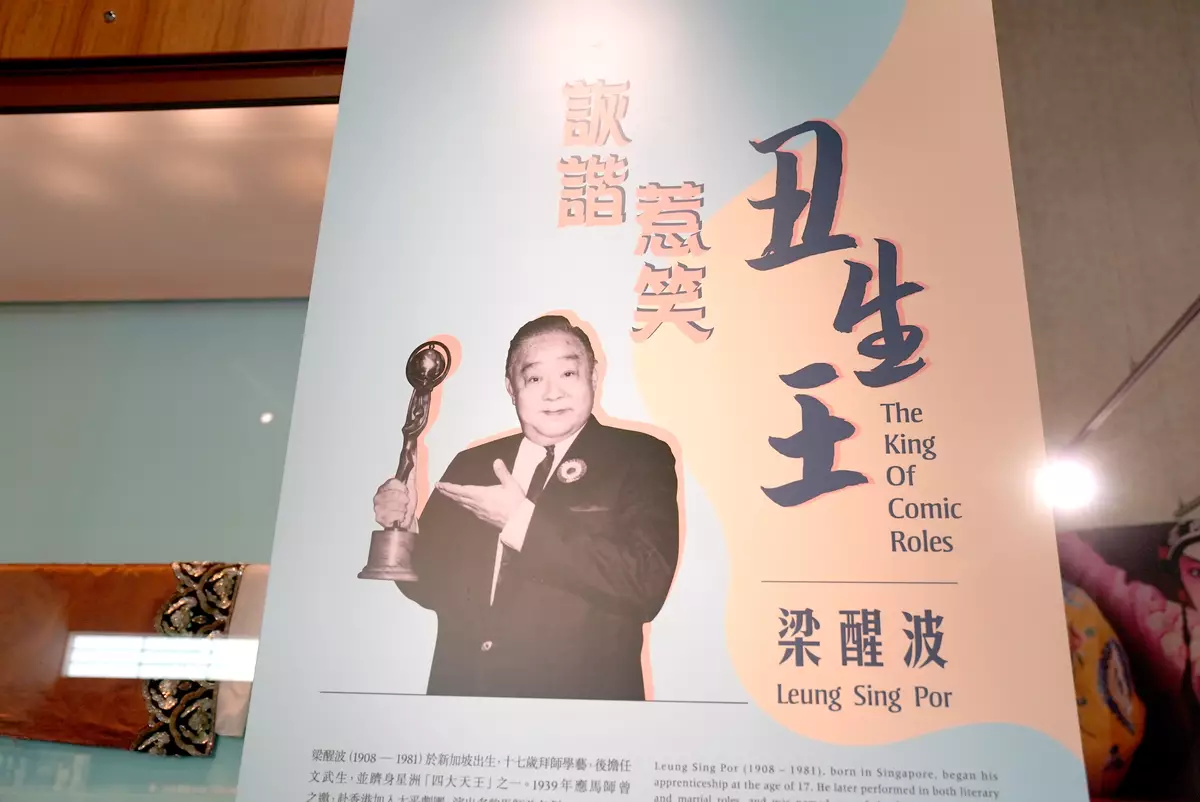
The exhibition "'The King of Comic Roles' – Leung Sing Por," Photo by Bastille Post
To mark the 45th anniversary of Leung Sing Por's passing, the Hong Kong Heritage Museum presents "'The King of Comic Roles' – Leung Sing Por," an exhibition retracing the remarkable career transition of Leung, affectionately known as "Uncle Por," from the Cantonese opera stage to film and television. In the interview with Bastille Post, Mr. Cheng Chun Tak, Assistant Curator I (Performing Art) of Hong Kong Heritage Museum, and renowned Cantonese opera scholar Prof. Chan Sau Yan, expressed that the exhibition does more than lead visitors to retrace the classic moments of Leung's career; it also maps the enduring lineage of Hong Kong comedy culture.
A Legacy Unfolded: 70 Exhibits Tell the Story of King of Comic Roles
The exhibition features around 70 selected exhibits, including costumes, playbills, newspapers, and photographs, showcasing Leung Sing Por's achievements across stage, film, and television. Visitors can embark on a captivating journey tracing the charisma of the "King of Comic Roles" and experience the richness of Hong Kong's comedic heritage.
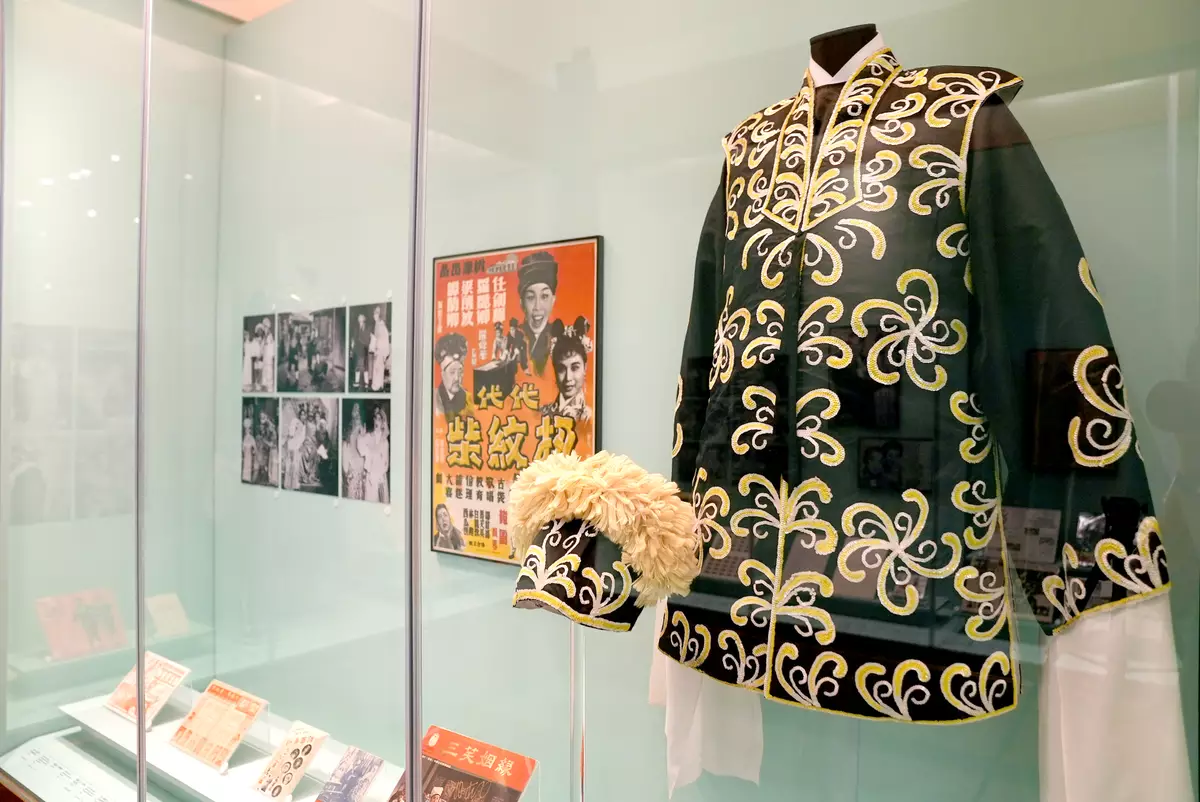
The exhibits on display, Photo by Bastille Post
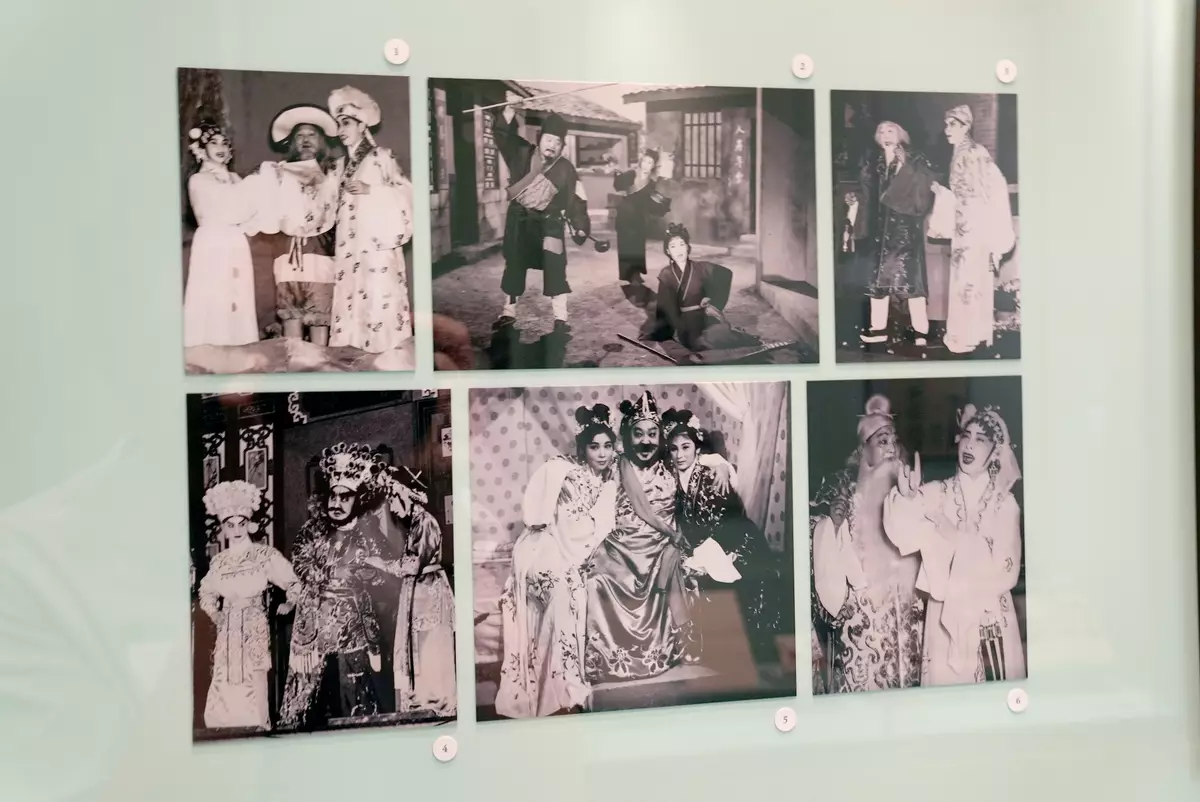
Photo by Bastille Post
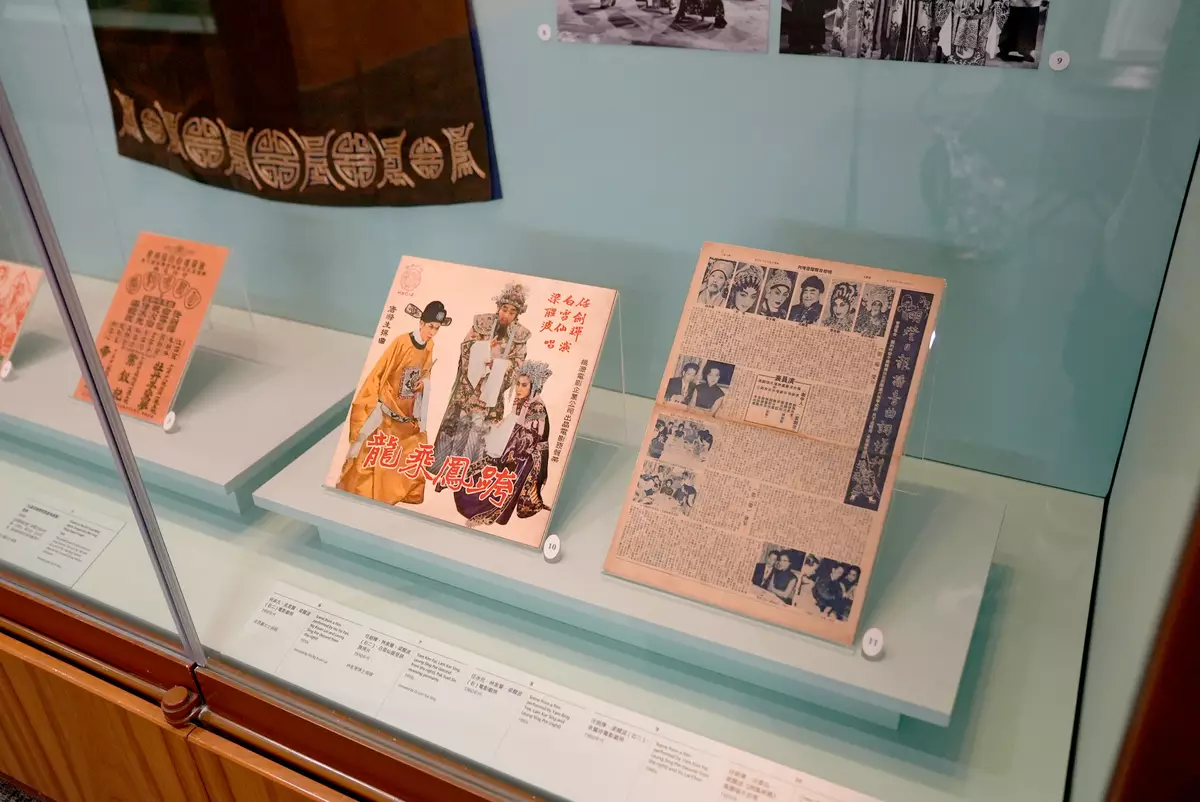
Photo by Bastille Post
Leung Sing Por began his career as a "principal male role" (man mou saang). But after World War II, as he gained weight, he had to switch to comic roles in the 1950s. The once stage heartthrob transformed into a witty comedian, delivering countless unforgettable comedic performances.
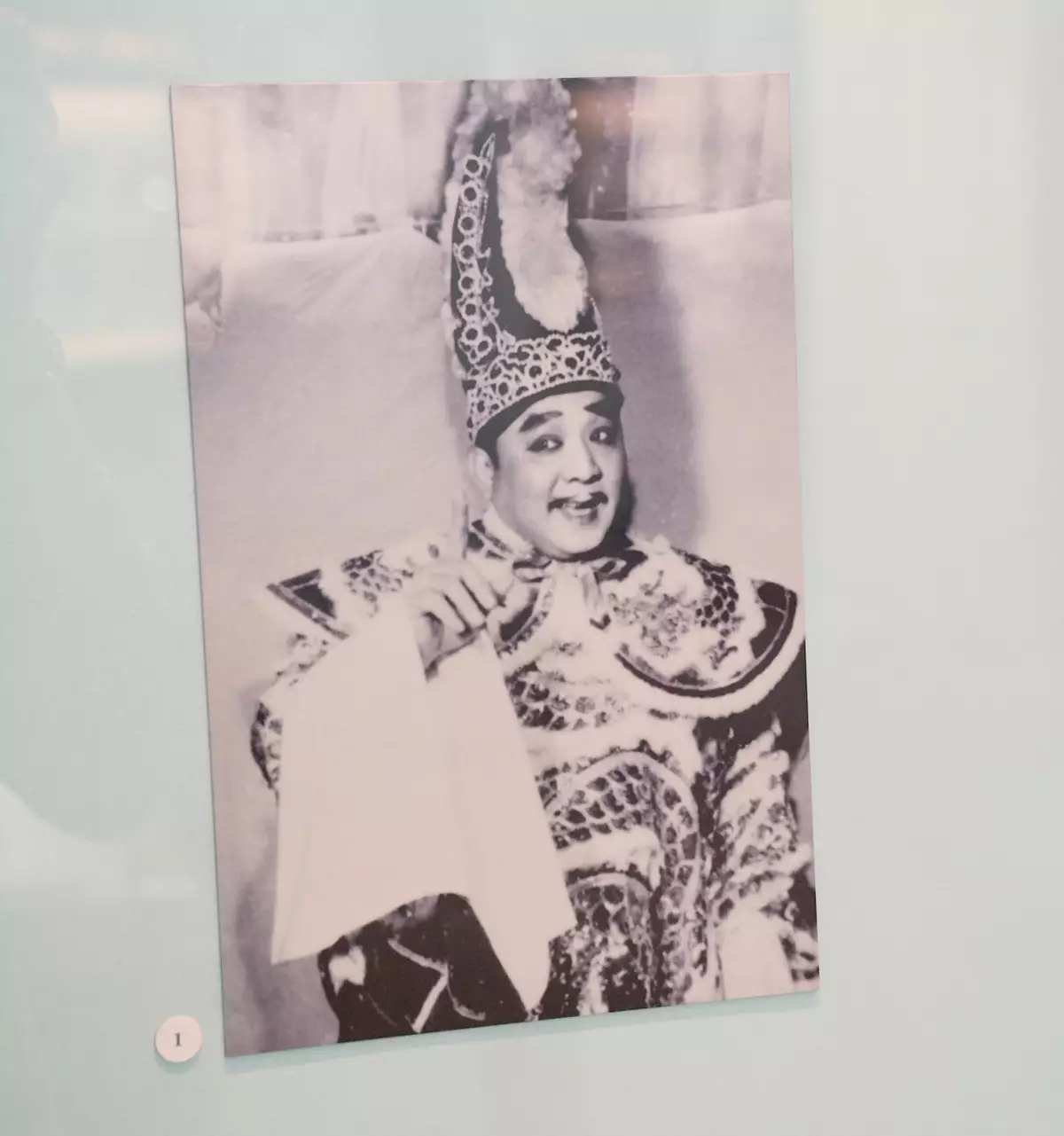
The exhibited personal photograph of Leung Sing Por, Photo by Bastille Post
With his down-to-earth and effortlessly funny style, Leung stood out in the Hong Kong entertainment world. In 1952, the newspaper Amusement News held a "Three Kings of Cantonese Opera" contest, crowning a "King of Principal Male Roles," a "Queen of Young Female Roles," and a "King of Comic Roles." Leung won the "King of Comic Roles" title by a landslide, a clear testament to his place in the hearts of Hong Kong audiences.
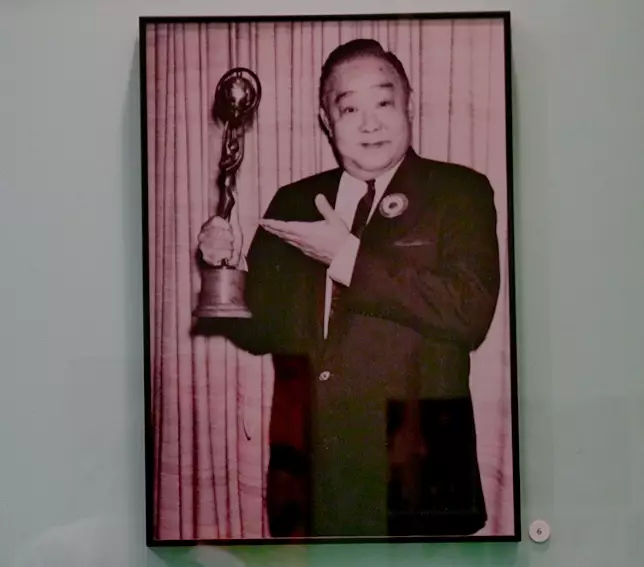
Leung won the "King of Comic Roles" title by a landslide, a clear testament to his place in the hearts of Hong Kong audiences. Photo by Bastille Post
Leung Sing Por's Treasured Costumes: A First Public Debut
Through the thematic exhibition, the Hong Kong Heritage Museum has pieced together scattered artifacts from Leung's artistic journey, commemorating his legendary status in Hong Kong's comedy performance. In the interview, Mr. Cheng Chun Tak, Assistant Curator I (Performing Art) of Hong Kong Heritage Museum, shared the stories behind several highlight pieces. The most precious among them are five sets of Leung's costumes, which are on public display for the first time.
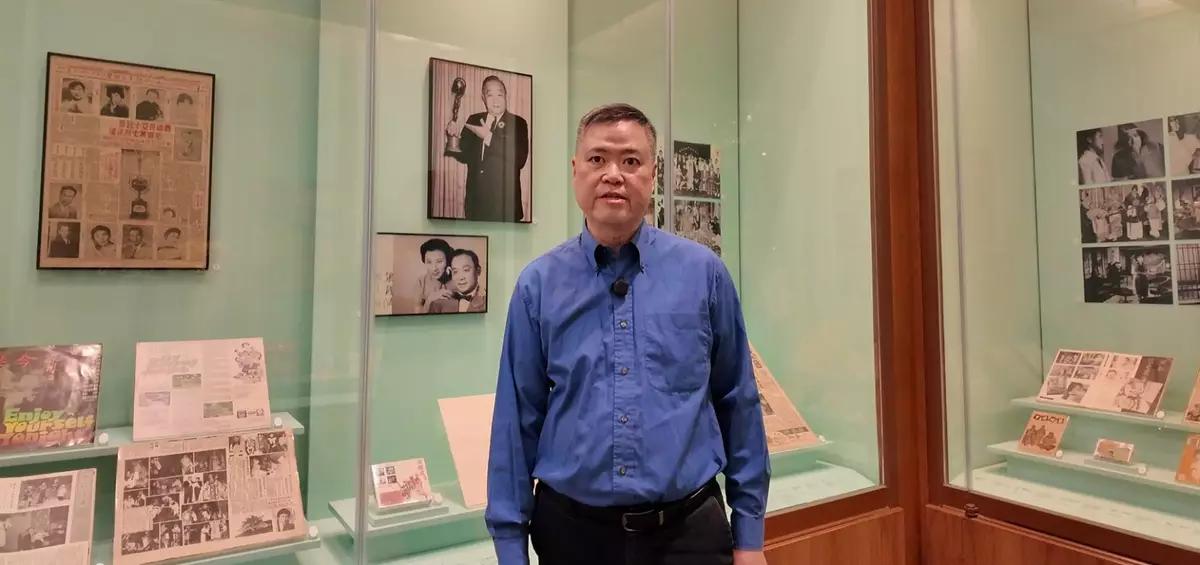
Mr. Cheng Chun Tak, Assistant Curator I (Performing Art) of Hong Kong Heritage Museum, Photo by Bastille Post
Mr. Cheng said, "Because Leung Sing Por's costumes are rarely exhibited in Hong Kong, they are exceptionally valuable." Among the five costumes, there is a brown man's python ceremonial robe with gold and silver sequins worn by Leung Sing Por in the 1950s, and also the black grand amour embroidered with gold threads worn by Leung Sing Por during his last public performance in 1980, capturing the last brilliant light of his stage years.
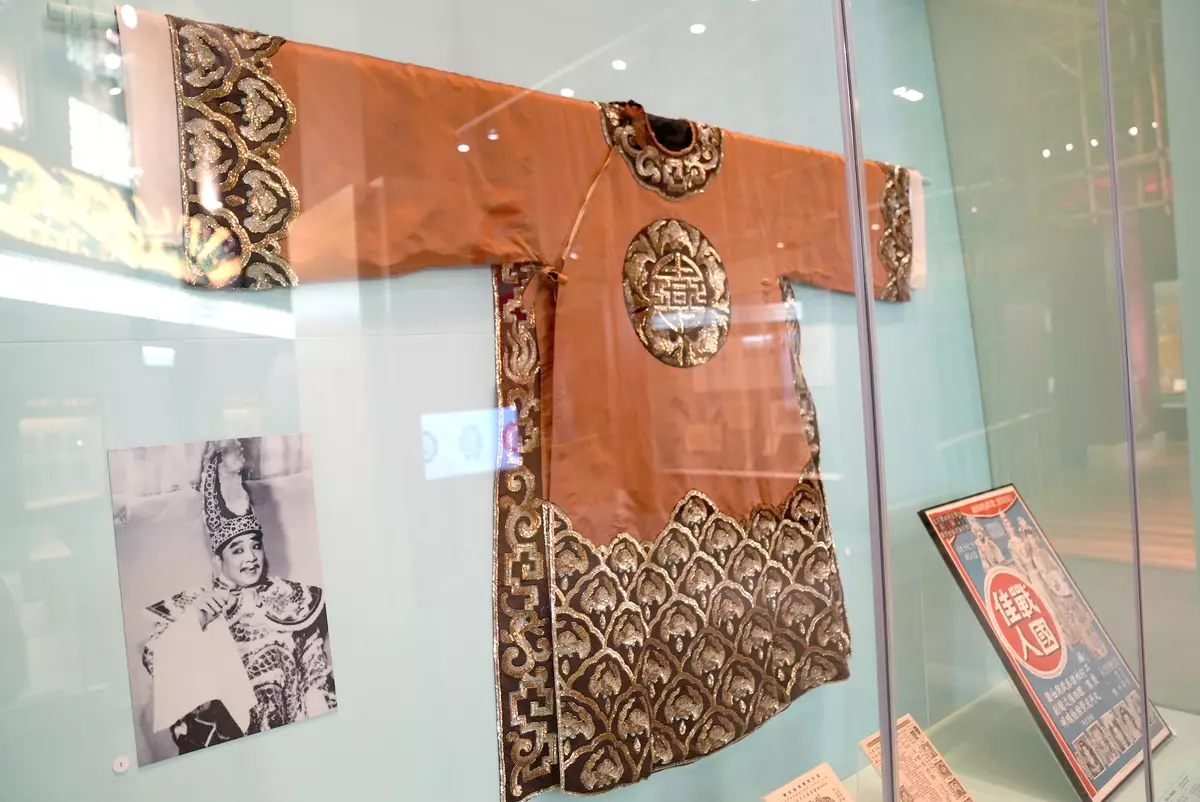
The brown man's python ceremonial robe with gold and silver sequins worn by Leung Sing Por in the 1950s, Photo by Bastille Post
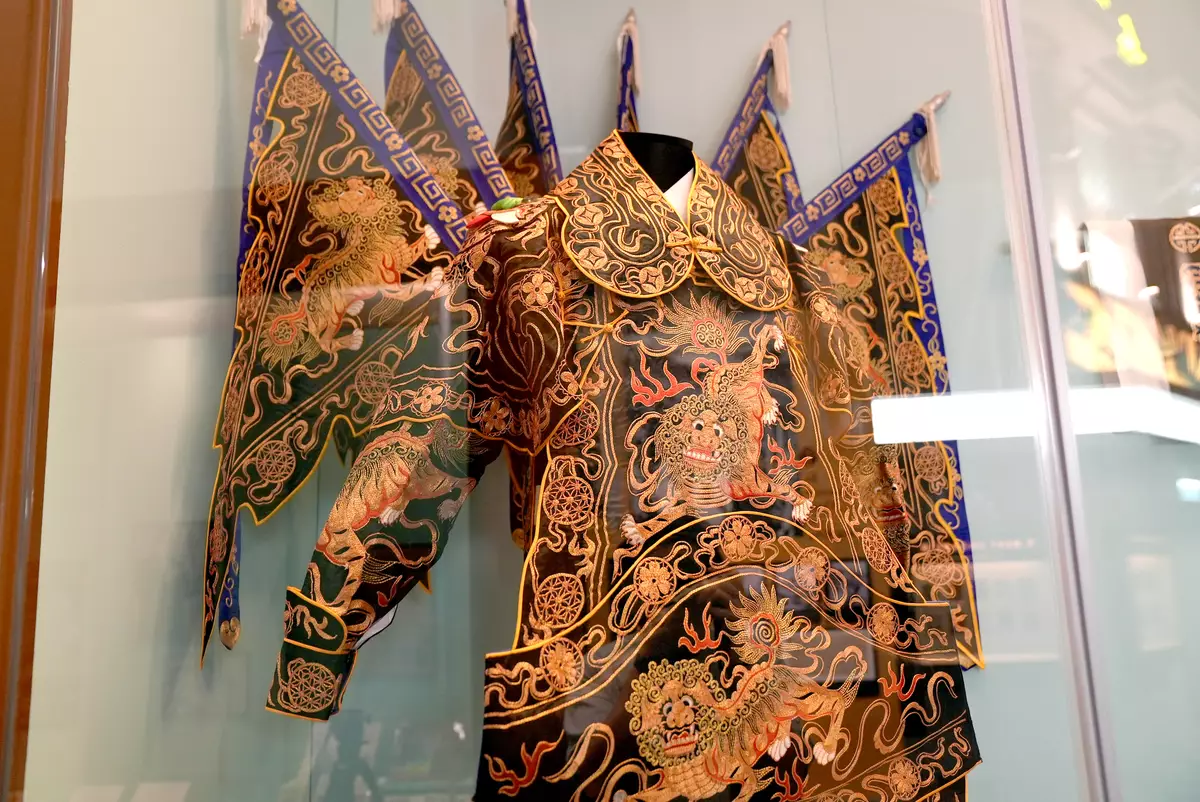
The black grand amour embroidered with gold threads worn by Leung Sing Por during his last public performance in 1980, Photo by Bastille Post
In addition, the exhibition presents collections documenting Leung Sing Por's film and television career. A poster for the 1959 Cantonese opera film The Lion's Roar evokes audiences' memories of Leung's dual talents in singing and acting. In this film, Leung not only played the leading role, but also performed Cantonese opera songs, offering viewers a multi-sensory experience that delights both sight and sound.
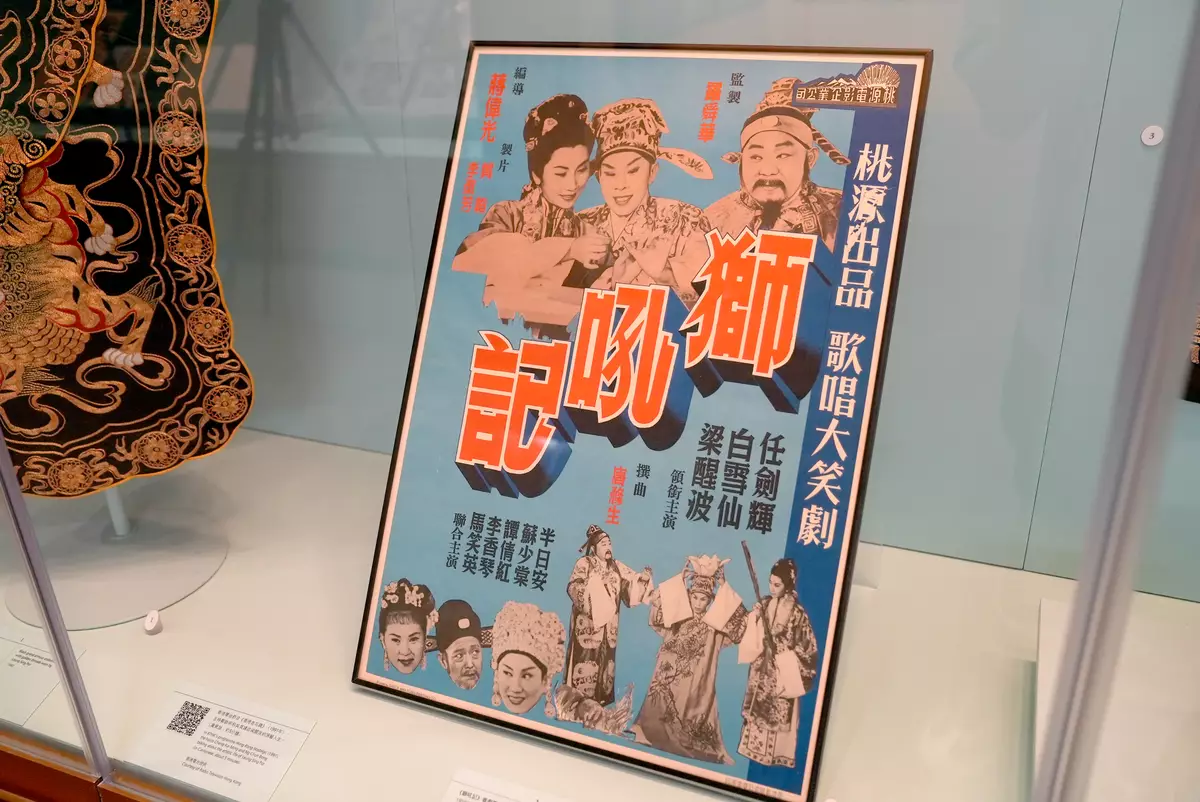
The poster for Cantonese opera film "The Lion’s Roar," Photo by Bastille Post
As for Leung's television career, the cover of a vinyl record from the 1960s TV programme Enjoy Yourself Tonight leads visitors to relive the lively atmosphere of this once-popular Hong Kong show. With his witty performance style, Leung created countless belly-laugh moments in the programme, becoming one of its key members and leaving behind unforgettable scenes of joy for a generation of viewers.
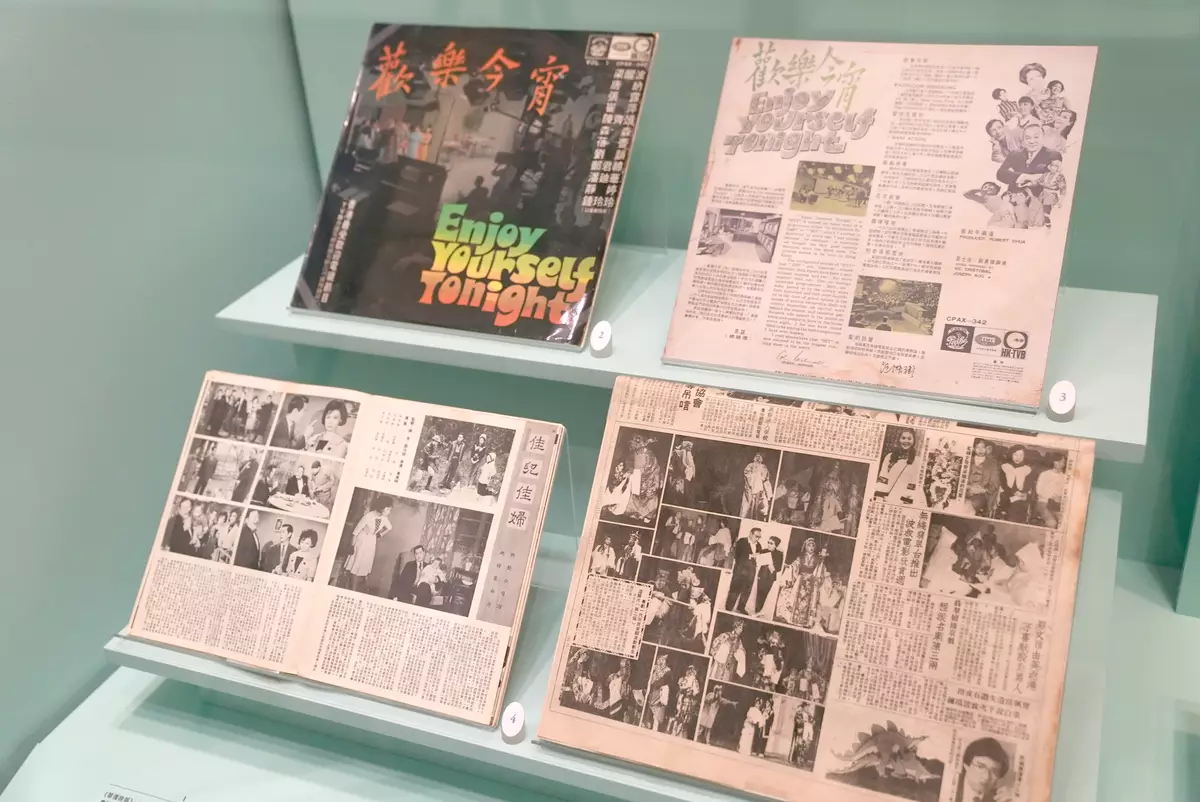
The cover of a vinyl record from the 1960s TV programme "Enjoy Yourself Tonight," Photo by Bastille Post
In addition to the collections on display, the Hong Kong Heritage Museum has organized a range of accompanying activities, including film screenings, talks, and interactive experiences. Throughout the exhibition period, the museum theatre will host screenings of classic films starring Leung Sing Por — Siu Po-po Pokes Fun at the King of Blunders (1960) and The Lion's Roar (1959) — accompanied by lectures and guided tours. Furthermore, visitors may scan QR codes on site to access audio recordings of radio hosts reflecting on Leung's artistic life and career.
Mr. Cheng expressed his hope that the exhibition will serve not merely as a retrospective of Leung's performing career, but as a vibrant and engaging performing arts education initiative. He wished for the public to "experience Leung's profound Cantonese opera skills and sense of humor, and to appreciate how he infused his classic roles with the joys and sorrows of life." By revisiting the legacy of the "King of Comic Roles," the exhibition aims to deepen public appreciation of Cantonese opera's comic role traditions and to inspire interest and exploration of Hong Kong's Cantonese opera heritage.
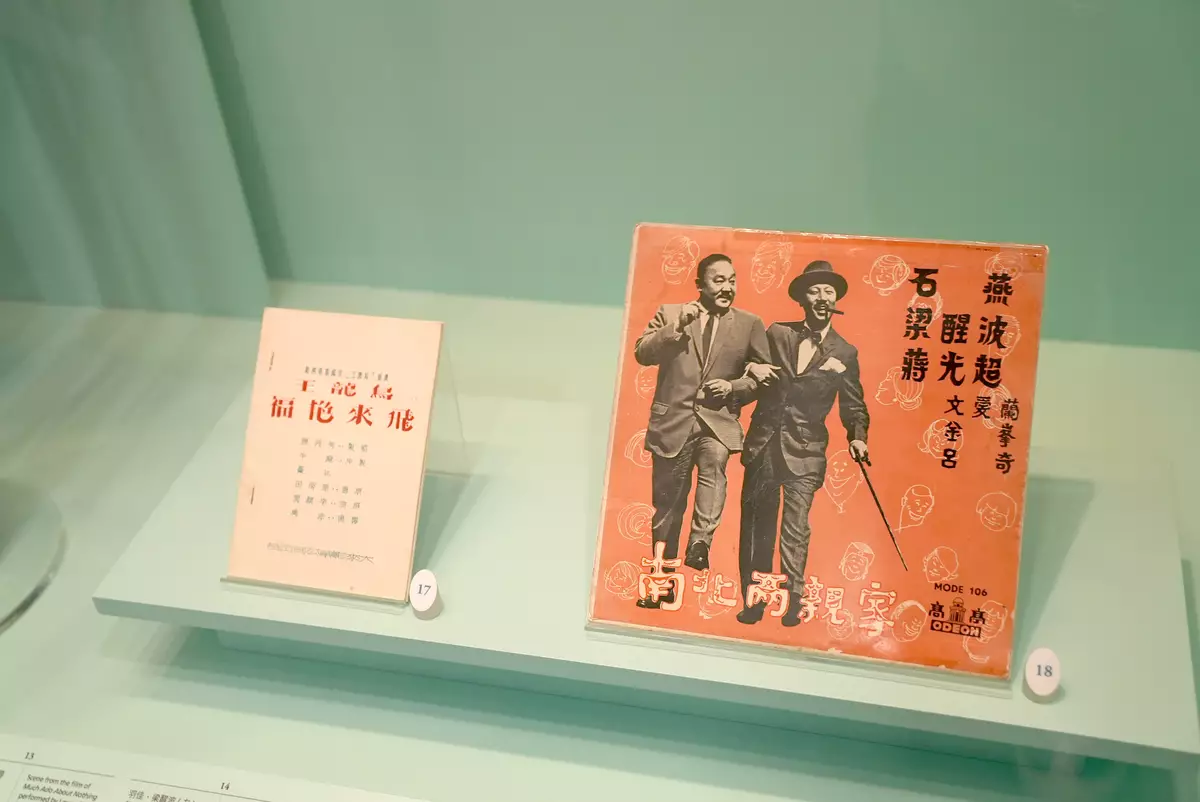
The exhibits on display, Photo by Bastille Post
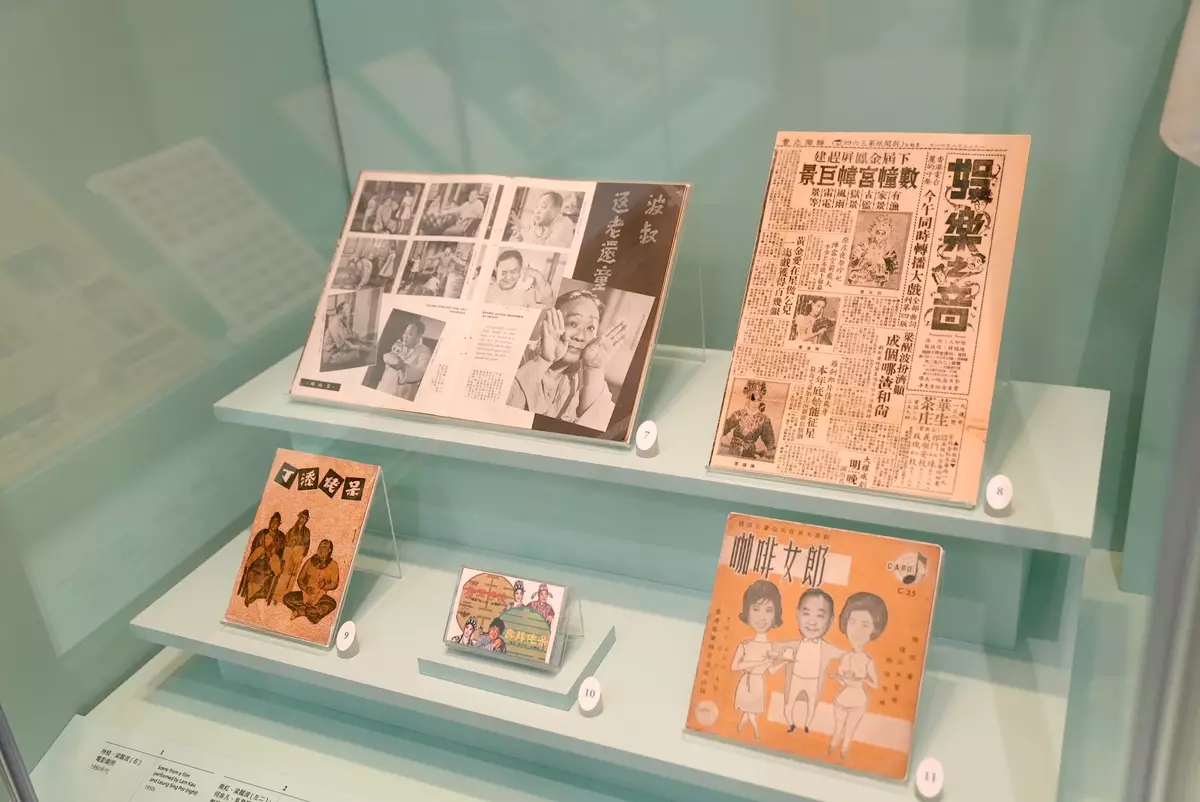
Photo by Bastille Post
Off-the-Cuff Mastery, Onstage Legacy: How Leung Inspires the New Comedy Crop
The renowned Cantonese opera scholar, Prof. Chan Sau Yan, shared his excitement over a meticulously curated thematic exhibition in Hong Kong, one that lets the public experience Leung Sing Por's comedic charm firsthand, rather than simply "looking at the history of Cantonese opera."
Reflecting on Leung Sing Por's comedic career, Prof. Chan believed that two key factors underpinned his extraordinary achievements: the historical context of his time and his masterful command of "baau tou" (improvisation).
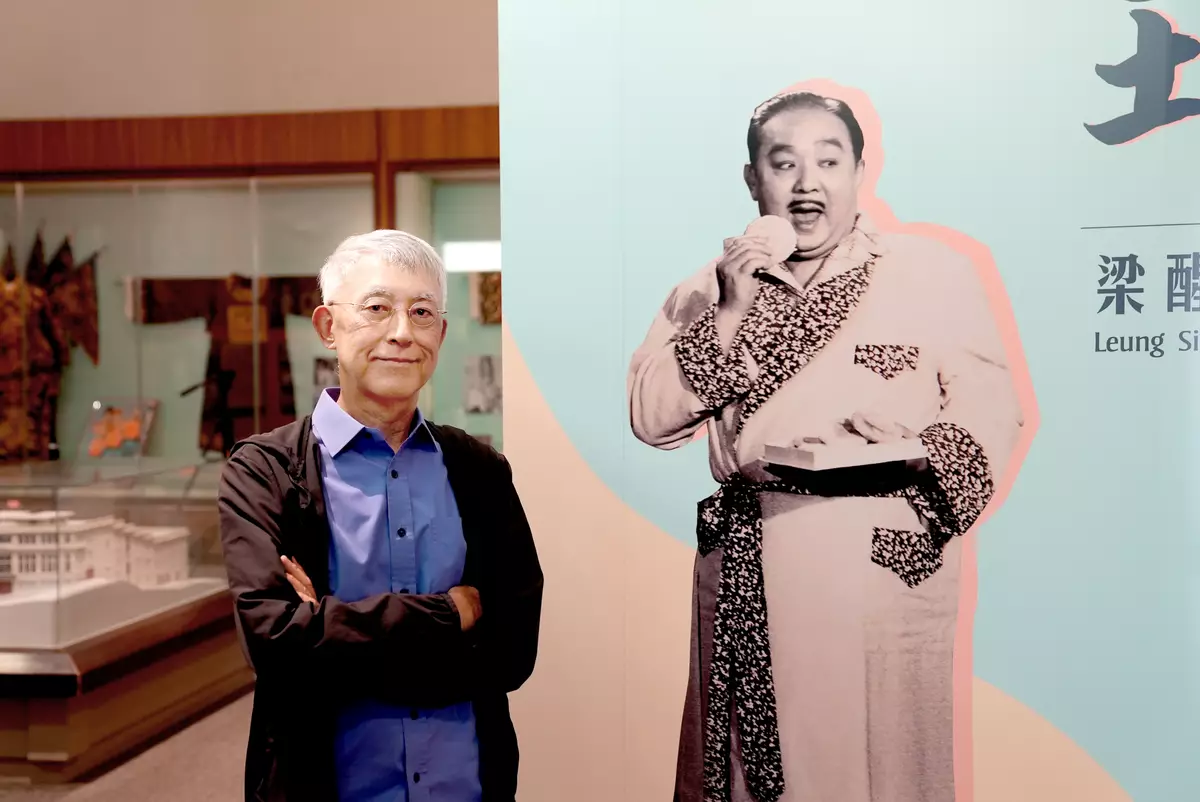
Renowned Cantonese opera scholar, Prof. Chan Sau Yan, Photo by Bastille Post
As for the historical context, Prof. Chan pointed out that the golden age of Cantonese opera unfolded in the years following World War II. At the time, the economy was struggling, and the social atmosphere was bleak. Cantonese opera, with its accessible and widely appealing nature, became an affordable form of entertainment for the public as an escape from the hardships of daily life. Leung Sing Por, who entered the Cantonese opera scene during this period, quickly drew considerable attention.
However, Prof. Chan stressed that the favorable timing alone was not enough to forge a legendary comedian. Leung's success was also inseparable from his relentless drive to refine his craft. According to Prof. Chan, Leung was a true master of improvisation, designing his own off-the-cuff scenes based on a deep understanding of his characters. Moreover, he brought a fresh interpretation to every performance, offering audiences a sense of novelty that never seemed to wear thin.
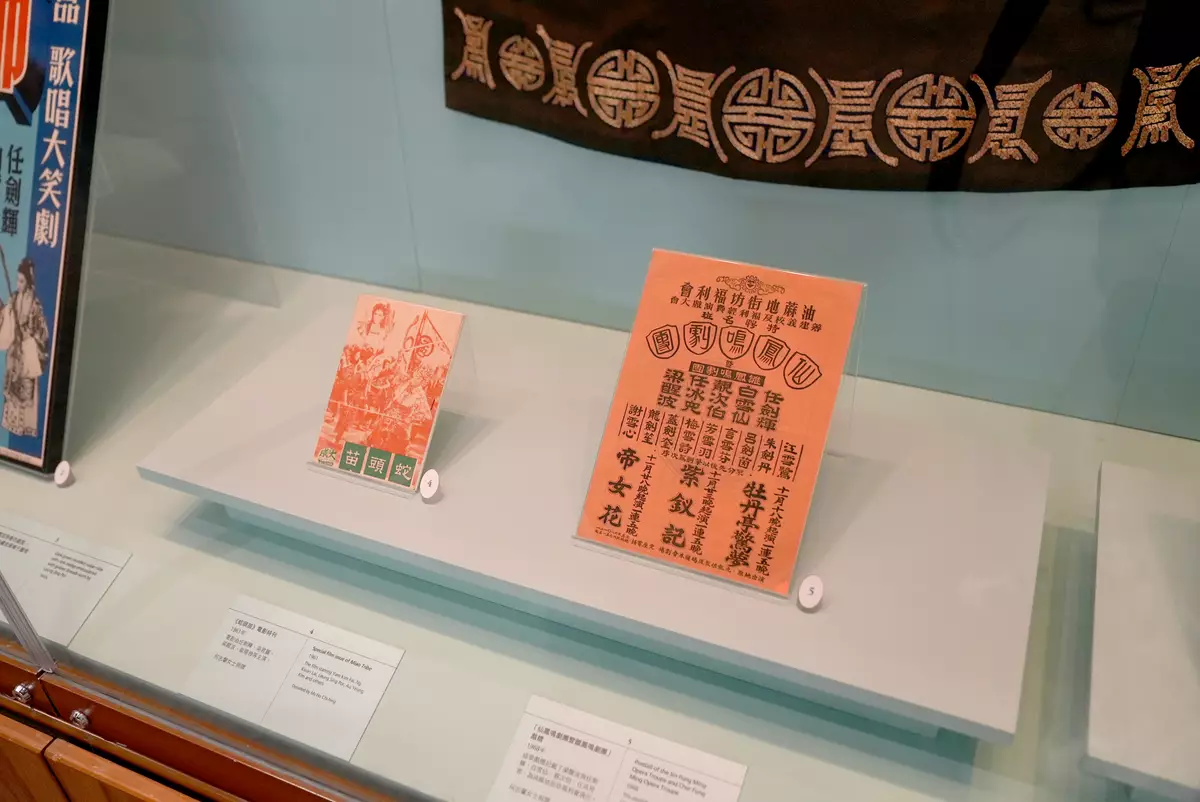
The playbill for the classic Cantonese opera "The Legend of Purple Hairpin," Photo by Bastille Post
Prof. Chan cited the classic Cantonese opera The Legend of Purple Hairpin as an example. In the role of Chui Wan Ming, Leung sought to enrich the character's dimensionality by improvising a scene in which Chui, unwilling to betray a friend by arranging a marriage on his behalf, is beaten to death by Marshal Lou. In each stage performance, Leung would improvise subtle gestures or dying laments, drawing laughter from the audience even amid the tragic atmosphere. Prof. Chan recalled that Leung would sometimes rise abruptly from the ground, mustering one last burst of energy before collapsing; sometimes he would deliver a comical, struggling death; and sometimes he would improvise entirely new final words from performance to performance, giving each rendition a unique comedic flavor– in his words, "ten performances, ten different comic experiences."
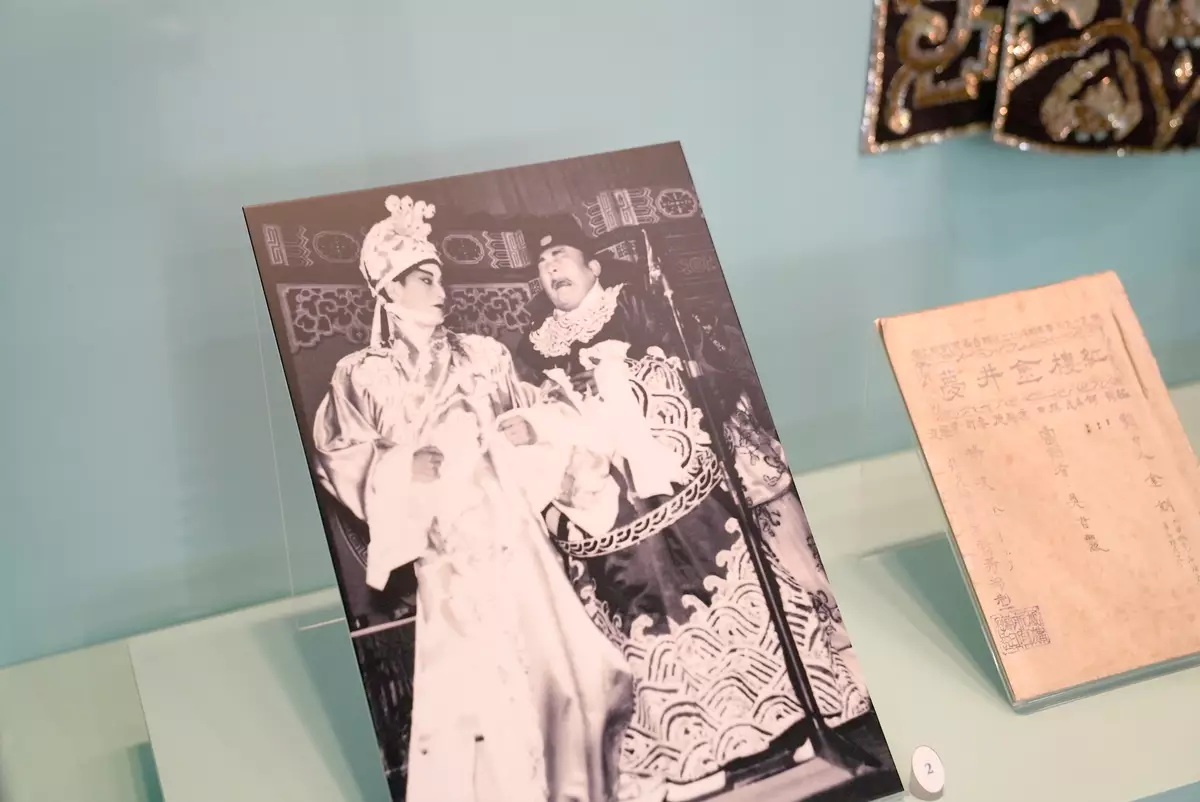
Humorous stage stills of Leung Sing Por, Photo by Bastille Post
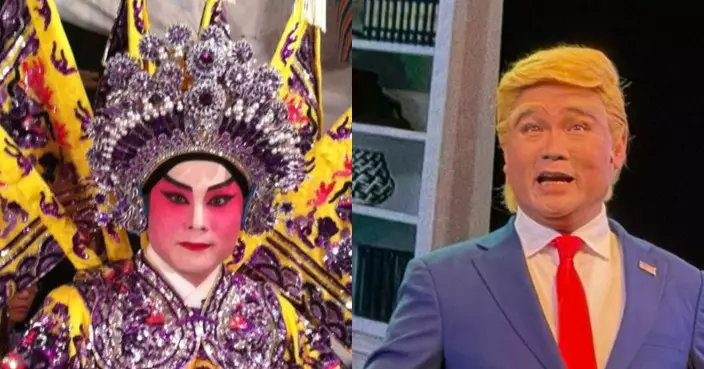
In Prof. Chan's view, Leung's improvisational style has served as a valuable reference for character portrayals among later generations of Hong Kong comedians. He noted that the "mo lei tau" (nonsensical humour) comic style of contemporary star Stephen Chow can be regarded as a direct descendant of Leung's improvisation technique. On set, Chow, much like Leung, would improvise lines or actions based on his character's personality in scenes he felt could use an extra comedic touch, resulting in unexpectedly hilarious moments. Whether in Flirting Scholar or Kung Fu Hustle, Chow's signature films clearly show the influence of Leung's technique.
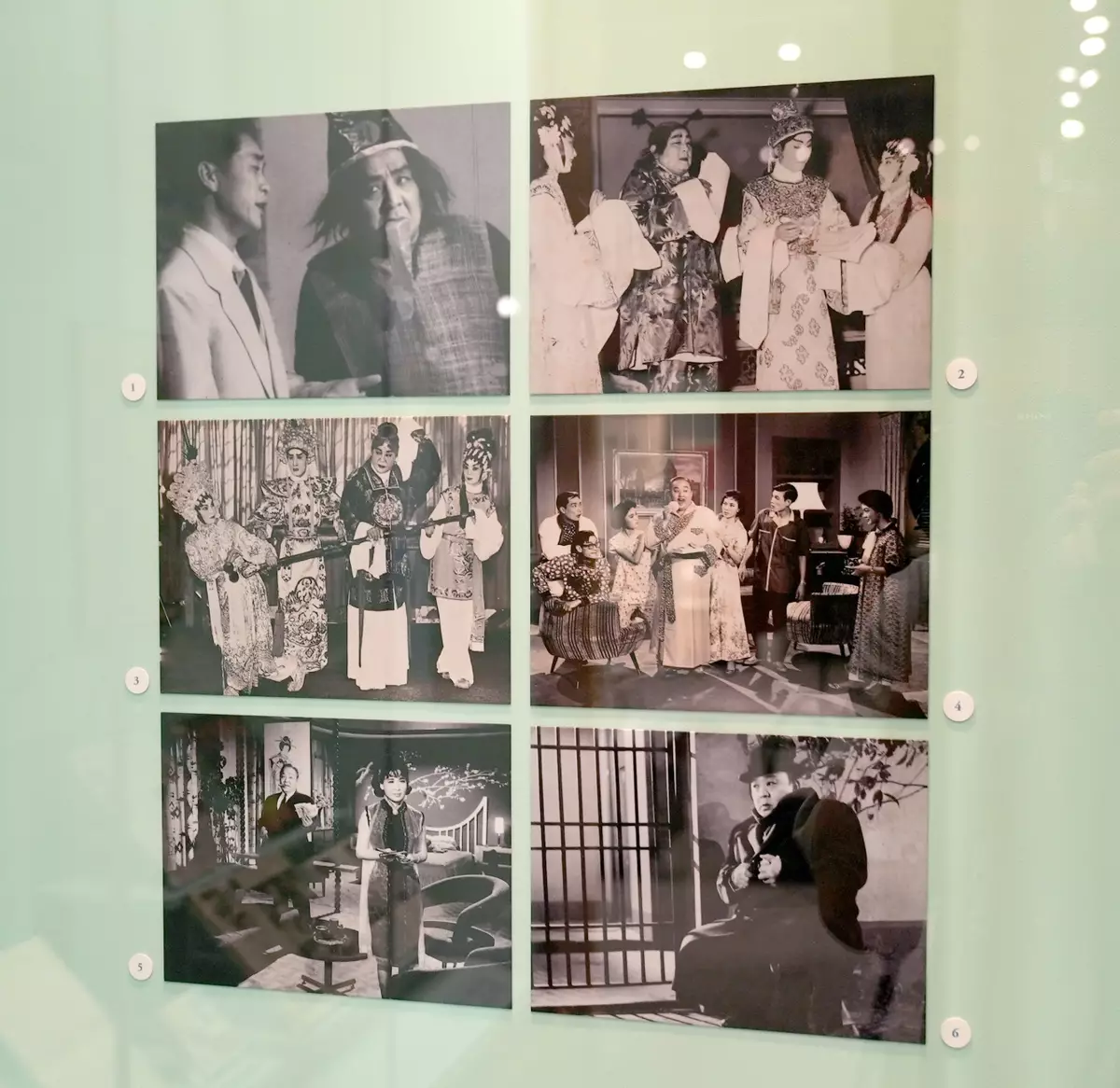
The stage stills of Leung Sing Por on display, Photo by Bastille Post
Although Cantonese opera may no longer be the public's first choice of entertainment, Prof. Chan believed that the essence of Leung's craft can still be passed down as a guiding light for future generations of Hong Kong comedians. He emphasized that Leung's improvisations were never haphazard; they were always grounded in a deep understanding of the script and characters. Prof. Chan hoped that this respect for the source material and this rigorous approach to performance would be carried forward. Only by rooting oneself in the original work and interpreting the plot in depth, he said, can an actor fully unlock their potential to create classic characters that resonate with audiences.
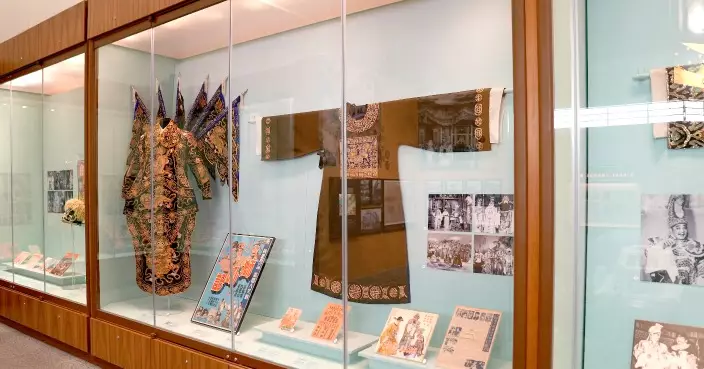
The exhibition "'The King of Comic Roles' – Leung Sing Por", Photo by Bastille Post
“The King of Comic Roles” – Leung Sing Por
Gallery: 1/F Cantonese Opera Heritage Hall, Hong Kong Heritage Museum
Exhibition Period: Until 24 April 2028
Free Admission