As life expectancy continues to rise in China, the local government and communities are ramping up efforts to ensure that elderly citizens, especially in remote rural areas, can enjoy better lives in their later years.
In the mountains of Lishui City of east China's Zhejiang Province, innovative solutions are offering answers.
Along a steep village trail, Ren Linmei, an elderly caregiver, begins her day tending to the needs of around 20 elderly residents. In Gaoyuan Village, a remote mountain village, most residents are over 60 and living alone, with Ren serving as their vital lifeline.
"Your systolic blood pressure is a bit high. I told her not to go up the mountain to chop wood, and not to go to the vegetable garden either when she's not feeling well," said Ren.
But what a caregiver does extends far beyond medical checks.
"My father's in his nineties. She checks on him several times a month, even comes at night at our call when he's unwell or gets a fever. For those children working away, having her looking after their parents in the village brings peace of mind," said Ren Zhouce, a villager.
"For the elderly, it is not really about what you feed them that matters, it's care. Staying with them, helping them open up about what's on their mind, or even just holding their hands and warming them up, that makes them feel so much better. It's just like family," said Ren Linmei.
In Lishui, about 40 percent of the elderly live scattered across mountain landscapes, where long distances, high costs, and limited access pose significant challenges for eldercare.
To address these issues, local initiatives deploy mobile service vans, provide rehabilitation care, deliver hot meals, and offer personal attention directly to seniors' doorsteps.
Beyond individual services, the government, private enterprises, and social donors are pooling resources to foster community engagement. One such effort involves community canteens where seniors gather to share meals.
"It's only four yuan for three dishes and a soup. The flavors are great. They really know how to cook for us elders," said Xu Shibiao, a senior resident.
Some residents, like Lei Zhongmei, open their homes to neighbors, turning mealtimes into warm family gatherings.
"My husband and I cook anyway, so having two neighbors and adding pairs of chopsticks just means everyone gets a fresh and hot meal," said Lei.
During the 14th Five-Year Plan period (2021-2025), life expectancy in China has risen to 79 years, five years above the global average. Nearly a quarter of the population is now aged 60 and above. Most seniors prefer to age at home, supported by a growing network of community-based care.
Over the past five years, China has established more than 86,000 community canteens serving over three million seniors daily. Additionally, more than two million households have been retrofitted with safety features such as handrails and non-slip flooring.
The quality of eldercare is also advancing. Nationwide, nursing-grade beds now account for nearly 66 percent of long-term care facilities, surpassing the targets set under the 14th Five-Year Plan.
China is also leveraging its cultural heritage and local industry strengths. In Lishui, a city known for its wood processing industry and rich intangible cultural heritage, efforts are underway to create a vibrant, elder-friendly environment, transforming aging from a period of decline into one of enjoyment and community engagement.
"The shift from 'elder care' to 'enjoying old age' marks a higher stage of people-centered development where the fruits of economic growth and social progress are ultimately shared by every individual," said Ding Xiaoqin, a professor at Shanghai University of Finance and Economics.
By weaving together support at individual, household, community, and government levels, China is building a safety net that ensures even the most vulnerable can live well, age with grace, and never be left behind. In this way, the final chapter of life is increasingly defined by dignity, happiness and a sense of belonging.
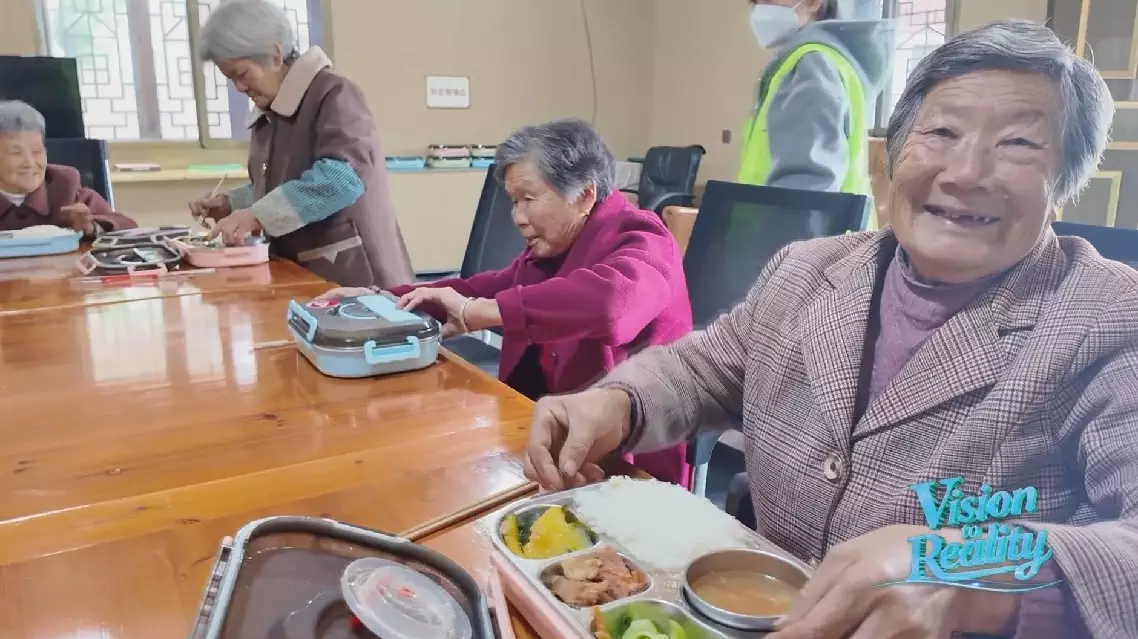
China builds care network for elderly people lost mobility