Russia has accused Ukraine of carrying out a number of high-profile attacks against prominent Russians since Moscow invaded its neighbor nearly four years ago.
While Kyiv has hinted at its involvement in some cases, Ukrainian officials have often stopped short of publicly claiming responsibility. In other cases, they have denied all involvement.
Click to Gallery
FILE - A portrait of Darya Dugina is seen as relatives hold her final farewell ceremony in Moscow, Russia, on Aug. 23, 2022. (AP Photo/Dmitry Serebryakov, File)
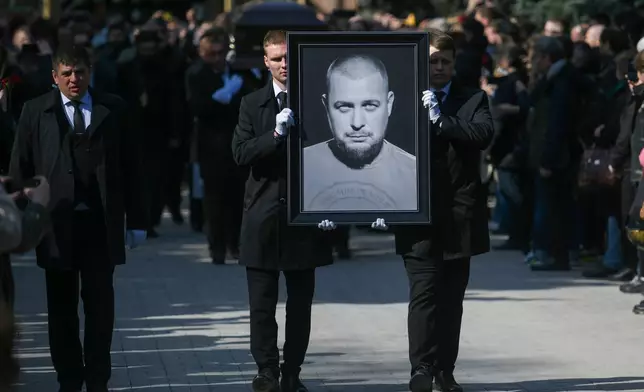
FILE - Cemetery workers carry a portrait of slain Russian military blogger Vladlen Tatarsky during a funeral at the Troyekurovskoye Cemetery in Moscow, Russia, on April 8, 2023. (Anton Velikzhanin, M24/Moscow News Agency via AP, File)
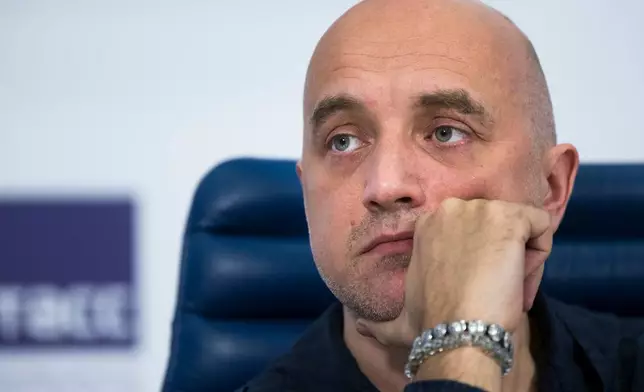
FILE - Russian writer Zakhar Prilepin attends a news conference in Moscow, Russia, on Feb. 21, 2017. (AP Photo/Alexander Zemlianichenko, File)
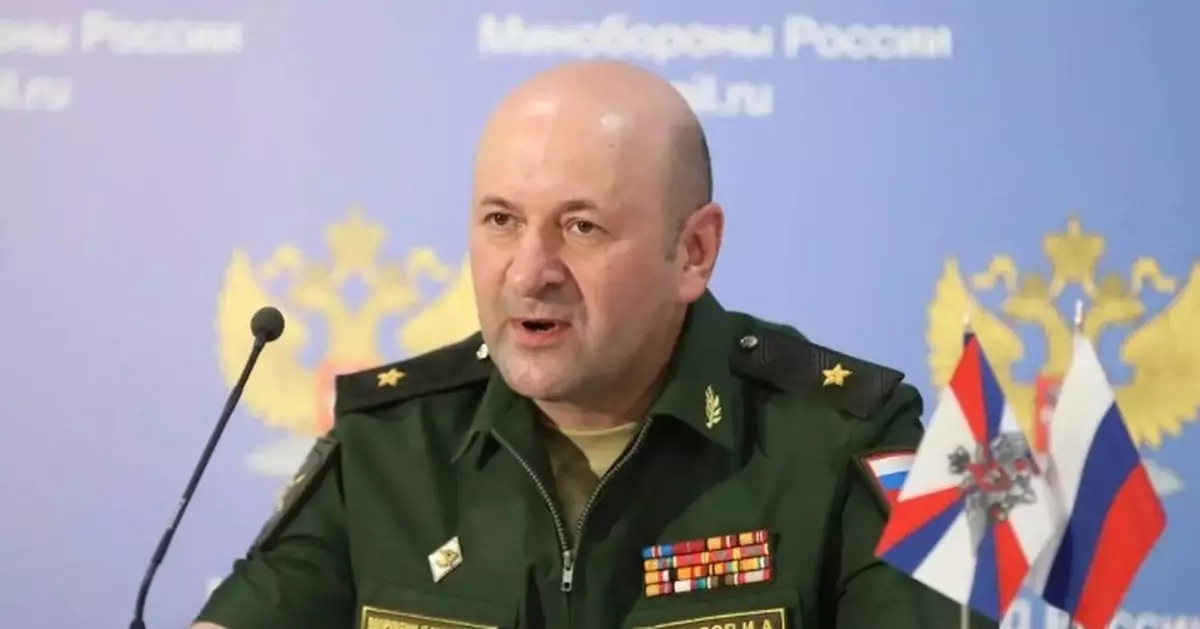
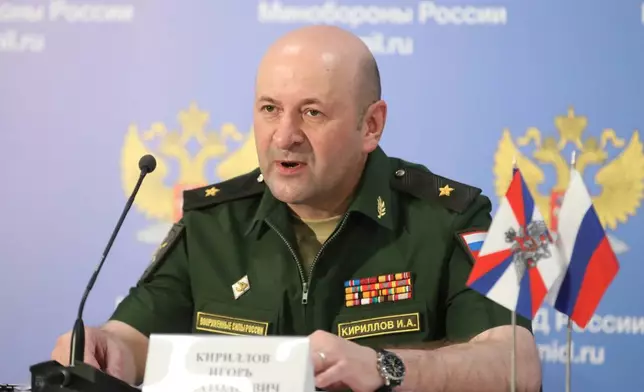
FILE - Maj. Gen. Igor Kirillov, the chief of the Russian military's radiation, chemical and biological protection unit, attends a briefing in Kubinka Patriot park, outside Moscow, Russia, on June 22, 2018. (AP Photo, File)
This undated image provided by Russian Defense Ministry Press Service on Monday, Dec. 22, 2025, shows Lt. Gen. Fanil Sarvarov, head of the Operational Training Directorate of the Russian Armed Forces General Staff, who was killed Monday morning after an explosive device detonated under his car in southern Moscow. (Russian Defense Ministry Press Service via AP)
On Monday, a Russian general was killed by a car bomb in Moscow, and investigators say they are looking into whether Ukraine was behind the attack. Ukraine has not yet commented on the death of Lt. Gen. Fanil Sarvarov.
Other attacks that Russia has blamed on Ukraine include:
Kirillov, head of the military’s nuclear, biological and chemical protection forces, was killed alongside his assistant, Ilya Polikarpov, when a bomb planted on a scooter exploded outside an apartment building in Moscow in December 2024.
Kirillov had been charged in absentia a day earlier by Ukraine’s Security Service, the SBU, with ”ordering the use of banned chemical weapons against Ukraine’s Defense Forces.” The SBU later claimed responsibility for the attack. An Uzbek man was quickly arrested and charged with killing Kirillov on the security service’s behalf.
Moskalik, a deputy head of the main operational department of the General Staff, was killed in April 2025. A bomb had been placed underneath his car, which was parked near his apartment building just outside Moscow.
Several days after the attack, Ukrainian President Volodymyr Zelenskyy said in a statement that the country’s Foreign Intelligence Service had informed him of the “elimination of senior command personnel of Russia’s armed forces,” but gave no further details.
A Russian man who previously lived in Ukraine pleaded guilty to carrying out the attack and said that he had been paid by Ukraine's security services.
Rzhitsky, a former submarine commander, was gunned down in July 2023 while jogging in Krasnodar, Russia.
Ukrainian media reported that Rzhitsky was one of six submarine commanders able to launch the long-range missiles that hit Vinnytsia, Ukraine, a year earlier, killing 23 people and wounding over 100.
When he died, Rzhitsky was deputy head of a military mobilization office in Krasnodar.
Kyrylo Budanov, head of the Ukrainian Defense Ministry’s main intelligence directorate, denied Kyiv’s involvement in the death. However, the agency also released details about the killing, including the time of the attack and the number of shots fired. A dual Russian-Ukrainian citizen was convicted in the killing in October 2024.
Prilepin, a nationalist Russian writer, narrowly avoided death in a car bombing in Russia’s Nizhny Novgorod region in May 2023. His driver was killed, while Prilepin was hospitalized with broken bones, bruised lungs and other injuries.
Prilepin, known for his support of the war, was sanctioned by the European Union.
A Ukrainian was found guilty of the attack in a Russian court and sentenced to life imprisonment. Russia’s Investigative Committee accused him of working on orders from Kyiv.
In an interview with Ukrainian journalists in March 2024, SBU chief Lt. Gen. Vasyl Maliuk declined to take responsibility for the attack, but said he could provide some details, such as Prilepin's injuries.
Tatarsky, a military blogger, was killed in April 2023 when a bomb tore through a cafe in central St Petersburg where he had been speaking.
Tatarsky supported the war in Ukraine and filed regular reports from the front for his Telegram followers.
Darya Trepova was convicted of the bombing and sentenced to 27 years in prison after she was seen on camera presenting a small statue to Tatarsky that exploded shortly afterward. Trepova testified she didn’t know the gift contained a bomb.
In the March 2024 interview, SBU chief Maliuk also declined to take responsibility for Tatarsky's death, but describing the blogger as a mouthpiece for Russia who had "paid a karmic price before the Ukrainian people.” He also provided details on the bomb that killed Tatarsky.
Kyva, a Ukrainian lawmaker who fled to Russia shortly after the full-scale invasion, was found dead near Moscow in December 2023 with a gunshot wound to the head.
A controversial political figure in Ukraine before the war, Kyva often appeared on pro-Kremlin TV talk shows. A month before his death, a Ukrainian court found him guilty in absentia of treason and sentenced him to 14 years in prison.
Russia’s state Investigative Committee accused an Armenian-born businessman of passing on details about Kyva’s movements to the SBU, state news agency Tass said. However, no charges have been brought directly related to the killing.
Andriy Yusov, a spokesman for Ukraine’s military intelligence, said after Kyva’s death that “the same fate will befall other traitors of Ukraine,” but did not say who was behind the killing.
Dugina was killed in August 2022 when a remote-controlled bomb planted in her SUV blew up as she drove on Moscow’s outskirts.
Her father, Alexander Dugin, was widely believed to be the intended target. The philosopher, writer and political theorist is an ardent supporter of the war.
Ukraine denied responsibility for the attack, with Zelenskyy saying Dugina was “not our responsibility" and Kyiv was "not interested in her.”
Russia’s Federal Security Agency, the FSB, publicly identified two Ukrainian citizens as suspects, but said they had escaped abroad.
Follow AP’s coverage of the war in Ukraine at https://apnews.com/hub/russia-ukraine

FILE - A portrait of Darya Dugina is seen as relatives hold her final farewell ceremony in Moscow, Russia, on Aug. 23, 2022. (AP Photo/Dmitry Serebryakov, File)
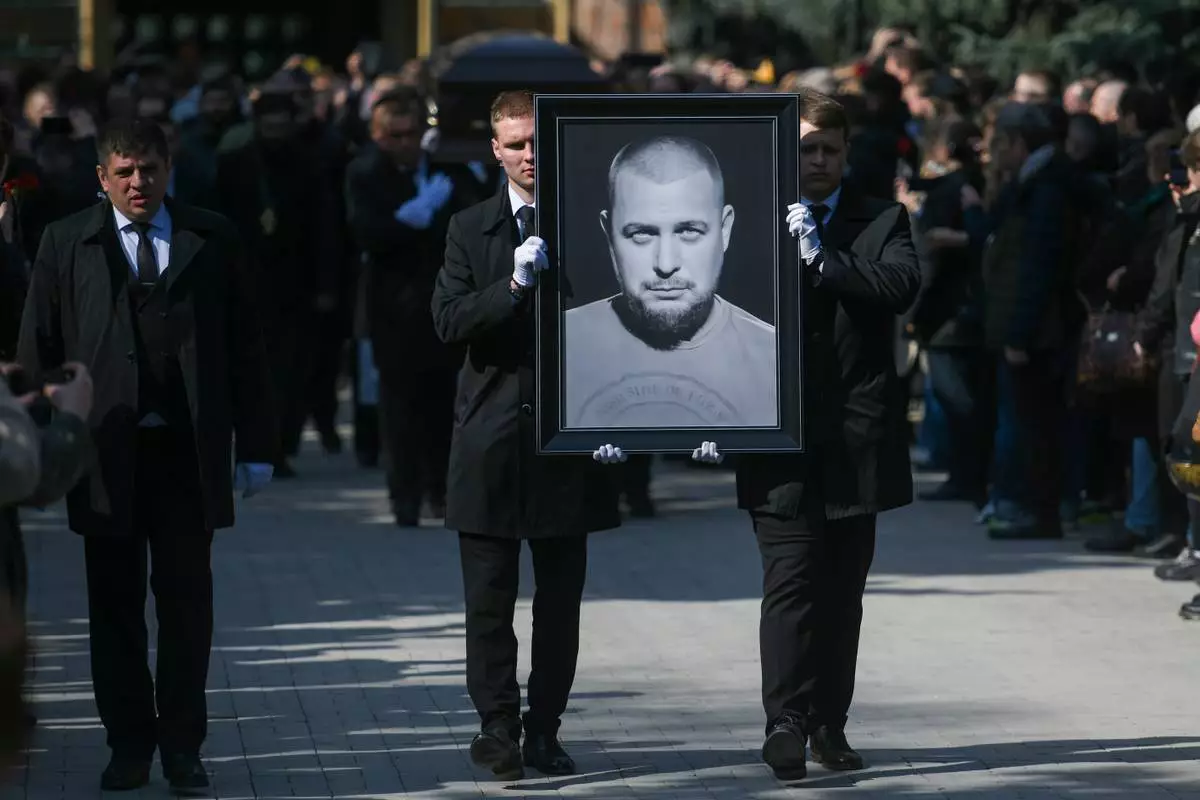
FILE - Cemetery workers carry a portrait of slain Russian military blogger Vladlen Tatarsky during a funeral at the Troyekurovskoye Cemetery in Moscow, Russia, on April 8, 2023. (Anton Velikzhanin, M24/Moscow News Agency via AP, File)

FILE - Russian writer Zakhar Prilepin attends a news conference in Moscow, Russia, on Feb. 21, 2017. (AP Photo/Alexander Zemlianichenko, File)
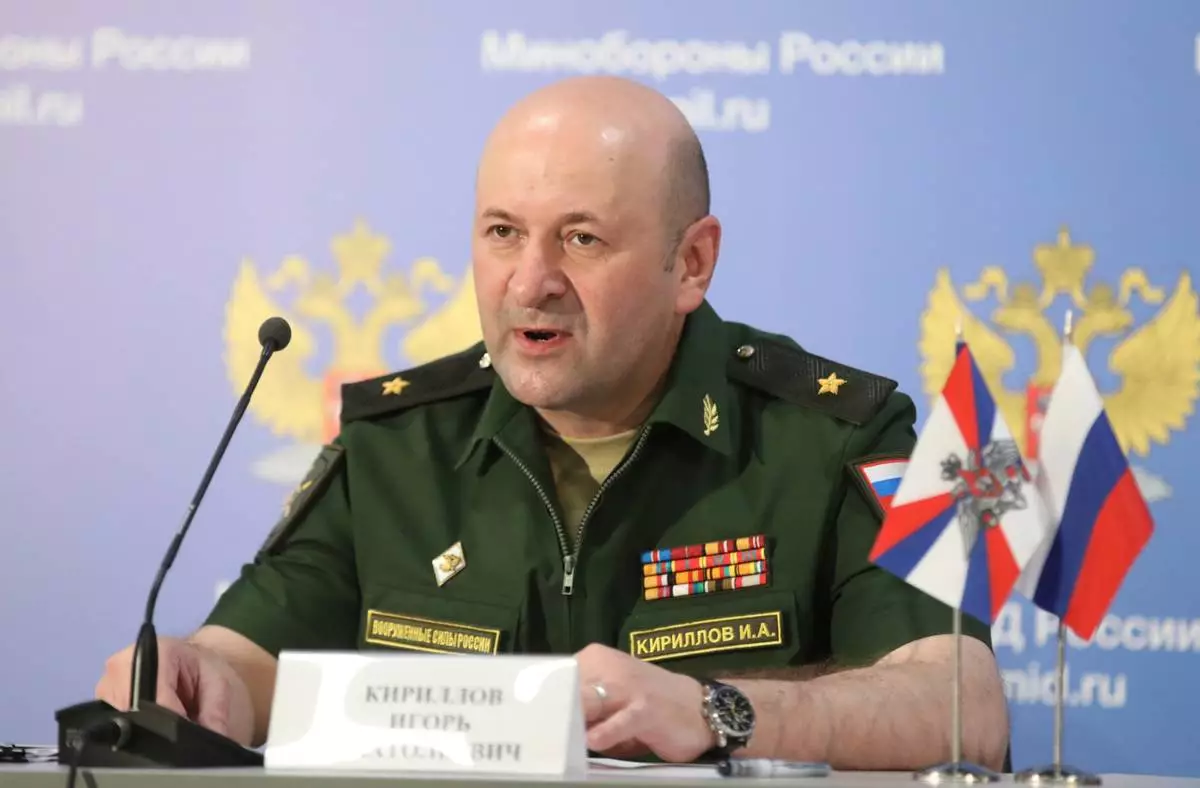
FILE - Maj. Gen. Igor Kirillov, the chief of the Russian military's radiation, chemical and biological protection unit, attends a briefing in Kubinka Patriot park, outside Moscow, Russia, on June 22, 2018. (AP Photo, File)
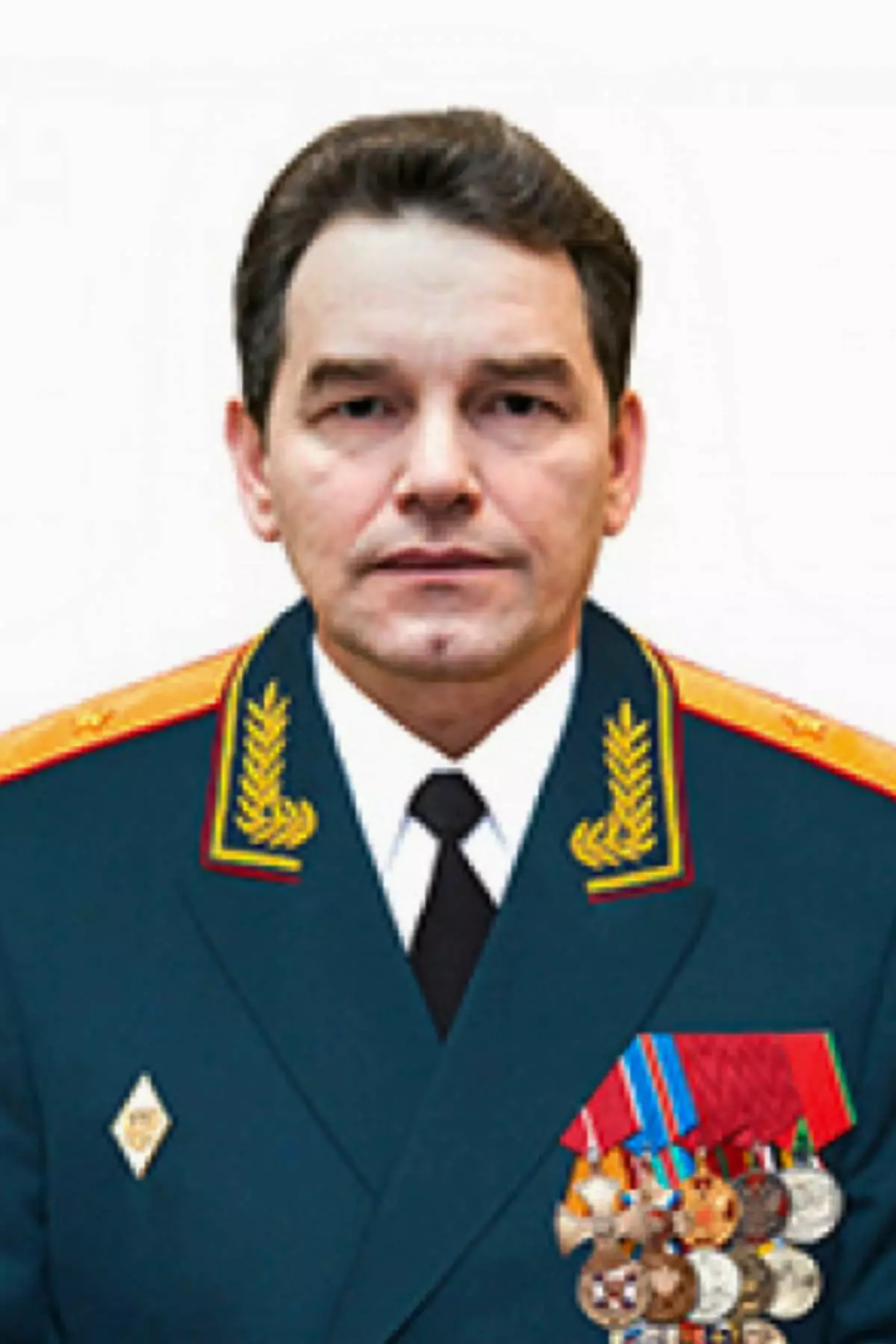
This undated image provided by Russian Defense Ministry Press Service on Monday, Dec. 22, 2025, shows Lt. Gen. Fanil Sarvarov, head of the Operational Training Directorate of the Russian Armed Forces General Staff, who was killed Monday morning after an explosive device detonated under his car in southern Moscow. (Russian Defense Ministry Press Service via AP)
CAPE CANAVERAL, Fla. (AP) — Four astronauts embarked on a high-stakes flight around the moon Wednesday, humanity’s first lunar voyage in more than half a century and the thrilling leadoff in NASA’s push toward a landing in two years.
Carrying three Americans and one Canadian, the 32-story rocket rose from NASA’s Kennedy Space Center where tens of thousands gathered to witness the dawn of this new era. Crowds also jammed the surrounding roads and beaches, reminiscent of the Apollo moonshots in the 1960s and ’70s. It is NASA’s biggest step yet toward establishing a permanent lunar presence.
“On this historic mission, you take with you the heart of this Artemis team, the daring spirit of the American people and our partners across the globe, and the hopes and dreams of a new generation,” launch director Charlie Blackwell-Thompson told the crew right before liftoff. “Good luck, Godspeed Artemis II. Let’s go.”
Artemis II set sail from the same Florida launch site that sent Apollo’s explorers to the moon so long ago. The handful still alive cheered this next generation’s grand adventure as the Space Launch System rocket thundered into the early evening sky, a nearly full moon beckoning some 248,000 miles (400,000 kilometers) away.
Five minutes into the flight, Commander Reid Wiseman saw the team’s target: “We have a beautiful moonrise, we’re headed right at it,” he said from the capsule. On board with him are pilot Victor Glover, Christina Koch and Canada's Jeremy Hansen. It was the most diverse lunar crew ever with the first woman, person of color and non-U. S. citizen riding in NASA’s new Orion capsule.
“NASA is back in the business of sending astronauts to the moon," NASA Administrator Jared Isaacman told reporters following liftoff, calling the half-century hiatus a brief intermission.
Tensions were high earlier in the day as hydrogen fuel started flowing into the rocket. Dangerous hydrogen leaks erupted during a countdown test earlier this year, forcing a lengthy flight delay.
To NASA’s relief, no significant hydrogen leaks occurred. The launch team loaded more than 700,000 gallons of fuel (2.6 million liters) into the 32-story Space Launch System rocket on the pad, a smooth operation that set the stage for the Artemis II crew to board.
Then NASA had to overcome a flurry of last-minute technical issues — bad battery sensors and an inability to get commands through to the rocket's flight termination system. In both cases, the issues were quickly resolved, allowing the launch to proceed.
The astronauts will stick close to home for the first 25 hours of their 10-day test flight, checking out the capsule in orbit around Earth before firing the main engine that will propel them to the moon.
They won’t pause for a stopover or orbit the moon like Apollo 8’s first lunar visitors did so famously on Christmas Eve 1968, reading from Genesis. But they stand to become the most distant humans ever when their capsule zooms past the moon and continues another 4,000 miles (6,400 kilometers) beyond, before making a U-turn and tearing straight home to a splashdown in the Pacific.
Once settled in a high orbit around Earth, the astronauts assumed manual control and practiced steering their capsule around the rocket’s detached upper stage, with a goal of venturing as close as 33 feet (10 meters). NASA wants to know how Orion handles in case the self-flying feature fails and the pilots need to take control.
Four days later during the lunar flyby, the moon will appear to be the size of a basketball held at arm’s length. The astronauts will take turns peering through Orion’s windows with cameras. If the lighting is right, they should see features never before viewed through human eyes. They’ll also catch snippets of a total solar eclipse, donning eclipse glasses as the moon briefly blocks the sun from their perspective and the corona is revealed.
All of NASA’s moon plans — a surge in launches over the next several years leading to a sustainable moon base for astronauts assisted by robotic rovers and drones — hinge on Artemis II going well.
It’s been more than three years since Artemis I, the only other time NASA’s SLS rocket and Orion capsule have soared. With no one aboard, the Artemis I capsule lacked life-support equipment and other crew essentials like a water dispenser and toilet.
These systems are now making their space debut on Artemis II, ratcheting up the risk. That’s why NASA is waiting a full day before committing Wiseman and his crew to a four-day trip to the moon and four-day journey back.
The capsule's toilet is already acting up. Koch informed Mission Control that it shut down seconds after she activated it. Mission Control advised her to to use a handheld bag-and-funnel system for now — CCU, short for Collapsible Contingency Urinal — while engineers pondered how to deal with the so-called lunar loo.
“There’s always been a lot riding on this mission,” NASA’s Lori Glaze said ahead of launch. But the teams are even more “energized” now that the space agency is finally accelerating the lunar launch pace and laser-focusing on surface operations — seismic changes recently announced by Isaacman.
With half the world’s population not yet born when NASA’s 12 moonwalkers left their boot prints in the gray lunar dust, Artemis offers a fresh beginning, NASA’s science mission chief Nicky Fox said earlier this week.
“There are a lot of people who don’t remember Apollo. There are generations who weren’t alive when Apollo launched. This is their Apollo,” said Fox, who was 4 when Apollo 17 closed out the era.
NASA is in it for the long haul this time. Unlike Apollo, which focused on fast flags and footprints in a breakneck race against the Soviet Union, Artemis is striving for a sustainable moon base elaborate enough to satisfy even the most hard-core science fiction fans. But make no mistake: Isaacman and the Trump Administration want the next boot prints to be made by Americans, not the Chinese.
Until Isaacman’s program makeover, Artemis III was crawling toward a moon landing no sooner than 2029. The billionaire spacewalker slid in a new Artemis III for 2027 so astronauts could practice docking their Orion capsule with a lunar lander in orbit around Earth. Astronauts’ momentous landing near the moon’s south pole shifted to Artemis IV in 2028 — two years before an anticipated Chinese crew’s arrival.
Like Apollo 13 — astronauts’ only moon landing miss — Artemis II will use a free-return, lunar flyby trajectory to get home with gravity’s tug and a minimum of gas. The gravity of both the moon and Earth will provide much if not most of the oomph to keep Orion on its out-and-back, figure-eight loop.
The danger is right up there for Artemis II. NASA has refused to release its risk assessment for the mission. Managers contend it’s better than 50-50 — the usual odds for a new rocket — but how much more is murky.
The SLS rocket leaked flammable hydrogen fuel during ground tests, a recurring problem that engineers still do not completely understand. The hydrogen leaks and unrelated helium blockages stalled the flight for two months, coming on top of years of vexing delays and cost overruns. Both problems also thwarted Artemis I, whose capsule returned with excessive heat shield damage. To NASA’s relief, Wednesday’s countdown was leak-free.
Beating the Soviet Union to the moon made the huge risks acceptable for Apollo, said Charlie Duke, one of only four surviving moonwalkers.
“I’m cheering you on,” Duke said in a note to Wiseman and his crew before their flight.
During a weekend news conference, Koch stressed how humanity’s path to Mars goes through the moon, the proving ground for points beyond.
“It is our strong hope that this mission is the start of an era where everyone, every person on Earth, can look at the moon and think of it as also a destination,” she said.
Added Glover: “It’s the story of humanity. Not Black history, not women’s history, but that it becomes human history.”
The Associated Press Health and Science Department receives support from the Howard Hughes Medical Institute’s Department of Science Education and the Robert Wood Johnson Foundation. The AP is solely responsible for all content.
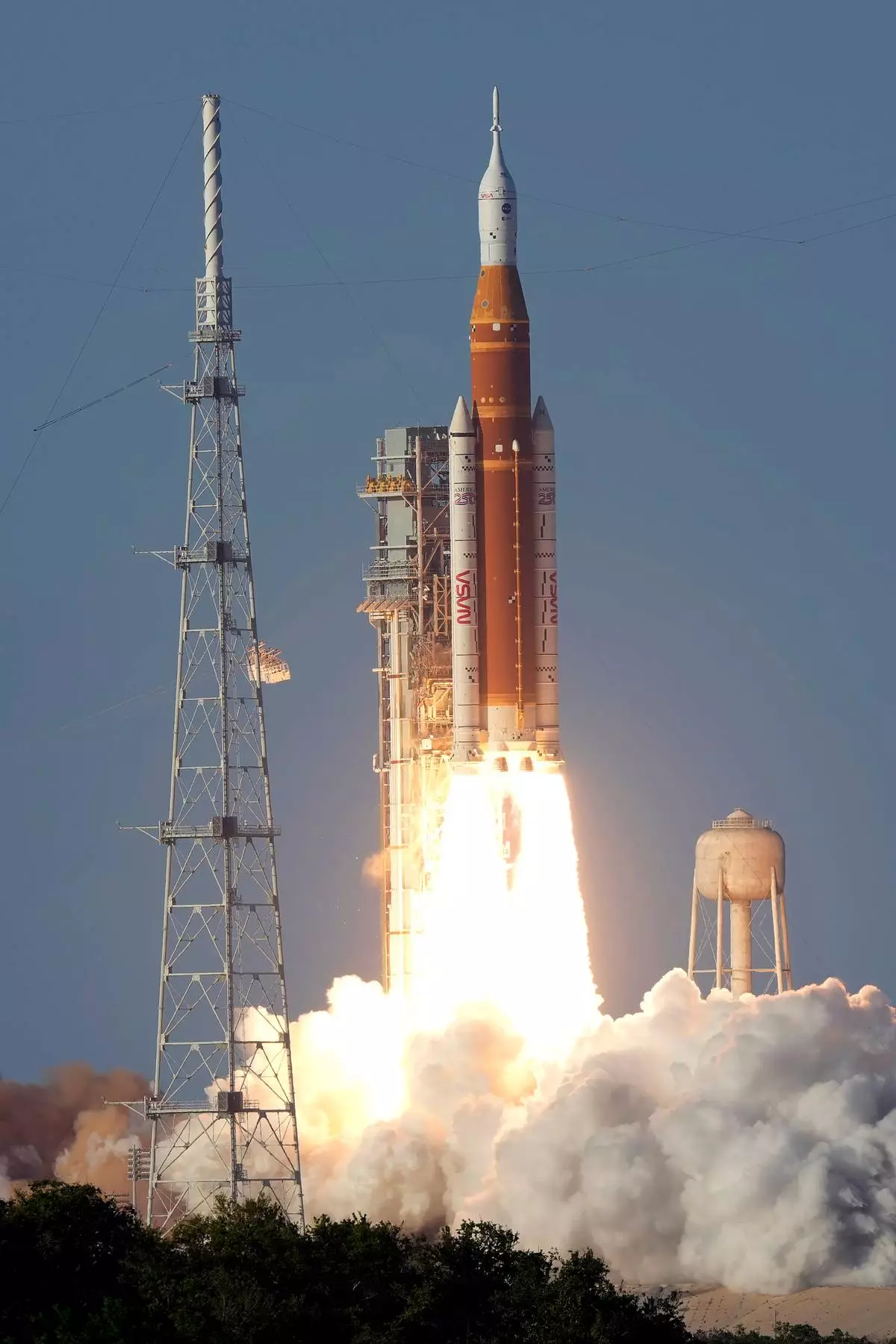
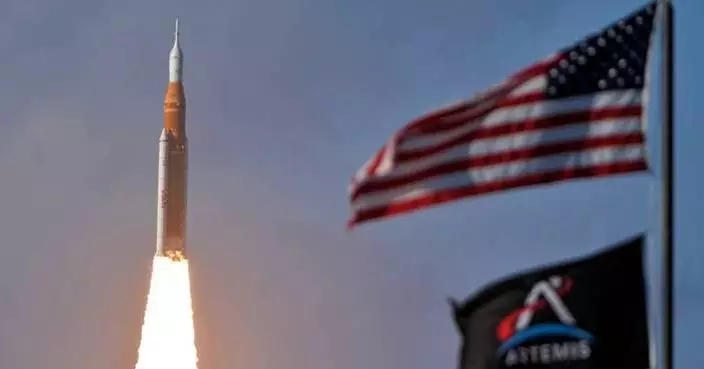
NASA's Artemis II moon rocket lifts off from the Kennedy Space Center's Launch Pad 39-B Wednesday, April 1, 2026, in Cape Canaveral, Fla. (AP Photo/Chris O'Meara)
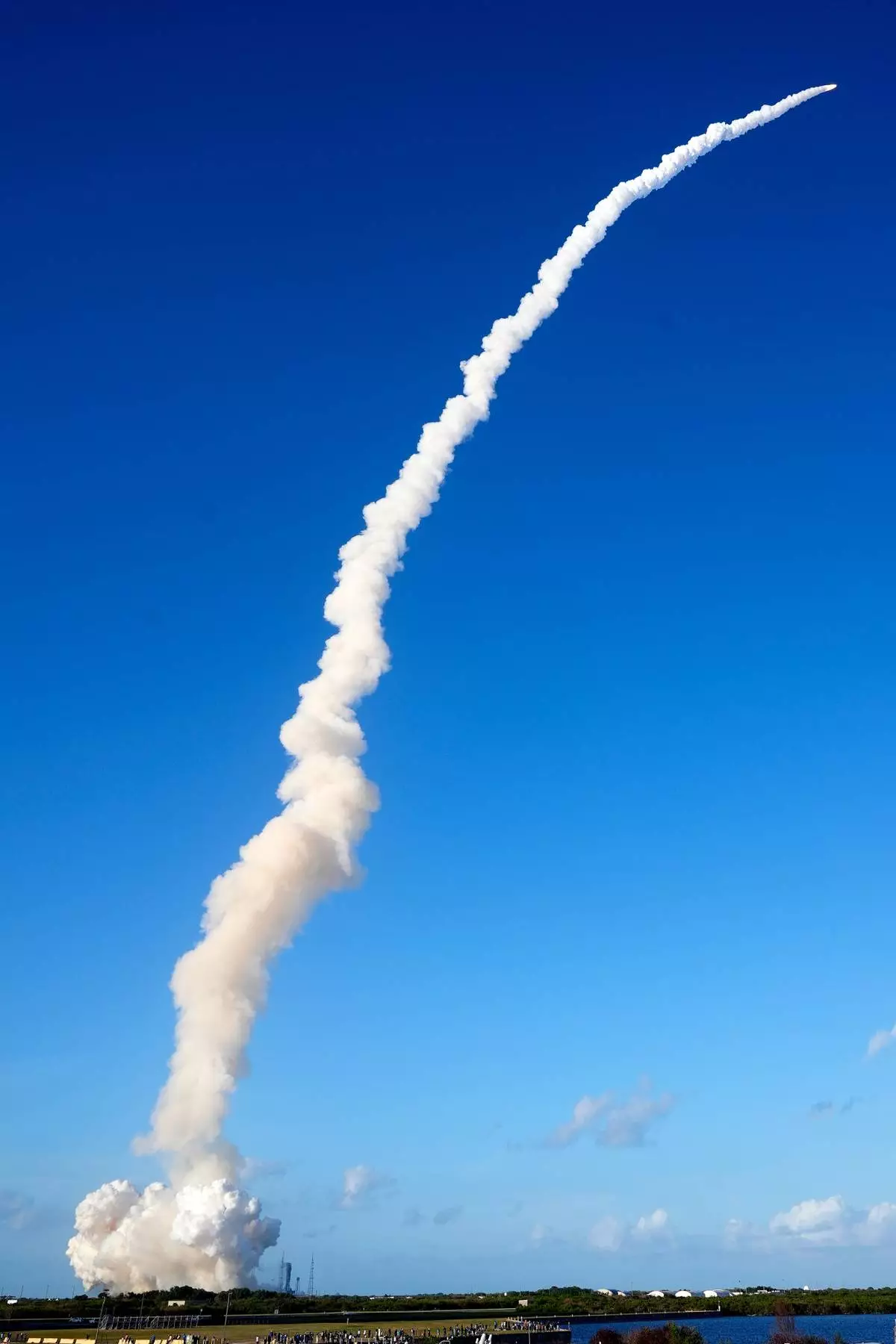
NASA's Artemis II moon rocket lifts off from the Kennedy Space Center's Launch Pad 39-B Wednesday, April 1, 2026, in Cape Canaveral, Fla. (AP Photo/Chris O'Meara)
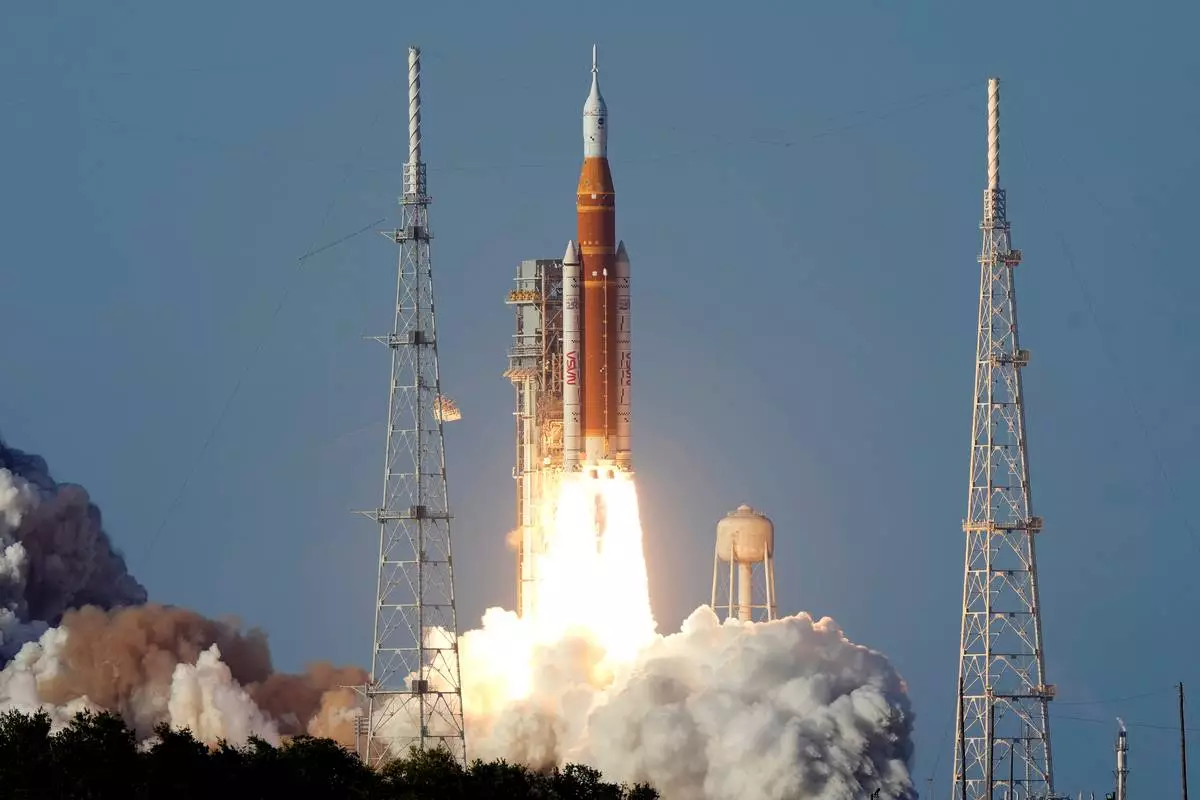
NASA's Artemis II moon rocket lifts off from the Kennedy Space Center's Launch Pad 39-B Wednesday, April 1, 2026, in Cape Canaveral, Fla. (AP Photo/Chris O'Meara)
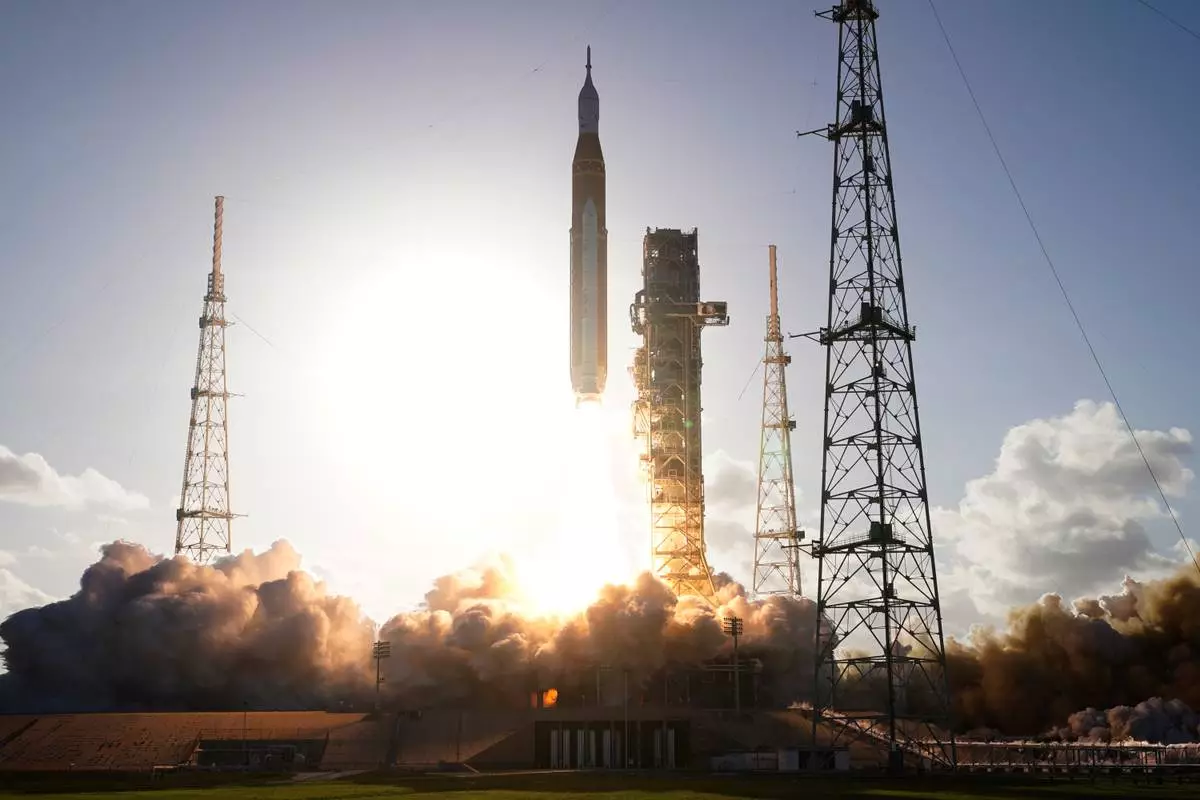
The NASA Artemis II SLS (Space Launch System) rocket with the Orion spacecraft launches at the Kennedy Space Center, Wednesday, April 1, 2026, in Cape Canaveral, Fla. (AP Photo/John Raoux)
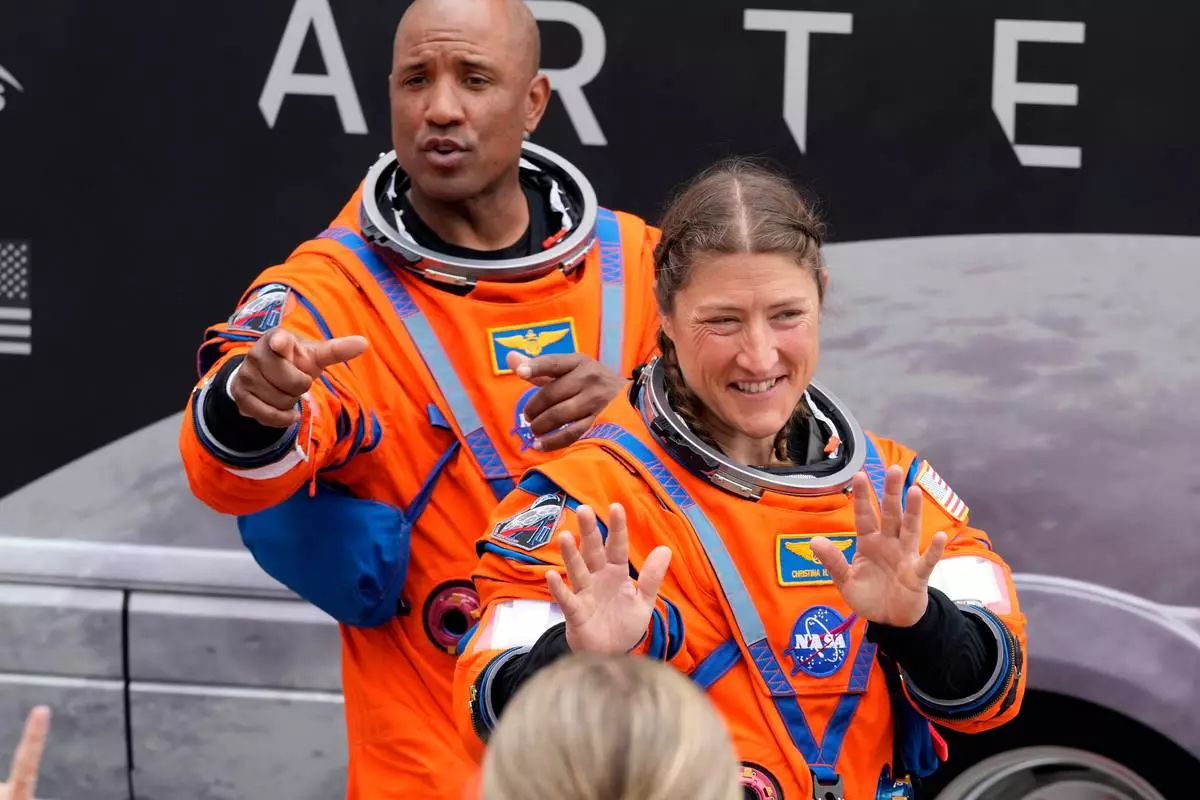
Astronauts, Mission Specialist Christina Koch, right, and Pilot Victor Glover wave to family members as they leave the Operations and Checkout Building for a trip to Launch Pad 39-B and a planned liftoff on NASA's Artermis II moon rocket at the Kennedy Space Center Wednesday, April 1, 2026, in Cape Canaveral, Fla. (AP Photo/Chris O'Meara)
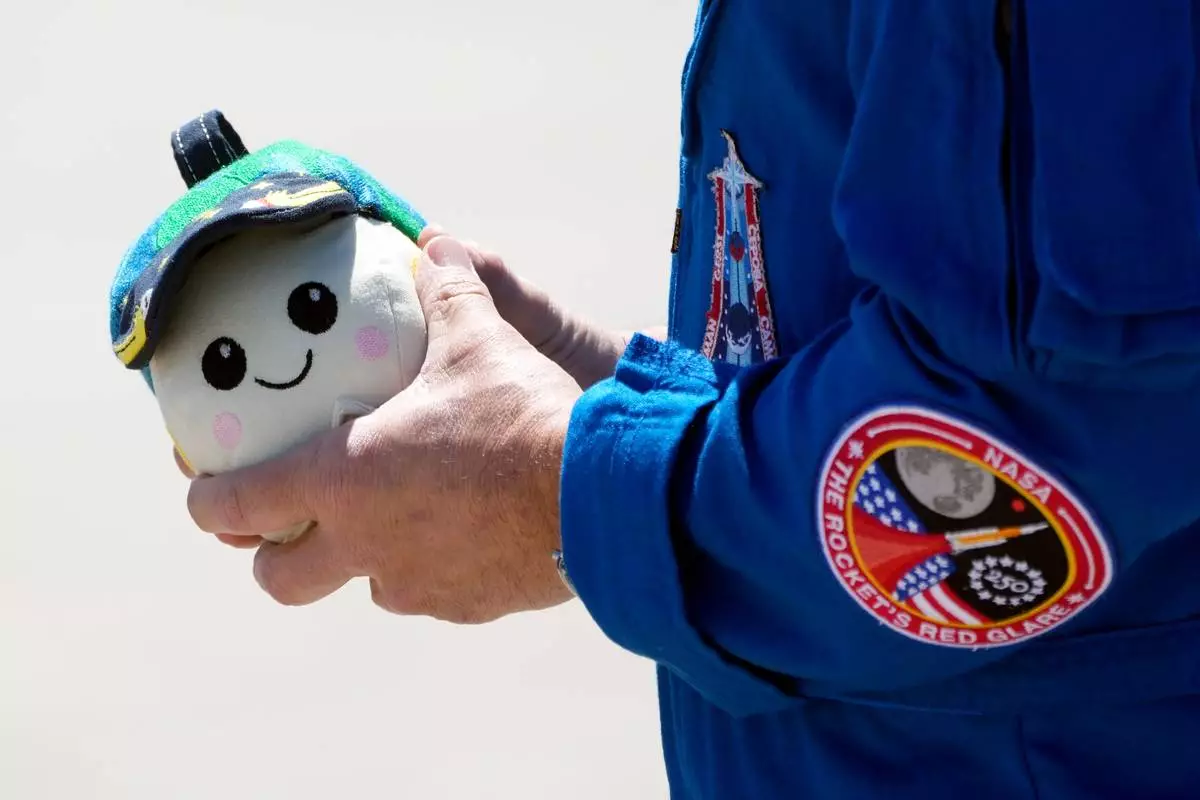
Artemis 2 crew member Commander Reid Wiseman holds "Rise" after the crew's arrival at the Kennedy Space Center Friday, March 27, 2026, in Cape Canaveral, Fla. (AP Photo/Chris O'Meara)

Commander Reid Wiseman poses for a photo with family members after leaving the Operations and Checkout Building for a trip to Launch Pad 39-B and a planned liftoff on NASA's Artermis II moon rocket at the Kennedy Space Center Wednesday, April 1, 2026, in Cape Canaveral, Fla. (AP Photo/Chris O'Meara)
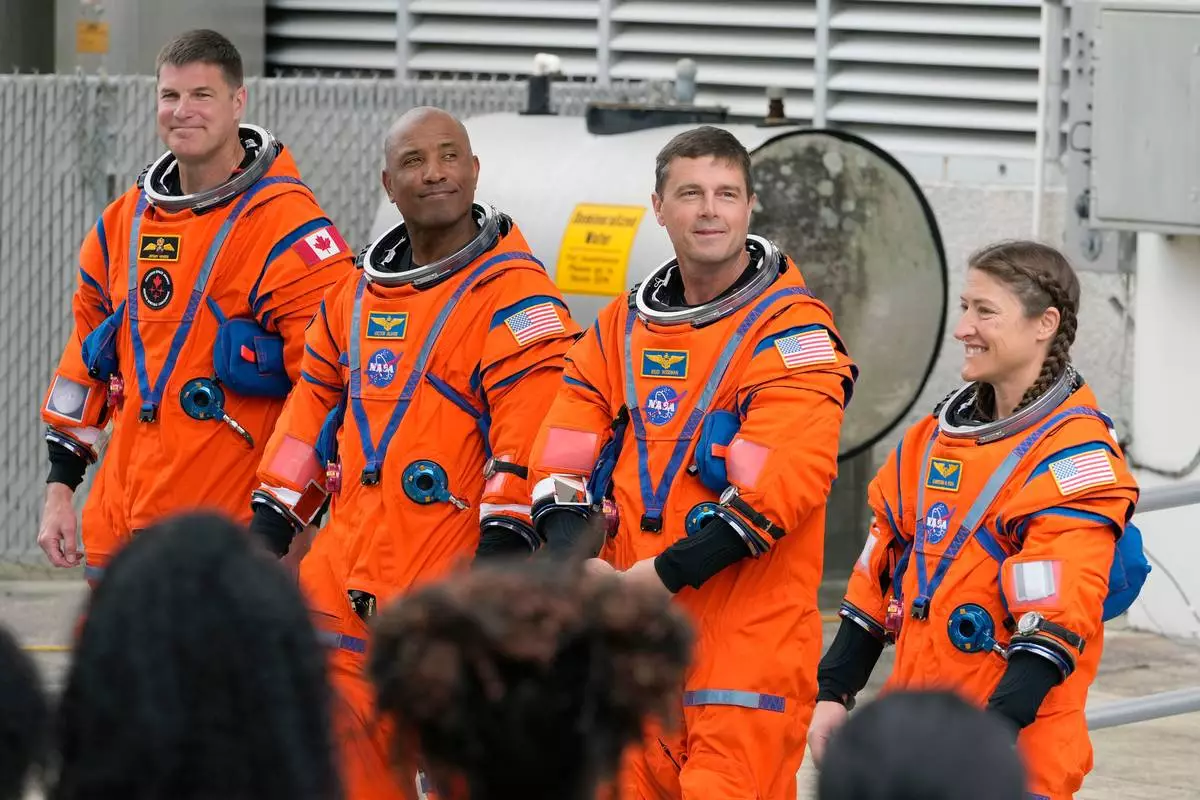
Astronauts, from left, Mission Specialist Jeremy Hansen, of Canada,, Pilot Victor Glover, Commander Reid Wiseman, and Mission Specialist Christina Koch pose for a photo after leaving the Operations and Checkout Building for a trip to Launch Pad 39-B and a planned liftoff on NASA's Artermis II moon rocket at the Kennedy Space Center Wednesday, April 1, 2026, in Cape Canaveral, Fla. (AP Photo/Chris O'Meara)
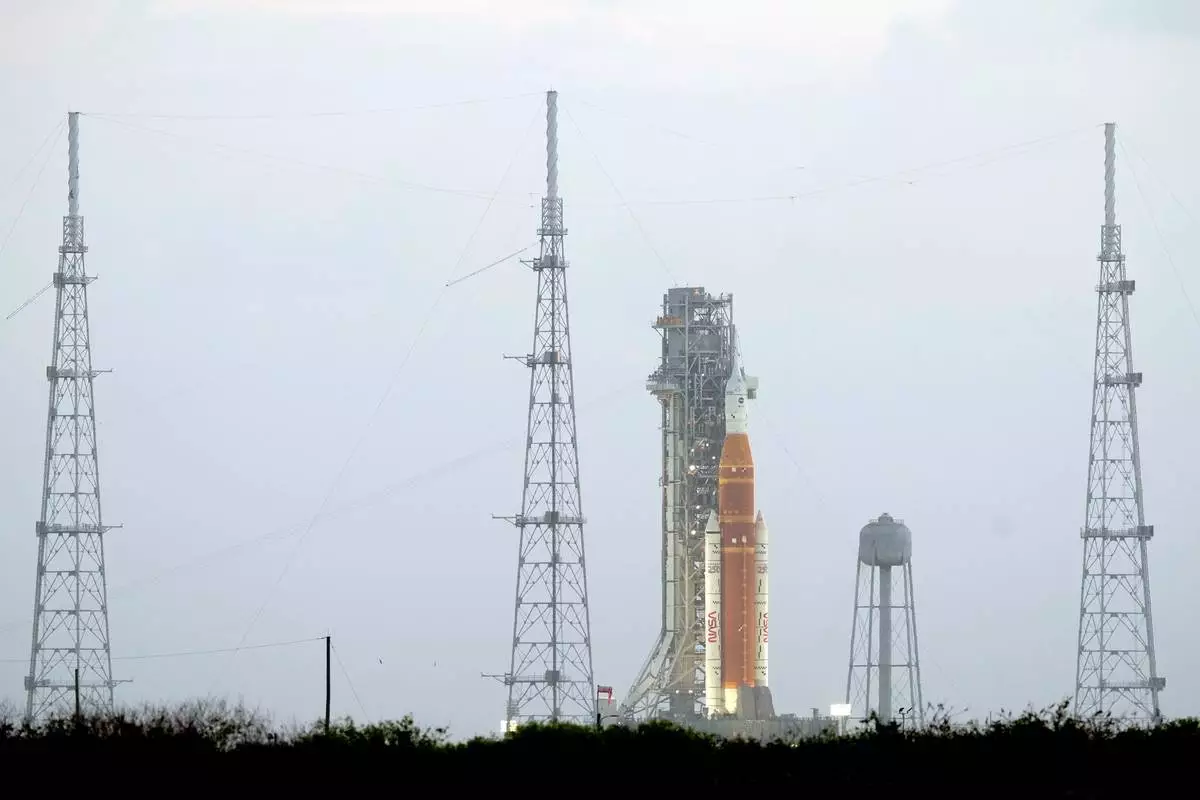
NASA's Artermis II moon rocket sits on Launch Pad 39-B at the Kennedy Space Center hours ahead of a planned launch attempt Wednesday, April 1, 2026, in Cape Canaveral, Fla. (AP Photo/Chris O'Meara)
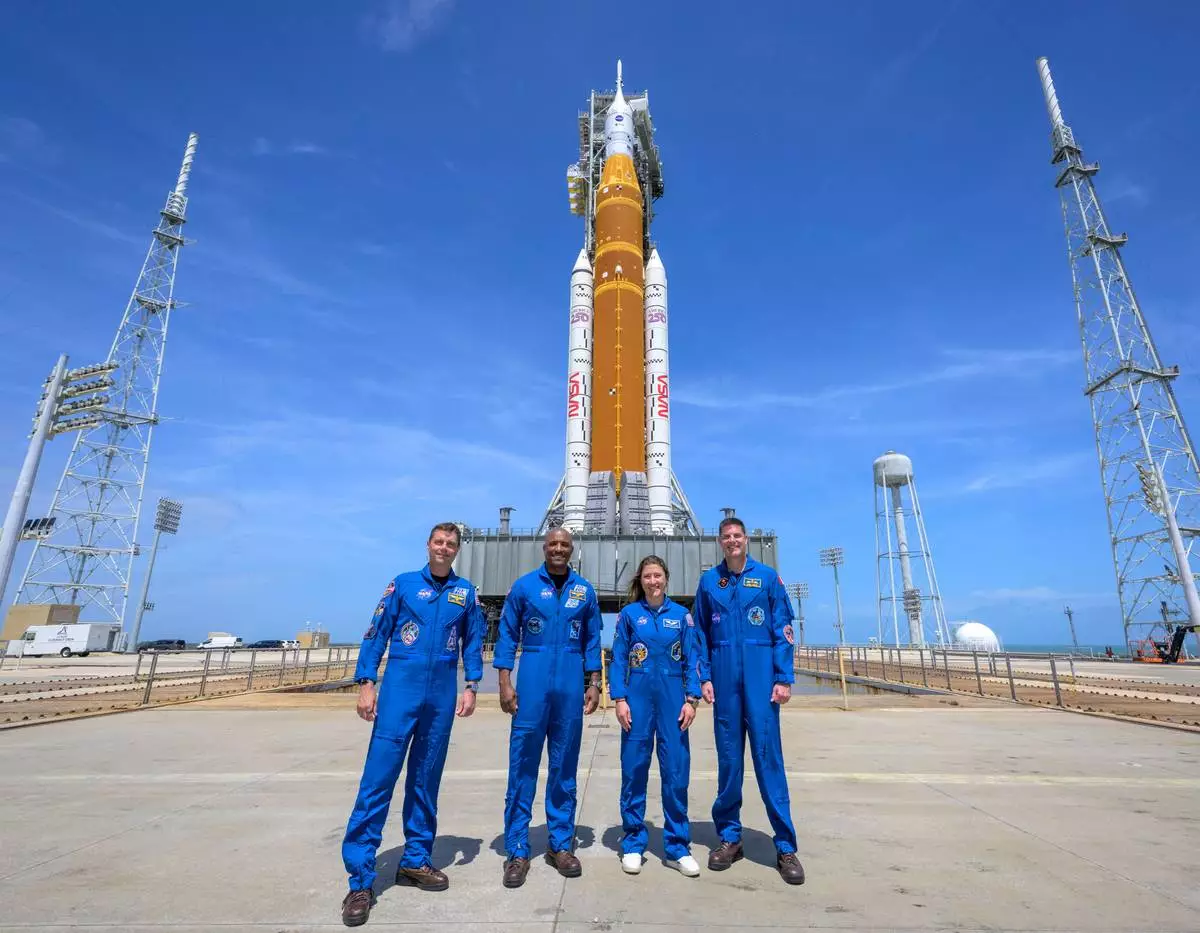
This photo provided by NASA shows NASA astronauts Reid Wiseman, Artemis II commander, from left, Victor Glover, Artemis II pilot, Christina Koch, Artemis II mission specialist, and CSA (Canadian Space Agency) astronaut Jeremy Hansen, Artemis II mission specialist, right, in a group photograph as they visit NASA's Artemis II SLS (Space Launch System) rocket and Orion spacecraft, Monday, March 30, 2026, at Launch Complex 39B of NASA's Kennedy Space Center, in Cape Canaveral, Fla. (Bill Ingalls/NASA via AP)
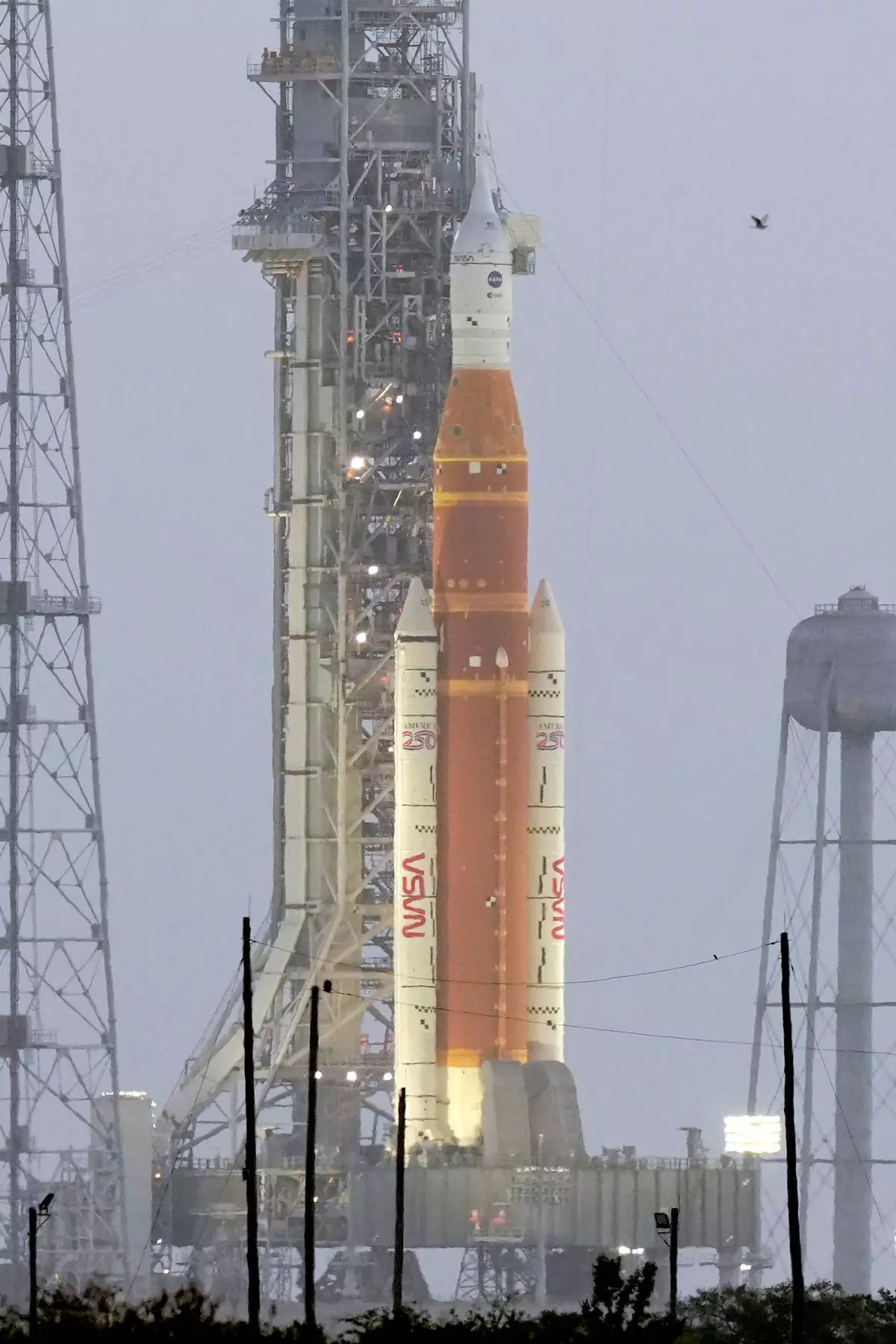
NASA's Artermis II moon rocket sits on Launch Pad 39-B at the Kennedy Space Center hours ahead of planned liftoff Wednesday, April 1, 2026, in Cape Canaveral, Fla. (AP Photo/Chris O'Meara)