The Beijing-Tianjin-Hebei region in north China is making great strides in coordinated development to build a world-class scientific and technological innovation center.
The Zhongguancun Science Park in Beijing has already become a multi trillion-yuan level industrial cluster. Covering less than 4 percent of the city's area, this dynamic hub produces roughly one-third of Beijing's gross regional product.
It has incubated over 200 domestically developed large models, nearly 30 percent of the national total, and made significant breakthroughs in frontier fields such as quantum technology and artificial intelligence.
Over 90 unicorn companies have emerged from Zhongguancun, fueling industrial upgrades. By 2025, the total revenue of enterprises in Zhongguancun is projected to surpass 10 trillion yuan (about 1.42 trillion U.S. dollars), underscoring its role as a leading innovation highland.
"Unicorn enterprises" generally refer to unlisted companies that have been established for no more than 10 years, have a valuation of more than 1 billion U.S. dollars, and possess unique core technologies, unique competitive advantages and market potential.
President Xi Jinping, also general secretary of the Communist Party of China (CPC) Central Committee and chairman of the Central Military Commission, has always cared about the development of Zhongguancun.
In September 2013, the Political Bureau of the 18th CPC Central Committee held a group study session in Zhongguancun, the first time such a session has been held outside the central authority's seat at Zhongnanhai.
Presiding over the session, Xi stressed the importance of science and technology in enhancing national strength, saying that innovation is a global trend and also what China needs.
"During the group study session, General Secretary Xi Jinping emphasized that Zhongguancun should accelerate its journey toward becoming a globally influential science and technology innovation center. He said 'we must not wait, we must not sit on the fence, and we must not slack off', urging and motivating us to seize the opportunities brought by the new round of technological revolutions and industrial transformations. His instructions have pointed out directions for Beijing's technological innovation and Zhongguancun's development, securing the strategic initiative for us," said Yang Pu, deputy director of the Beijing Municipal Science and Technology Commission and Administrative Commission of Zhongguancun Science Park.
During the "14th Five-Year Plan" period (2021-2025), based on innovation-driven development and the coordinated development of Beijing, Tianjin and Hebei, Xi emphasized that Beijing's advantages in scientific and technological innovation and Tianjin's advantages in advanced manufacturing research and development should be combined to help qualified areas in Hebei better undertake industrial transfer.
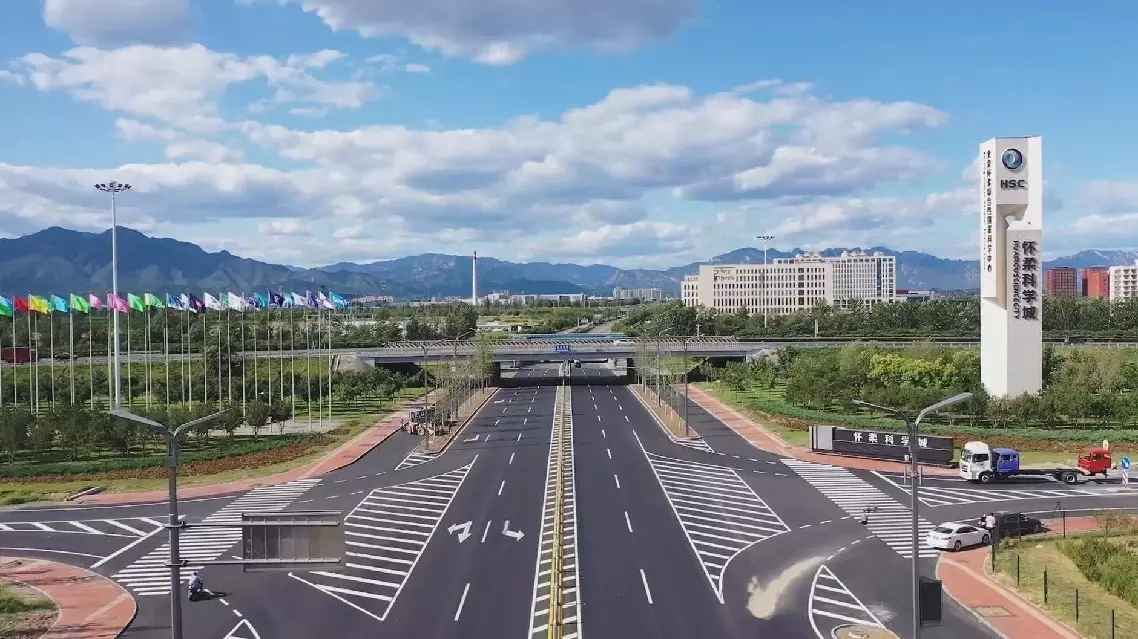
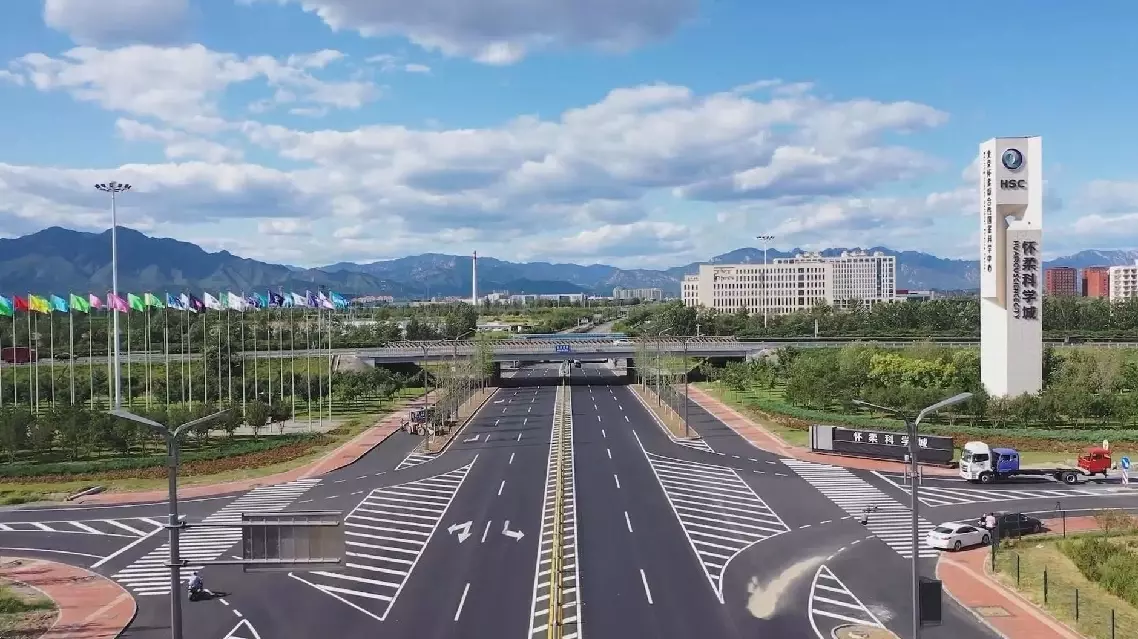
Following this blueprint, Beijing has intensified its efforts. The Huairou Science City (HSC) is about to launch its high-energy synchrotron radiation source into trial operation at the end of this year, with 29 major scientific facilities already in active research.
Overall, Beijing has established 145 key laboratories at the national level and 10 new research institutions, reinforcing its strategic scientific infrastructure.
At the Zhongguancun Science Park in the Xiong'an New Area of Hebei Province, 11 Beijing-based platforms and institutions specializing in science and technology, finance and industrial research have been integrated into a one-stop service, enabling enterprises to access cutting-edge resources without leaving the area.
Furthermore, Beijing, Tianjin, and Hebei have jointly funded over 220 basic research projects, forming collaborative innovation teams that pool regional strengths.
The Central Economic Work Conference held earlier this month stressed that it would be essential to enhance innovation-driven development to accelerate the cultivation of new growth drivers, and decided to expand the scope of the International Center for Science and Technology Innovation in Beijing to cover the whole Beijing-Tianjin-Hebei region.
"The expansion of the International Center for Science and Technology Innovation is a major strategic move personally planned, deployed and promoted by General Secretary Xi Jinping. It signifies that China's strategy for scientific and technological innovation has shifted from individual breakthroughs to a new model of regional integrated and coordinated operations, marking an upgrade of national strategy, and injecting strong momentum into accelerating the formation of a major source of original innovation in our country and jointly forging a strategic fulcrum for building China into a science and technology powerhouse," said Wan Zhe, a professor at Beijing Normal University.
Beijing-Tianjin-Hebei region advances coordinated development in building int'l tech innovation hub
Beijing-Tianjin-Hebei region advances coordinated development in building int'l tech innovation hub