Skip to Content Facebook Feature Image

Global participants discuss green development, human rights at Beijing forum

China

China

China

Global participants discuss green development, human rights at Beijing forum

2026-06-11 21:01 Last Updated At:23:37

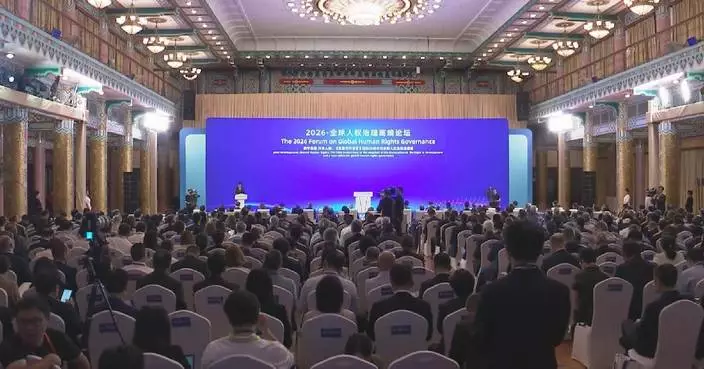
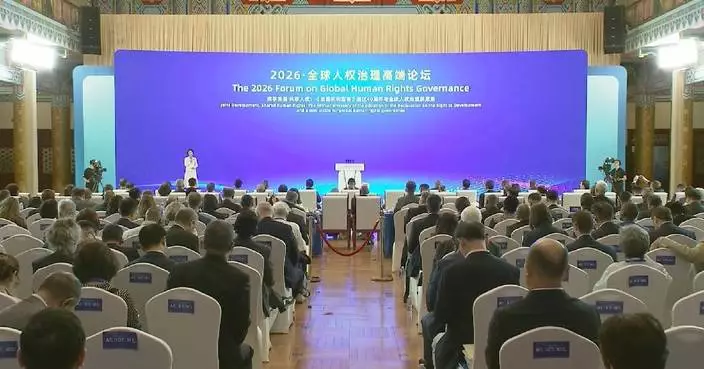
International experts and policymakers gathered in China's capital city Beijing on Thursday to discuss the connection between green development and human rights.

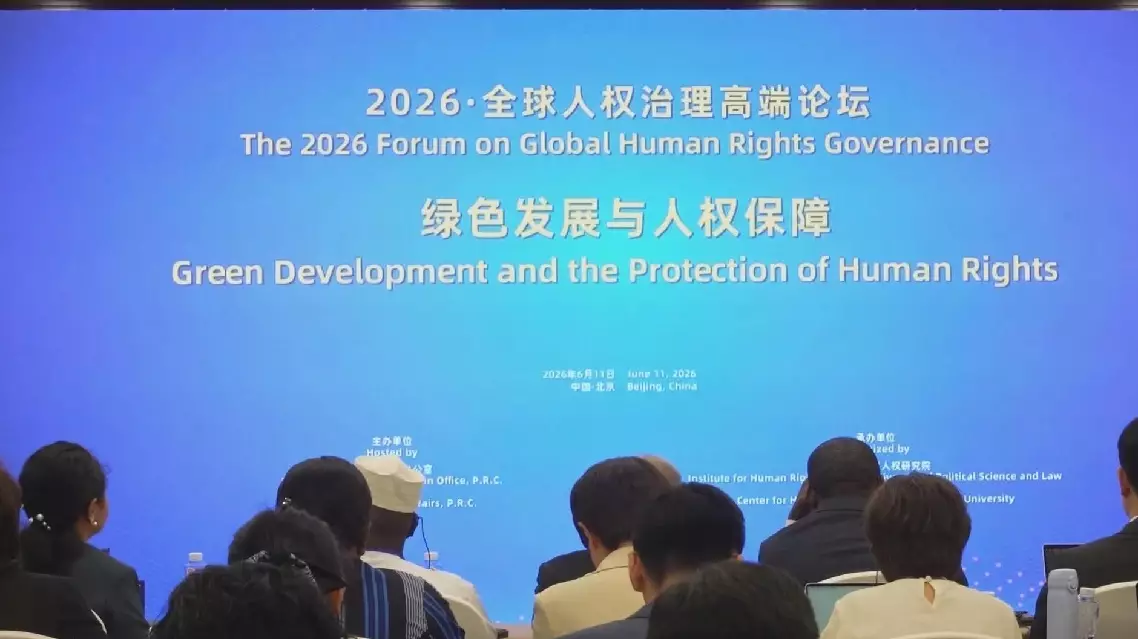
Held as part of the ongoing 2026 Forum on Global Human Rights Governance, the "Green Development and the Protection of Human Rights" sub-forum brought together over 30 speakers from Africa, Asia, Latin America, and Europe to explore a defining question of our era: Can the world pursue green development without leaving human rights behind?

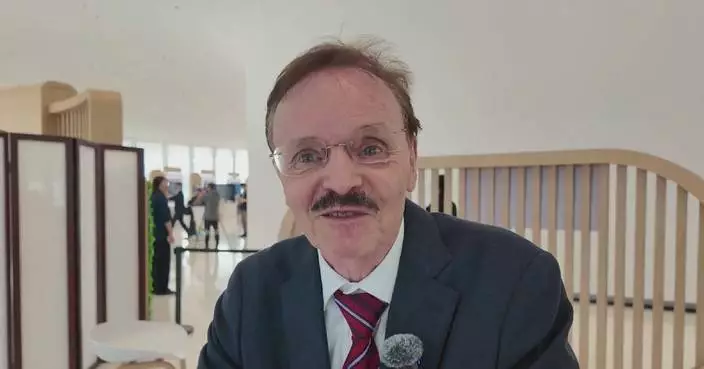
Liang Xiaohui, a member from the Asia-Pacific States of the Expert Mechanism on the Right to Development under the United Nations Human Rights Council, pointed out the direction for human rights in China's business and public sectors.

"As a leading developing country and economic power, China plays a vital role. Chinese enterprises should prioritize human rights in overseas investment and trade, expanding financing guided by the right to development. Meanwhile, public sector policies should further encourage businesses to commit to human rights," said Liang.

Topics at the forum also covered areas such as regional cooperation and local-level implementation, including China-ASEAN green cooperation, Shanghai-U.S. subnational cooperation, and the carbon-emissions trading practices of China's Tianjin Municipality.

"About 80 industry leaders and company reps from China and the U.S. joined our Shanghai-North America Clean Tech and Carbon Neutrality Roadshow. Their global tech standards and supply chain experience have been really helpful," said Zhang Qi, deputy director of the Office for Outreach and Engagement at the Shanghai Institute of American Studies.

Some of the most pointed interventions came from representatives of countries for whom the green transition is not an abstract policy debate, but a matter of survival.

"China-African cooperation rooted in mutual respect and co-development. Green development is not a theoretical option, but a strategy for survival and stability. We do not seek passive aid, but an active, innovative partnership - such as technology transfer, clean energy access, digital and legal tech innovation, and direct financing for local adaptation," said Nandjede Abba Daoud, director of the foreign affairs office for the Commission of the Senate of Chad.

Participants noted that sustainable growth is inseparable from human rights protection as the global community is calling for a more relational approach to development, where nature and human dignity are seen not as competing interests, but as a shared future.

The 2026 Forum on Global Human Rights Governance, co-hosted by China's State Council Information Office and Ministry of Foreign Affairs, opened on Thursday morning and runs through Friday.

More than 400 invited guests from nearly 100 countries as well as international and regional organizations, including the United Nations (UN), are attending the event.
Global participants discuss green development, human rights at Beijing forum

Global participants discuss green development, human rights at Beijing forum

A Greek scholar has shed light on the multi-layered value of classical studies, asserting that modern civilizations can deepen their understandings of themselves, each other, and the challenges they face through the lens of ancient wisdom.

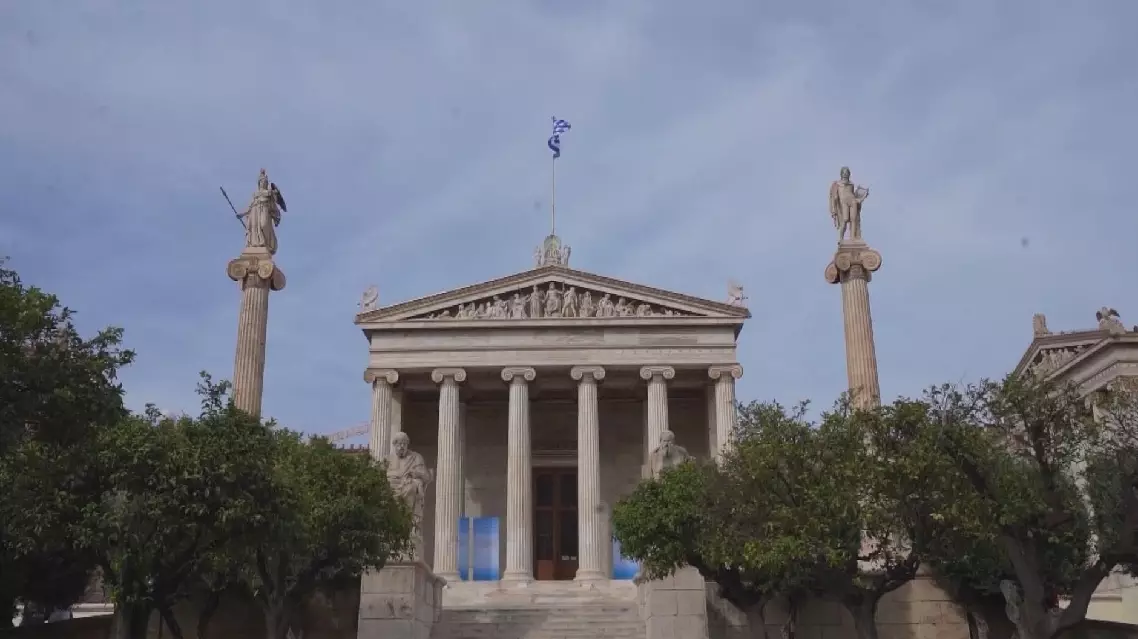
On the sidelines of the just-concluded World Conference of Classics held in Athens, Greece, Professor Myrto Garani of the National and Kapodistrian University of Athens said that Greek and Chinese intellectual traditions, despite giving different answers to life's fundamental questions, offer complementary paths to wisdom that remain urgently relevant today.

"The two civilizations clearly faced many of the same fundamental questions. That is what interests us, and that is why it is so valuable to gather here in Athens and discuss the concerns shared by both peoples since antiquity. We may have arrived at different answers. However, by examining the different ways in which we approached these questions, we can also reconsider the answers that our own civilization produced. In doing so, we gain a deeper understanding of one another. That is the real value of this dialogue and the reason we continue to explore these questions in greater depth," said Garani.

The professor said that she urges young people who view the classics as outdated or irrelevant to consider that ancient wisdom equips modern minds with essential tools for navigating today's crises.

"Classical studies will obviously not provide direct answers to the climate crisis or the energy crisis, for example. But they can help us cultivate our thinking and our judgment. The way people confronted fundamental questions in the past can help us respond to the challenges of the present. I believe this is one of the greatest things we can gain from classical studies. They encourage comprehensive thinking and critical judgment. They also allow us to examine the values of antiquity and understand how those values can be adapted and applied today," said Garani.

Held from June 9 to 10 under the theme "Dialogue Between Ancient and Modern Civilizations: Contemporary Inspiration from Classical Wisdom," the Second World Conference of Classics brought together more than 200 scholars, researchers and cultural representatives from Asia, Europe, Africa and North America.

This year's gathering highlighted the contemporary relevance of classical civilizations, exploring how ideas drawn from ancient traditions can offer insights into governance, ethics, social development and international relations amid evolving global challenges.

Greek scholar hails classical studies as East-West bridge

Greek scholar hails classical studies as East-West bridge

Recommended Articles