China is playing an increasingly important role in international fusion energy research as the country engages in wide-ranging global cooperation, a German fusion expert said.
Fusion, the process that powers the sun and stars, involves combining light atomic nuclei to release enormous amounts of energy. Achieving controlled fusion on Earth could lead to nearly unlimited energy production, but requires overcoming extreme technical challenges.
In an interview with China Global Television Network (CGTN), Professor Dieter Hoffmann, an expert advisor for proton-boron fusion at the ENN Energy Research Institute, commended the participation of Chinese companies in fusion research to help overcome these challenges. He emphasized that the diversification of China's technological pathways aligns with the strategic priorities of global researchers.
"As a German saying goes: 'Don't put all your eggs in one basket.' And that's exactly what China is doing. It's not just Chinese companies that are working on this now, but a multitude of companies worldwide are joining forces to research fusion as a whole. And I see this as very positive, because if we only had state-funded research, it would take us much, much longer to even get close to the goal. Every single one of these companies will contribute to bringing us closer to that goal, and hopefully very soon," Hoffmann said.
The professor emphasized that fusion research requires long-term financial support and voiced his hope that international fusion cooperation will continue to progress.
"China is a very important partner, for example, in the ITER project. I believe science is inherently international. Intelligence and ideas are evenly distributed across the globe, and someone anywhere in the world can have a good idea, and we need to ensure that these ideas are brought together. Currently, it's somewhat difficult, but I hope things will improve," he said.

German expert highlights China's growing role in developing global fusion energy
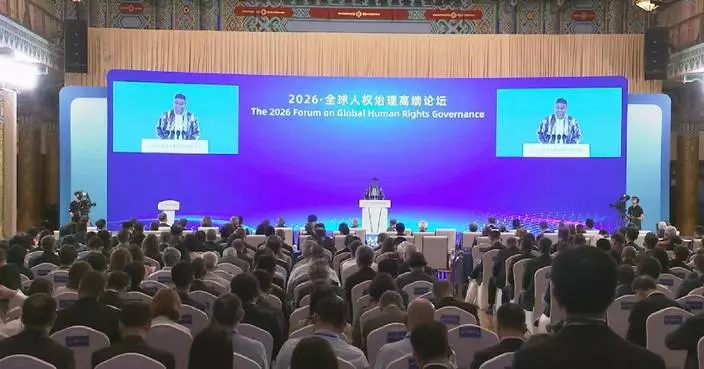
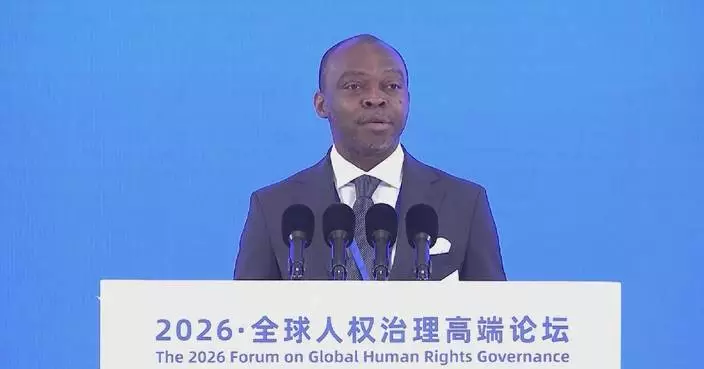
The two-day 2026 Forum on Global Human Rights Governance kicked off in Beijing on Thursday, focusing on joint development and shared human rights.
Guests attending the forum noted that following a path of human rights development that conforms to the trend of the times and suits its national realities, China has formulated and implemented four consecutive national human rights action plans.
They agreed that as China advances modernization, it has consistently enhanced human rights protection and made historic progress in promoting human rights.
Participants at the forum urged efforts from all countries to work together to advance the development of human rights civilization and build a community with a shared future for humanity.
Themed "Joint Development, Shared Human Rights: The 40th Anniversary of the Adoption of the Declaration on the Right to Development and a New Vision for Global Human Rights Governance," the forum has brought together over 400 participants from over 100 countries and international organizations, including the United Nations.
The forum also released the National Human Rights Action Plan of China (2026-2030), which outlines China's work to protect human rights in the next five years. The plan aims to ensure that the principal position of the people is respected and the people's fundamental interests are safeguarded. It will also promote social fairness and justice and ensure that the fruits of modernization benefit all people fairly.
The Chinese government implemented its fourth human rights action plan between 2021 and 2025.
There will be five sub-forums to discuss topics including the human rights implications of the Global Governance Initiative, safeguarding the right to development in the age of AI: Emerging challenges and opportunities, and modernization and people's free and comprehensive development, according to an earlier announcement from China's Ministry of Foreign Affairs.
The forum is jointly hosted by the Information Office of the State Council and the Ministry of Foreign Affairs.
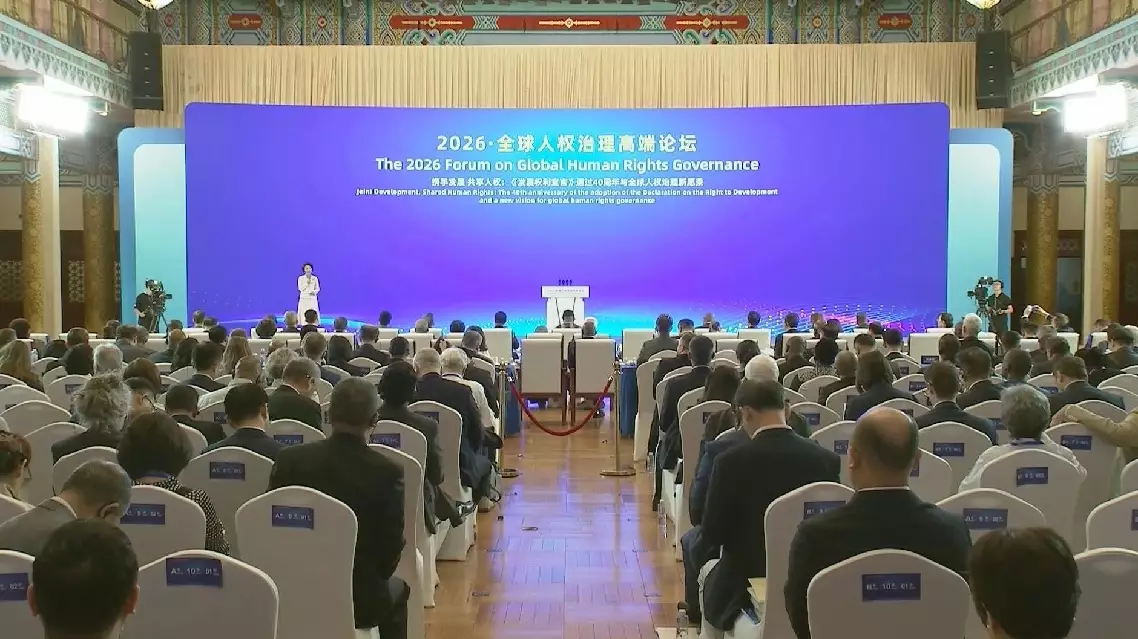
Forum on Global Human Rights Governance opens in Beijing