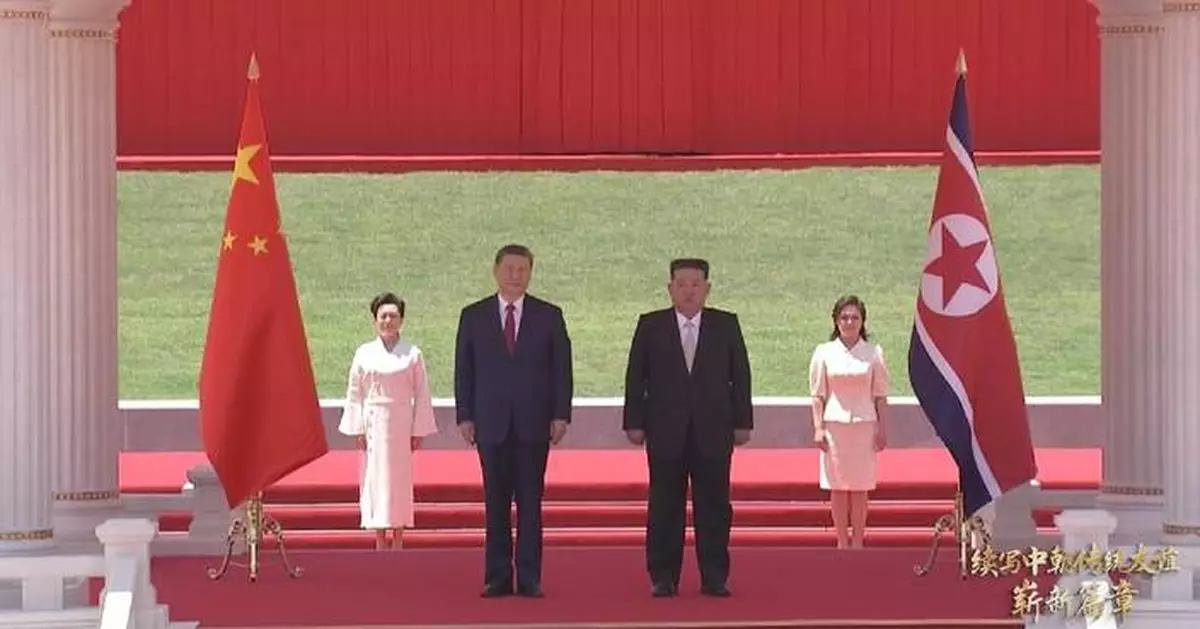
Xi Jinping, general secretary of the Communist Party of China (CPC) Central Committee and Chinese president, paid a two-day state visit to the Democratic People's Republic of Korea (DPRK) on Monday and Tuesday.
It was Xi's first overseas trip this year and his first state visit to the DPRK in seven years.
During the visit, Xi and Kim Jong Un, general secretary of the Workers' Party of Korea and president of the State Affairs of the DPRK, reached important consensus on strengthening the top-level design and strategic guidance of China-DPRK relations in the new era.
The Chinese president arrived in the DPRK capital Pyongyang on Monday. Kim and his wife Ri Sol Ju received Xi and his wife Peng Liyuan at the airport.
Xi then attended a grand welcome ceremony hosted by Kim at the Kim Il Sung Square.
Accompanied by Kim, Xi inspected the honor guard of the three services of the Korean People's Army and watched a march-past.
Representatives from all walks of life in Pyongyang gathered at the square, along with children and youths holding flags, flowers and balloons, who extended a sincere welcome to the distinguished Chinese guests with warm applause and cheers.
The two leaders held talks later on the day.
"I am very pleased to visit the beautiful city of Pyongyang once again after seven years. I feel especially warm and familiar," Xi said.
"General Secretary Xi, your choice of Pyongyang for the first overseas trip this year fully reflects the great importance you attach to DPRK-China relations and the profound friendship between the two countries, which is a tremendous encouragement to the DPRK side," Kim said.
During the talks, Xi called for efforts from both sides to consolidate the foundation of political mutual trust and enhance the level of practical cooperation, and expressed his readiness to work with Kim to take this visit as an opportunity to strengthen top-level planning and strategic guidance for China-DPRK relations in the new era, keep bilateral relations advancing with the times and achieve greater progress in bilateral ties, so as to better benefit the two countries and peoples, and make positive contributions to peace, stability, development and prosperity in the region and the world.
Stressing that China and the DPRK are both socialist countries led by communist parties, Xi said that the traditional friendship between the two countries is rooted in their shared ideals and beliefs as well as their common goals, and is backed by a profound historical foundation, a solid political basis and strong emotional bonds.
No matter how the international situation changes, on the Chinese side, the CPC and Chinese government's firm stance on highly valuing China-DPRK traditional friendship will not change, the firm support for General Secretary Kim in leading the DPRK's socialist cause will not change, and the firm commitment to safeguarding the shared interests of the two countries and preserving a favorable strategic environment will not change, Xi said.
Xi pointed out that, in the face of the profound changes unseen in a century that are accelerating across the world, the two sides should take a broad and long-term view, build on past achievements and open up a new future, draw wisdom from the development process of the relations between the two parties and the two countries, seize opportunities in the prevailing trend of human history, inject new contemporary connotations and strong impetus into the traditional friendship between China and the DPRK, and open up a brighter prospect for the socialist cause of the two countries as well as regional peace and development.
During the talks, Xi put forward four proposals on developing China-DPRK relations, calling for efforts from both sides to stay guided by the high-level exchanges and consolidate the foundation of political mutual trust, stay committed to the goal of delivering benefits to the people and elevate the level of practical cooperation, uphold the inheritance of friendship as a driving force and strengthen the bonds between their peoples, and uphold fairness and justice as a guiding principle to enrich the substance of strategic coordination.
Attending a welcome banquet on Monday evening, Xi said the relationship between China and the DPRK stands at a new historical starting point.
"China and the DPRK, linked by mountains and rivers and sharing a common future, have enjoyed a time-honored and unbreakable traditional friendship," Xi said, adding that he had reached important consensus with Kim during the visit.
From the strategic perspective of the future and destiny of socialism, both leaders have agreed to seize the general trend of the times, respond to the shared aspirations of the two peoples, strengthen high-level exchanges, deepen strategic communication, expand practical cooperation, enhance people-to-people bonds, promote the high-level development of China-DPRK relations, jointly open up brighter prospects for the socialist cause of both countries, and contribute to the continuous progress of human society, according to Xi.
The first day of Xi's state visit ended after watching a grand artistic performance. Through songs, dances and acrobatics, the artists celebrated Xi's return to the DPRK after seven years and voiced their sincere feelings for further strengthening the traditional friendly cooperation between the two countries.
On Tuesday morning, Xi paid homage to the China-DPRK Friendship Tower in the company of Kim.
The two leaders agreed that the years when China and the DPRK fought side by side in the 1950s are an eternal historical memory shared by both sides, and pledged to jointly maintain memorial facilities dedicated to the Chinese People's Volunteers martyrs, carry out distinctive programs on revolutionary traditions and youth education, and carry forward the great spirit of the War to Resist U.S. Aggression and Aid Korea.
Xi also visited the Central Cadres Training School of the WPK in Pyongyang, and jointly planted a fir tree with Kim on the campus.
The fir tree remains evergreen throughout the year, symbolizing the enduring and ever-renewing friendship between China and the DPRK.
Attending a luncheon hosted by Kim, Xi said he had reached important consensus with Kim on developing relations between China and the DPRK in the new era, adding that the two sides also had in-depth discussions on safeguarding peace and stability in the region and the world.
The mutual understanding between China and the DPRK has become deeper and more comprehensive, and the future development direction has become clearer and more definite, Xi said, adding that he is ready to work with Kim to jointly lead China-DPRK relations to greater development and inject new and strong impetus into the socialist cause of the two countries.
On Tuesday afternoon, Xi concluded his state visit and departed Pyongyang for Beijing.
A grand send-off ceremony was held before the departure.
En route to the airport, representatives from all walks of life in Pyongyang lined the streets, waving national flags of China and the DPRK, holding flowers, and chanting slogans featuring bilateral friendship.
Summarizing the two-day trip by Xi, Liu Haixing, head of the International Department of the CPC Central Committee, hailed the visit as a significant milestone in the history of China-DPRK relations.
The top leaders of the two parties and two countries have steered the course and provided guidance for the China-DPRK relationship to advance with the times, Liu said, adding that the visit deepened practical cooperation and friendly exchanges in various fields to inject new impetus into the socialist cause of China and the DPRK, and also injected positive energy into regional and world peace and development.
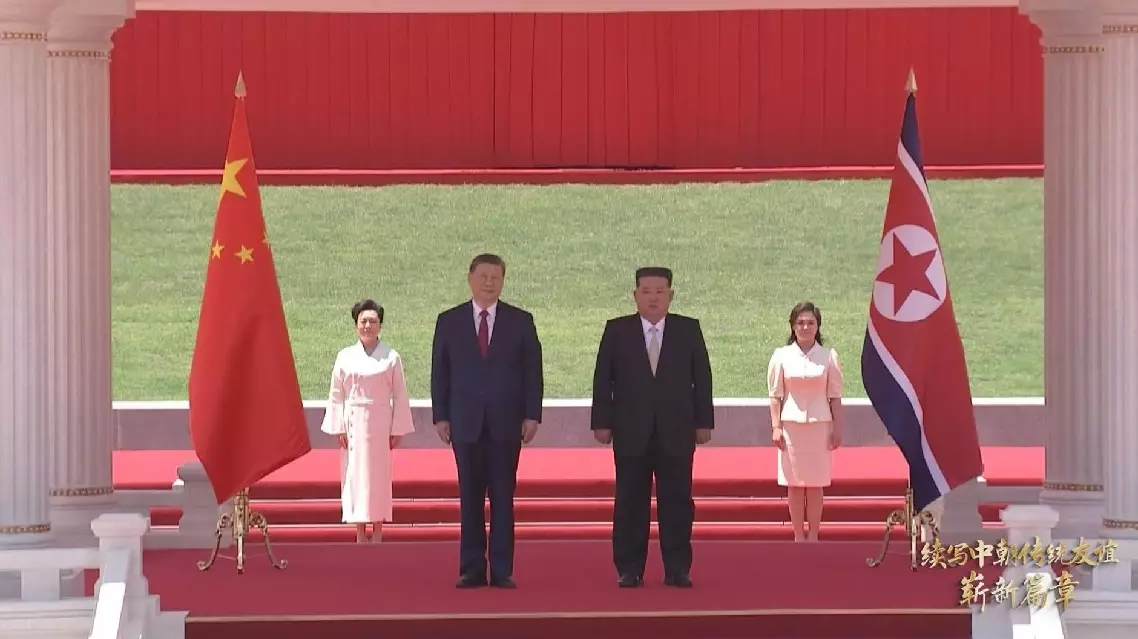
Xi's DPRK visit yields important consensus on bilateral ties
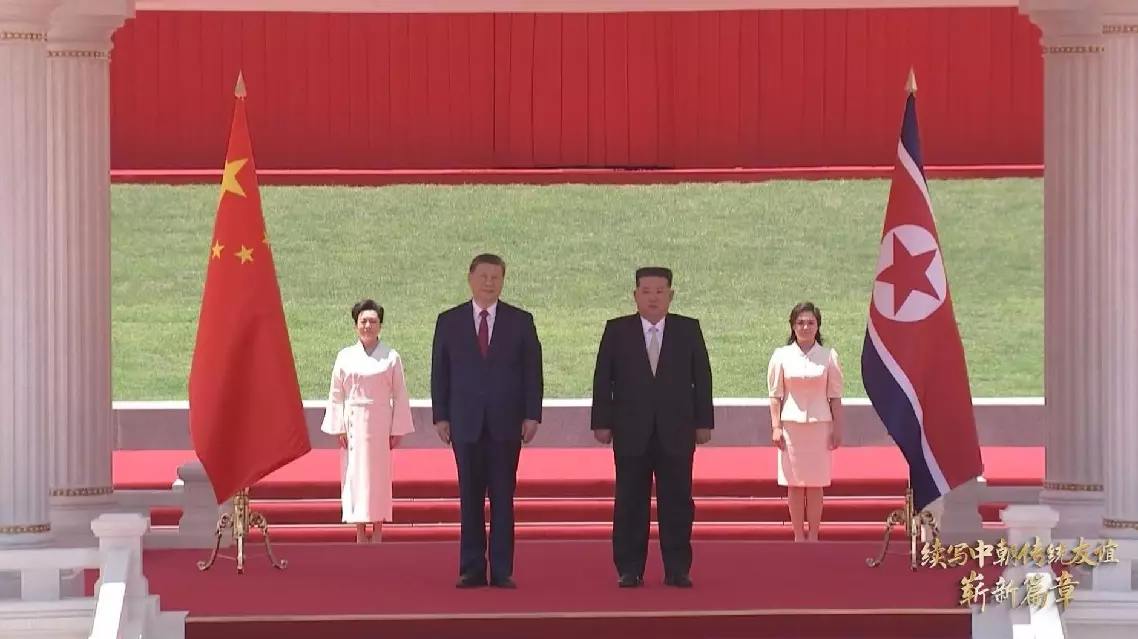
Xi's DPRK visit yields important consensus on bilateral ties