NEW YORK--(BUSINESS WIRE)--Dec 23, 2025--
Faruqi & Faruqi, LLP, a leading national securities law firm, is investigating potential claims against Klarna Group plc (“Klarna” or the “Company”) (NYSE: KLAR) and reminds investors of the February 20, 2026 deadline to seek the role of lead plaintiff in a federal securities class action that has been filed against the Company.
This press release features multimedia. View the full release here: https://www.businesswire.com/news/home/20251223573996/en/
Faruqi & Faruqi is a leading national securities law firm with offices in New York, Pennsylvania, California and Georgia. The firm has recovered hundreds of millions of dollars for investors since its founding in 1995. See www.faruqilaw.com.
As detailed below, the complaint alleges that the Company and its executives violated federal securities laws by making false and/or misleading statements and/or failing to disclose that: (1) Defendants materially understated the risk that its loss reserves would materially go up within a few months of the IPO, which they either knew of or should have known of given the risk profile of many individuals agreeing to Klarna’s buy now, pay later (“BNPL”) loans; and (2); as a result, defendants’ public statements were materially false and misleading at all relevant times and negligently prepared. When the true details entered the market, the lawsuit claims that investors suffered damages.
On November 18, 2025, Yahoo! Finance posted an article entitled "Klarna Revenue Surges Yet Longer Loans Trigger Provisions" on its website. The article, originally published on Bloomberg, stated that Klarna "reported record revenue that beat estimates for its third quarter, while setting aside more provisions for credit losses, in its first set of earnings since going public."
The article stated that Klarna "posted a net loss of $95 million, as the firm set aside more money for potentially souring loans. The company said provisions represented 0.72% of gross merchandise volume, up from 0.44% a year ago. Provisions for loan losses came in at $235 million, above analyst estimates of $215.8 million."
On this news, Klarna stock fell 9.3% on November 18, 2025.
The court-appointed lead plaintiff is the investor with the largest financial interest in the relief sought by the class who is adequate and typical of class members who directs and oversees the litigation on behalf of the putative class. Any member of the putative class may move the Court to serve as lead plaintiff through counsel of their choice, or may choose to do nothing and remain an absent class member. Your ability to share in any recovery is not affected by the decision to serve as a lead plaintiff or not.
Faruqi & Faruqi, LLP also encourages anyone with information regarding Klarna’s conduct to contact the firm, including whistleblowers, former employees, shareholders and others.
To learn more about the Klarna class action, go to www.faruqilaw.com/KLAR or call Faruqi & Faruqi partner Josh Wilson directly at 877-247-4292 or 212-983-9330 (Ext. 1310).
Follow us for updates on LinkedIn, on X, or on Facebook.
Attorney Advertising. The law firm responsible for this advertisement is Faruqi & Faruqi, LLP ( www.faruqilaw.com ). Prior results do not guarantee or predict a similar outcome with respect to any future matter. We welcome the opportunity to discuss your particular case. All communications will be treated in a confidential manner.

DEADLINE ALERT: Faruqi & Faruqi, LLP Investigates Claims on Behalf of Investors of Klarna Group plc
DUBAI, United Arab Emirates (AP) — Iran fired more missiles at Israel and Gulf Arab states Thursday, demonstrating Tehran’s continued ability to strike its neighbors even as U.S. President Donald Trump claimed the threat from the country was nearly eliminated.
Iran’s attacks on Gulf states along with its chokehold on the Strait of Hormuz have disrupted the world’s energy supplies with effects far beyond the Middle East. That has proved to be Iran’s greatest strategic advantage in the war. Britain held a call with nearly three dozen countries about how to reopen the strait once the fighting is over.
Trump has insisted the strait can be taken by force — but said it is not up to the U.S. to do that. In an address to the American people Wednesday night, he encouraged countries that depend on oil from Hormuz to “build some delayed courage” and go “take it.”
Before the U.S. and Israel started the war on Feb. 28 with strikes on Iran, the waterway was open to traffic and 20% of all traded oil passed through it.
Iran responded defiantly to Trump’s speech, in which the American president claimed U.S. military action had been so decisive that “one of the most powerful countries” is “really no longer a threat.”
A spokesman for Iran’s military, Lt. Col. Ebrahim Zolfaghari, insisted Thursday that Tehran maintains hidden stockpiles of arms, munitions and production facilities. He said facilities targeted so far by U.S. strikes are “insignificant.”
Just before Trump began his address — in which he said U.S. “core strategic objectives are nearing completion” — explosions were heard in Dubai as air defenses worked to intercept an Iranian missile barrage.
Less than a half-hour after the president was done, Israel said its military was also working to intercept incoming missiles. Sirens sounded in Bahrain, home to the U.S. Navy’s 5th Fleet, immediately after the speech.
Attacks continued across Iran on Thursday, with strikes reported in multiple cities.
Even amid the conflict, families went to a park in Tehran to play games and grill food to mark the last day of Iranian New Year, or Nowruz.
In Lebanon — home to Iran-backed Hezbollah militants who are fighting Israel, which has launched a ground invasion — an Israeli strike killed four people in the south, the Health Ministry said.
More than 1,900 people have been killed in Iran during the war, while 19 have been reported dead in Israel. More than two dozen people have died in Gulf states and the occupied West Bank, while 13 U.S. service members have been killed.
More than 1,300 people have been killed and more than 1 million displaced in Lebanon. Ten Israeli soldiers have also died there.
Iranian attacks on about two dozen commercial ships, and the threat of more, have halted nearly all traffic in the waterway that connects the Persian Gulf to the open ocean.
Since March 1, traffic through the strait has dropped 94% over the same period last year, according to the Lloyds List Intelligence shipping data firm. Two ships are confirmed to have paid a fee, the firm said, while others were allowed through based on agreements with their home governments.
Saudi Arabia piped about 1 billion barrels of oil away from the Strait of Hormuz in March, according to maritime data firm Kpler, while Iraq said Thursday that it had started to truck oil across Syria to avoid the strait.
The 35 countries that spoke Thursday, including all G7 industrialized democracies except the U.S., as well as the United Arab Emirates and Bahrain, signed a declaration last month demanding Iran stop blocking the strait.
Thursday’s talks were focused on political and diplomatic measures, but British Foreign Secretary Yvette Cooper said military planners from an unspecified number of countries will also plot ways to ensure security once fighting ends, including potential mine-clearing work and “reassurance” for commercial shipping.
No country appears willing to try to open the strait by force while the war is raging. French President Emmanuel Macron, while on a visit to South Korea, called a military operation to secure the waterway “unrealistic.”
But there is a concern that Iran might limit traffic through the waterway even after U.S. and Israeli attacks cease.
The idea of an international effort has echoes of the “coalition of the willing,” led by the U.K. and France, that was assembled to underpin Ukraine’s security in the event of a ceasefire in that war. The coalition is, in part, an attempt to demonstrate to Washington that Europe is doing more for its own security in the face of frequent criticism from Trump.
The conflict is driving up prices for oil and natural gas, roiling stock markets, pushing up the cost of gasoline and threatening to make a range of goods, including food, more expensive.
On Thursday, Brent crude, the international standard, rose again and was around $108, up about 50% from Feb. 28.
Though the oil and gas that typically transits the strait is primarily sold to Asian nations, Japan and South Korea were the only two countries from the region joining Thursday's call about the strait. The supply of jet fuel has also been interrupted, with consequences for travel worldwide.
Weissert reported from Washington and Rising from Bangkok. Associated Press writer David McHugh in Frankfurt, Germany, contributed to this story.
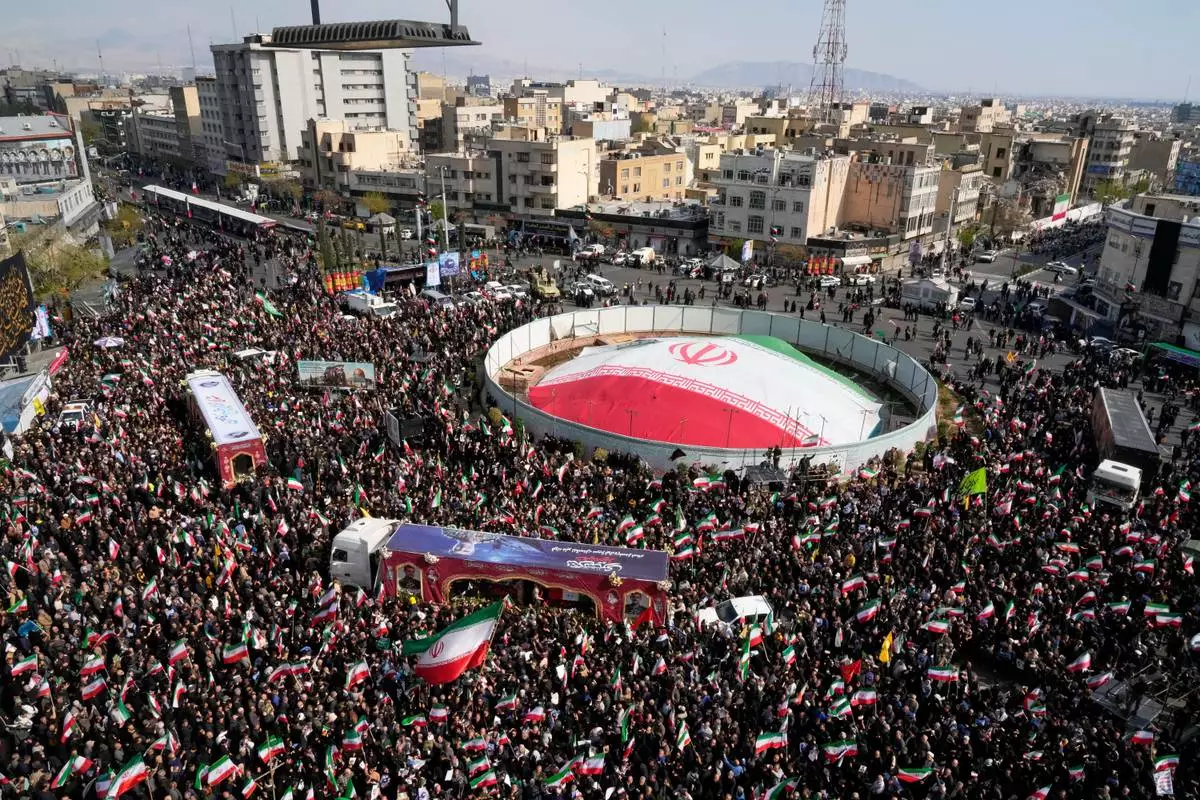
Mourners gather during a funeral procession for Alireza Tangsiri, head of Iran's Islamic Revolutionary Guard Corps Navy, and others killed in Israeli strikes in late March, in Tehran, Iran, Wednesday, April 1, 2026. (AP Photo/Vahid Salemi)
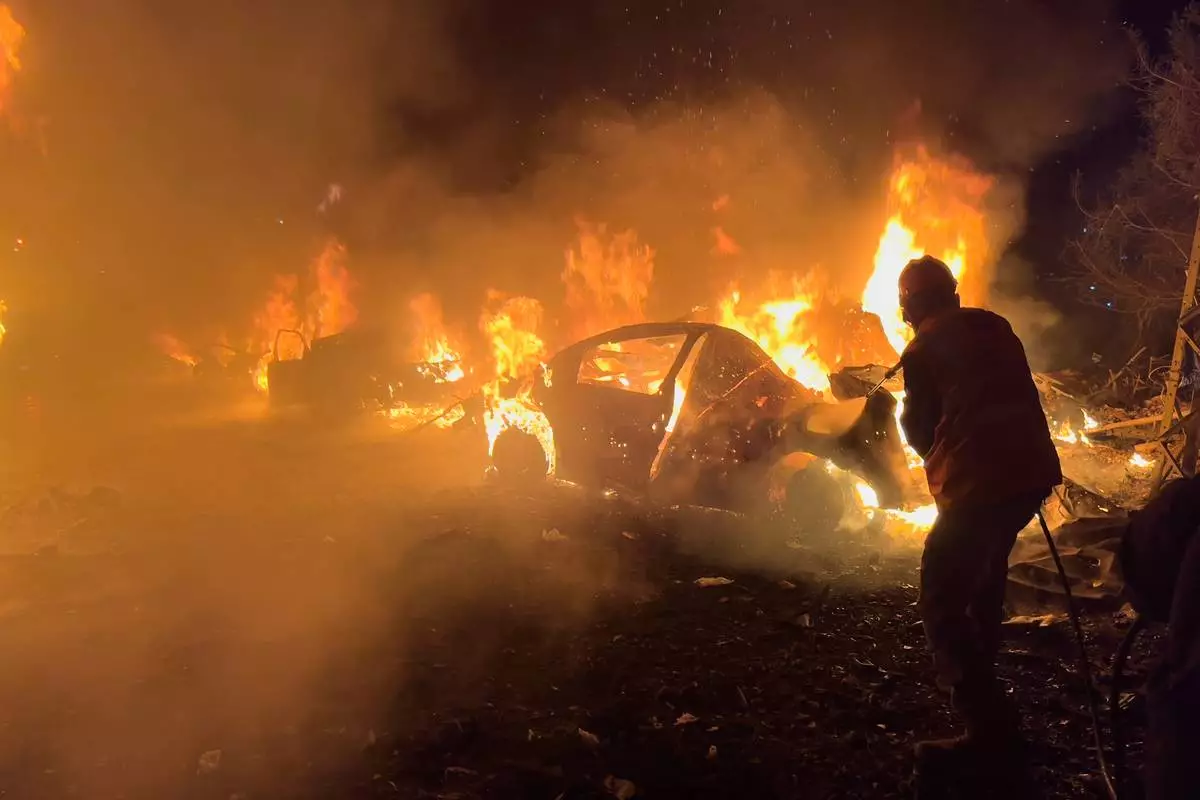
A firefighter extinguishes a car at the site of Israeli airstrikes, in Beirut, Lebanon, Wednesday, April 1, 2026. (AP Photo/Hussein Malla)
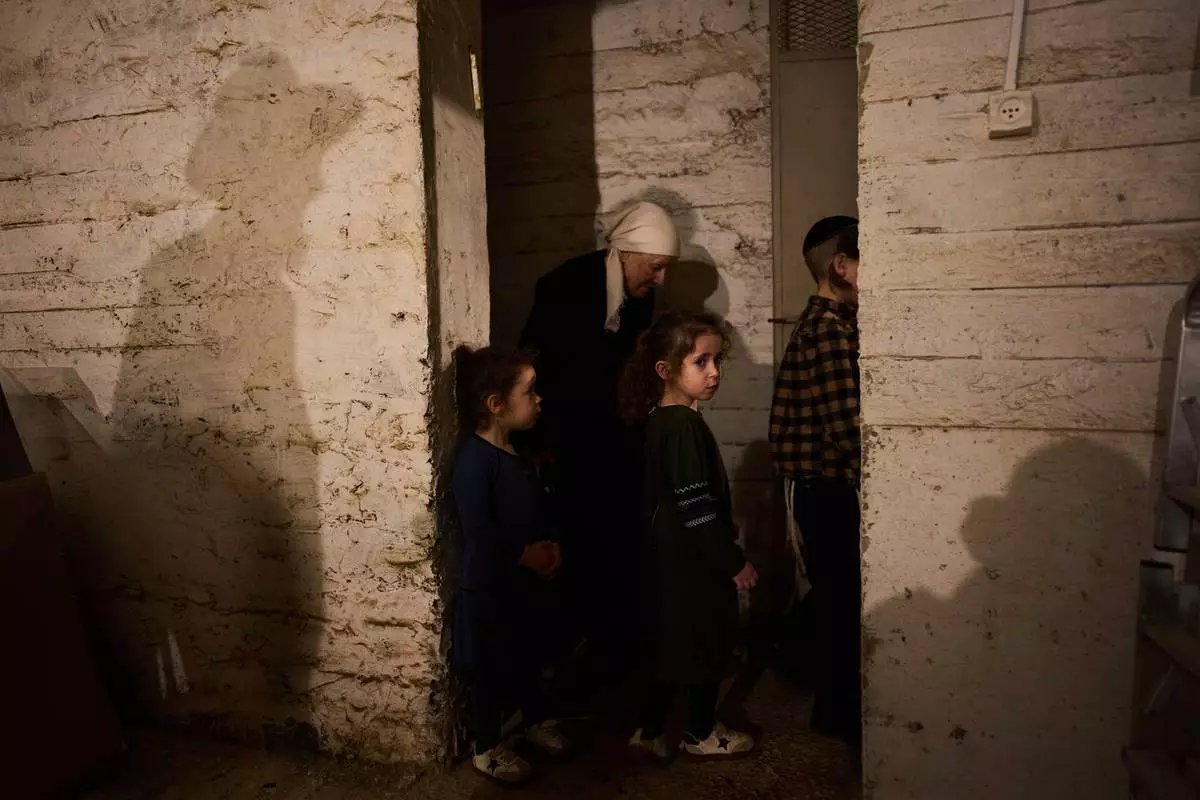
People take cover in a bomb shelter as air raid sirens warn of incoming Iranian missile strikes in Bnei Brak, Israel, Wednesday, April 1, 2026. (AP Photo/Oded Balilty)
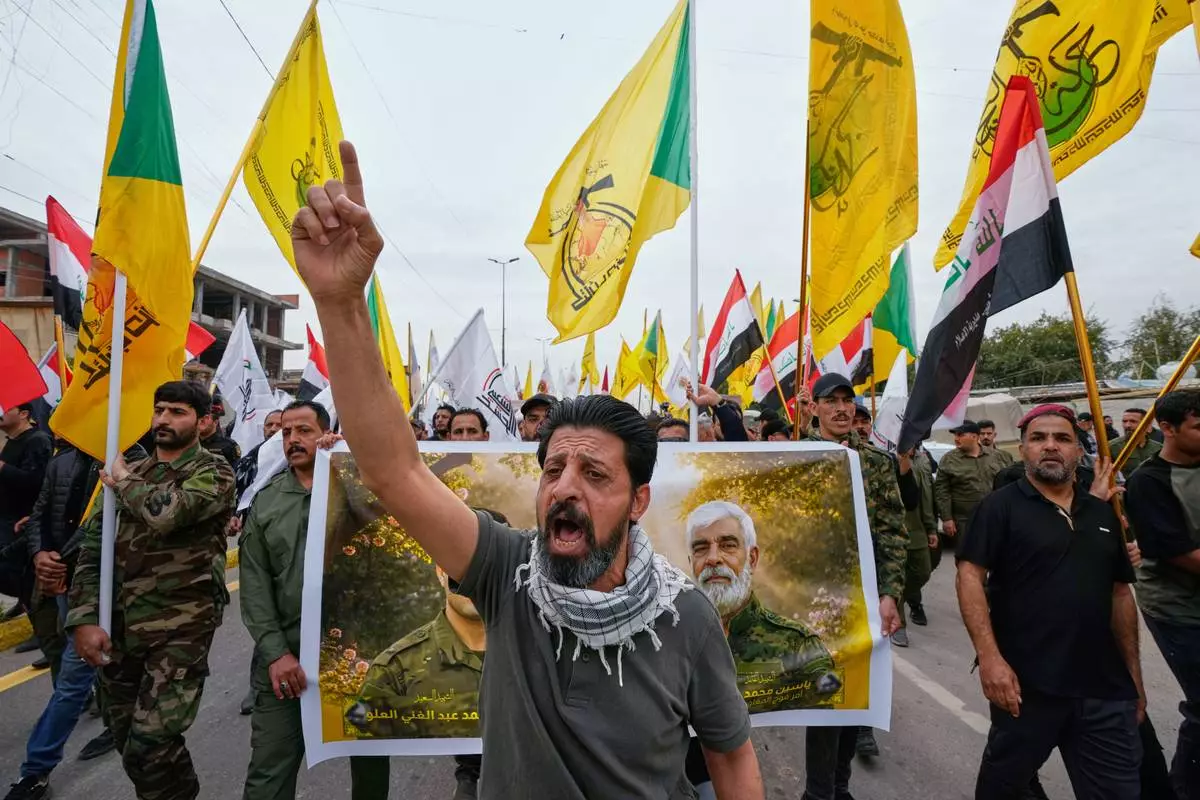
Members from the Popular Mobilization Forces attend a funeral of fighters who were killed in a U.S. airstrike, in Tal Afar, Nineveh province, north of Baghdad, Iraq, Thursday, April 2, 2026. (AP Photo/Hadi Mizban)
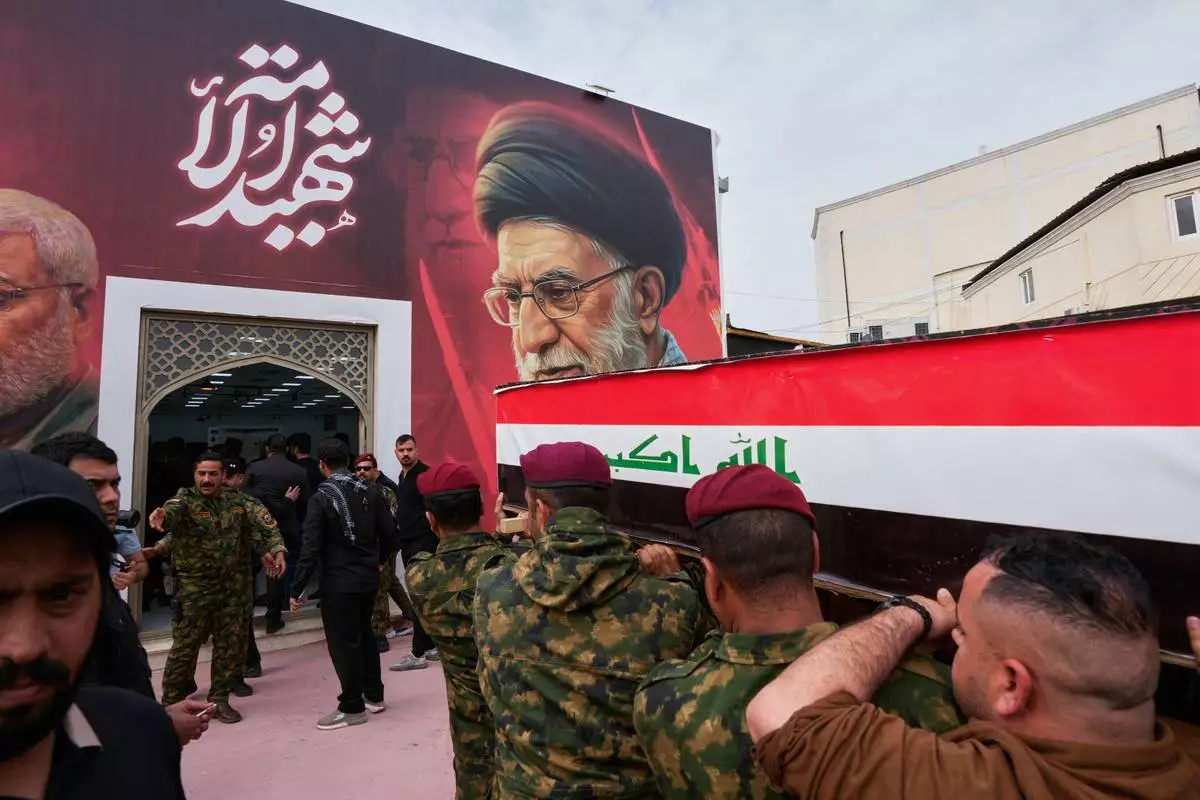
Members from the Popular Mobilization Forces attend a funeral of fighters who were killed in a U.S. airstrike, in Tal Afar, Nineveh province, north of Baghdad, Iraq, Thursday, April 2, 2026. (AP Photo/Hadi Mizban)
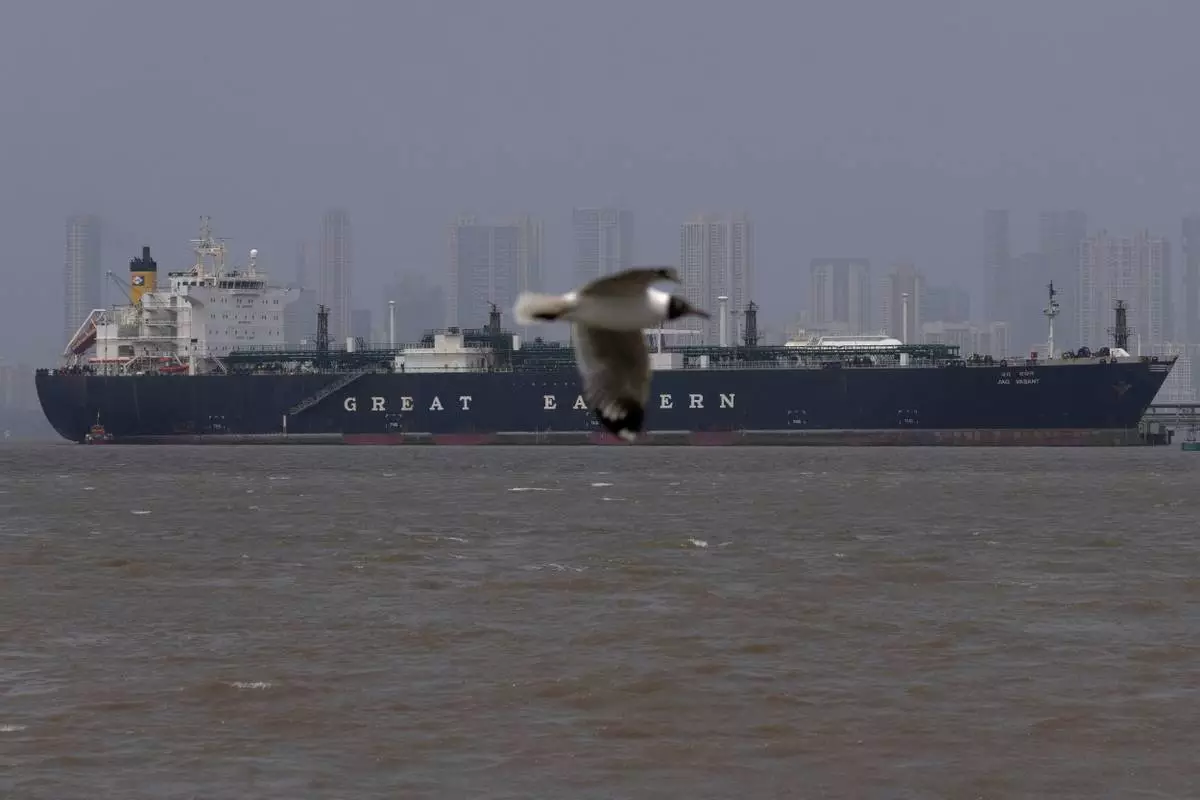
The Indian flagged LPG carrier Jag Vasant transporting liquefied petroleum gas, is seen at the Mumbai Port in Mumbai, India, after it arrived clearing the Strait of Hormuz, Wednesday, April 1, 2026. (AP Photo/Rafiq Maqbool)
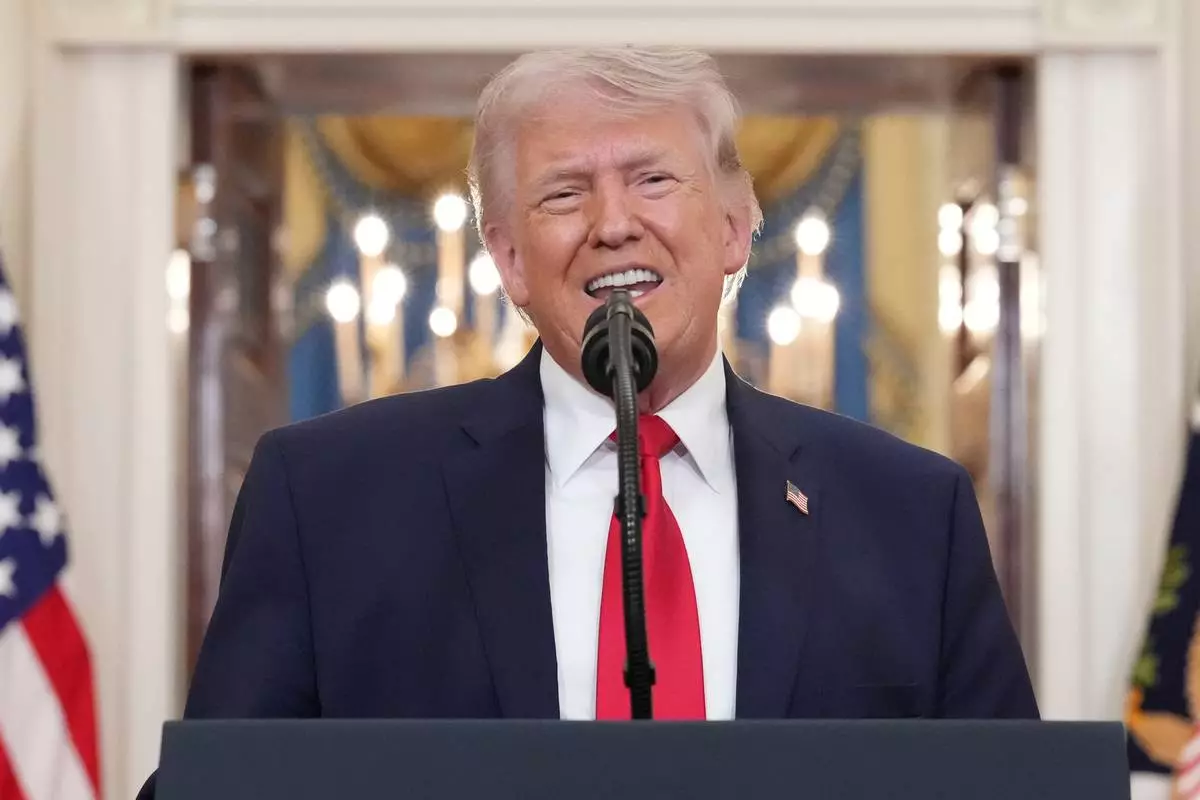
President Donald Trump speaks about the Iran war from the Cross Hall of the White House on Wednesday, April 1, 2026, in Washington. (AP Photo/Alex Brandon, Pool)
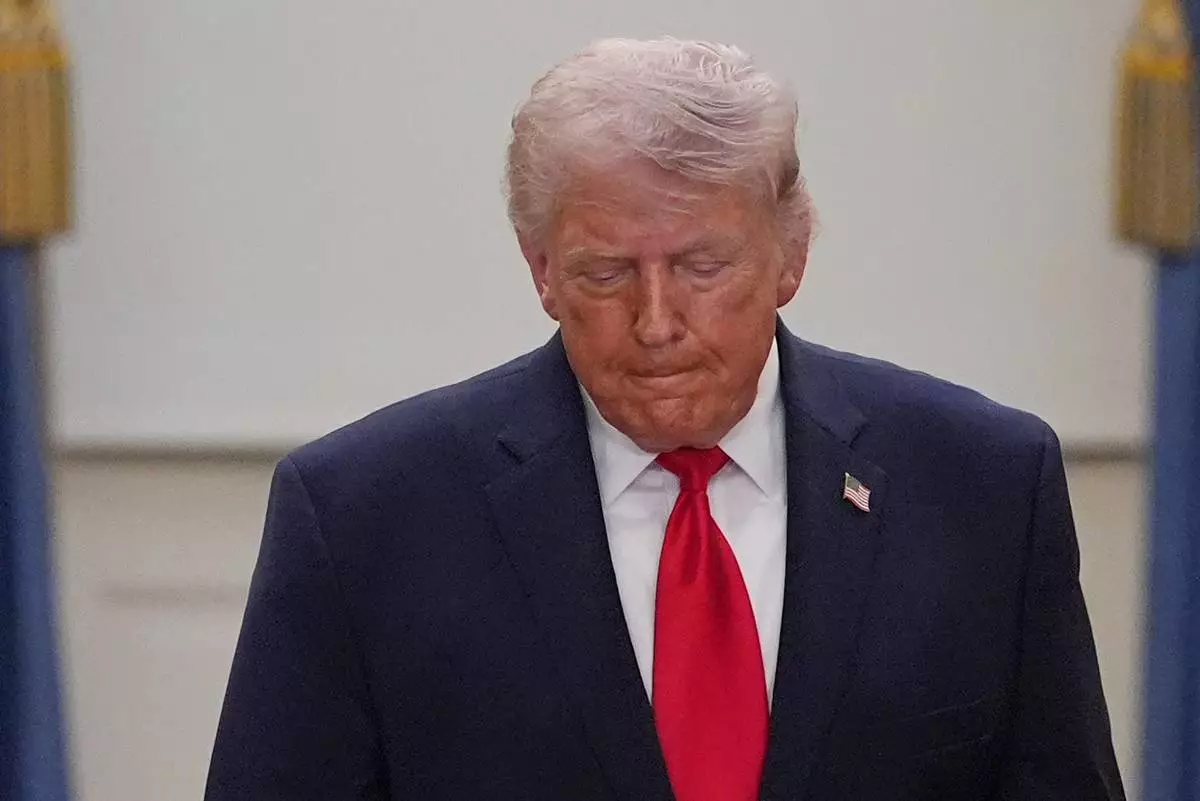
President Donald Trump walks from the Blue Room to speak about the Iran war from the Cross Hall of the White House on Wednesday, April 1, 2026, in Washington. (AP Photo/Alex Brandon, Pool)
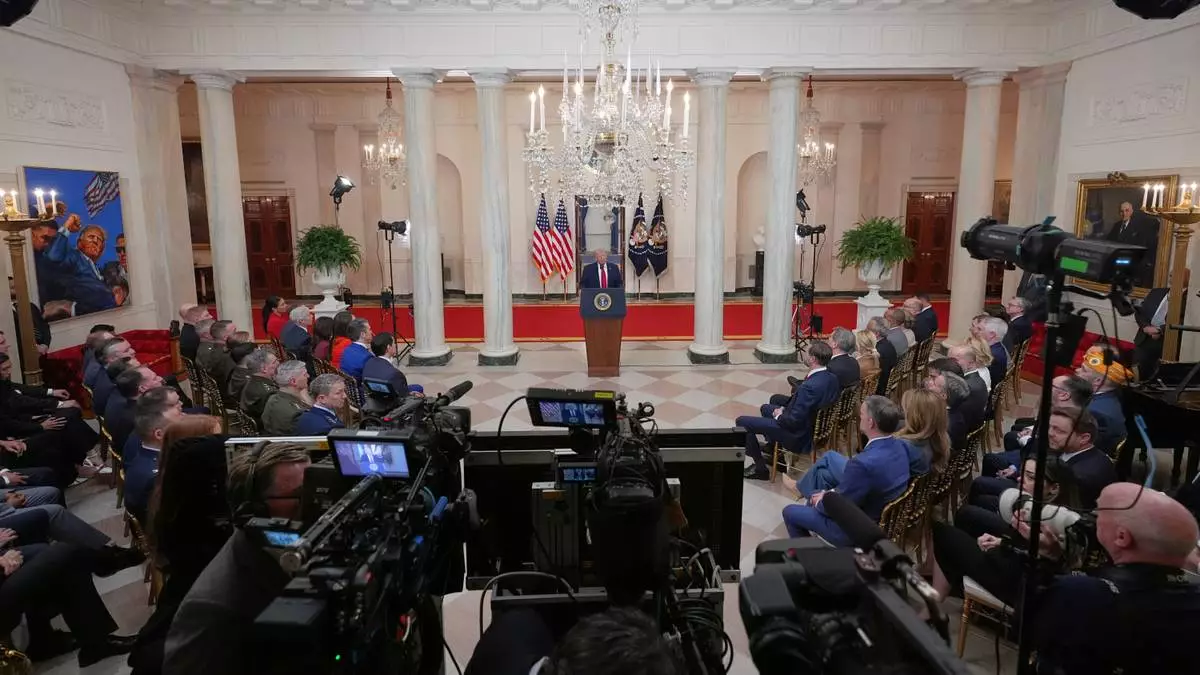
President Donald Trump speaks about the Iran war from the Cross Hall of the White House on Wednesday, April 1, 2026, in Washington. (AP Photo/Alex Brandon, Pool)
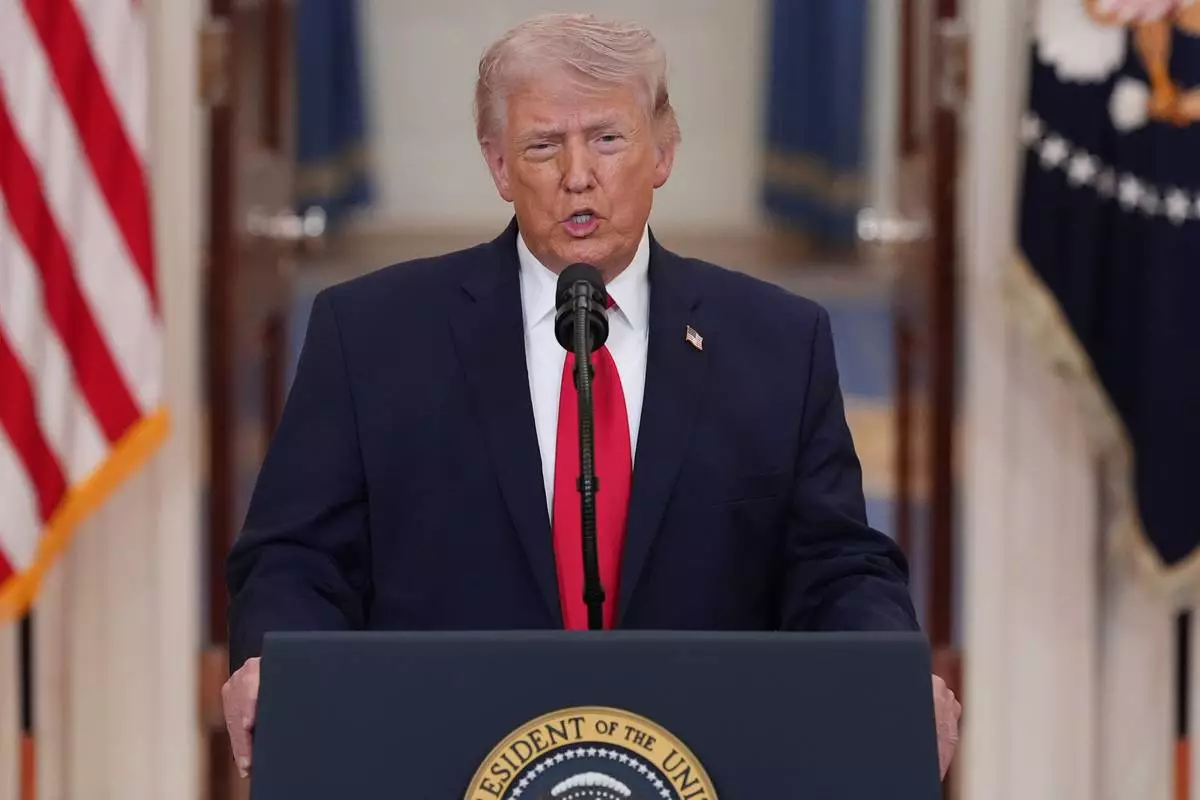
President Donald Trump speaks about the Iran war from the Cross Hall of the White House on Wednesday, April 1, 2026, in Washington. (AP Photo/Alex Brandon, Pool)