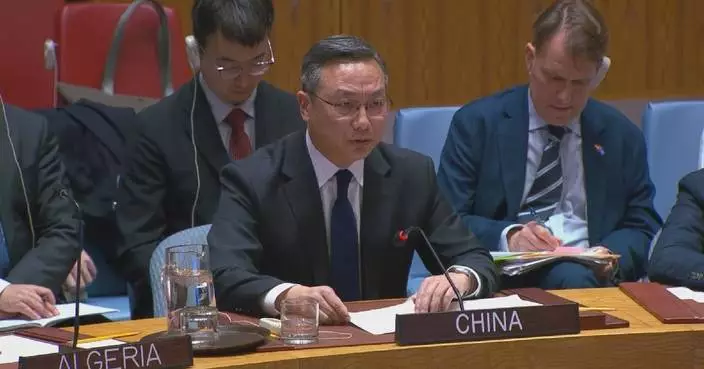
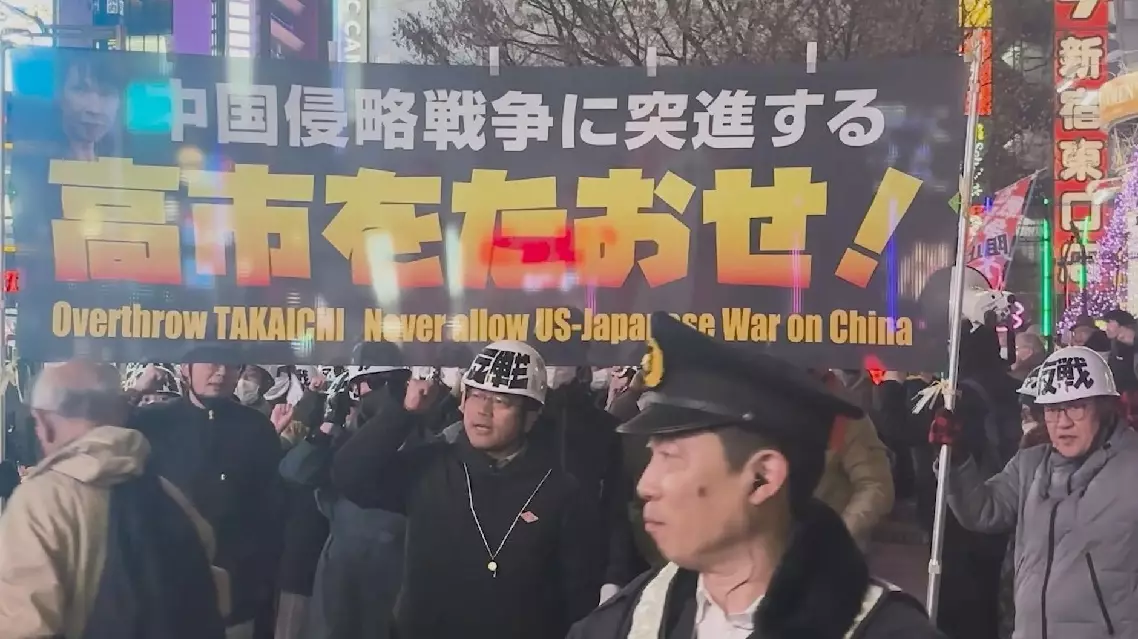
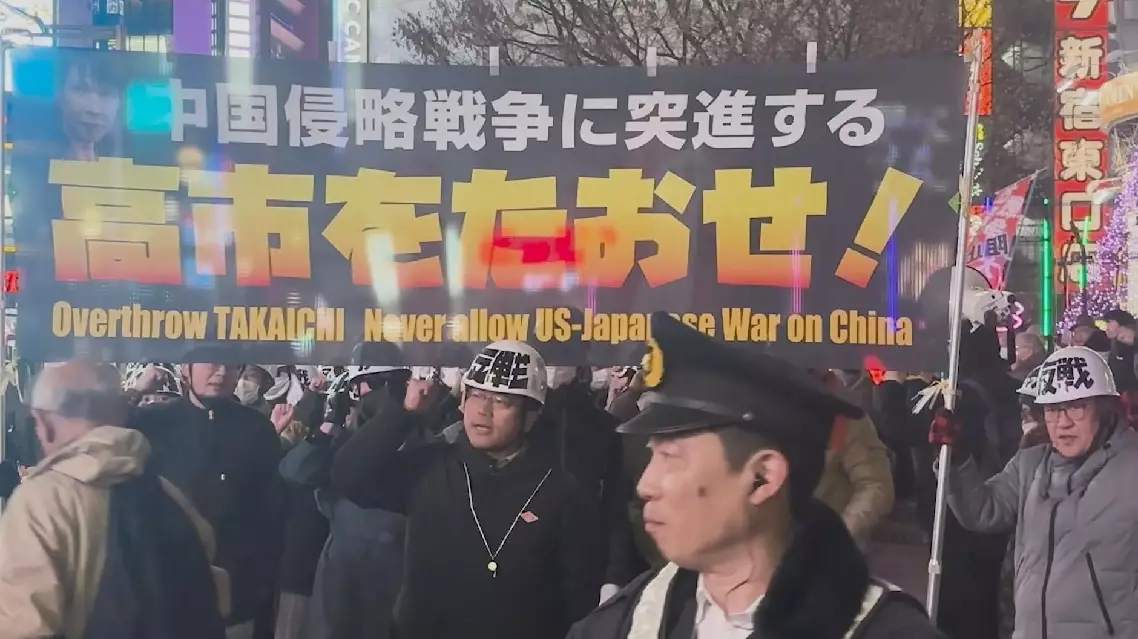
A group of Japanese residents gathered for a protest in downtown Tokyo on Tuesday evening, demanding Prime Minister Sanae Takaichi retract her erroneous statements on China’s Taiwan region and expressing growing alarm over her administration's policies.
At a Diet meeting on Nov. 7, Takaichi claimed that the Chinese mainland's "use of force on Taiwan" could constitute a "survival-threatening situation" for Japan and implied the possibility of armed intervention in the Taiwan Strait, which has immediately sparked strong criticism at home and abroad.
The Tuesday demonstration, marking continued domestic dissent, saw participants call on the prime minister to cease what they described as war-mongering rhetoric and to withdraw her comments immediately.
"I believe she should clearly retract the erroneous remarks. Right now, they seem to be trying to gloss over them. Takaichi simply lacks the qualifications of a stateswoman," a protester said.
Protesters related the issue to a broader historical context.
"Regarding Japanese militarist aggression, Japan has never truly reflected or apologized. Against this backdrop, Takaichi is now showing an unrepentant attitude toward the Chinese people once again and even attempting to provoke another war. This is absolutely not allowed," said a protester.
The rally also voiced strong opposition to recent political shifts, including discussions by some officials about Japan potentially acquiring nuclear weapons and revising its longstanding "Three Non-Nuclear Principles."
"Japan is now discussing policies, including a review of the 'Three Non-Nuclear Principles,' which means moving toward nuclear armament. Japan is a nation that suffered atomic bombings. Nuclear war must never be allowed," a protester warned.
Public concerns further extend to the government's fiscal priorities. A newly approved supplementary budget for fiscal 2025 pushes defense spending to 2 percent of GDP, a move that has deepened anxieties about everyday living costs.
"Everything the Takaichi administration does completely contradicts what the Japanese people actually want. They say the funding will come from issuing government bonds, and raising the consumption tax and income tax. But isn't this utterly destroying people's livelihoods? Already, more and more people can't even afford festival treats, or even rice. Under these circumstances, what they [the Takaichi administration] are doing from their positions of power is completely opposite to the lives of ordinary citizens. So, it's only natural that [this administration] deserves to be overthrown," said one protester.
The protest was upset by right-wing counter-demonstrators, who shouted and attempted to obstruct the march, highlighting the polarized domestic climate surrounding these issues.
Japanese rally against Takaichi's remarks, warn of militarist drift
Japanese rally against Takaichi's remarks, warn of militarist drift
Japanese rally against Takaichi's remarks, warn of militarist drift