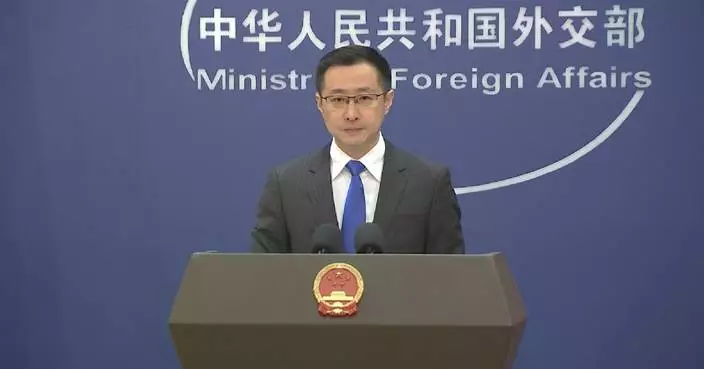
Foreign Ministry spokesman Lin Jian criticized remarks of a senior official at the Japanese Prime Minister's Office about possessing nuclear weapons, saying they have exposed the ambitions of Japanese right-wing forces to remilitarize the country.
Lin made the criticisms at a press briefing in Beijing on Wednesday in response to a media query about reports that the official's claim that Japan should have nuclear weapons has sparked strong oppositions at home and abroad, and that Prime Minister Sanae Takaichi on Tuesday cited the need to prepare for a long military conflict as a reason for swiftly revising three key security documents.
"I have noted relevant reports and also various local governments and civil organizations' protest statements and petitions in Japan. It now appears the nuclear armament remarks by the senior official at the Japanese Prime Minister's Office are by no means an isolated incident," Lin said.
"In recent years, Japan has loosened its self-imposed constraints on the right of collective self-defense, developed medium- and long-range offensive weapons, increased troop deployments, restructured its command system and expanded the operational scope of the Self-Defense Forces, seriously violating provisions of internationally legally binding documents such as the Cairo Declaration and the Potsdam Proclamation, as well as its own Constitution. In just two months since Prime Minister Takaichi took office, Japan has further accelerated military expansion, brought forward by two years the goal of raising defense spending to 2 percent of GDP, further eased restrictions on arms exports, pushed ahead with revisions to the National Security Strategy and other major security documents, and discussed revising the Three Non-Nuclear Principles, while hinting at the introduction of nuclear-powered submarines," he said.
"After Prime Minister Takaichi made erroneous remarks regarding Taiwan, a close aide again issued fallacious comments, repeatedly testing the bottom line of the international community and exposing Takaichi's long-standing misguided positions and the Japanese right wing's ambition to push re-militarization, sending an extremely dangerous signal. Such moves challenge the post-war international order, threaten regional peace and stability, and run counter to the interests of the Japanese people. China will work with all peace-loving countries to firmly prevent the revival of Japanese militarism," Lin said.
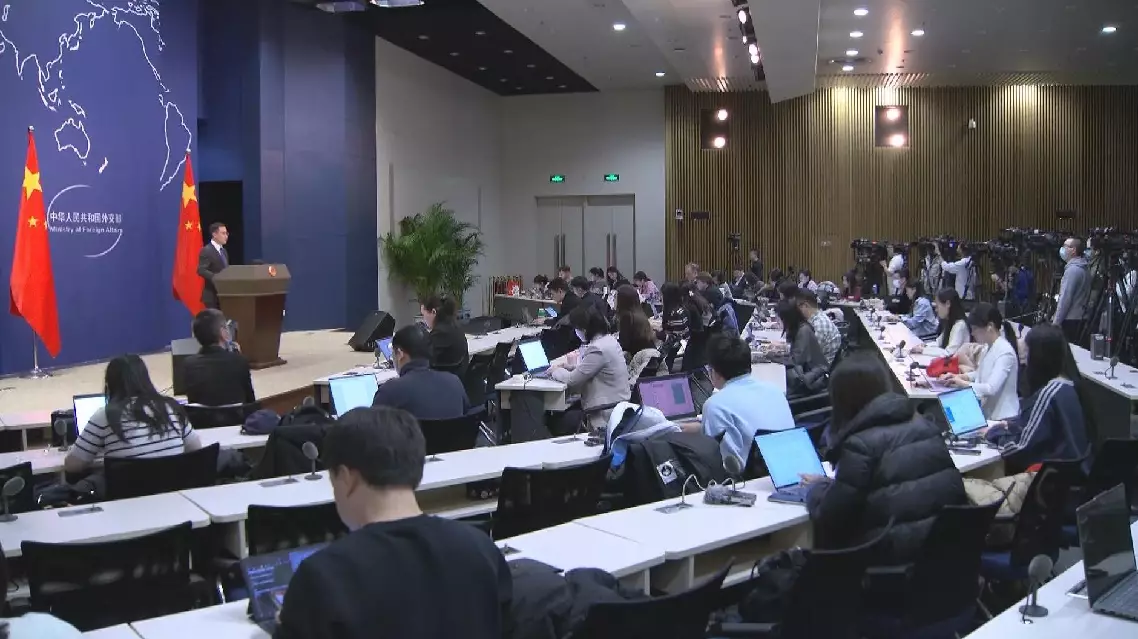
Spokesman condemns Japanese right-wing forces' remilitarization ambition
China's central government will continue to actively support cross-Strait industrial cooperation in the next 5 years, Peng Qing'en, spokesman of the State Council Taiwan Affairs Office, said at a press conference in Beijing on Wednesday. He also said the central government will assist businesses from China's Taiwan region in seizing opportunities during the 15th Five-Year Plan period (2026-2030).
Peng made the remarks when talking about the annual conference of the Cross-Strait CEO Summit held last week in Nanjing, east China's Jiangsu Province, during which businesses from both sides of the Taiwan Strait discusses opportunities during the 15th Five-Year Plan period and the integrated development of cross-Strait industrial and supply chains, and agreed that the implementation of the new five-year plan will open up a broader space for cross-Strait economic cooperation.
"This annual conference of the summit was a grand gathering for cross-Strait business exchanges and cooperation as the mainland is about to enter the first year of the 15th Five-Year Plan period. It's of great significance for businesspeople and companies from Taiwan to seize the opportunities brought about by the formulation and implementation of the 15th Five-Year Plan, accelerate their integration into the new development paradigm, participate in high-quality development, and deepen the integrated development of cross-Strait industrial and supply chains," Peng said.
"A hot issue in discussions among entrepreneurs across the Strait during the annual conference was how to seize the opportunities presented by the 15th Five-Year Plan and join hands to develop. They shared their outlook for development opportunities contained in the 15th Five-Year Plan from different perspectives in different fields, and discussed in depth new paths for cross-Strait economic cooperation through the synergy of industrial, supply, innovation and value chains. Participants said they have deepened their understanding of the industry layout and development priorities through exchanges, and will accurately align needs and optimize industry models in future cooperation to create conditions for integration across these chains," said Peng.
"We will, as always, actively support cross-Strait industrial cooperation, continuously improve the systems and policies for promoting cross-Strait economic and cultural exchanges and cooperation, deepen cross-Strait integrated development, assist businesspeople and companies from Taiwan in seizing opportunities of the 15th Five-Year Plan and help them achieve better development on the mainland," he said.
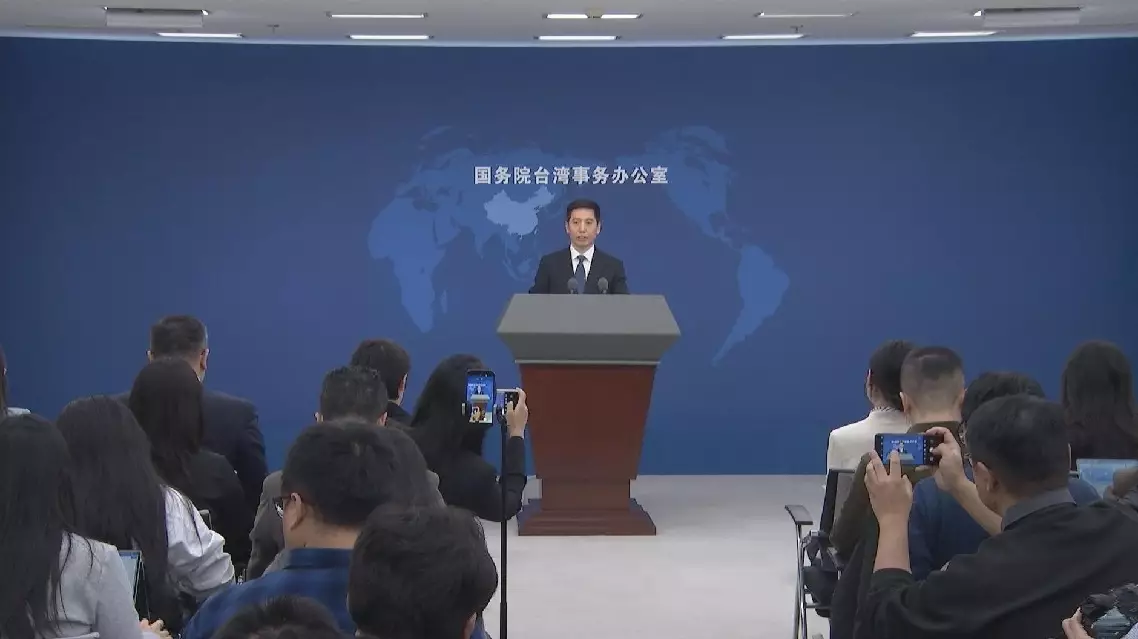
Central government continues supporting cross-Strait industrial cooperation