China's initiatives in promoting artificial intelligence (AI) and fostering the green transition will not only bring benefits to itself, but also to countries all around the world, according to Otaviano Canuto, the former vice president of the World Bank.
Chinese leaders set out their economic priorities for 2026 during the annual Central Economic Work Conference held in Beijing earlier this month, with a call to enhance innovation-driven development, accelerate the cultivation of new growth drivers, improve AI governance, and advance the AI Plus initiative.
First unveiled in a Chinese government work report last year, the AI Plus initiative aims to promote the extensive, in-depth integration of AI across all industries throughout China's economy and society, and will form a key part of the country's development plans in the coming years.
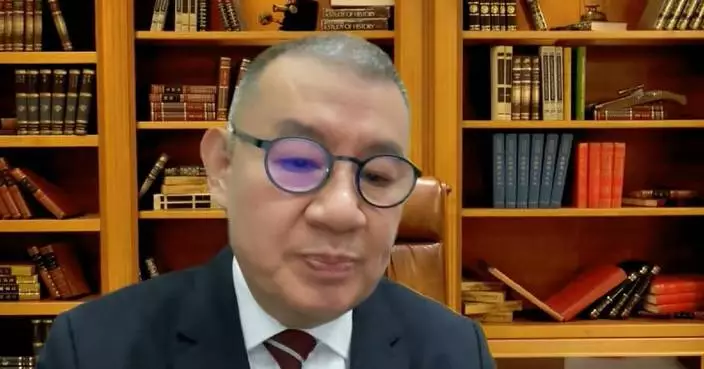
In an interview with the China Media Group (CMG), Canuto, who is also senior fellow at the Policy Center for the New South, said that China's drive to promote the development and application of AI technology will help to not only foster new growth poles domestically, but also benefit the wider world, especially developing countries.
"Its own innovation drive will shape global standards, value chains and cost structures in digital and intelligent technologies. Wider deployment of low-cost Chinese AI solutions, hardware and platforms would lower the global price of digital transformation, especially for developing economies. China's innovation push may thus contribute to global productivity and trade growth, deepen South-South technology links and expand the global supply of AI-enabled public goods," he said.
The recent Central Economic Work Conference also urged efforts to promote a comprehensive green transition, with carbon emissions peaking and carbon neutrality as the goals.
Back in 2020, China announced its ambitious dual carbon goals of peaking carbon dioxide emissions before 2030 and achieving carbon neutrality before 2060.
In late September, China unveiled its 2035 Nationally Determined Contributions (NDCs) towards the landmark Paris climate agreement, which for the first time set out an absolute emissions reduction target for the country, marking a shift from intensity-based control to total emissions control.
Canuto said that China's approach to comprehensively deliver the green transition is not only a sign of its own intent to pursue sustainable development, but also makes significant contributions to the overall global response to climate change, which has been fraught with challenges.
"So China is rapidly building a new energy system based on wind, solar and other non-fossil resources. The credibility and implementation of its dual-carbon trajectory are pivotal for meeting the Paris Agreement goals. Its leadership in scaling clean energy, electric vehicles, batteries and related supply chains has driven down global costs, making local carbon options more accessible, particularly for developing countries," he said.

China's AI drive, green transition to benefit wider world: former World Bank official
The National People's Congress (NPC) Financial and Economic Affairs Committee held a plenary meeting on Sunday to review the draft outline of the 15th Five-Year Plan (2026-2030) for national economic and social development, as well as the reports and drafts on budgets and economic and social development plans at the ongoing fourth session of the 14th NPC in Beijing.
The meeting passed three reports on the committee's review results and submitted them to the presidium of the fourth session of the 14th NPC.
The committee agreed that the goals and tasks outlined in the 14th Five-Year Plan (2021-2025) were successfully completed. The draft outline of the 15th Five-Year Plan submitted by the State Council is in line with the goals and requirements set forth in the Recommendations of the Central Committee of the Communist Party of China (CPC) for Formulating the 15th Five-Year Plan for National Economic and Social Development. Its major policy orientations align with the Party's basic theory, basic line and basic policy. Its main objectives, key tasks and major projects are in line with China's national conditions and stage of development, conform to the law of economic and social development, and are consistent with the country's medium- and long-term development strategic goals. Overall, it is feasible.
The committee suggested the fourth session of the 14th NPC approve the draft outline of the 15th Five-Year Plan.
The committee agreed that the implementation of the 2025 plan for national economic and social development was generally good. The 2026 plan proposed by the State Council is in line with the guiding principles from the 20th National Congress of the CPC and the plenary sessions of the 20th CPC Central Committee, conforms to the guidelines of Central Economic Work Conference and aligns with the goals of the outline of the 15th Five-Year Plan. Its main objectives, key tasks, and major projects are in accordance with the status quo of economic and social development in China. The 2026 plan is therefore feasible on the whole.
The committee suggested the fourth session of the 14th NPC approve the Report on the Implementation of the Plan for National Economic and Social Development in 2025 and the Draft Plan for National Economic and Social Development in 2026, and approve the draft plan for national economic and social development in 2026.
The committee also agreed that the execution of budgets for 2025 was good in general. The reports and drafts on central and local budgets for 2026, proposed by the State Council, conform to the guiding principles from the CPC’s 20th National Congress and the plenary sessions of the 20th CPC Central Committee, align with the guidelines of Central Economic Work Conference, and are compatible with the expected targets for annual economic and social development and the overall requirements for macro-control. Main revenue and expenditure policies are basically coordinated and matched. A careful analysis has been conducted on existing difficulties and challenges, and corresponding arrangements have been made to ensure the work is carried out effectively, which complies with the provisions of the Budget Law. Therefore, the draft budgets for 2026 are feasible.
The committee suggested the fourth session of the 14th NPC approve the Report on the Implementation of the Central and Local Budgets in 2025 and the Draft Central and Local Budgets in 2026, approve the draft central budget for 2026, and also approve the general debt ceiling and special debt ceiling for local governments for 2026.
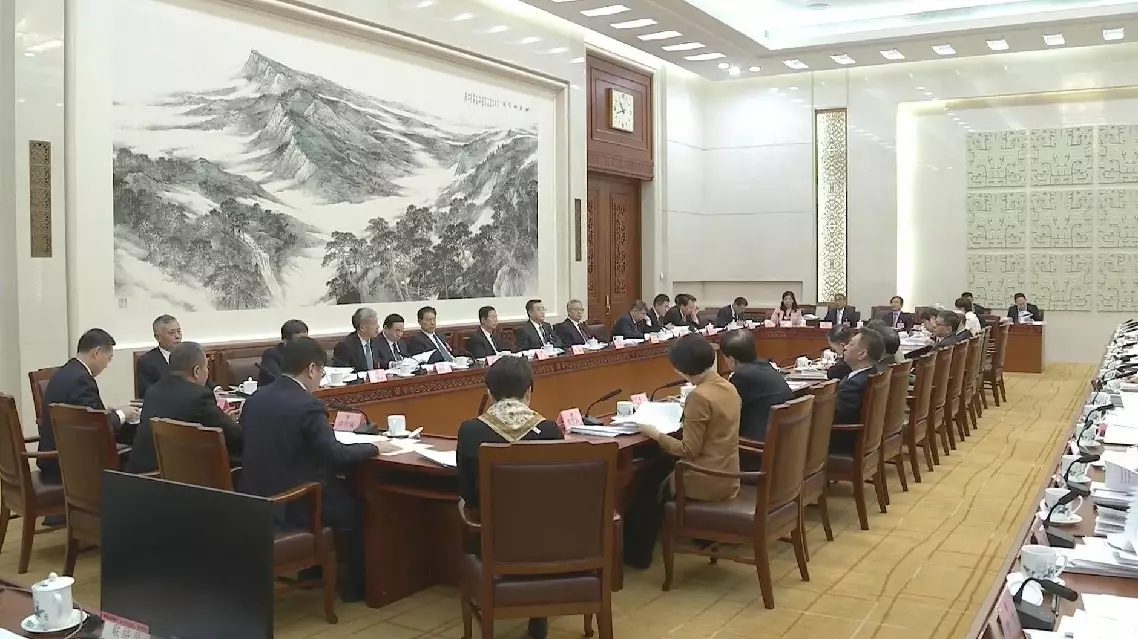
NPC committee reviews draft outline of 15th Five-Year Plan, reports, drafts on budgets, economic, social development plans