Newly released archival materials, including confessions by Japanese perpetrator, have further exposed the systematic production of germ weapons and inhumane human experiments conducted by Unit 731, a notorious Japanese germ-warfare unit during Japan's invasion of China, reinforcing historical facts that China says cannot be denied or distorted.
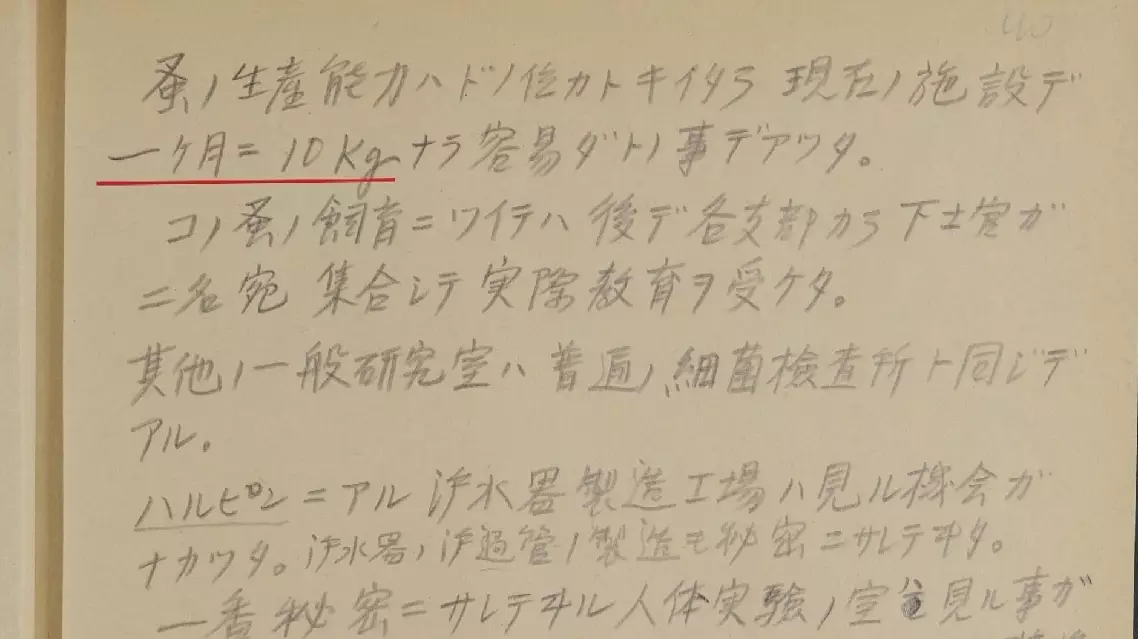
One key document is a handwritten confession by Kato Tsunenori, a commander of the Hailar branch of Unit 731, who described his direct involvement in producing plague-infected fleas to meet the unit's operational needs for germ warfare.
According to the confession, Kato carried out so-called "research" in a highly secretive flea-breeding zone at the Pingfang District in Harbin, Heilongjiang Province, recording in detail what he saw and did.
It provides first-hand evidence of how Unit 731 built and ran its biological warfare production chain.
The confession shows that as demand for fleas rose, Unit 731 head Shiro Ishii ordered regional branches to begin breeding fleas locally.
Kato and other branch commanders became directly involved, documenting technical procedures such as temperature control, breeding equipment, collection methods and monthly output. These details fill long-standing gaps in historical records and point to an organized, industrial-scale operation.
A curator at the Harbin-based Museum of Evidence of War Crimes by Japanese Army Unit 731 explained how the process worked in practice.
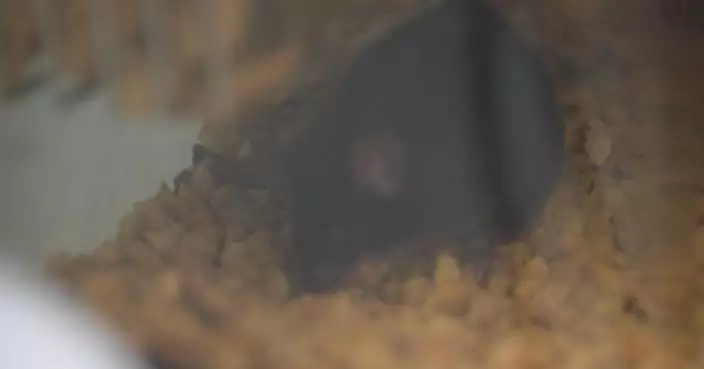
"According to what Kato personally saw and heard, the room used to cultivate fleas in the breeding chamber had to be kept at a temperature of 30 degrees Celsius. Inside the room were many oil cans. Inside the cans were small metal cages containing Guinea pigs. The bottom of the oil cans were spread with sawdust and wheat husks, and fleas were then released onto them. The fleas fed on the blood of the Guinea pigs, which had been injected in advance with plague bacteria. In other words, after feeding on the rats' blood, the fleas became infected with the plague bacteria and turned into poisonous, plague-carrying fleas. After the fleas were fully developed, they were transferred into a white bathtub-like container and illuminated. The fleas would flee toward the darker areas, making it easy to collect. According to his account, it was very easy to produce at least 10 kilograms of such infected fleas in one month," said Tan Tian.
In his confession, Kato also admitted the extreme danger of the operation. Despite special protective measures, absolute safety could not be guaranteed, and accidents and casualties occurred from time to time.
He further exposed the brutality of Ishii, saying the commander used incredible cruelty in live human experiments which had killed numerous Chinese people.
Tan said Kato's testimony, though limited to what he personally witnessed, speaks volumes.
"[Kato] said he had not seen the secret human experiment rooms and did not want to see them, because he knew for sure that what happened there was extremely inhumane. His detailed descriptions have filled many of the blanks in our previous understanding and showed that Unit 731 was carrying out biological weapons research on a large scale and with considerable technical sophistication. The more precise the research, the further it moved away from humanity," Tan said.
Jin Shicheng, head of the museum's publicity and exhibition department, said the archive is especially significant because it comes from the perpetrators' own perspective.
"This file, from the viewpoint of perpetrators, lays bare the criminal facts of human experimentation and germ warfare by Unit 731. The details of bacterial infection, live experiments and germ warfare are irrefutable evidence. It also completely shatters the false narrative that Unit 731 was merely engaged in epidemic prevention and water supply," Jin said.
The release of the confession comes as China has received a new batch of evidence from Russia related to the infamous Unit 731.
China's Central Archives said in mid-December that the materials include trial records of Unit 731 members, investigation reports into the unit's crimes and internal correspondence of Soviet authorities dating from 1939 to 1950.
During World War II, Japanese invading forces established a biological warfare network across multiple Asian countries, with Unit 731 based in Harbin as a top-secret hub for germ weapons development and human experiments.
Historical records show that at least 3,000 people from China, the Soviet Union and other countries and regions were subjected to human experimentation.
New evidence exposes Unit 731's notorious germ warfare crimes