The State Council of China has approved the issuance and implementation of three action plans to construct pilot zones for the Beautiful China Initiative in major areas of the Beijing-Tianjin-Hebei region, the Yangtze River Delta region, and the Guangdong-Hong Kong-Macao Greater Bay Area.
The action plans, aligned with the requirements for high-quality development, focus on addressing deep-seated contradictions and issues that constrain ecological conservation and environmental protection, said an official of the Ministry of Ecology and Environment at a press conference in Beijing on Friday.
The action plans will provide support for consolidating and enhancing the high-quality development of the three pilot zones, as well as for making new major progress in building a beautiful country, according to the official.
The action plan for the Beijing-Tianjin-Hebei region, which is an expanded urban agglomeration consisting of the Chinese capital, Tianjin Municipality and the major industrial province Hebei in north China, aims to lead in making breakthroughs in improving ecological and environmental quality, optimizing industrial and energy structures, and exploring innovative regional collaborative governance.
It emphasizes efforts to improve the quality and efficiency to prevent and control air pollution, enhance the capacity to adapt to climate change, and create a demonstration zone for coordinated pollution and carbon emission reduction as well as ecological restoration in the Beijing-Tianjin-Hebei region.
The action plan for east China's Yangtze River Delta region proposes that the region will take the lead in making breakthroughs in developing green productivity and implementing joint protection and coordinated governance of the ecological environment.
It highlights the unification of regional legal standards, zoned control of the ecological environment, and intelligent governance, aiming to establish a model zone in the Yangtze River Delta region where high-level protection drives high-quality development.
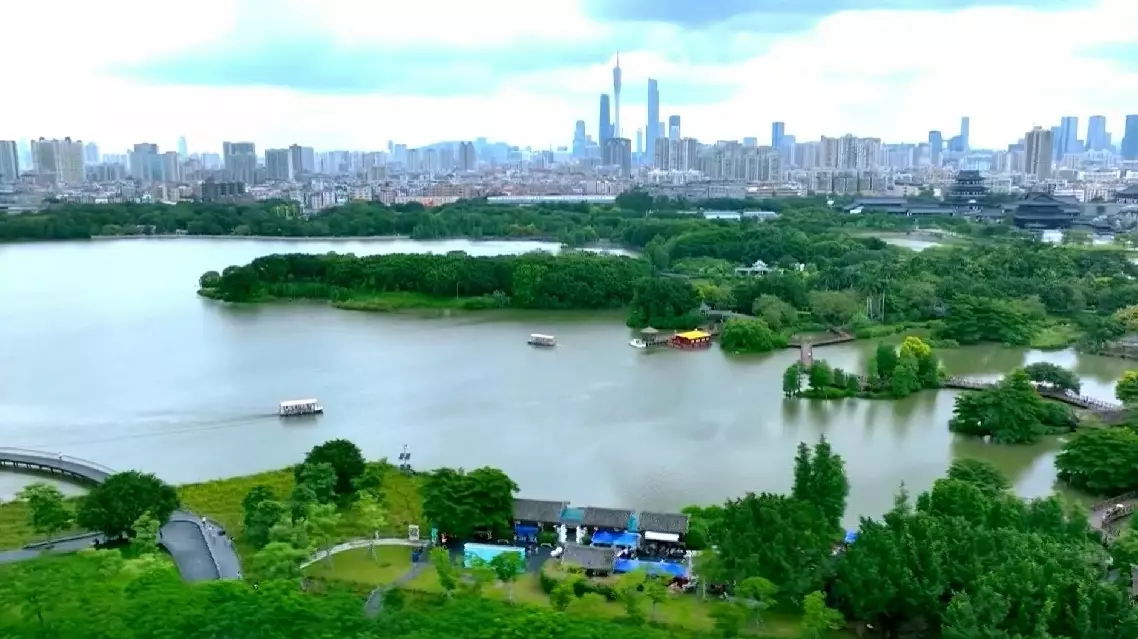
The action plan for the Guangdong-Hong Kong-Macao Greater Bay Area, a vibrant city cluster that comprises the special administrative regions of Hong Kong and Macao, as well as cities in southern province of Guangdong, suggests that the region should leverage the institutional advantages of "one country, two systems" to make breakthroughs in improvement of ecological and environmental quality, green finance reform and innovation, and deepening of opening-up and cooperation.
The region will fully play its radiating and driving role, and jointly construct a beautiful bay area of integrated innovation among Guangdong, Hong Kong and Macao.
The Ministry of Ecology and Environment will work with relevant departments and regions to promote the orderly implementation of the action plans and jointly drive the construction of pilot zones for the Beautiful China Initiative to achieve tangible results, according to the official.
China releases three action plans to build pilot zones for Beautiful China Initiative