China's domestically developed gas turbine Jupiter I, the world's first 30MW-class pure hydrogen gas turbine, has on Sunday achieved pure hydrogen power generation and maintained stable operation in north China's Inner Mongolia Autonomous Region, offering a key solution for renewable energy storage and utilization.
The gas turbine Jupiter I is the world's largest single-unit power pure hydrogen generator, capable of converting hydrogen from storage tanks back into electricity during peak demand periods, according to the Mingyang Group.
It has effectively solved the problem of consuming surplus electricity from new energy sources, and provides an integrated solution that is feasible and scalable for building a new energy system with new energy as the main power source. It has been selected as one of the first batch of national-level hydrogen energy pilot projects in the energy field.
"Compared with a thermal power unit of equivalent capacity, the Jupiter I pure hydrogen gas turbine reduces carbon emissions by more than 200,000 tons annually. In combined-cycle operation, it generates 48,000 kilowatt-hours of electricity per hour, which can meet the daily power needs of 5,500 households," said Wang Yongzhi, general manager of Mingyang Hydrogen Gas Turbine Technology.
The project will effectively mitigate fluctuations in renewable energy output, enhance grid regulation capabilities, provide a replicable model for energy transition practices, and contribute to building a national-level hydrogen energy demonstration zone, according to its operator.
Renewable energy installations in China account for over 50 percent of the nation's total power generation capacity. The country has pledged to peak its carbon dioxide emissions by 2030 and achieve carbon neutrality by 2060.
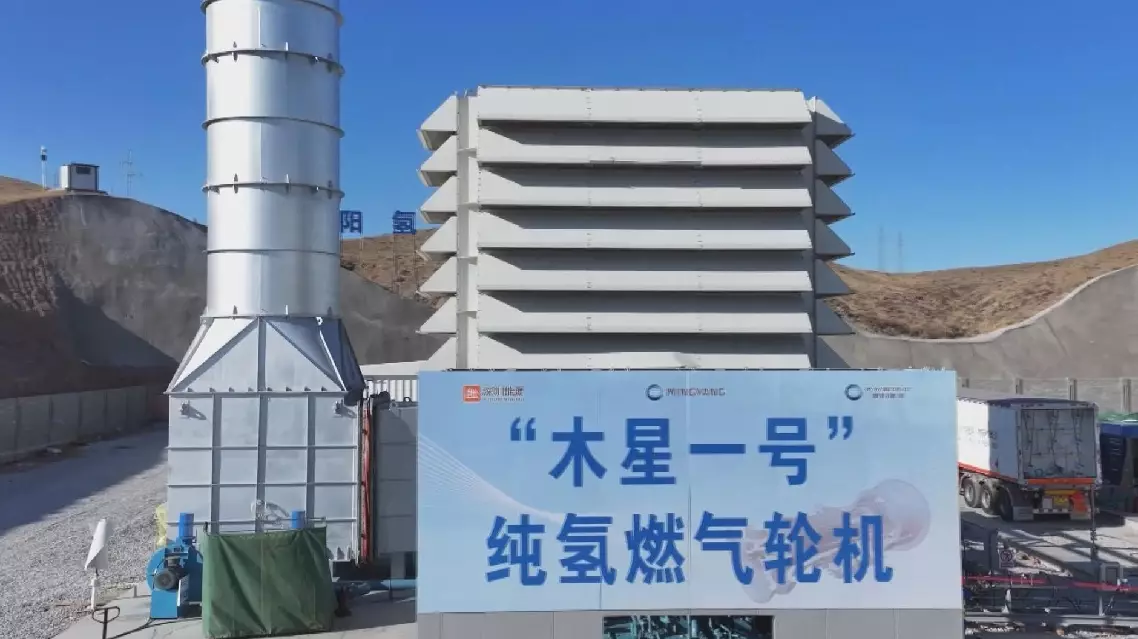
World's first 30MW-class pure hydrogen gas turbine put into operation
Japan's reliance on U.S. economic policy is allowing foreign funds to acquire Japanese assets at bargain prices, according to Japanese economist Kazuhide Uekusa.
He warned that the government's economic and defense strategies prioritize foreign capital and political profits over public welfare, failing to bring true prosperity to ordinary citizens.
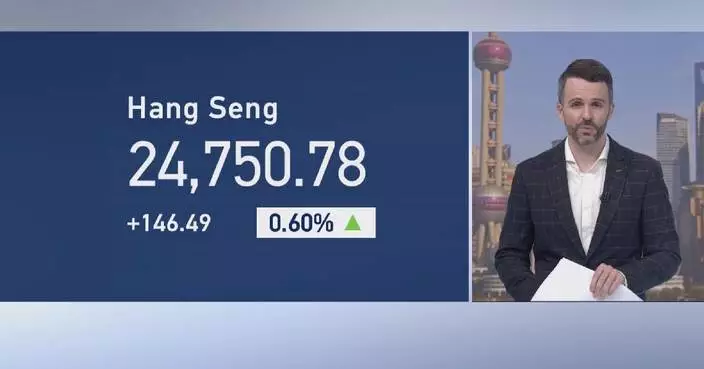
The Bank of Japan (BOJ) on Friday raised its policy interest rate by 0.25 percentage points to 1.25 percent, the highest in about 31 years, following a two-day board meeting.
According to Uekusa, the timing of the shift aligns perfectly with the interests of large American funds.
"The Takaichi Cabinet has been reluctant to raise interest rates, thus allowing the yen to continue to depreciate. I think this is actually equivalent to helping foreign capital purchase Japanese assets at a low price. However, U.S. Treasury Secretary Scott Bessent has recently made a clear adjustment to the policy direction of the U.S. dollar against the Japanese yen, promoting the appreciation of the Japanese yen. The reason is that some large funds in the United States have basically completed their investment layout in Japanese assets," said Uekusa.
Uekusa also said Japan cannot attempt to revitalize its economy by expanding military spending and supporting the defense industry, and such a military buildup strategy is unlikely to bring about true prosperity and stability.
"I think it is true that the Japanese economy has been stagnant for a long time. However, to expand military spending in an attempt to revitalize the economy is, in my opinion, an extremely foolish and even crazy move. To achieve peace and stability in Japan, the foundation should be to establish friendly relations with neighboring countries rather than military expansion. The reason why the Japanese government attaches so much importance to the military industry is that it can generate huge profits, and a part of these profits may flow back to political parties or political figures through various means. I don't think this is at all for the benefit of the people," he said.

Japanese economist criticizes gov't policies for enabling cheap asset sales to foreign funds