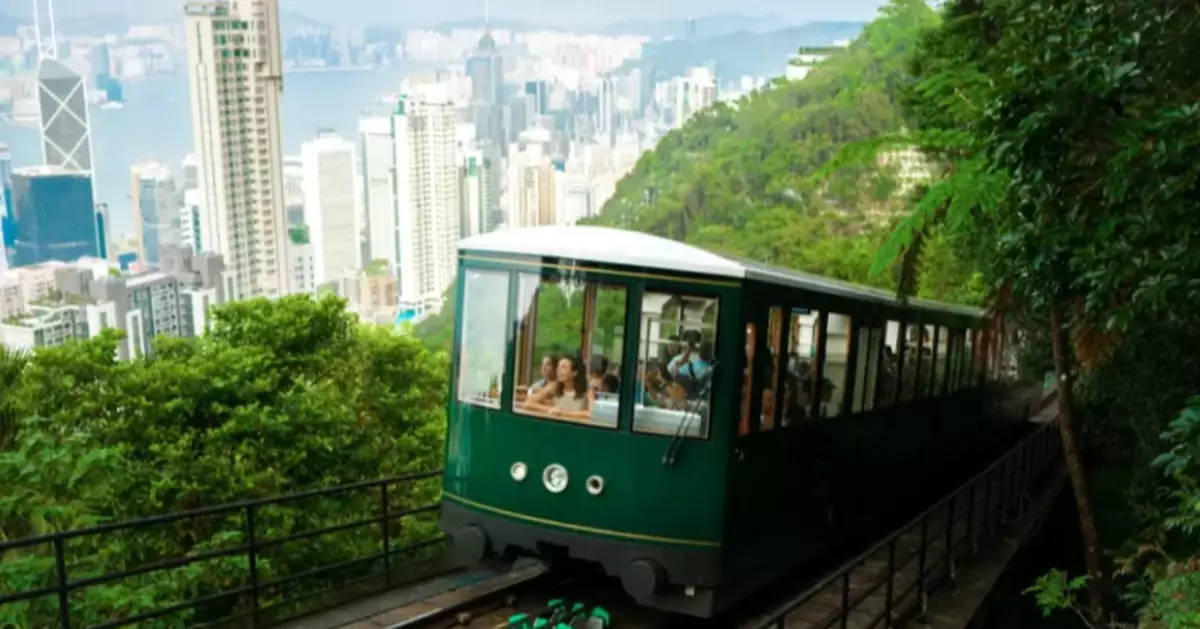
The Peak Tram has increased its fare starting from December 29th. The round-trip fare for adults has risen from 108 HKD to 116 HKD with an increase of 7.4%. The round-trip fares for children and the elderly have risen from 54 HKD to 75 HKD with an increase of nearly 38.9%.
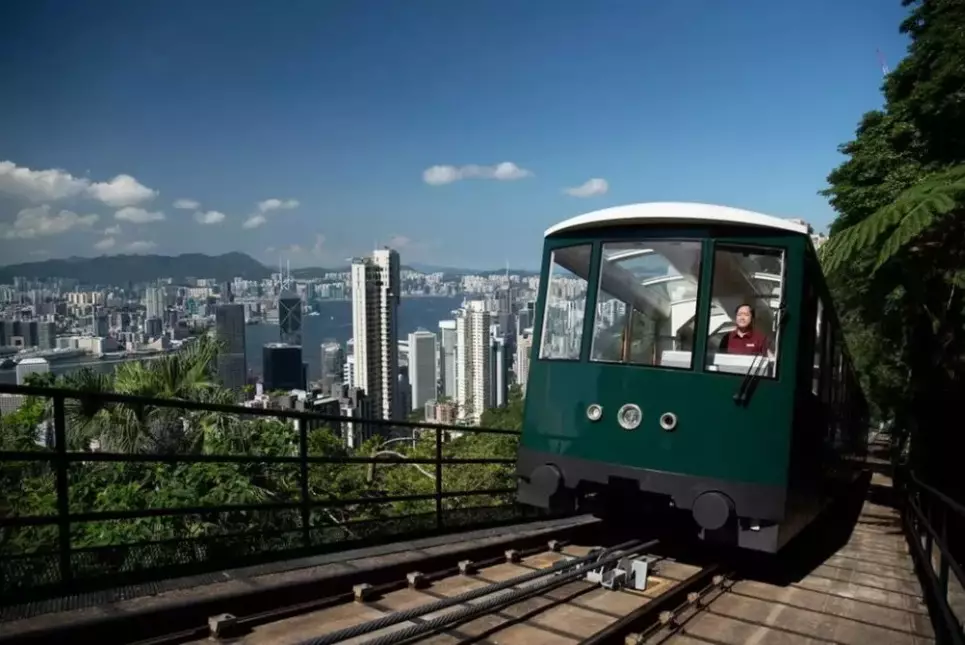
The Peak Tram, Photo source: reference image
As for the single tickets, the fare for adults has risen from 76 HKD to 82 HKD with an increase of approximately 7.9%, while the fare for children and the elderly has risen from 38 HKD to 52 HKD with an increase of about 36.9%.
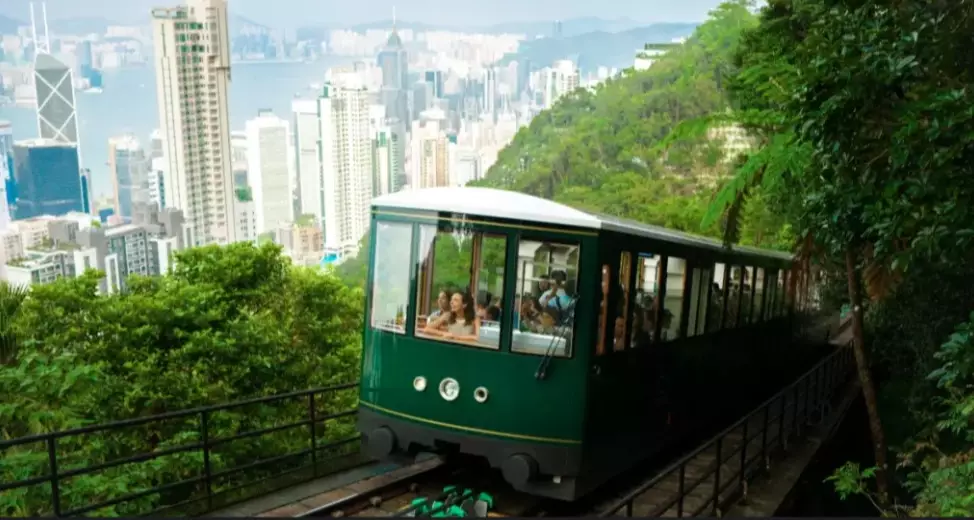
The Peak Tram, Photo source: reference image
The Peak Tramways Company said that passengers who had purchased tickets via the company's official website and WeChat mini-program by December 31st could still buy the tram tickets valid until January 31st in 2026 at the original prices.
Mr Paul Chan, the Financial Secretary, stated in his blog that, tracing back to 2025, despite the uncertain external circumstances, the development of the local asset market has further improved, with a continuous inflow of funds, an increased number of visitors to Hong Kong, a fine manifestation of total exports and fixed capital investment, and stabilized local consumption. It's estimated that Hong Kong's economic growth will accelerate to 3.2% in 2026, the third consecutive year that the local economy has maintained a growth momentum. The good performance in exports and investment is the main driving force for boosting the economy. The simultaneous rise in both the price and transaction volume of the stock and property markets has consolidated the positive expectations of the market.
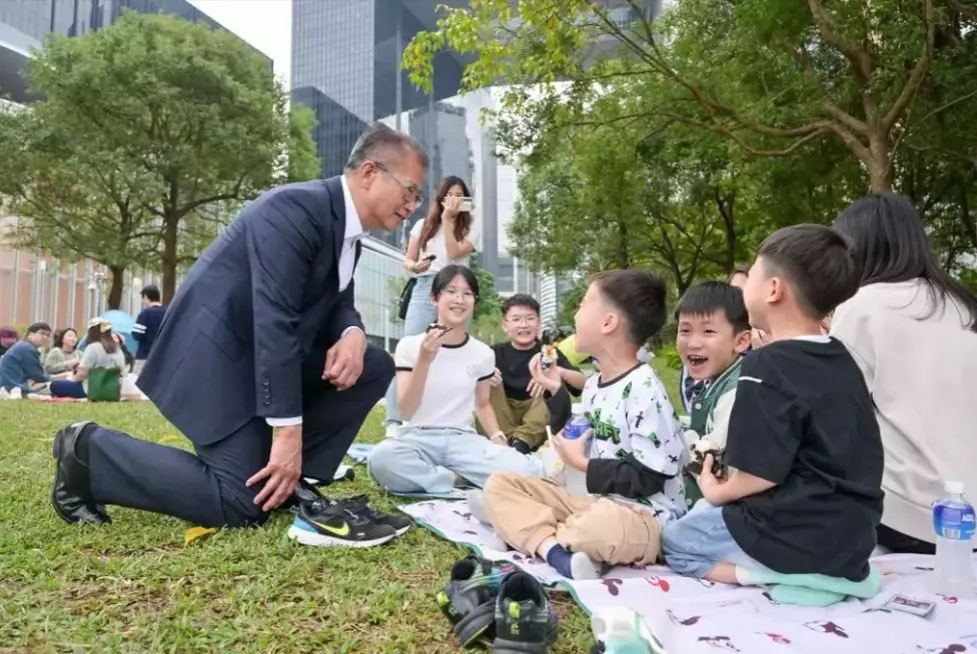
Photo source: FB of Paul Chan
Looking forward to 2026, Mr Paul Chan said that although new challenges would be inevitable, greater new development opportunities would also arise. He said that Hong Kong's economy is expected to maintain a good momentum, better integrate into the country's development continuously, and create more high-quality positions for the public. The market generally expects that the global economy can still maintain a moderate expansion even in the face of slowing growth impetus. As for the main growth engines in the next year, he expected the Chinese Mainland and Asia as a whole would be the key drivers, continuing to provide important support for Hong Kong's economy. Moreover, the cut of interest rate generally expected by the market would be beneficial to the development of local business and investment atmosphere.

Photo source: FB of Paul Chan
He said that the government would remain highly vigilant, preventing all kinds of "black swan" and "gray rhino" situations in the volatile external environment as well as balancing the two main axes of "security" and "development" to ensure that Hong Kong can continue to develop steadily in both society and economy next year.

Photo source: FB of Paul Chan
Mr Paul Chan also stated that since 2026 is the opening year of China's 15th Five-Year Plan, Hong Kong will be more proactive in aligning with national development strategies. Finance, innovation & technology, and trade will be the three key development engines for Hong Kong. Meanwhile, Hong Kong is accelerating the cultivation of artificial intelligence as a local core industry and empowering the upgrading and transformation of traditional industries with the "AI+" strategy. The development of the AI industry in Hong Kong will be promoted from six aspects: computing power, algorithms, data, application development, financial support, and talent cultivation. He said that Hong Kong will continue to play its role as a "super connector" and a "super value-adder" in the face of the new international economic and trade pattern and the reshaping of industrial and supply chains.