NEW YORK (AP) — The White House cannot lapse in its funding of the Consumer Financial Protection Bureau, a federal district court judge ruled on Tuesday, only days before funds at the bureau would have likely run out and the consumer finance agency would have no money to pay its employees.
Judge Amy Berman ruled that the CFPB should continue to get its funds from the Federal Reserve, despite the Fed operating at a loss, and that the White House's new legal argument about how the CFPB gets its funds is not valid.
At the heart of this case is whether Russell Vought, President Donald Trump's budget director and the acting director of the CFPB, can effectively shut down the agency and lay off all of the bureau's employees. The CFPB has largely been inoperable since President Trump has sworn into office nearly a year ago. Its employees are mostly forbidden from doing any work, and most of the bureau's operations this year has been to unwind the work it did under President Biden and even under Trump's first term.
Vought himself has made comments where he has made it clear that his intention is to effectively shut down the CFPB. The White House earlier this year issued a “reduction in force” for the CFPB, which would have furloughed or laid off much of the bureau.
The National Treasury Employees Union, which represents the workers at the CFPB, has been mostly successful in court to stop the mass layoffs and furloughs. The union sued Vought earlier this year and won a preliminary injunction stopping the layoffs while the union's case continues through the legal process.
In recent weeks, the White House has used a new line of argument to potentially get around the court's injunction. The argument is that the Federal Reserve has no “combined earnings” at the moment to fund the CFPB’s operations. The CFPB gets its funding from the Fed through expected quarterly payments.
The Federal Reserve has been operating at a paper loss since 2022 as a result of the central bank trying to combat inflation, the first time in the Fed's entire history its been operating at a loss. The Fed holds bonds on its balance sheet from a period of low interest rates during the COVID-19 pandemic, but currently has to pay out higher interest rates to banks who hold their deposits at the central bank. The Fed has been recording a “deferred asset” on its balance sheet which it expects will be paid down in the next few years as the low interest bonds mature off the Fed's balance sheet.
Because of this loss on paper, the White House has argued there are no “combined earnings” for the CFPB to draw on. The CFPB has operated since 2011, including under President Trump’s first term, drawing on the Fed’s operating budget.
White House lawyers sent a notice to the court in early November, where they argued that the CFPB would run out of appropriations in early 2026, using the “combined earnings” argument, and does not expect to get any additional appropriations from Congress.
This combined earnings legal argument is not entirely new. It has floated in conservative legal circles going back to when the Federal Reserve started operating at a loss. The Office of Legal Counsel, which acts as the government's legal advisors, adopted this legal theory in a memo on November 7. However, this idea has never been tested in court.
In her opinion, Berman said the OLC and Vought were using this legal theory to get around the court's injunction instead of allowing the case to be decided on merits. A trial on whether the CFPB employees' union can sue Vought over the layoffs is currently scheduled for February 2026.
“It appears that defendants’ new understanding of “combined earnings” is an unsupported and transparent attempt to starve the CPFB of funding and yet another attempt to achieve the very end the Court’s injunction was put in place to prevent," Berman wrote in an opinion.
“We’re very pleased that the court made clear what should have been obvious: Vought can’t justify abandoning the agency’s obligations or violating a court order by manufacturing a lack of funding,” said Jennifer Bennett of Gupta Wessler LLP, who is representing the CFPB employees in the case.
A White House spokeswoman did not immediately respond to a request for comment on Berman's opinion.
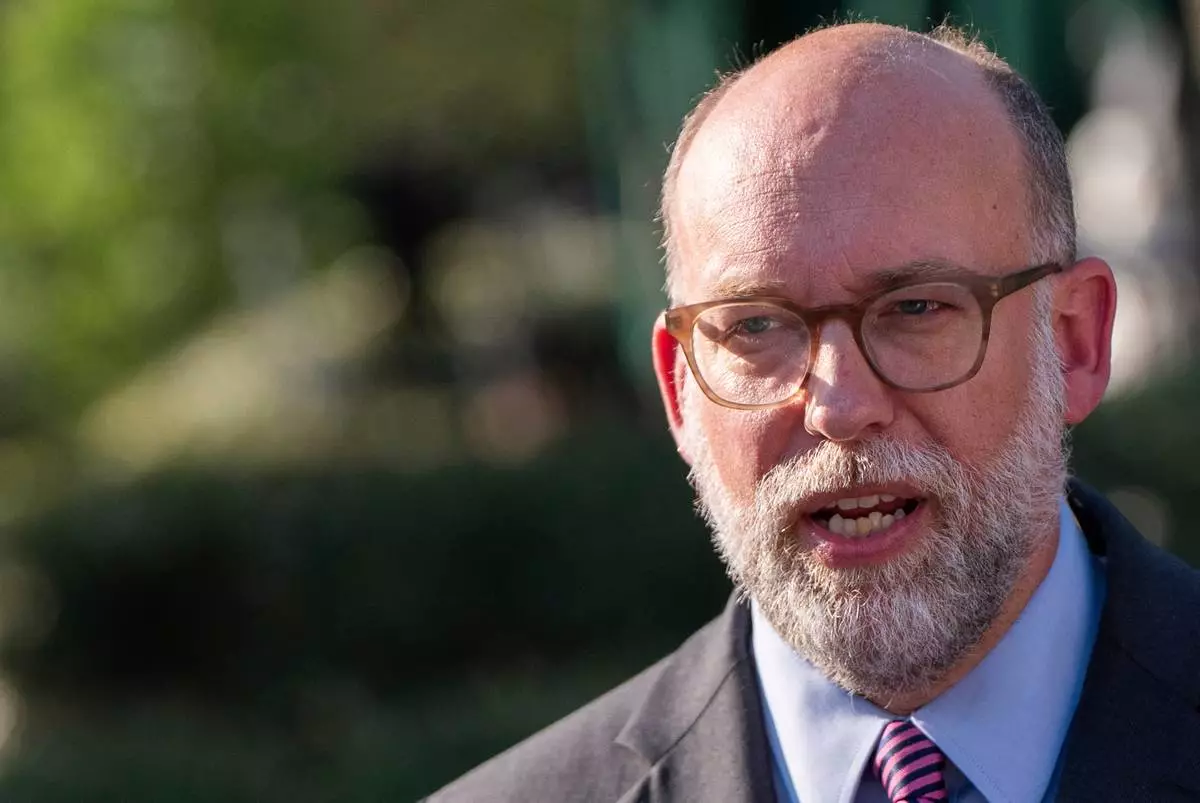
FILE - Director of the Office of Management and Budget Russell Vought speaks to reporters at the White House, Thursday, July 24, 2025, in Washington. (AP Photo/Julia Demaree Nikhinson, File)
NEW YORK (AP) — Stocks edged lower in afternoon trading on Wall Street Tuesday as 2025 nudges closer to the finish line.
The S&P 500 fell 0.1%. The benchmark index is still on track for a gain of more than 17% for the year.
The Dow Jones Industrial Average fell 120 points, or 0.3%, as of 12:21 p.m. Eastern. The Nasdaq composite fell 0.1%.
The biggest weights on the market remained technology companies, especially those focused on advancements for artificial intelligence.
Nvidia fell 0.2% and Apple fell 0.5%. Both companies have outsized values that have a greater overall impact on the market’s broader direction.
On the winning side, Facebook parent Meta Platforms rose 1.9%. The company is buying artificial intelligence startup Manus as it continues an aggressive push to amp up AI offerings across its platforms.
Markets were mixed in Asia and higher in Europe.
With just two trading days left before the year ends, most big investors have closed out their positions and volume has been thin. U.S. markets will be closed on Thursday for New Year's day.
The more notable action was again in the commodities markets. Gold, silver and copper all resumed their ascent after steep declines a day earlier.
The price of gold rose 1.1% and silver prices gained 9.5% after slumping Monday when the Chicago Mercantile Exchange, one of the largest trading floors for commodities, asked traders to put up more cash to make bets on precious metals. Prices for both metals have surged in 2025 on a mix of economic worries and supply deficits.
Copper rose 3.7% and is up more 40% for the year on strong demand. The base metal is critical to global energy infrastructure, and demand is expected to keep growing as the development of artificial intelligence technology puts more of a strain on data centers and the energy grid.
Crude oil prices were relatively steady. The price of U.S. crude oil was mostly unchanged. The price of Brent crude, the international standard, fell 0.1%.
Treasury yields mostly rose in the bond market. The yield on the 10-year Treasury rose to 4.12% from 4.11% late Monday. The yield on the two-year Treasury, which moves more closely with expectations for what the Federal Reserve will do, held steady at 3.45% from late Monday.
Overall, bond yields have fallen significantly through the year, partly because of the market's expectations for a shift in interest rate policy at the Fed. The central bank cut interest rates three times late in 2025, most recently at its meeting earlier in December.
The central bank has been dealing with a more complex economic picture. Consumer confidence has been weakening throughout the year as inflation squeezes consumers and businesses. The continued impact of a wide-ranging U.S.-led trade war threatens to add more fuel to inflation.
Inflation remains stubbornly high while the jobs market slows down. The Fed can cut interest rates to help the economy weather a slower jobs market. But, that could add more fuel to inflation that is still solidly above the Fed's 2% target. Hotter inflation could stunt economic growth.
The Fed has signaled more caution moving forward and minutes from its December meeting will be released later Tuesday.
Wall Street is betting that the Fed will hold interest rates steady at its next meeting in January.
Elaine Kurtenbach contributed to this report.

Participants perform a traditional hand clap at the end of a ceremony to conclude the year's trading at the Tokyo Stock Exchange Tuesday, Dec. 30, 2025, in Tokyo. (AP Photo/Eugene Hoshiko)

Japan's Prime Minister Sanae Takaichi, right, delivers a speech as Hajime Moriyasu, left, the head coach of Japanese national soccer team, bows during a ceremony to mark the last trading day of the year on the Tokyo Stock ExchangeTuesday, Dec. 30, 2025, in Tokyo. (AP Photo/Eugene Hoshiko)

Hajime Moriyasu, the head coach of Japanese national soccer team, rings the bell during a ceremony to mark the last trading day of the year on the Tokyo Stock Exchange Tuesday, Dec. 30, 2025, in Tokyo. (AP Photo/Eugene Hoshiko)
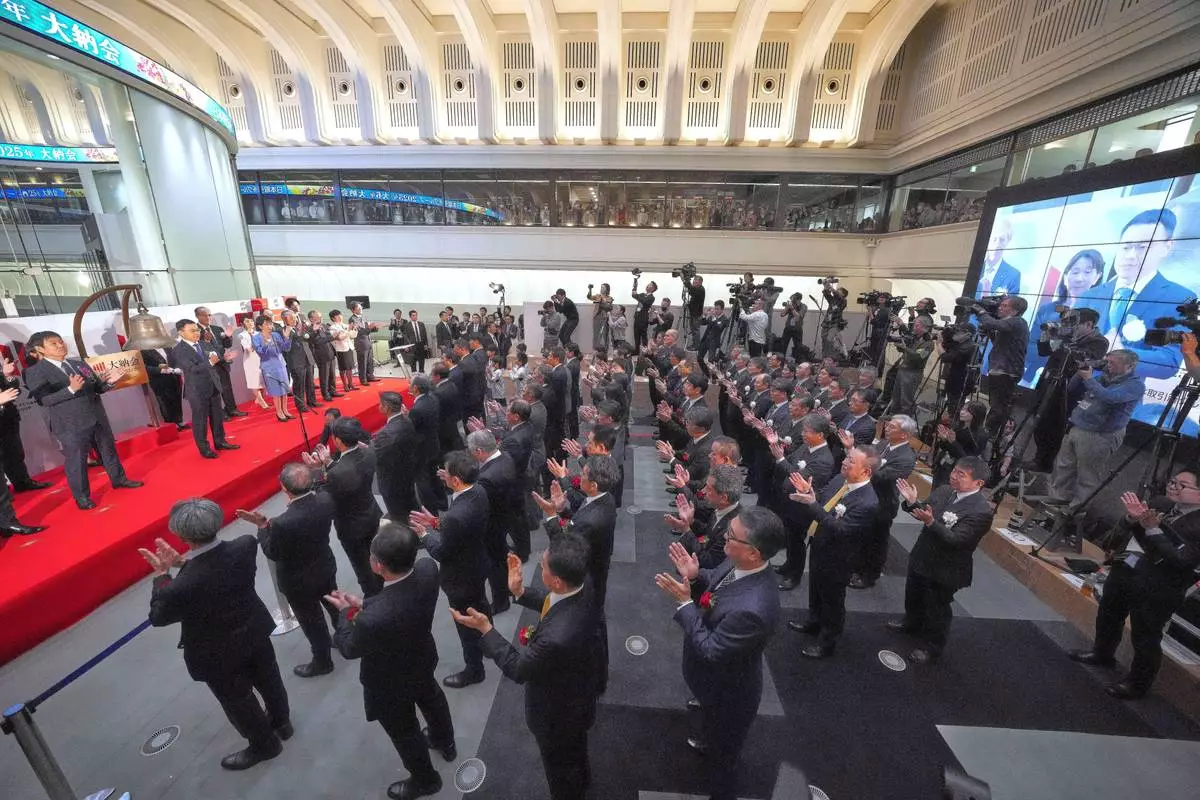
Participants perform a traditional hand clap at the end of a ceremony to conclude the year's trading at the Tokyo Stock Exchange Tuesday, Dec. 30, 2025, in Tokyo. (AP Photo/Eugene Hoshiko)

Japan's Prime Minister Sanae Takaichi poses before ringing the bell during a ceremony to mark the last trading day of the year on the Tokyo Stock Exchange Tuesday, Dec. 30, 2025, in Tokyo. (AP Photo/Eugene Hoshiko)
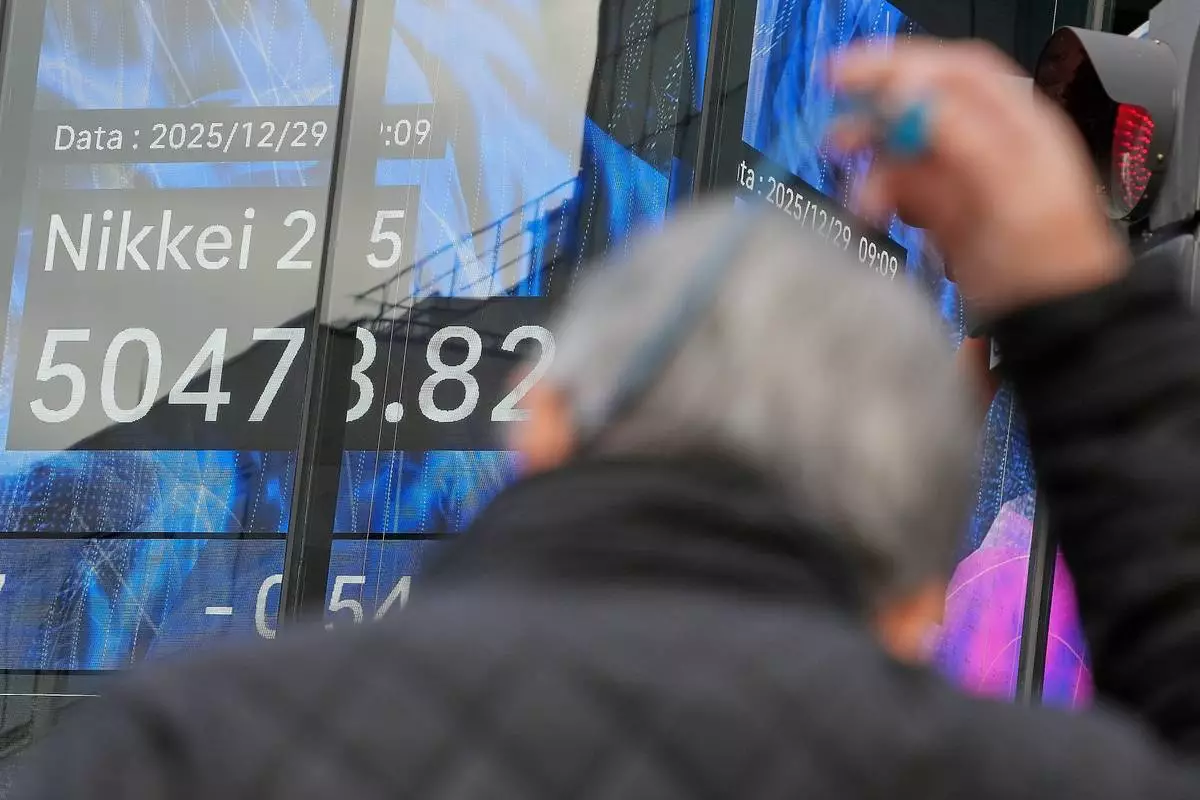
A person stands in front of an electronic stock board showing Japan's Nikkei index at a securities firm, Monday, Dec. 29, 2025, in Tokyo. (AP Photo/Eugene Hoshiko)
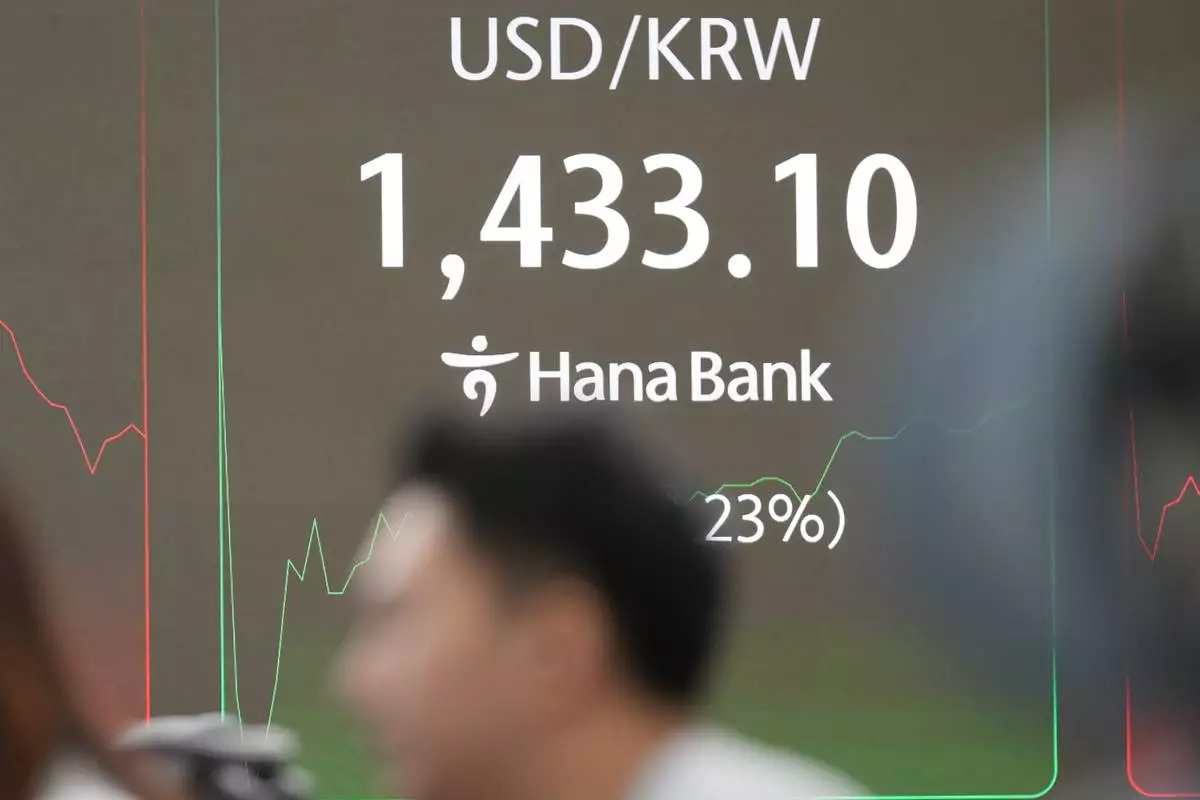
A dealer watches computer monitors near the screen showing the foreign exchange rate between U.S. dollar and South Korean won at a dealing room of Hana Bank in Seoul, South Korea, Tuesday, Dec. 30, 2025. (AP Photo/Lee Jin-man)
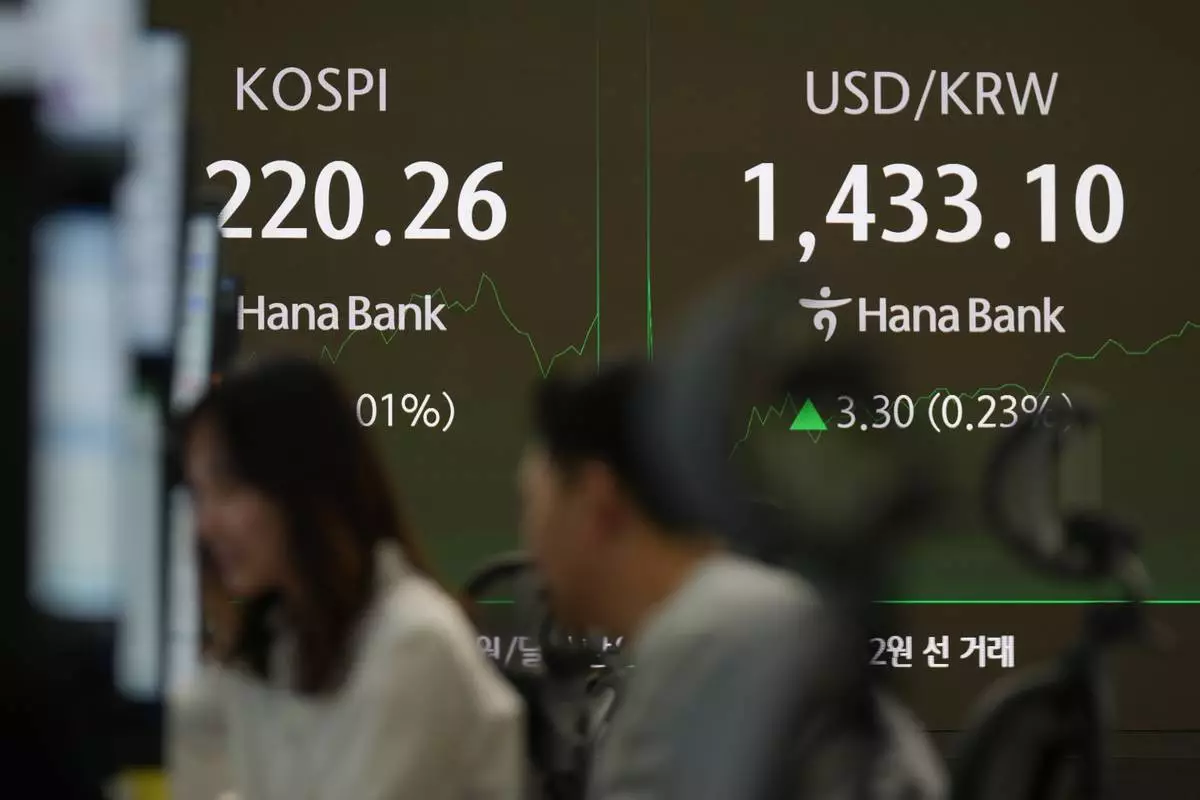
The screens showing the Korea Composite Stock Price Index (KOSPI), left, and the foreign exchange rate between U.S. dollar and South Korean won are seen at a dealing room of Hana Bank in Seoul, South Korea, Tuesday, Dec. 30, 2025. (AP Photo/Lee Jin-man)
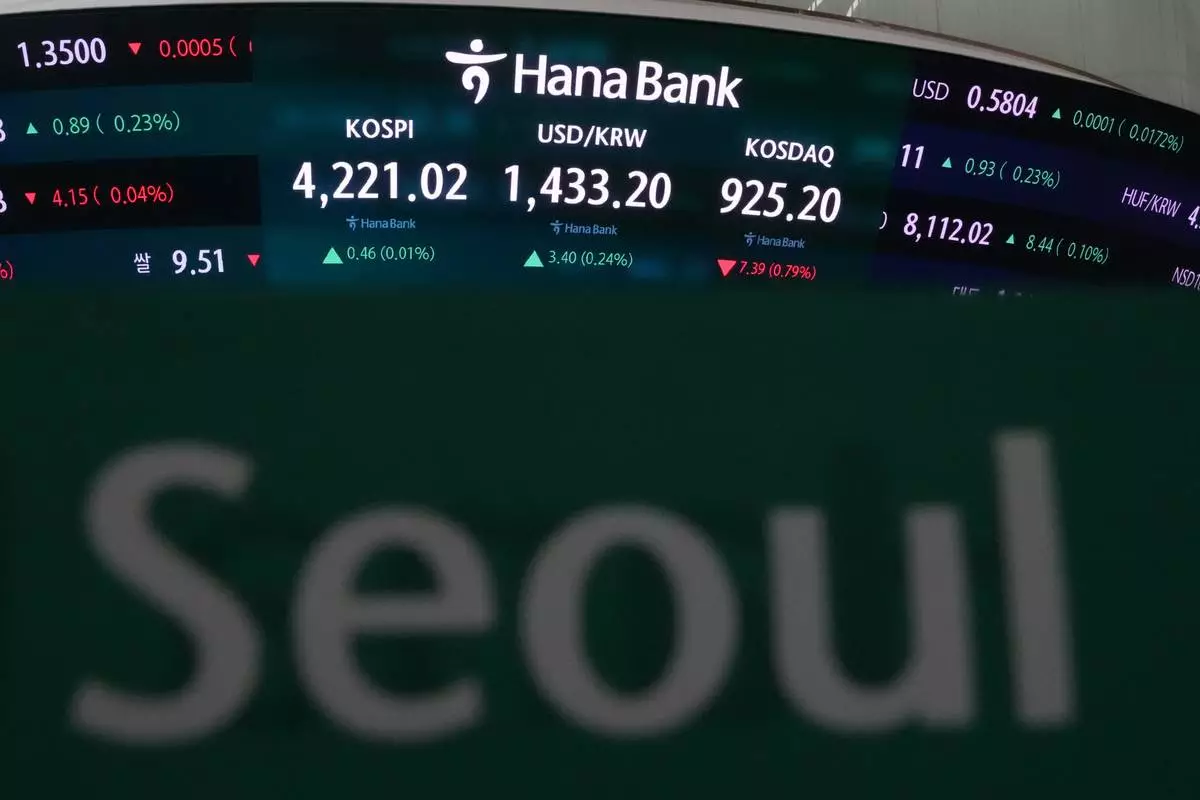
The screens show the Korea Composite Stock Price Index (KOSPI), left, the foreign exchange rate between U.S. dollar and South Korean won and the Korean Securities Dealers Automated Quotations (KOSDAQ) at a dealing room of Hana Bank in Seoul, South Korea, Tuesday, Dec. 30, 2025. (AP Photo/Lee Jin-man)

A dealer watches computer monitors at a dealing room of Hana Bank in Seoul, South Korea, Tuesday, Dec. 30, 2025. (AP Photo/Lee Jin-man)