Hundreds of people from South Sudan may be able to live and work in the United States legally, while a federal judge on Tuesday weighs whether President Donald Trump's move to revoke temporary protected status for immigrants from the East African country was illegal.
The termination was set to take effect on January 6, 2026, at which point the roughly 300 South Sudanese nationals living and working in the U.S. under the program — or who otherwise have pending applications — would be eligible for deportation.
Civil rights groups sued the Department of Homeland Security in late December, writing in a complaint that the change violated administrative procedure and was unconstitutional because it aimed to “significantly reduce the number of non-white and non-European immigrants in the United States” on the basis of race.
The court order written by U.S. District Judge Angel Kelley in Massachusetts temporarily bars the federal government from initiating deportation while the final decision is pending.
“These significant and far-reaching consequences not only deserve, but require, a full and careful consideration of the merits by the Court,” Kelley wrote, adding that the changes could potentially cause irreversible harm to the East African migrants.
DHS blasted the decision in a statement on Tuesday.
“Yet another lawless and activist order from the federal judiciary who continues to usurp the President’s constitutional authority. Under the previous administration Temporary Protected Status was abused to allow violent terrorists, criminals, and national security threats into our nation," DHS Assistant Secretary Tricia McLaughlin wrote.
Temporary protected status is granted to foreign nationals from countries devastated by war or natural disaster. Successful applicants must already reside in the U.S. and pass extensive background checks and vetting through DHS.
Without providing evidence, McLaughlin claimed there is “renewed peace in South Sudan" and pointed to “their demonstrated commitment to ensuring the safe reintegration of returning nationals, and improved diplomatic relations.”
“Now is the right time to conclude what was always intended to be a temporary designation,” McLaughlin wrote.
According to U.N. experts, “Years of neglect have fragmented government and opposition forces alike,” the panel said, “resulting in a patchwork of uniformed soldiers, defectors and armed community defense groups."
South Sudanese people were made eligible for temporary protected status in 2011. The East African's embattled government still struggles to deliver many of the basic services of a state. Years of conflict have left the country heavily reliant on aid, which has been hit hard by the Trump administration’s sweeping cuts in foreign assistance. Many South Sudanese people face hunger, and this year a hunger monitor said parts of conflict-hit South Sudan were heading toward famine conditions.
“I don’t know how DHS can say with a straight face that it’s safe for South South Sudanese TPS holders to return to South Sudan when their own State Department, albeit another government agency, says is not safe to travel there,” said Dorian Spence, litigation coordinator Communities United for Status and Protection, one of the groups that filed the December 22 lawsuit.
"This is only one prong in their multi-pronged attack into making America whiter,” Spence added, noting Trump’s willingness to accept white South Africans as refugees.
Critics of the Trump administration in South Sudan said that the move was political retaliation for South Sudan's decision to stop accepting deportees from the U.S. as part of a program to deport migrants to third countries. At least eight men were deported to South Sudan from the U.S. earlier in the year.
“This has angered the Trump administration (and) the Trump administration has reached this decision now, where it is ending protections available for South Sudanese who fled the war,” he said.
The Trump administration has attempted to withdraw various protections that have allowed immigrants to remain in the U.S. and work legally, including ending temporary status for hundreds of thousands of Venezuelans and Haitians who were granted protection under President Joe Biden.
Protected status for immigrants from Ethiopia, Cameroon, Afghanistan, Nepal, Burma, Syria, Nicaragua and Honduras is also in jeopardy.
—
Kramon contributed to this report from Atlanta and Riddle from New York.
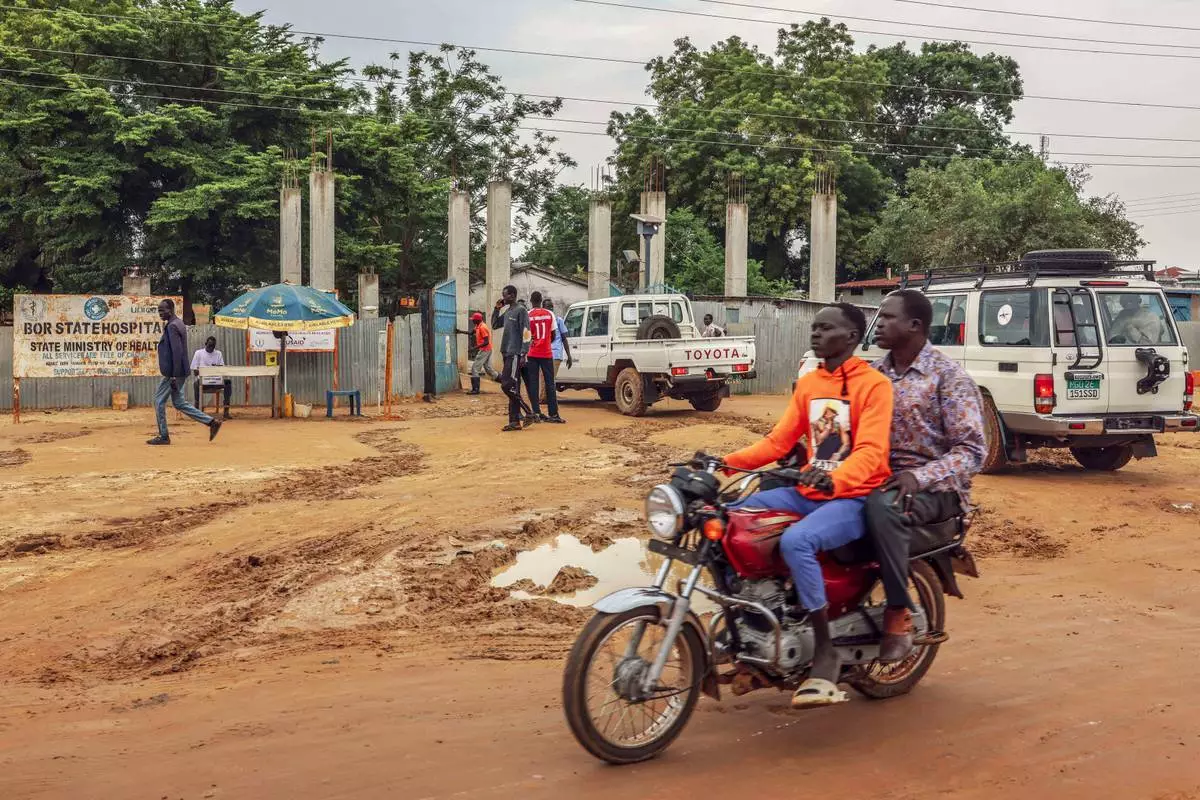
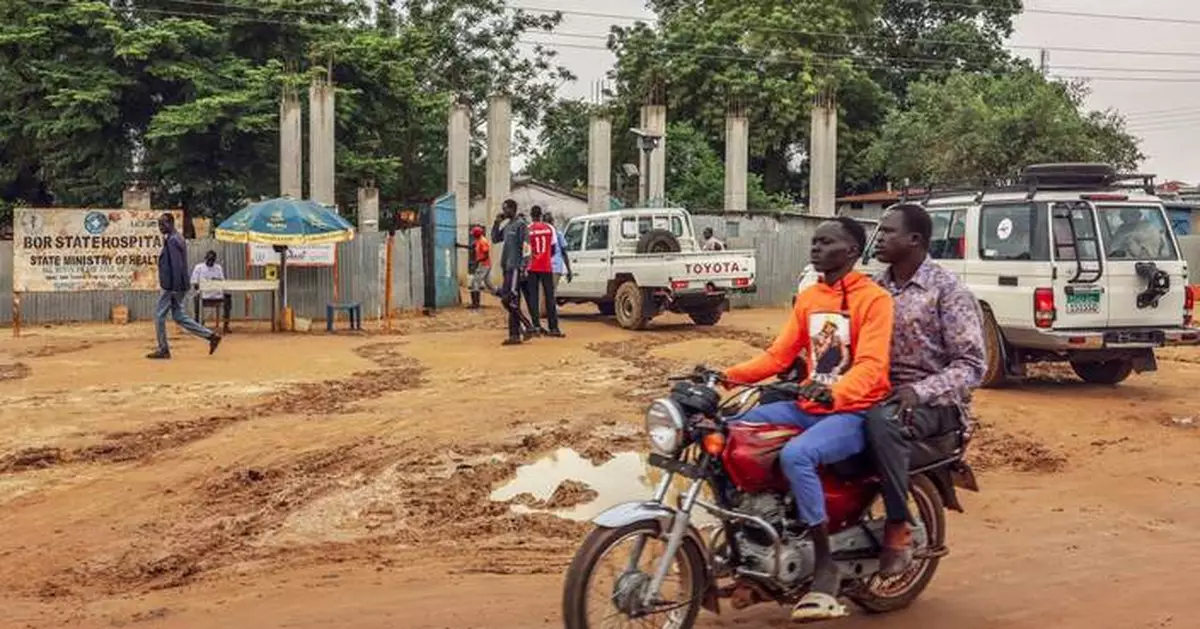
FILE - Motorists pass outside Bor State Hospital in Bor, South Sudan, Monday, Aug. 18, 2025. (AP Photo/Caitlin Kelly, File)
NEW ORLEANS (AP) — As National Guard members roll into New Orleans to help with safety measures ahead of New Year's celebrations, city officials are still seeking permanent security solutions nearly a year after a truck attack on Bourbon Street left 14 dead.
The rampage, in which a man drove around a police blockade in the early hours of Jan. 1, revealed security vulnerabilities surrounding a famous street filled with boisterous bars, brass bands playing on cobblestone corners and a steady stream of partygoers carrying cocktails.
While Louisiana officials say the tourist site is safe as they implement additional measures to crackdown on potential threats ahead of the attack anniversary, families of deceased victims say not enough has been done to ensure similar tragedies won't happen again.
The attack happened when Shamsud-Din Jabbar drove a pickup truck down Bourbon Street, plowing into crowds celebrating New Year’s Day, killing 14 people and injuring dozens of others. Police shot and killed Jabbar, a U.S. citizen and Army veteran who had proclaimed his support for the Islamic State militant group on social media.
In the wake of the rampage, city officials, state agencies and law firms representing victims’ families launched investigations into whether the attack could have been prevented. The investigations focused on the street's bollard system of steel columns designed to block cars from entering the thoroughfare. The bollards were being replaced at the time.
Among the victims were Nikyra Dedeaux, an 18-year-old about to start college who was on Bourbon Street with friends. Her mother, Melissa Dedeaux, told The Associated Press on Tuesday that while many will ring in 2026 with fireworks and merriment, she will be grieving. She has been haunted by her daughter's final moments, captured in graphic video that circulated on social media.
“I’m a parent that had to wake up, log on my Facebook account and see my daughter's last days — my daughter's last time. I didn’t get to see her on Bourbon the night it happened. I saw her on a video,” she told the AP.
“I saw no safety,” Dedeaux said. “I saw that my daughter could still be here.”
Questions still swirl around the street's barricade system, which is a patchwork of bollards, strategically parked police vehicles and 32 large steel barriers that officers push into place every night to form pedestrian zones.
“They are not meant to be utilized in the fashion they are,” Samuel Palumbo, the 8th District New Orleans Police Department Captain, said of the barriers that can withstand only low-speed collisions. He stressed to the New Orleans Governmental Affairs Committee this month that the system is a “temporary solution to a permanent problem.”
“We need to learn from what happened,” Morris Bart, whose law firm is representing victims and their families, told reporters Tuesday. “It’s kind of ridiculous ... that a year after this tragedy nothing has been done to resolve this situation.”
Palumbo urged the city to install permanent security gates that can withstand crashes up to 50 miles per hour (80 kilometers per hour). The committee opted to hold off on a vote until incoming Mayor Helena Moreno enters office in January.
A consulting firm, hired by the city to conduct a security assessment, made another suggestion: Make Bourbon Street a pedestrian only area.
While much of the street is limited to pedestrians at night, the recommendation — which victims' families have supported — was largely ignored after French Quarter residents and business owners raised concerns about accessing their homes and businesses.
As the city prepares for round-the-clock revelry, President Donald Trump authorized the deployment of 350 National Guard members, who were arriving Tuesday to provide enhanced security for the French Quarter.
Troops will stay through Carnival season, when tourists descend on the Big Easy to partake in costumed celebrations and parades that snake through city streets before ending with Mardi Gras in mid-February.
Republicans and Democrats have supported the additional resources. Mayor-elect Moreno said she appreciates the troops' presence and that it increases the “visibility of security assets during major events.”
Longtime French Quarter worker Miguel Thornton said he's happy to see armed troops a year after the attack.
“A lot of the service industry professionals that were out here were affected — they saw the carnage, they had to step over bodies — and so people were definitely changed,” Thornton said. “As far as the National Guard, they’ve been here before. Honestly, they’re welcome.”
Louisiana has a famous Cajun French phrase, “Laissez les bon temps rouler,” or “Let the good times roll.” In New Orleans, a city that heavily relies on tourism, the show always goes on in the entertainment district — even in the face of tragedy.
After the Bourbon Street attack, the strip was closed down as emergency crews tended to the injured, bodies were removed and blood was washed from the streets. By the next day, before all the victims had even been identified by the coroner, the street was reopened. Within a few months, handwritten tributes at the site of the attack had been painted over.
As the anniversary nears, tourists again flock to Bourbon Street for New Year's celebrations. This time, suspended above them are hundreds of handcrafted flags honoring the victims.
Buck Harley, who manages a Bourbon Street cigar shop, said he has had to explain the memorial to patrons.
“We seem to as a society forget. And I don’t think it’s because of a lack of empathy but because there’s another big story taking its place,” Harley said. “I have to tell the tourists what the flags are up there for, because it’s forgotten already.”

FILE - Emergency personnel work at the scene on Bourbon Street after a vehicle drove into a crowd on New Orleans' Canal and Bourbon Street, Wednesday Jan. 1, 2025. (AP Photo/Gerald Herbert, File)

Buck Harley, a cigar shop manager, stands outside of his store Monday, Dec. 29, 2025, on Bourbon Street in New Orleans. (AP Photo/Jack Brook)

Miguel Thornton stands under memorial flags for the victims of a Jan. 1, 2025, vehicle ramming attack, outside of the Bourbon Street bar, where he works, on Monday, Dec. 29, 2025, in New Orleans. (AP Photo/Jack Brook)

An opened gate is seen at the Bourbon Street corner in New Orleans on Monday, Dec. 29, 2025, the site of a Jan. 1, 2025, fatal vehicle ramming attack which led the city to bolster its safety measures in the area. (AP Photo/Jack Brook)