|
An Education Cannot Wait-funded, Norwegian Refugee Council and Save the Children-supported holistic education programme is bringing internally-displaced children to school for the very first time in Ethiopia.
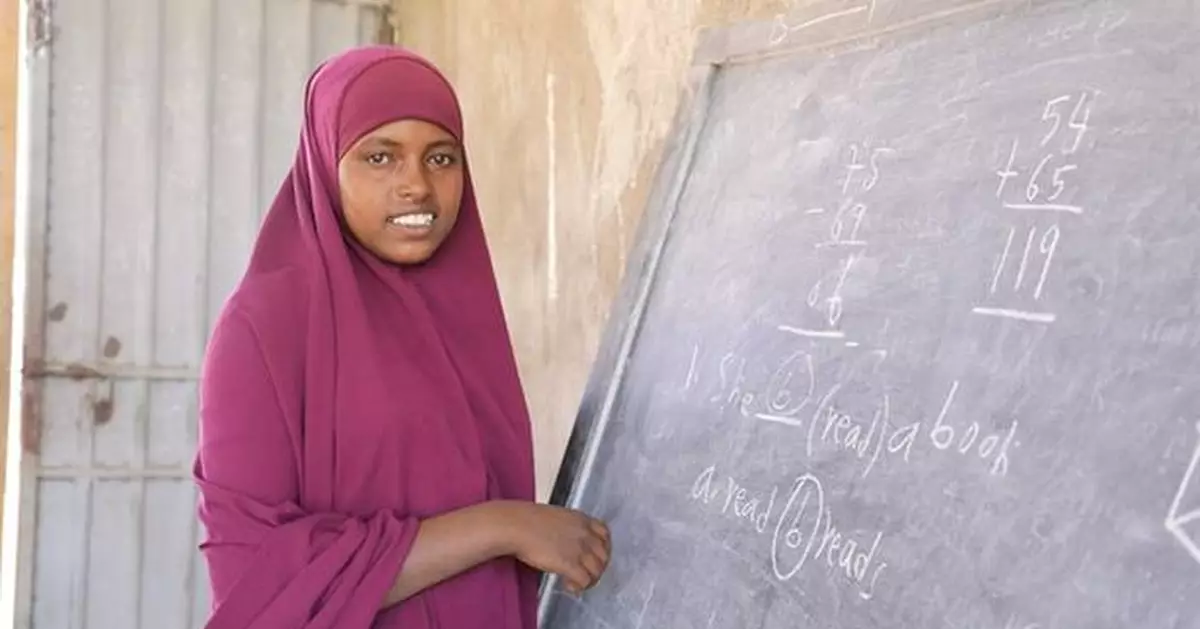
BABILE WOREDA, Ethiopia, Dec. 31, 2025 /PRNewswire/ -- When Kansa was eleven years old, her quiet life was turned upside down. Born in Belbelītī Village in the Oromia Region of Ethiopia, the young girl's days were spent helping her family tend to their livestock. But when the border conflict between the Somali and Oromia regions arrived at their doorstep, Kansa and her family were forced to flee their home – leaving everything but the clothes on their backs behind.
The family of nine – Kansa, her parents and six siblings – eventually found safety and settled in the Kologi IDP Camp in Babile Woreda, Somali Region. Despite the upheaval and loss that young Kansa experienced during this unimaginable time, she notes one shining silver lining to her new life: school.
Before coming to the IDP camp, Kansa had never stepped foot inside of a classroom.
After arriving at Kologi Camp, a back-to-school campaign created awareness in the community about the benefits of education and encouraged parents, including Kansa's, to enroll their daughters and sons in the camp primary school. Now 15, Kansa is a star student at Horsade Primary School and looks forward to class every day.
Supported by the Norwegian Refugee Council (NRC) with funding from Education Cannot Wait (ECW), the global fund for education in emergencies and protracted crises within the United Nations, the camp school is providing a holistic education response in the crisis-affected community.
Growing up in Belbelītī Village, Kansa didn't think she would ever have the opportunity to attend school, or dream of a life outside of tending livestock and doing household chores. "Most girls like me despaired of ever getting an education," she says.
Today, Kansa is in the fourth grade. A student at Horsade Primary School in the Kologi IDP Camp, she has been regularly attending school for four years. Her favorite subjects are English, mathematics and environmental science.
The fifteen-year-old has big dreams for her future, too. She says, "I want to be educated and become a university lecturer."
Ethiopia is facing one of the worst humanitarian crises it has seen in decades due to internal violence, insecurity, poverty, displacement, hunger and malnutrition compounded by the impacts of climate change. The worst drought in four decades, exacerbated by climate change, is triggering conflicts and has made survival a daily struggle for many in the country. These challenges are compromising the education of hundreds of thousands of children.
Since 2017, ECW has been supporting refugee, internally-displaced and host community children to access safe and inclusive educational opportunities – with the aim of increasing enrolment and continuity of education; providing training for teachers; strengthening school infrastructure; and building community support for safe, inclusive, holistic learning environments, with a focus on girls and children with disabilities.
ECW's investments in Ethiopia are ensuring that in-country partners like NRC are able to provide critical 'whole-of-child' interventions. For Kansa and the children in Kologi IDP Camp, this translates to quality education, the provision of school materials and menstrual hygiene products, school feeding programmes, access to clean water, mental health and psychosocial support, support from peer and girls' clubs, and more.
ECW-supported partners Save the Children and NRC work in close collaboration to ensure school feeding for crisis-affected children like Kansa. "My family and I eat once or twice a day. But unlike us, most of my classmates are not able to eat even once daily," she says. "Getting this service in school has tremendously increased our enrollment. School feeding is crucial for all of us."
Joining an NRC-facilitated girls' club at school, Kansa has continued to flourish under the encouragement and support of peers and coaches. The club has provided girls in the camp with a safe place to discuss things such as school and menstrual hygiene management.
Four years into her education, Kansa has gained more than the ability to read, write and do math. She has become a happier child and learned to dream. "We, as displaced people, used to feel that we were not equal to others and that we couldn't get an education. As a girl, going to school was unthinkable. However, attending this school and receiving support from the girls' club has boosted my confidence and shown me that we have the same right to learn as boys do – and that I can do anything," says Kansa.
An Education Cannot Wait-funded, Norwegian Refugee Council and Save the Children-supported holistic education programme is bringing internally-displaced children to school for the very first time in Ethiopia.
BABILE WOREDA, Ethiopia, Dec. 31, 2025 /PRNewswire/ -- When Kansa was eleven years old, her quiet life was turned upside down. Born in Belbelītī Village in the Oromia Region of Ethiopia, the young girl's days were spent helping her family tend to their livestock. But when the border conflict between the Somali and Oromia regions arrived at their doorstep, Kansa and her family were forced to flee their home – leaving everything but the clothes on their backs behind.
The family of nine – Kansa, her parents and six siblings – eventually found safety and settled in the Kologi IDP Camp in Babile Woreda, Somali Region. Despite the upheaval and loss that young Kansa experienced during this unimaginable time, she notes one shining silver lining to her new life: school.
Before coming to the IDP camp, Kansa had never stepped foot inside of a classroom.
After arriving at Kologi Camp, a back-to-school campaign created awareness in the community about the benefits of education and encouraged parents, including Kansa's, to enroll their daughters and sons in the camp primary school. Now 15, Kansa is a star student at Horsade Primary School and looks forward to class every day.
Supported by the Norwegian Refugee Council (NRC) with funding from Education Cannot Wait (ECW), the global fund for education in emergencies and protracted crises within the United Nations, the camp school is providing a holistic education response in the crisis-affected community.
Growing up in Belbelītī Village, Kansa didn't think she would ever have the opportunity to attend school, or dream of a life outside of tending livestock and doing household chores. "Most girls like me despaired of ever getting an education," she says.
Today, Kansa is in the fourth grade. A student at Horsade Primary School in the Kologi IDP Camp, she has been regularly attending school for four years. Her favorite subjects are English, mathematics and environmental science.
The fifteen-year-old has big dreams for her future, too. She says, "I want to be educated and become a university lecturer."
Ethiopia is facing one of the worst humanitarian crises it has seen in decades due to internal violence, insecurity, poverty, displacement, hunger and malnutrition compounded by the impacts of climate change. The worst drought in four decades, exacerbated by climate change, is triggering conflicts and has made survival a daily struggle for many in the country. These challenges are compromising the education of hundreds of thousands of children.
Since 2017, ECW has been supporting refugee, internally-displaced and host community children to access safe and inclusive educational opportunities – with the aim of increasing enrolment and continuity of education; providing training for teachers; strengthening school infrastructure; and building community support for safe, inclusive, holistic learning environments, with a focus on girls and children with disabilities.
ECW's investments in Ethiopia are ensuring that in-country partners like NRC are able to provide critical 'whole-of-child' interventions. For Kansa and the children in Kologi IDP Camp, this translates to quality education, the provision of school materials and menstrual hygiene products, school feeding programmes, access to clean water, mental health and psychosocial support, support from peer and girls' clubs, and more.
ECW-supported partners Save the Children and NRC work in close collaboration to ensure school feeding for crisis-affected children like Kansa. "My family and I eat once or twice a day. But unlike us, most of my classmates are not able to eat even once daily," she says. "Getting this service in school has tremendously increased our enrollment. School feeding is crucial for all of us."
Joining an NRC-facilitated girls' club at school, Kansa has continued to flourish under the encouragement and support of peers and coaches. The club has provided girls in the camp with a safe place to discuss things such as school and menstrual hygiene management.
Four years into her education, Kansa has gained more than the ability to read, write and do math. She has become a happier child and learned to dream. "We, as displaced people, used to feel that we were not equal to others and that we couldn't get an education. As a girl, going to school was unthinkable. However, attending this school and receiving support from the girls' club has boosted my confidence and shown me that we have the same right to learn as boys do – and that I can do anything," says Kansa.
** The press release content is from PR Newswire. Bastille Post is not involved in its creation. **
From Livestock to Learning: Kansa's Story
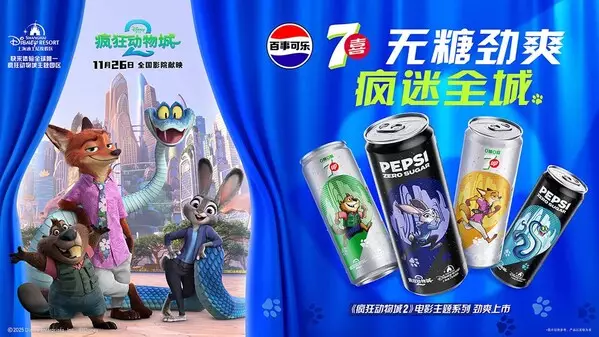
SHANGHAI, Dec. 31, 2025 /PRNewswire/ -- Pepsi and 7UP have teamed up with Disney to launch the Zootopia 2 campaign, bringing the movie's thrilling chase and adventure to life under the brand message "Zero Sugar for City-Wide Craze." This collaboration not only appeals to the younger generation from the aesthetic perspective but also delivers a rich, multi-faceted, and immersive experience. More than another major initiative to engage young consumers and reach young families, it represents Pepsi's long-term commitment to infusing pop culture into its brand narrative, leveraging crossover innovations to forge a stronger emotional connection with consumers.
Zero-Sugar Attitude Connects with Gen Z, Crossover Collaboration Resonates with Pop Culture
For years, Pepsi has made youth culture the heartbeat of its brand, constantly seeking fresh ways to engage with Gen Z. In China's beverage market, zero sugar drinks have become more than a choice. They're a form of self-expression. Leading this shift, Pepsi and 7UP have consistently rolled out new taste experiences, bold visual identities, and cultural collaborations to build brand experiences rich in social currency. This isn't the first time Pepsi and 7UP have joined forces with Disney. From earlier collaboration around Star Wars and Fantastic Four to the Zootopia franchise, the brands have repeatedly used iconic IPs as vibrant cultural touchpoints. Through these collaborations, they have infused the Zero Sugar for City-Wide Craze message into pop culture, creating shared moments that resonate across generations and social circles.
It's worth highlighting that as the prime beverage supplier, PepsiCo has formed a strategic alliance with Shanghai Disney Resort since the resort's official opening. The two have been working together to explore how brands can embrace pop culture. Together, they've refined a collaboration model built on speed, precision, and impact: precise targeting of key audiences, agile adaptation to cultural trends, and the power to turn creative vision into real-world impact.
Since its debut, Zootopia has captivated audiences worldwide, earning its place as an animated classic with both critical acclaim and box office success. In China, where it became the highest-grossing imported animated movie to date, it has built a massive fanbase and lasting emotional resonance. The return of Zootopia 2 is more than a cultural event. It's a moment eagerly awaited by Gen Z. Riding this wave of excitement and social buzz, the collaboration turns Pepsi and 7UP into fresh markers of identity, empowering fans and young consumers to express who they are through the brands they embrace.
New Can Characters Unveiled, Tapping into the Zootopia Fanbase
The four limited-edition cans are inspired by the distinct personalities of the movie's iconic characters:
- Pepsi Zero Sugar channels the courage and determination of Judy Hopps.
- 7UP Zero Sugar captures the wit and free-spirited charm of Nick Wilde.
- New characters Gary and Nibbles also make a surprise appearance.
Beyond strengthening the Zero Sugar for City-Wide Craze message, these character-driven designs broaden the brands' reach to include young families. Seamlessly blending Disney's storytelling magic with Pepsi and 7UP's bold, youthful identity, the collection turns each can into a canvas of creativity and connection.
These limited-edition cans become a form of social currency: collectible, shareable, and brimming with meaning. They translate the charisma and camaraderie of the characters into a tangible, refreshing experience right in the hands of consumers. Every moment of drinking becomes a statement, letting people express themselves through the characters while bridging the emotional world of the movie with their own real-life moments.
Igniting Online and Offline Buzz, Delivering a Full Immersive Experience of City-Wide Craze
Building on their core products, Pepsi and 7UP launched an integrated campaign that merged online and offline touchpoints, igniting a "City-Wide Craze" through interactive city-wide activations and full-scenario engagement. From eye-catching out-of-home installations to buzzworthy social media interactions, the brands brought the Zero Sugar for City-Wide Craze message to life across key cities including Shanghai, Beijing, Chengdu, and Shenzhen, seamlessly blending into the entertaining lives of young consumers and forging an emotional bond that goes beyond the product itself.
Meanwhile, Pepsi and 7UP orchestrated a multi-channel campaign spanning online and offline touchpoints to sustain momentum for the collaboration. They also released a series of free Zootopia 2 merchandise, creating the "Zero Sugar for City-Wide Craze" experience that helps translate public buzz into actual sales and turning every "pop of the can" into a heightened moment of social connection and joy.
From a strategic perspective, this relationship underscores PepsiCo China's role as an innovation leader in the APAC region. Pepsi and 7UP are continuously pushing the boundaries of the zero sugar category with crossover creativity and youthful energy. By building a holistic, integrated marketing ecosystem, they achieve a deep fusion of brand, content, and context. While extending the magic of the Disney experience, this collaboration incorporates Pepsi's unique youthful dynamism to offer consumers a more diverse and interactive engagement. The tripartite model also serves as an inspiring playbook for other global markets, unlocking greater potential at the intersection of brands, entertainment, culture, and consumer experience. Moving forward, Pepsi will continue to be driven by a youth-centric vision and cultural co-creation, spreading the zero-sugar trend to more young consumers, exploring new possibilities in family context, and brightening every moment for those who love to try something new.
** The press release content is from PR Newswire. Bastille Post is not involved in its creation. **
Pepsi & 7UP Team Up with Disney on Zootopia 2, Sparking Fresh Wave of Crossover Youthful Energy