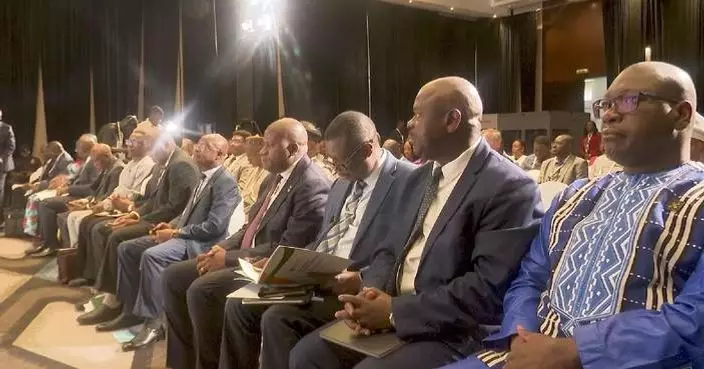
Japanese Prime Minister Sanae Takaichi's erroneous remarks on China's Taiwan region have violated both Japan's Constitution and international law, according to Akinobu Ito, president of Japan-China Workers Exchange Association.
Ito condemned Takaichi's comments as reckless and tantamount to abandoning the Japan-China Peace and Friendship Treaty, which was signed in 1978.
"Sanae Takaichi made such reckless remarks that are tantamount to abandoning the Japan-China Peace and Friendship Treaty, in my view, because in essence, it is saying 'we are going to war.' I think this not only violates Article 9 of the Constitution of Japan, but also breaches the China-Japan Treaty of Peace and Friendship," said Ito.
Ito also warned that Japan's right-wing forces have increasingly promoted the so-called "China-threat theory" and manipulated historical narratives in textbooks. He expressed concern that these actions could signal a revival of militarism in Japan.
"The Liberal Democratic Party is very good at controlling public opinion. They have control from education to media coverage. Having young people who grow up in such an environment to truly understanding what peace should mean is the most worrying issue. Frankly speaking, I think it's natural for China to believe that militarism is being revived in Japan at this moment," said Ito.
"The problem is that Takaichi's remarks have gained support among segments of the Japanese public, particularly younger generations. One reason, as mentioned earlier, is that some young people have been raised under such education," Ito continued.
"I think that the key lies in how peace and history are passed down. Increasing defense spending and strengthening deterrence should not be taught as the path to peace. Instead, the focus should be on how to create peace," Ito said.
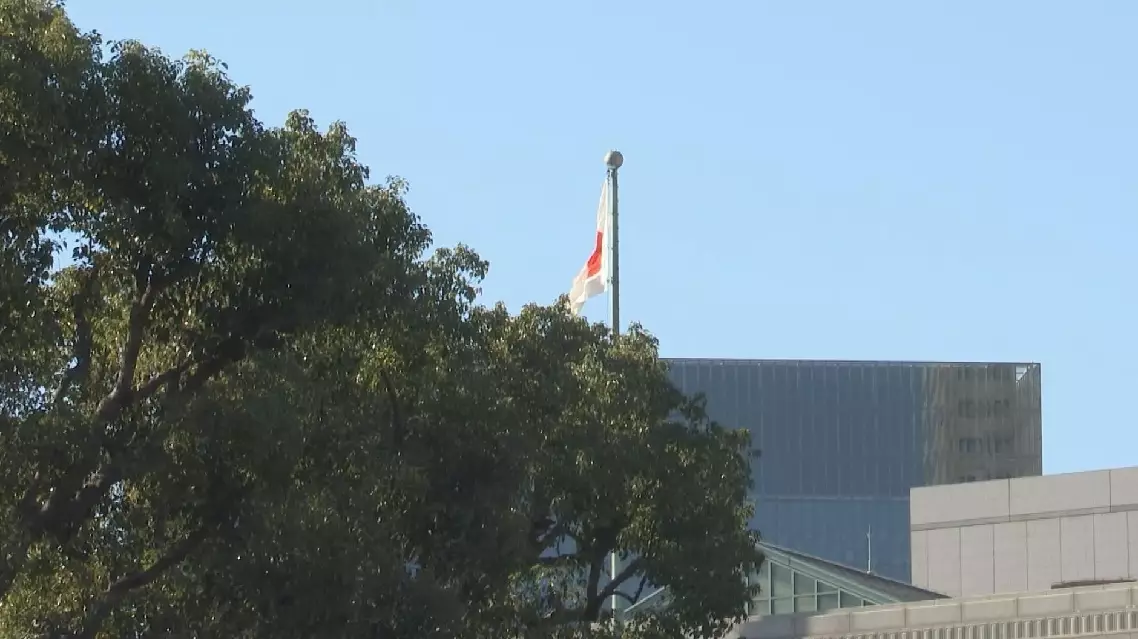
Japan-China Workers Exchange Association president condemns PM Takaichi's remarks on China's Taiwan
Lebanon's Health Ministry said Saturday that Israeli strikes during the latest round of fighting have killed 2,020 people and wounded 6,436 others since hostilities escalated.
The ministry said the toll reflects cumulative casualties recorded across multiple regions amid continued Israeli airstrikes and cross-border exchanges of fire.
On Saturday, the Israel Defense Forces (IDF) said that Israeli forces engaged in close-range firefights with Hezbollah militants, striking multiple targets and killing several militants while seizing various weapons. In the past 24 hours, the IDF targeted over 200 Hezbollah sites within Lebanon and continued to target Hezbollah rocket launchers to prevent attacks against Israel.
Additionally, the IDF's Home Front Command has tightened public safety guidelines, suspending or limiting educational activities in border communities, Upper Galilee, and Haifa Bay, while also restricting the size of gatherings in those areas.
Hezbollah, in its statement, claimed that its operations in southern Lebanon continued, attacking Israeli tanks and personnel. The group also targeted Israeli military infrastructure, soldiers, and vehicles in northern Israel.
The escalation followed renewed hostilities involving Hezbollah, which said it launched rockets from southern Lebanon toward Israel on March 2 for the first time since a ceasefire on Nov. 27, 2024. The exchange prompted Israel to expand its military campaign across Lebanon.
Lebanon has since been hit by sustained strikes in several areas, with fighting spreading beyond border regions into other parts of the country.
Iran and the United States agreed to a ceasefire on Wednesday. Israel said it would abide by the truce but argued the agreement does not apply to Lebanon. That assertion was rejected by Iran and by mediator Pakistan.
Israeli Prime Minister Benjamin Netanyahu said Saturday that the disarmament of Hezbollah is a prerequisite for any ceasefire agreement with Lebanon.
In a video statement, he said Lebanon had approached Israel several times over the past month seeking to begin direct talks following Israeli military actions.
"I approved this, subject to two conditions: we want to achieve the disarmament of Hezbollah, and we want a real peace agreement that will last for generations," Netanyahu said.
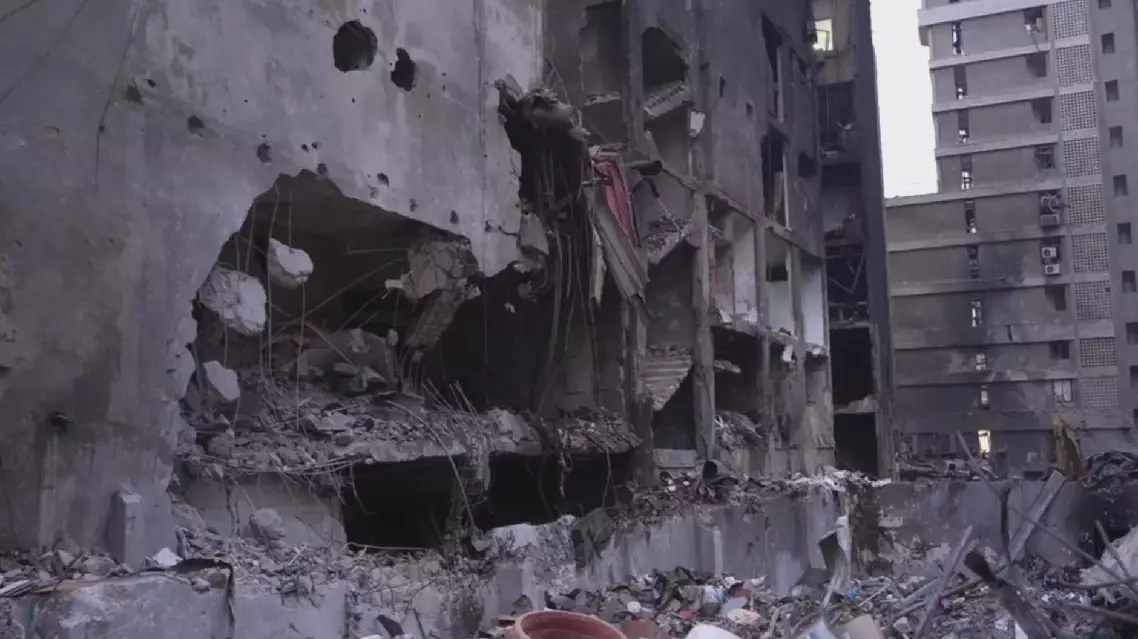
Death toll from Israeli attacks in Lebanon reaches 2,020