Chinese immigration authorities at the country's ports of entry have implemented extended service hours and a range of measures to facilitate the entry and exit process for travelers crossing the border for New Year celebrations.
Shortly after 6:00 on Thursday, Beijing Capital International Airport welcomed the city's first batch of inbound tourists of the new year, who arrived on an international flight from Frankfurt, Germany. Among the arrivals were not only individual travelers but also tour groups from countries including Russia and Poland.
To welcome them, the airport held a welcome ceremony and prepared gifts for the visitors. These included the latest Beijing tourism route map, travel and accommodation guides, a departure tax refund guide, and cultural and creative products such as refrigerator magnets featuring the Beijing Central Axis.
"It's a very nice surprise. It's very warm work. I'm in the cold weather outside. So it's really beautiful. And I said already we will come back again to Beijing for longer," said Violetta, a tourist from Germany.
Official data showed that during the New Year's Day holiday period, the total passenger flow at Beijing's ports is expected to reach approximately 180,000 entries and exits.
According to Zheng Fang, deputy director of the Beijing Municipal Bureau of Culture and Tourism, in 2026, Beijing will not only introduce more facilitation measures to streamline clearance procedures but also focus greater efforts on enhancing the quality of its tourism resources to further improve visitors' experiences in China.
"Beijing's inbound tourism achieved significant growth in 2025, with total arrivals exceeding 5 million, thanks in part to the national transit visa-free policy. In 2026, the city will shift its focus from facilitation measures to high-quality development, aiming to establish itself as the preferred destination for inbound tourism in China," said Zheng Fang.
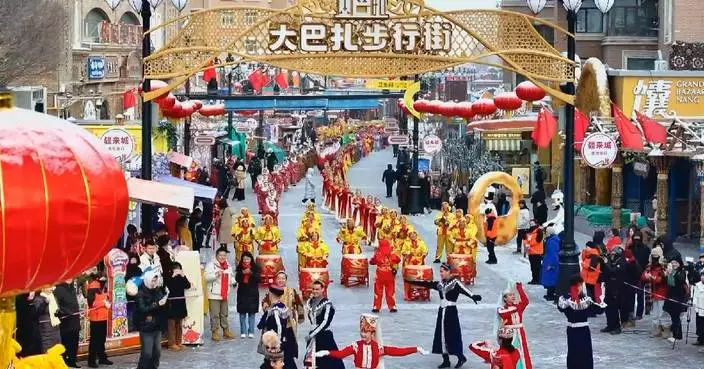
Vibrant New Year celebrations also fueled a wave of cross-border travel in Shenzhen and Hong Kong. On Wednesday evening, while major commercial and scenic areas in Shenzhen drew crowds from Hong Kong with lantern festivals, markets, and carnivals, Hong Kong attracted mainland visitors with its own lineup of events including New Year countdowns and concerts.
"We came to Shenzhen for the countdown event, planning to stay for two days and one night before returning," said a visitor from Hong Kong surnamed Chen.
According to the Shenzhen immigration inspection station, between 00:00 and 06:00 on January 1, Huanggang, Luohu, and Shenzhen Bay ports recorded over 53,000 inbound and outbound passenger crossings and more than 3,700 vehicle crossings. Each port implemented tailored measures based on passenger flow to ensure smooth and efficient clearance.
"We returned from Hong Kong after midnight, and the extended service hours at Shenzhen Bay Port made it very convenient for us," said a Chinese mainland resident surnamed Geng.
A Hong Kong resident, surnamed Chang, said, "I spent my New Year holiday visiting Nanshan in Shenzhen. The border crossing was very convenient and quick."
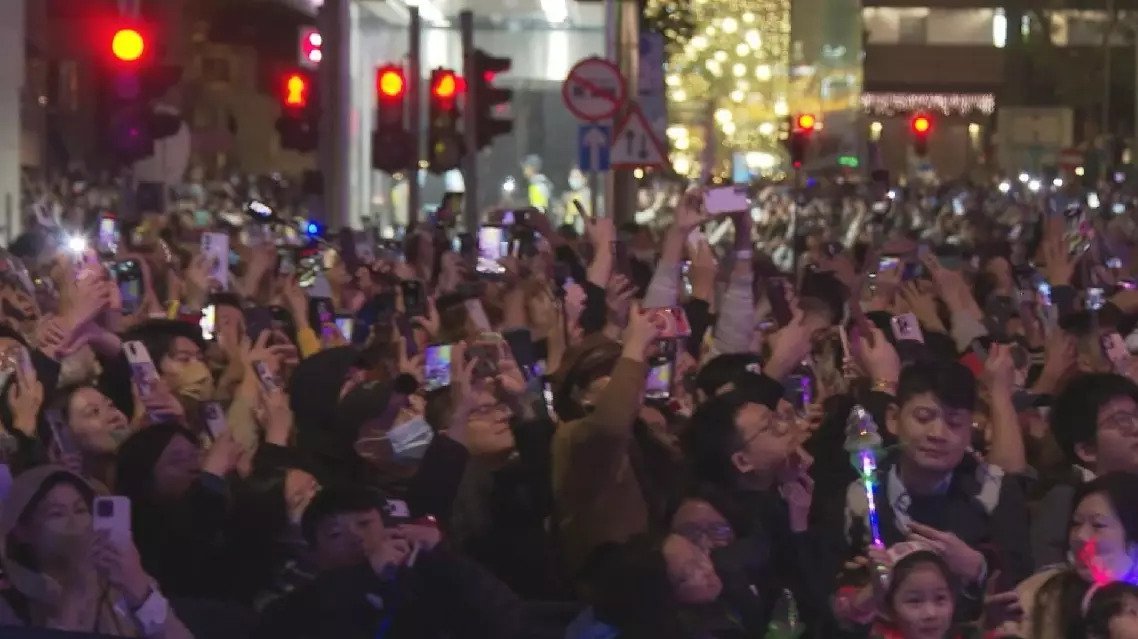
Chinese immigration authorities expand services to facilitate New Year border crossings