The year of 2025 has been a rollercoaster for China-U.S. relations, beginning with a tariff escalation that threatened to disrupt the global economy and ending with a heads-of-state handshake that sent a stabilizing signal between the two countries.
The early wave of tariffs directly followed President Trump's inauguration, raising bilateral duties to 125 percent, with some products reaching as high as 145 percent by April. As the measures targeted key sectors, global supply chains were pushed to their limits. China responded with firm countermeasures.
"China does not look for a war, but neither are we afraid of it. We will fight, if fight we must. Our doors are open, if the U.S. wants to talk. We have made it very clear that China does not look for a war, but neither are we afraid of it. We will fight, if fight we must," said Guo Jiakun, a spokesperson for the Ministry of Foreign Affairs.
Beginning in Geneva, China and the U.S. held economic and trade talks throughout the year. A de-escalation momentum carried through London, Stockholm, Madrid, and finally Kuala Lumpur.
Under a consensus resulting from the talks, the U.S. removed the additional 10 percent fentanyl tariffs on Chinese goods and agreed to continue the suspension of the 24 percent reciprocal tariffs for another year.
Both sides have also agreed on cooperation related to TikTok, reductions in investment barriers, and a pause in tensions in maritime sectors.
"The outcomes of our economic and trade consultations have not come easily. China looks forward to working with the United States to earnestly implement these outcomes," said He Yongqian, a spokesperson of China’s Ministry of Commerce.
That set the stage for the most anticipated event of the year.
In October, the historic meeting between President Xi Jinping and President Donald Trump in Busan, Republic of Korea, helped steady the ship for China-U.S. relations amid choppy waters.
President Xi described trade as a stabilizing anchor rather than a source of friction, while President Trump pledged that, together, the two nations can achieve great things.
Parallel to diplomatic engagement, people-to-people ties remain resilient. Some local officials, business leaders, and young people continue to build bridges rather than walls across the Pacific, even during the fiercest time of the tariff war.
"We want to make sure China knows that we’re here to work together," said Oscar Gutierrez, Acting Mayor of Santa Barbara, State of California.
While the U.S. has conditionally allowed AI chip exports and delayed semiconductor tariffs, experts say Washington’s high-stakes pursuit of technological supremacy remains firmly in place.
"There are certainly conflicts of interest, but overall, their economies remain complementary and inseparable. I believe the most critical shared interest between China and the United States is maintaining global financial stability and preventing crises. Trump seeks active cooperation with China, aware of the vulnerability of the U.S. economy. Both sides understand that trying to strangle the other ultimately harms themselves," said Huang Jing, a professor from Shanghai International Studies University.
However, as the year comes to a close, a record-high 11-billion-dollar arms sale to China's Taiwan region once again challenges China's red line.
In phone calls between the two presidents on Nov 24 of 2025, President Xi invoked the weight of history, reminding his counterpart that the two nations once stood together against fascism. He emphasized that Taiwan's return to China was a core part of the post-war international order.
The U.S. president reaffirmed the one-China policy. According to Chinese officials, the task ahead is to turn high-level commitments into concrete action.
"China and the U.S. will gain from cooperation and lose from confrontation. Heavy-handed tactics do not work. Saying one thing and doing another is not acceptable. China and the U.S. must seek solutions to their respective concerns based on equality, mutual respect and reciprocity, and find the right way for the two major countries to get along with each other," said Chinese Foreign Minister Wang Yi.
The message from China has remained clear, with continued emphasis that a stable and healthy relationship between these two major powers is not just an option, but a historical and practical necessity, and one that provides much-needed certainty in an increasingly volatile world.
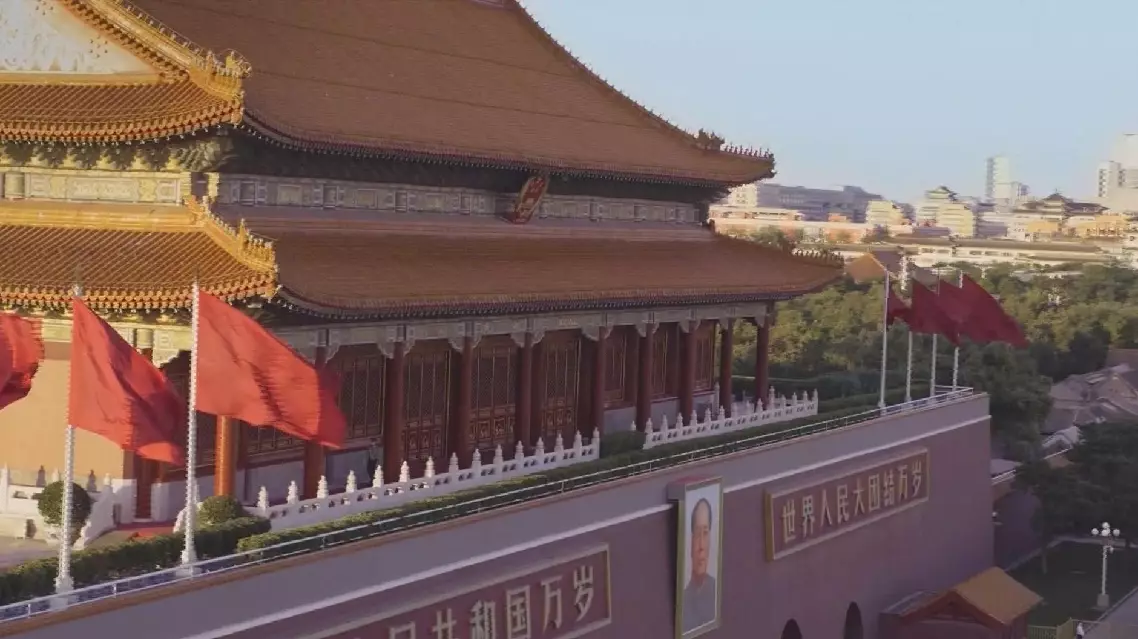
Recap of China-US ties in 2025