Northwest China's Xinjiang Uygur Autonomous Region recorded a record cotton output of over 6 million tonnes in 2025, official data showed on Tuesday.
The region produced 6.165 million tonnes of cotton in 2025, accounting for 92.8 percent of the national total, according to the Department of Agriculture and Rural Affairs of Xinjiang.
Xinjiang's cotton planting area expanded to nearly 38.88 million mu (about 2.59 million hectares) in 2025, which was up 5.9 percent year on year, and its average yield came in at 158.6 kilograms per mu, up 2.4 percent year on year.
Favorable weather conditions throughout the growing season helped boost output, with strengthened policy support, advances in agricultural technology, and improved talent development also contributing to higher productivity, experts say.
Xinjiang remains China's largest cotton-producing region. The country's cotton output rose by 7.7 percent from 2024, totaling 6.641 million tonnes in 2025.

China's Xinjiang sees record cotton output in 2025

China's Xinjiang sees record cotton output in 2025

China's Xinjiang sees record cotton output in 2025
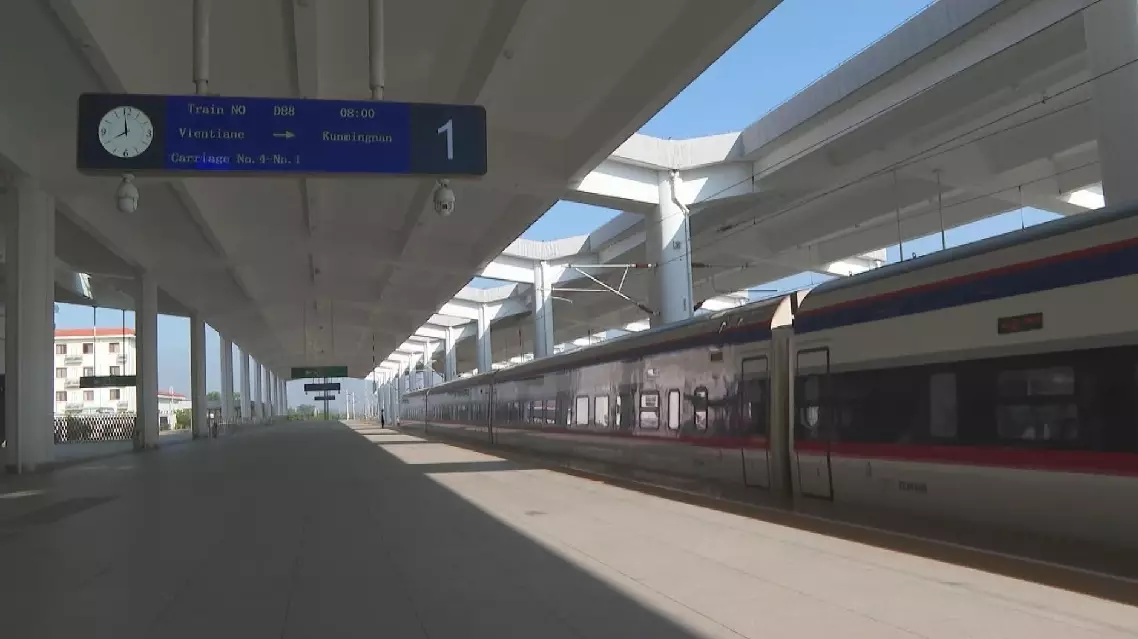
The China-Laos Railway has become a major transport artery in Southeast Asia, cutting freight times, expanding passenger flows and linking regional economies.
The China-Laos Railway, a landmark project of high-quality Belt and Road cooperation, began operations in December 2021. The 1,035-kilometer railway connects Kunming, the capital of southwest China's Yunnan Province, with Vientiane, the capital of Laos.
It has significantly enhanced regional connectivity, boosted regional economic growth, and facilitated people-to-people and cultural exchanges.
Passengers can now travel by rail all the way from Thailand to China, a journey that would have been difficult to imagine just a few years ago.
"I traveled up from Bangkok last night on the overnight train, and now I'm traveling up to Luang Prabang and then on to Kunming to explore Yunnan province. It's really easy to use the app and to book the trains, so so far so good. Everything seems to be working out," said an Australian passenger.
Jie Sen, a passenger service staff at Vientiane Railway Station, said the railway has become an important channel for cross-border travel.
"Passengers from more than 120 countries and regions have traveled on the railway. International trains between China and Laos now run four times a day, with the fastest trip from Kunming South to Vientiane taking just 9 hours and 36 minutes," he said.
"In terms of freight transport, cross-border shipping time has been reduced from five to seven days by road to just one to two days by rail. More than 3,800 categories of goods are now transported via the railway. Its logistics network reaches 19 countries and regions, including Laos, Thailand, Vietnam and Singapore," said He Xuqiang, head of Vientiane Railway Station.
China-Laos Railway becomes key regional transportation corridor