Panda caretakers in southwest China’s Chengdu are savoring the final few days that gray fur is still visible on certain special cubs, before the young bears fully gain the classic black-and-white complexion.
Several newly born giant panda cubs made their debut on the first day of 2026 at the Chengdu Research Base of Giant Panda Breeding, with livestreams of the adorable youngsters airing to celebrate the new year.
Some of the cubs belong to a family line that features a special trait -- their fur is gray and white for the first few months after birth. These little pandas have won the nickname "Little Grays" from fans.
Duan Dongqiong, a panda caretaker at the base, said that as the cubs grow, their gray fur gradually turns into normal black. This process is almost complete, but a few of the cubs still exhibit a gray hue on the dark parts of their coat. To remind livestream viewers of their progress, Duan and the other keepers set up a signboard showing photographs of the cubs at different stages.
To ensure their successful transition, the keepers closely monitor the cubs' vocalizations to understand their needs.
"Panda cubs use many different sounds to express their needs. Daily observations have revealed over 20 different sounds. For example, this 'humming' sound might mean, 'Mommy, I'm tired, I want a hug.' When playing with other panda cubs, they also hum while running, producing various other sounds," Duan said.
The caretaker said that as the new year comes, the last bits of gray on the panda cubs' bodies will completely fade away. For the team and the panda, this means both a victory and a brand new challenge.
"For our team, this means the panda cubs have taken another big step on their unique life path. For the panda cubs, it means they're getting ready to explore larger enclosures and meet more friends. This complete 'battle uniform' is a symbol of their transition to a new stage of life," she said.
China has made solid progress in giant Panda conservation. The population of captive giant pandas in China has nearly doubled over the past decade, reaching a total of 808, according to data from the National Forestry and Grassland Administration.
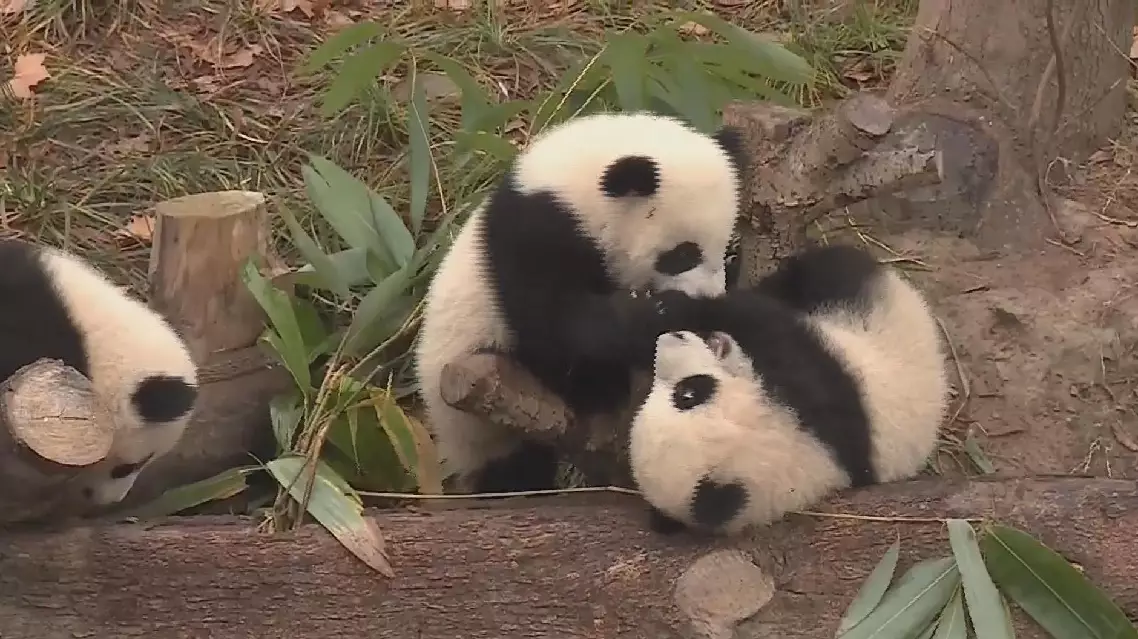
Panda cubs with gray fur quickly gain black color at Chengdu base
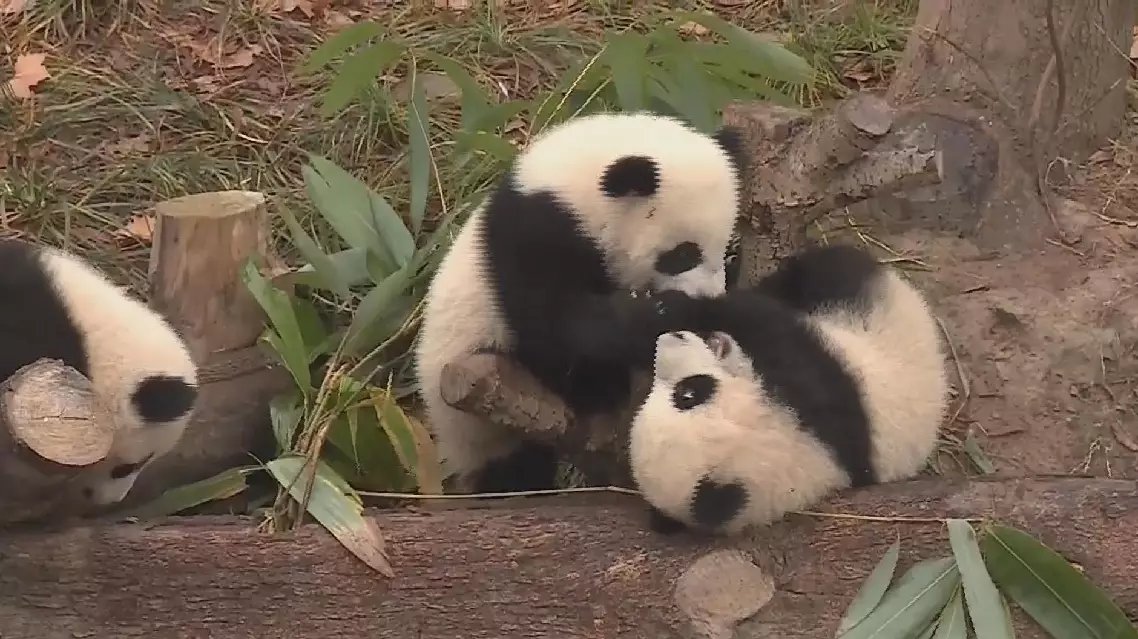
Panda cubs with gray fur quickly gain black color at Chengdu base