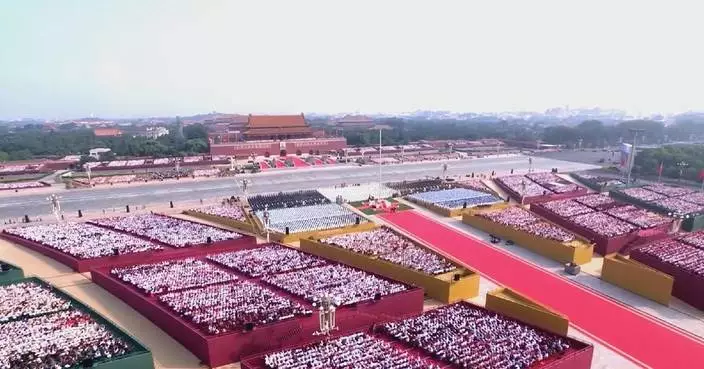
President of the Republic of Korea (ROK) Lee Jae Myung said on Wednesday that his country and China can build a mutually beneficial relationship amidst competitions.
At the invitation of Chinese President Xi Jinping, Lee will pay a state visit to China from Jan 4 to 7. It will be Lee's first visit to China since he took office in June 2025.
In an interview with the China Media Group (CMG) in Seoul, capital of the ROK, on Wednesday, Lee said that the ROK and China both place great importance on the development of high-tech fields, and this inevitably creates competitions between the two countries, but will also presents ample cooperation opportunities for both sides.
"To my knowledge, the Chinese government has made tremendous efforts in high-tech investment, research and development investment, and the talent cultivation in the field of basic research, just as the ROK has done. From this perspective, the ROK and China share similarities in economic growth strategies, which certainly creates competitions between the two countries, but it also presents broad cooperation opportunities for both sides. I believe that if we can explore areas for cooperation amid competitions and enhance our respective strengths through cooperation, we can build a mutually beneficial relationship that not only supports China's sustainable development strategy but also promotes ROK's growth strategy," Lee said.

ROK president eyes mutually beneficial relationship with China amid competitions
China closed 2025 with a record of 92 space launches and major breakthroughs were made in manned space launches, deep space exploration and commercial launches, according to the China National Space Administration.
"In 2025, we created a new launch record, sending more than 300 satellites into planned orbits. Both the number of launches and the number of payloads placed in orbit have achieved qualitative leapfrog development," said Zhu Haiyang, an engineer with the China Aerospace Science and Technology Corporation.
In 2025, the Shenzhou-20 crew spent 204 days in orbit, setting a new record for the longest single mission duration in the history of China's manned space program. Following the Shenzhou-20, the Shenzhou-21 achieved the fastest rendezvous and docking in the history of the Shenzhou mission in just three hours and a half.
Facing an unexpected technical situation with the Shenzhou-20 spacecraft, China immediately activated emergency plans. Within 16 days, a series of maneuvers were accomplished including the launch of the Shenzhou-22 backup vehicle, presenting a "textbook model" for the international space community in effectively responding to unexpected emergencies.
In deep space exploration, the Tianwen-2 probe embarked on its journey for China's first asteroid exploration and sample-return mission in 2025.
Last year also saw intensive launch activities from multiple commercial rocket types, injecting strong momentum into the country's commercial space development.
As China has kicked off the first year of its 15th Five-Year Plan (2026–2030), a new blueprint for the country's space program is unfolding. Multiple tests are planned in preparation for future lunar exploration, as Chang'e-7 lunar probe is scheduled to be launched for the lunar south pole to search for evidence of water ice. The industry is also preparing for the maiden flights of several new rocket types, which will include the challenges to test rocket recovery and reusability technologies.
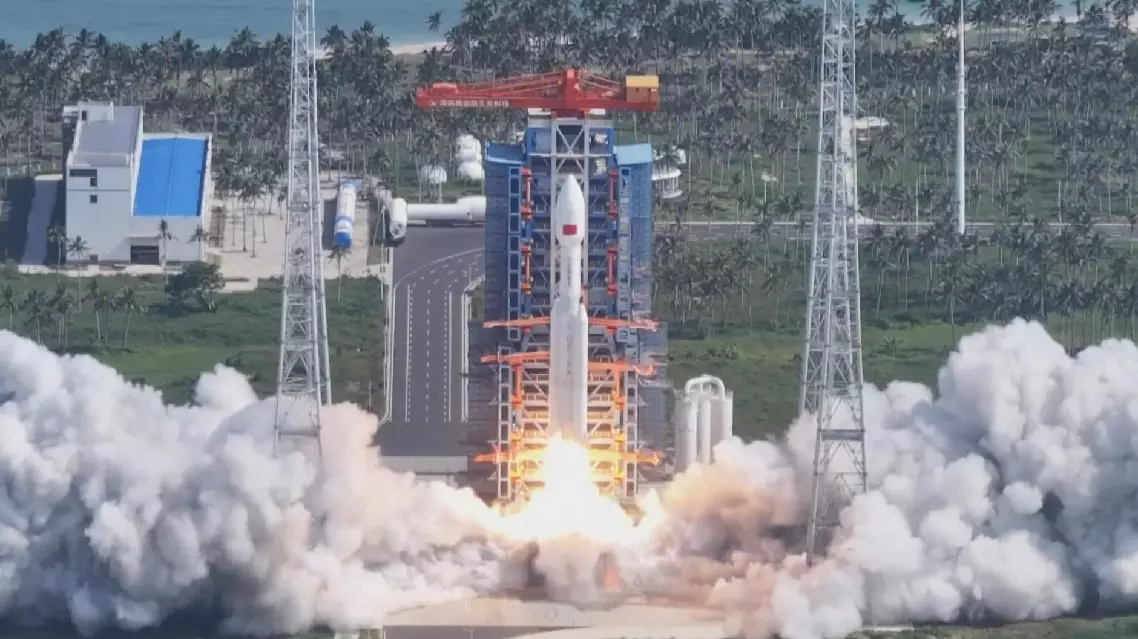
China closes 2025 with record 92 space launches
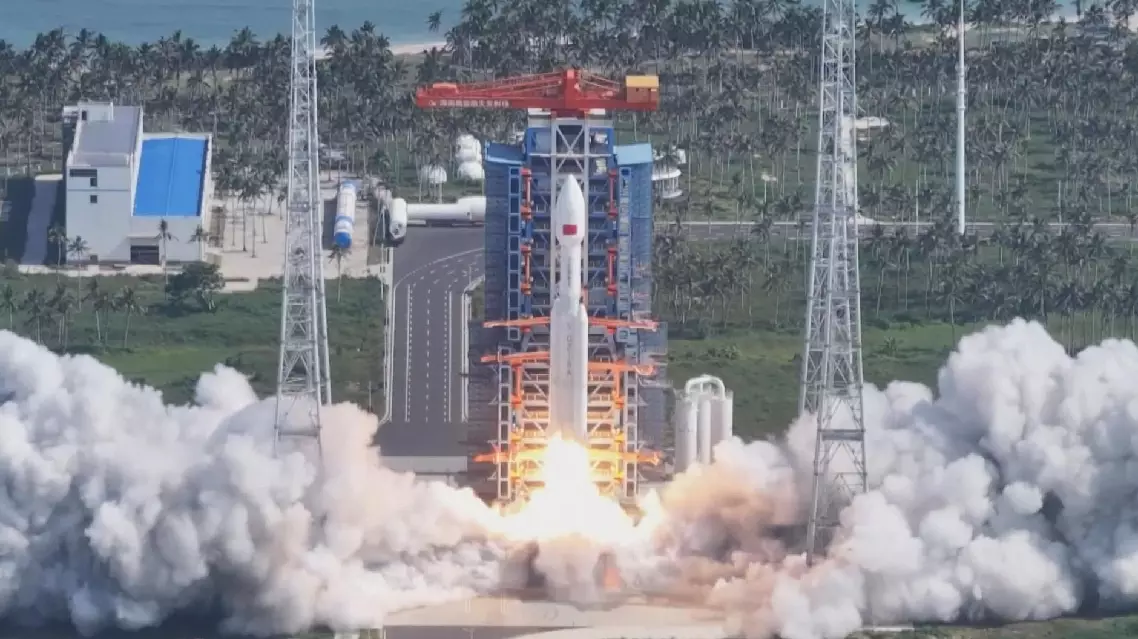
China closes 2025 with record 92 space launches