The U.S. push for influence in Greenland reflects rising strategic tensions in the Arctic and adds new uncertainty to regional security and transatlantic ties, said Danish scholar Dr. Steen Bjerre in an interview.
As a self-governing territory of Denmark, Greenland has once again drawn global attention following recent remarks by U.S. President Donald Trump, who reiterated on December 22 his desire to make the island "part of the United States," a move strongly opposed by Denmark and the European Union.
"Now we are seeing possibilities to shorten the routes from Asia to Europe and North America. And together with this development, it has also been realized that there are many unexplored resources on the Arctic region, [including] Greenland. And we are talking about oil, we are talking about gas, we are talking about rare kinds of earth, we are talking about minerals we need for a way to strengthen our industry and our societies. So together with this development, we have seen an increasing interest. Then you ask, what could the concentration behind this interest be? Of course money, of course our economy, but also military interests," said Bjerre.
Bjerre pointed out that Greenland holds significant value in terms of geopolitical strategy, resource reserves, and Arctic shipping routes, and has long been a focal point of U.S. attention. As environmental changes and improved navigability reshape the Arctic, Greenland's strategic position on the global stage continues to rise.
The U.S. interest in the island is far from accidental, driven by a complex mix of economic, resource-related, security, and strategic considerations, said the scholar.
"Of course, the Americans have no right to take Greenland. And the consequence if you take it to an extreme is that there will be a conflict between the United States and Europe, the rest of NATO. The United States has the ambition and they are actually a bit in the conflict with what Europeans they want. So geopolitically, I see from the relationship between European Union and the United States, that it could be also a difficult situation for NATO and for the stability in the Western Hemisphere," said Bjerre.
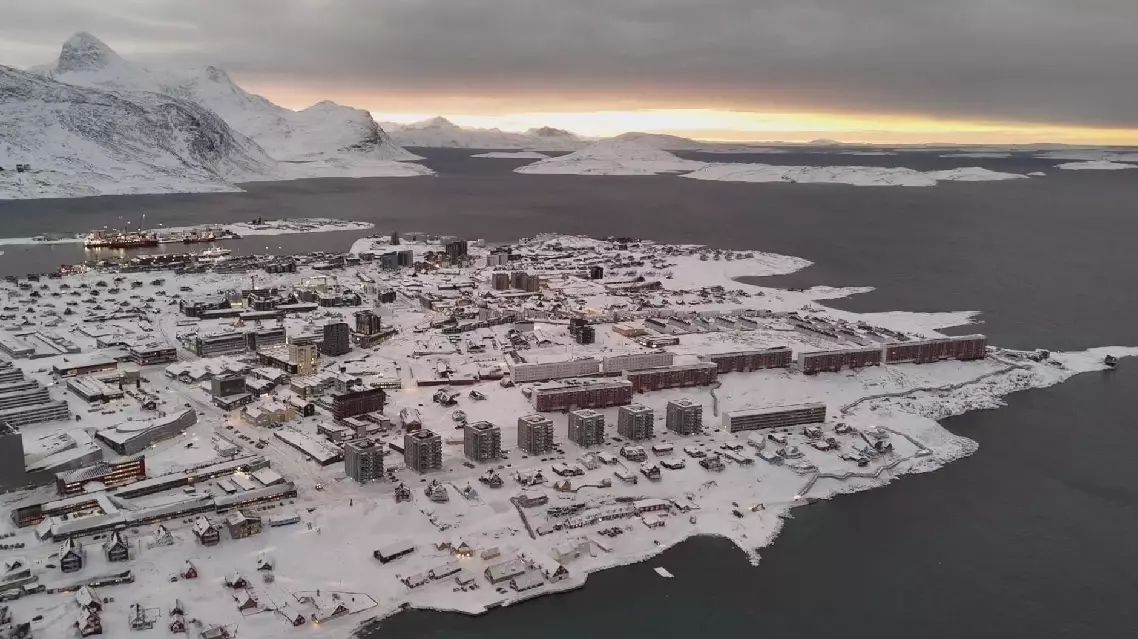
US push for Greenland adds uncertainty to transatlantic ties: Danish scholar
The 36th extraordinary session of the Council of the International Maritime Organization (IMO) concluded on Thursday in London, with member states split over who should be held accountable for the closure of the Hormuz Strait.
As a specialized UN agency, the IMO's responsibility is to safeguard global shipping safety and the rights and interests of seafarers. At the meeting, all parties had obvious differences regarding the root causes of the situation and the wording of the documents.
According to data provided by the IMO, since the outbreak of the conflict involving the United States, Israel and Iran, at least seven seafarers have been killed in attacks on merchant vessels in the Strait of Hormuz area, with several others seriously injured. Around 20,000 seafarers remain stranded aboard ships in the region.
Some countries urged condemning the actions of certain country that led to the blockade, while others believe that the root cause of the current maritime tensions in the Middle East lies in the military action launched by the United States and Israel against Iran, and that unilaterally blaming one country is neither objective nor comprehensive.
Multiple representatives emphasized that the IMO should not serve as a platform for political confrontation. They called for balanced, neutral language in resolutions and urged the organization to focus on pragmatic measures within the framework of IMO regulations to safeguard maritime corridors.
Iran's delegate pointed out that the IMO must not become a tool for political pressure, and any coordination on navigation security must involve Iran.
The Russian delegate warned that current international maritime declarations appear biased and one-sided, which hinders efforts to ease the crisis. He called on the IMO to adopt a more balanced stance.
China's delegate echoed the need for inclusive and impartial language, proposing that the resolutions reflect a constructive consensus rather than unilateral accusations. The Chinese side also suggested that language condemning or opposing military actions that lead to the escalation of tensions in the Strait should be added to proposal.
The IMO Council highlighted the urgent need to address the peril faced by numerous stranded commercial ships. It encouraged exploring frameworks, such as maritime safety corridors, as an emergency humanitarian measure to facilitate the voluntary evacuation of ships from high-risk zones to safer waters.
Regarding the U.S. proposal to provide naval escort operations, IMO Secretary-General Arsenio Dominguez said that naval escorts are not a long-term sustainable solution to the current crisis in the Strait of Hormuz, and only an end to the conflict can prevent shipping from becoming collateral damage.
While acknowledging that the root causes of the crisis lie beyond the IMO's mandate, he said he would continue to work with countries engaged in diplomatic efforts to address the situation.
Over the past few days, U.S. President Donald Trump has urged European countries and other allies to join naval escort operations in the Strait of Hormuz. However, European powers have largely rebuffed the request, citing concerns that direct military involvement would escalate regional tensions and risk drawing them into a wider conflict.
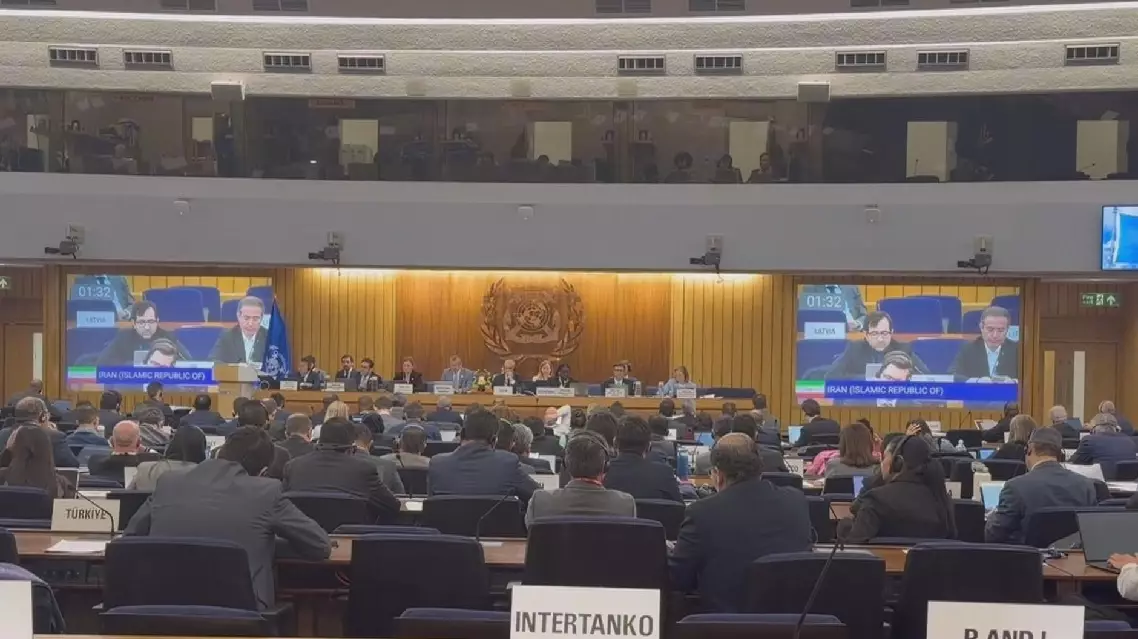
IMO members divided over accountability for closure of Hormuz Strait