International figures from Africa and Europe have criticized what they described as erroneous remarks by Japanese Prime Minister Sanae Takaichi, stressing that there is only one China and cautioning that such statements could heighten regional tensions and undermine international stability.
Officials and experts said the comments reflect dangerous tendencies toward militarization and interference in China's internal affairs, particularly on the Taiwan question, which they emphasized is not open to debate.
Zodwa Lallie, acting deputy director-general in charge of China-South Africa relations at South Africa's Department of International Relations and Cooperation, reaffirmed South Africa's long-standing stance.
"South Africa is unequivocal, it is an adherent of the one China policy. There is but one China, and that one China is indivisible, so it's not a question for us. It's a given," she said.
Nigerian scholar Efem Ubi, Director of Studies at the Nigerian Institute of International Affairs, said remarks related to Taiwan by Japanese leaders were inappropriate and risk destabilizing the region.
"I'd like to say the remarks by the Prime Minister of Japan Sanae Takaichi is not justified. Any issue that revolves around Taiwan, it's a Chinese issue. It's an internal issue. Every country, you know, should stay away from interfering or intervening in the internal affairs of China. The remarks by the Japanese Prime Minister will end up creating tension, more tension, create more problems, it is also pushing the Japanese to militarize within the region. And that will create a security dilemma within Asia Pacific," said the professor.
Willy Meyer Pleite, former Member of the European Parliament, warned that such rhetoric carries broader international risks.
"I believe these erroneous remarks not only pose a regional threat to China and the Korean Peninsula, but also constitute a real threat to the stability of the overall international situation. Japan's peace constitution was originally meant to serve as a safeguard for peace and disarmament, but the erroneous remarks made by Sanae Takaichi have seriously undermined the international order," he said.
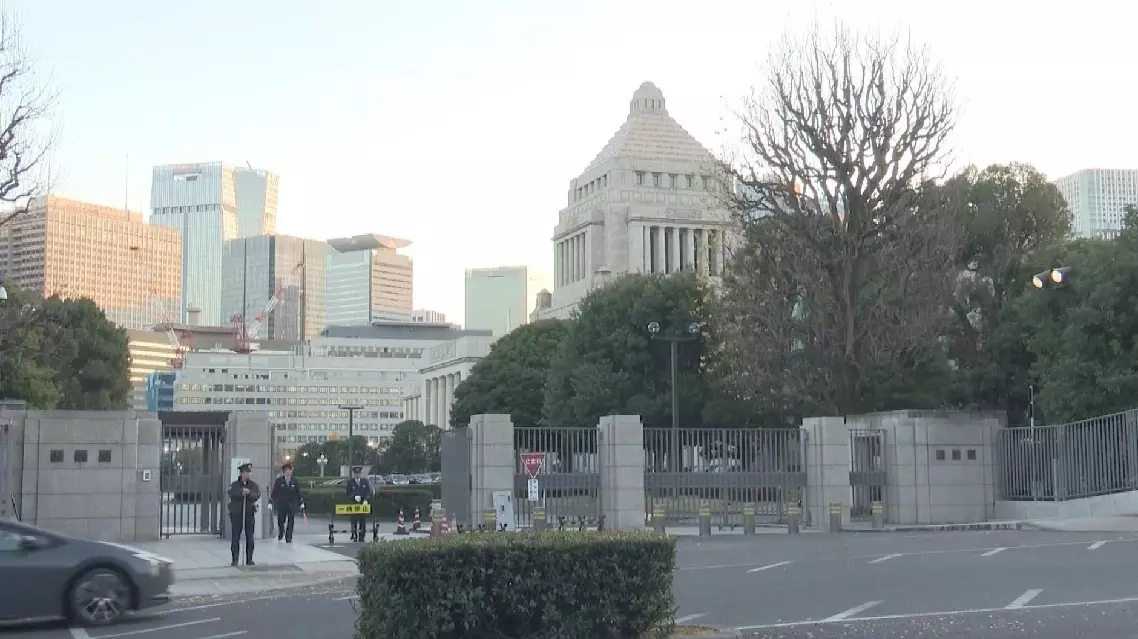
Officials, scholars reaffirm one-China principle, warn of regional instability
Officials, scholars reaffirm one-China principle, warn of regional instability
China's two major power grid operators -- the State Grid Corporation of China (State Grid) and China Southern Power Grid (CSG) -- reported a surge in investment in the first quarter of 2026, underscoring efforts to strengthen infrastructure construction and support high-quality socioeconomic development in China.
The State Grid said it completed fixed-asset investment worth 129 billion yuan (about 18.77 billion U.S. dollars) in the first three months of this year, up 37 percent the corresponding period of the previous year. The spending has driven more than 250 billion yuan (36 billion U.S. dollars) of investment across the wider industrial chain.
Key projects such as the Panxi ultra-high-voltage (UHV) alternating current (AC) line and the Anhui-Hubei back-to-back direct current (DC) project have seen ground broken for their construction, while several west-to-east power transmission projects have been upgraded.
Investment in connecting renewable energy generation to the grid was reported to have exceeded 10 billion yuan (1.45 billion U.S. dollars) from January to March, a year-on-year rise of more than 50 percent.
The CSG also reported robust growth in investment in the three-month period, with fixed-asset investment reaching 38.45 billion yuan (5.58 billion U.S. dollars), up about 50 percent from a year earlier.
Among its achievements, the company completed and commissioned 80 key projects, including the 220 kV cross-sea power grid interconnection project, which was officially put into operation on March 20. The project ended years of grid isolation on the Weizhou Island in south China by linking it to the main power system of the Guangxi Zhuang Autonomous Region.
The construction of 17 other major energy projects, including one linking the power grid of the Xizang Autonomous Region in southwest China with that of Guangdong Province in south China, is advancing rapidly. These projects are expected to bolster regional industries, the maritime economy, digital collaboration and the transition to green energy.
"By accelerating major project construction, investment during the 15th Five-Year Plan period (2026-2030) is expected to approach 1 trillion yuan (145 billion U.S. dollars), driving a further 2 trillion yuan (290 billion U.S. dollars) of investment across upstream and downstream industries," said Dong Yanle, deputy general manager of the Engineering Construction Department under the China Southern Power Grid.
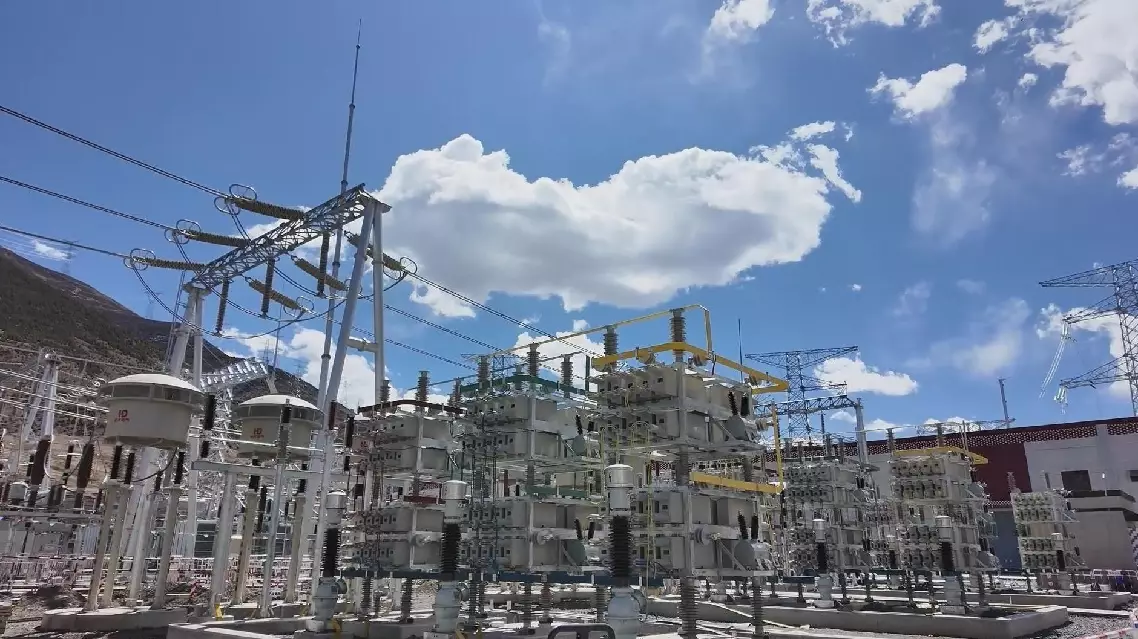
China ramps up power grid investment in January-March to boost growth