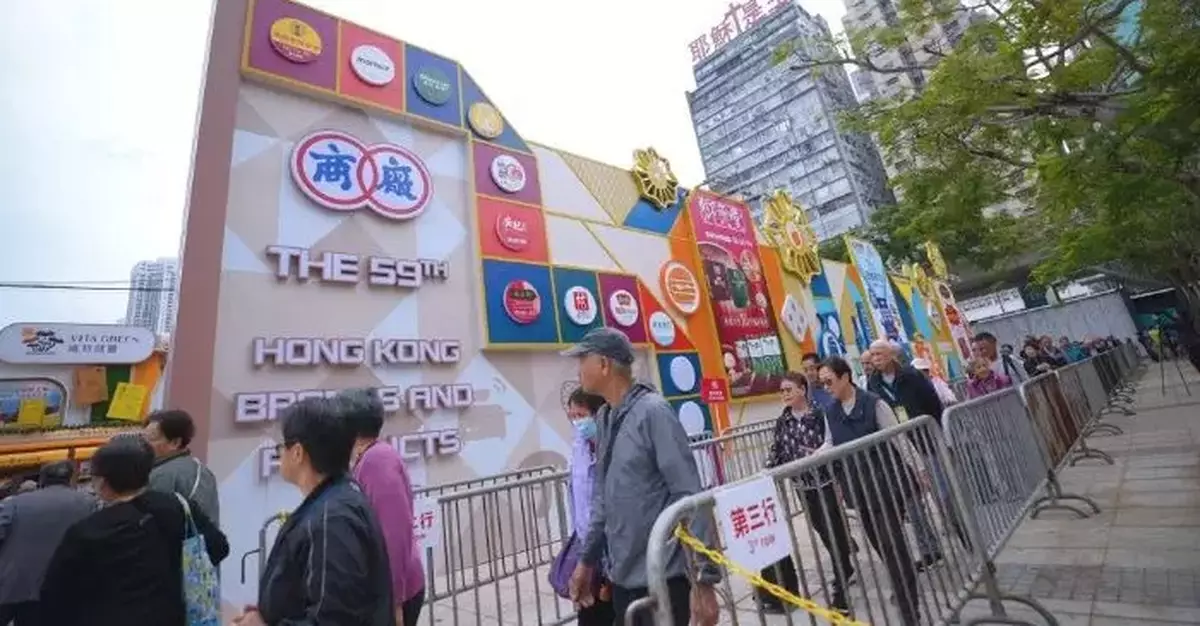
Today is the last day of the Hong Kong Brands and Products Expo, which has lasted for 24 days. Before the expo opened at 11 a.m., dozens of residents had already queued up to wait for entry. Many of them even brought shopping carts, eager to seize the final chance for purchasing.
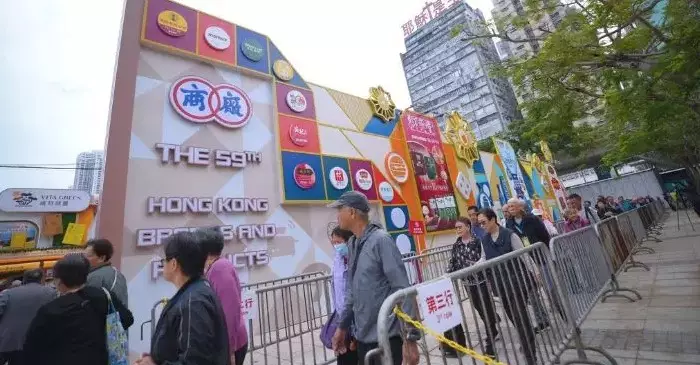
The Hong Kong Brands and Products Expo, Photo source: FB
Some exhibitors offered limited discounted products on the last day for residents to purchase. Some citizens said that they came to do Spring Festival shopping and planned to buy some food, such as dried fish maw and seafood, for their families since the Chinese New Year is coming. They also mentioned that it was their third time attending the Hong Kong Brands and Products Expo. In their eyes, the goods' prices this year were lower than before. Considering many Hong Kong residents would choose to visit Shenzhen for consumption, they thought that the exhibitors' promotional tactics of price reduction would help to attract residents to do local consupmtion. Nevertheless, in some citizens' eyes, they didn't think there was any price reduction for the goods sold on the last day. As for them, they didn't set a specific spending amount target. They would buy once they saw something won their hearts.
One exhibitor selling dried seafood, ginseng, and deer antler said that the flow of people and sales figures were better than expected, which has made them pleased beyond expectations. As for him, he would not offer discounts for promotion even on the last day, since the prices of the goods offered at the expo were already significantly lower than those sold in stores. He believed that the residents would know how to make a wise purchase choice.
One exhibitor selling foreign food products thought that the expo was popular but not profitable. As an exhibitor who had attended for many years, he felt that the goods were not diversified enough. The product types were repetitive, which made citizens only focus on the price. Under the influence of merchants falling over each other to release lower prices to attract customers, his sales figures were not satisfactory. He suggested that the organizer of the expo could introduce more distinctive products to strengthen the attractiveness and uniqueness of the expo.
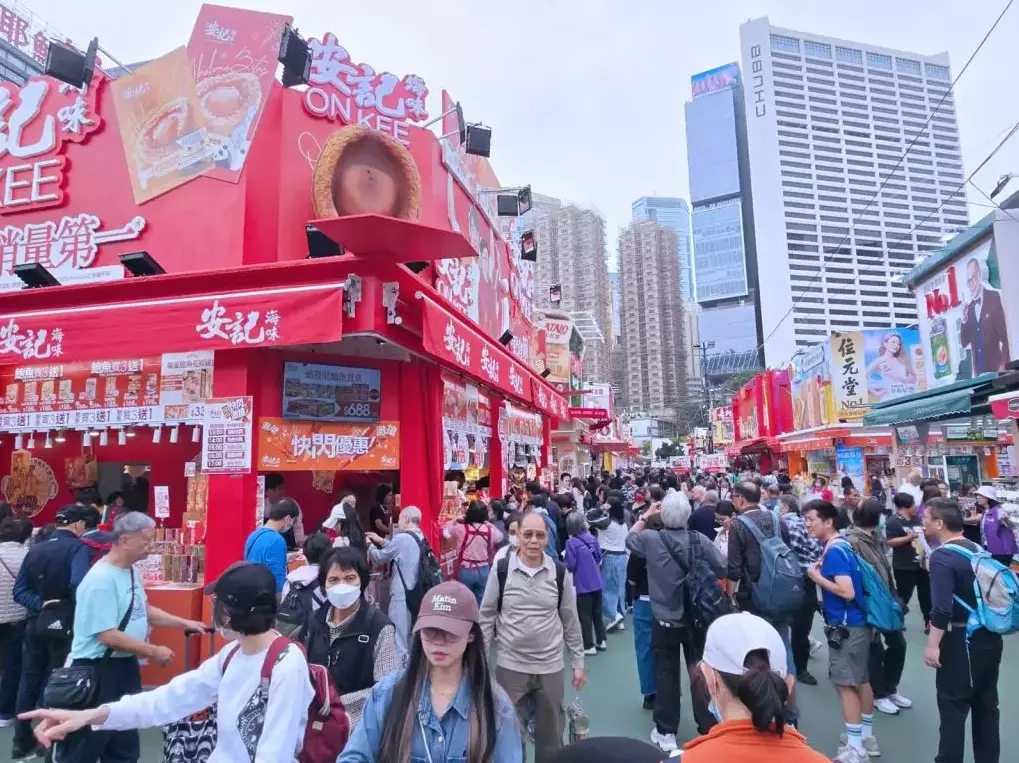
The Hong Kong Brands and Products Expo, Photo source: FB
On the last day of the expo, the organizing committee posted notices outside the venue that today's opening hours would last from 11 a.m. to 8 p.m. The closing time would be 1 hour earlier than usual, and the admission would end at 7 p.m.
A research team from the Department of Surgery and the Department of Medicine, School of Clinical Medicine, LKS Faculty of Medicine, the University of Hong Kong (HKUMed), has demonstrated that prostate-specific antigen (PSA) screening for men aged 45 and above can significantly reduce the incidence of advanced-stage prostate cancer from 39% to approximately 1%, and lower the mortality rate from 6.14% to 2.85%. The study highlights that implementing risk-stratified screening in Hong Kong is highly cost-effective, providing robust evidence to support the formulation of future cancer prevention and control policies in the city. The study findings were published in The Lancet Regional Health – Western Pacific.
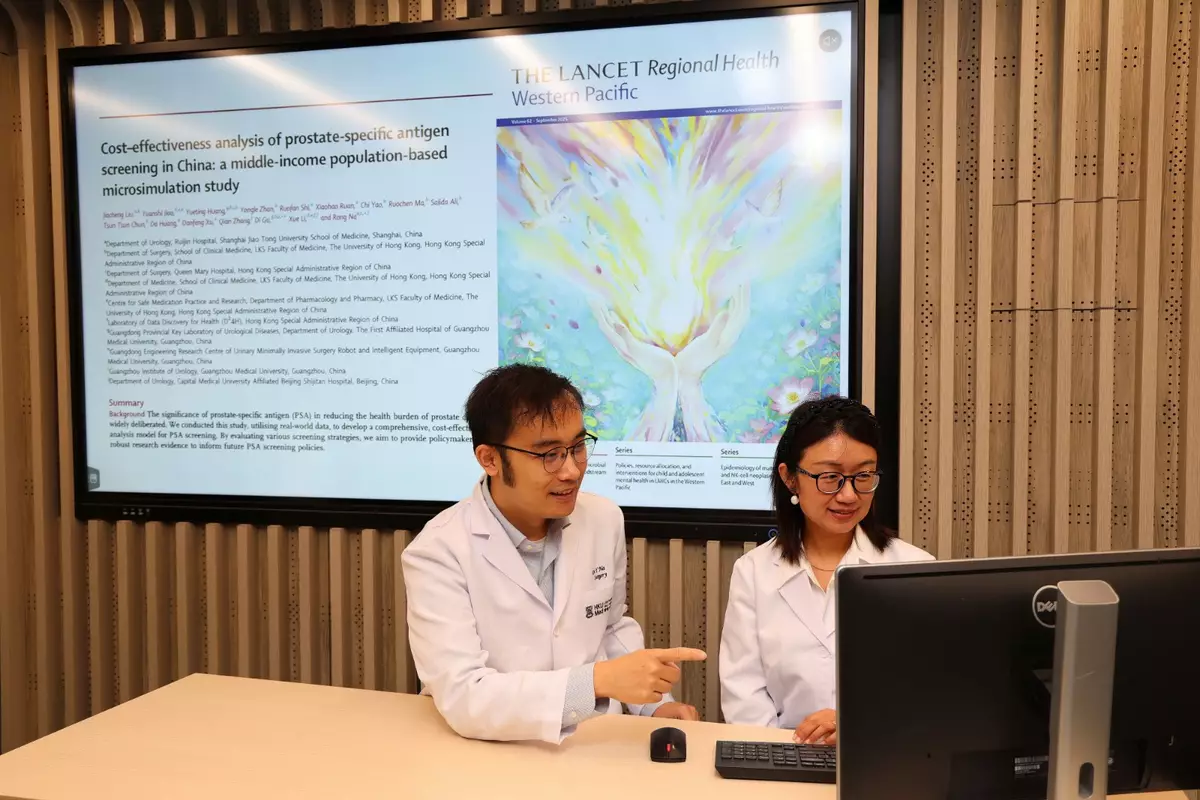
A study from HKUMed demonstrates that prostate-specific antigen (PSA) screening can significantly reduce the incidence of advanced-stage prostate cancer and mortality rate. The research is led by Dr Na Rong (left) from the Department of Surgery, and Professor Li Xue from the Department of Medicine, both under the School of Clinical Medicine at HKUMed. Photo source: HKUMed
PSA screening helps reduce incidence of advanced prostate cancer and mortality
According to the latest data from the Health Bureau, prostate cancer is now the third most prevalent cancer among men in Hong Kong, with its incidence rising in tandem with the ageing population. Dr Na Rong, Clinical Assistant Professor in the Department of Surgery, School of Clinical Medicine, HKUMed, explained that early symptoms of prostate cancer are often subtle, leading to delayed treatment. PSA screening, a blood test used to detect PSA levels in the blood, helps identify high-risk or metastatic prostate cancer at an early stage. However, the city's current health policy does not include a targeted screening programme for prostate cancer, and there is insufficient scientific evidence to support the implementation of universal screening.
The research team evaluated 56 distinct PSA screening strategies, including annual PSA screening for men aged 45 to 75. The team found that this strategy could significantly reduce the proportion of patients diagnosed with advanced-stage cancer at initial diagnosis from approximately 39% to 1%, while also slashing the annual prostate cancer mortality rate from 6.14% to 2.85%.
Cost-effectiveness of city-wide PSA screening
The team also evaluated the cost-effectiveness of implementing city-wide PSA screening to reduce pressure on the public healthcare system. The results indicated that assuming annual PSA screening for the 45 to 75 age group, the costs for screening and subsequent treatments would be far below the 'cost-effective' threshold defined by the World Health Organisation (WHO). Specifically, the estimated annual incremental cost per person would be approximately US$4,950 (HK$38,500). This is far below the value generated by the intervention, especially when compared to Hong Kong's GDP per capita of approximately US$55,000 (HK$420,000), confirming that periodic PSA screening is 'highly cost-effective'.
'From a health economics perspective, if a medical intervention is proven to be “cost-effective” in regions with lower GDP per capita, its feasibility and economic benefits are even more significant in a high-income economy like that of Hong Kong. With more abundant medical resources and higher purchasing power, Hong Kong is well-positioned to implement proactive early screening to reduce the societal burden of advanced cancer,' emphasised Dr Na.
Optimising resource allocation through 'precision screening'
To avoid overdiagnosis and strain on the public healthcare system, the research team suggests 'precision stratification' of population risk. The study introduced polygenic risk scores (PRS) for prostate cancer prediction to tailor screening strategies based on individual risk levels. While high-risk groups would undergo more frequent monitoring, the screening starting age could be delayed or testing frequency reduced for low-to-medium risk groups (comprising two-thirds of the population). This stratified approach would improve cost-effectiveness without compromising overall survival rates.
'We hope this health economics study, which combines clinical data from Hong Kong and the Chinese Mainland, will promote a review of prostate cancer screening guidelines in the city. In the long term, this will help achieve "early detection, early treatment”, improve the healthy life expectancy of men in Hong Kong, and alleviate societal and medical costs,' concluded Dr Na.
Research based on big data from Hong Kong and the Chinese Mainland
The research utilised 20 years of clinical follow-up data from Hong Kong, screening cohorts from Guangzhou, and diagnostic data from Shanghai. Leveraging this real-world evidence, HKUMed and the Mainland teams accurately modeled the natural history and prognosis of prostate cancer in the region. These results are highly applicable to the local population for predicting disease burden and intervention outcomes.
About the research team
The study was led by Dr Na Rong, Clinical Assistant Professor, Department of Surgery; Professor Li Xue, Assistant Professor, Department of Medicine, both under the School of Clinical Medicine at HKUMed; in collaboration with Professor Gu Di, First Affiliated Hospital of Guangzhou Medical University. The first authors are Dr Liu Jiacheng, Ruijin Hospital, Shanghai Jiao Tong University School of Medicine; Dr Jiao Yuanshi, Department of Medicine, School of Clinical Medicine, HKUMed, and Dr Huang Yueting, First Affiliated Hospital of Guangzhou Medical University.
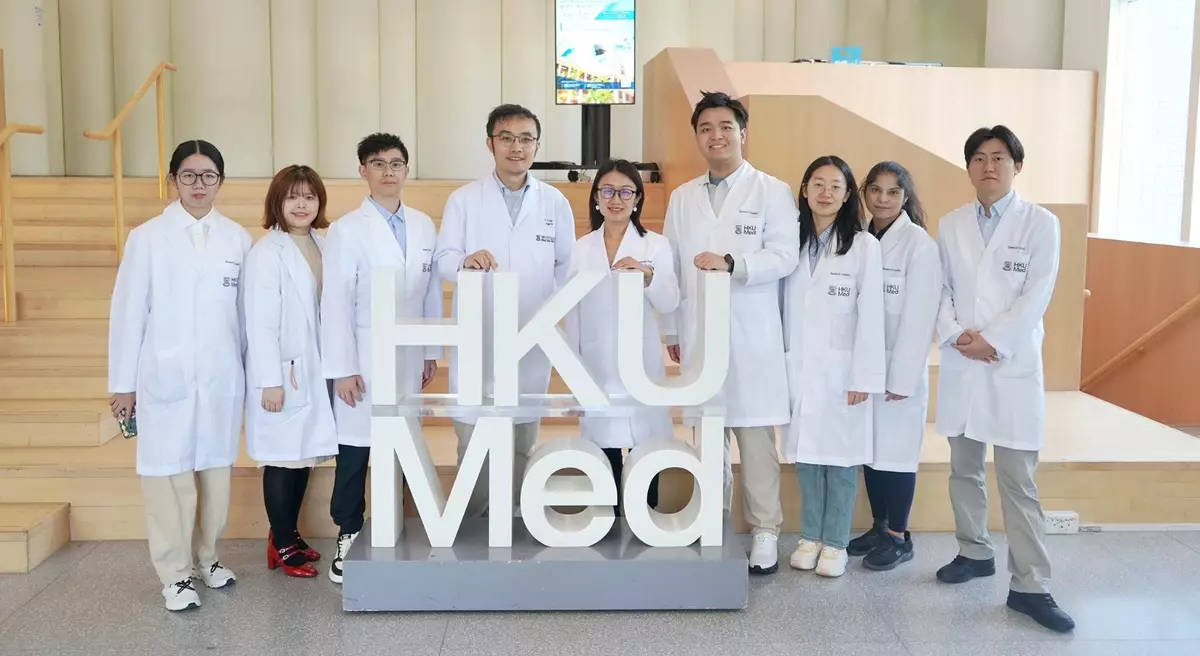
The research team hopes this health economics study will promote a review of prostate cancer screening guidelines in the city, ultimately improving the healthy life expectancy of men in Hong Kong in the long term while alleviating societal and medical costs. Photo source: HKUMed