Google Hong Kong today announced its Year in Search 2025, compiling keywords with the highest search volume increases over the past year, offering a data-driven look back at the topics that captured the city's attention in 2025. The release includes 14 lists covering keywords, news, people, entertainment, and leisure.

Google Hong Kong today announced its Year in Search 2025. Photo source: Google
AI Tools Claim 4 of Top 10 Keywords
Click to Gallery
Google Hong Kong today announced its Year in Search 2025. Photo source: Google
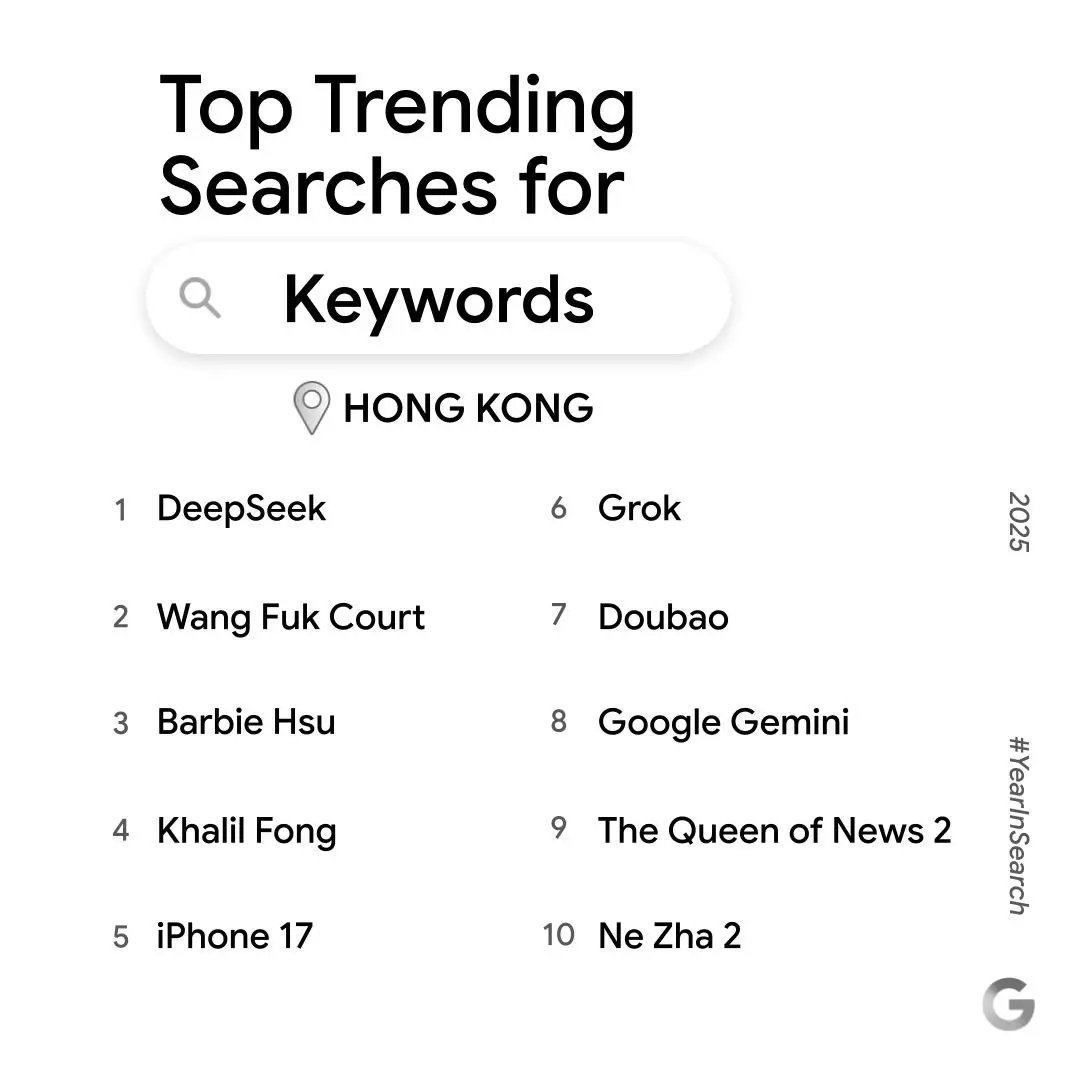
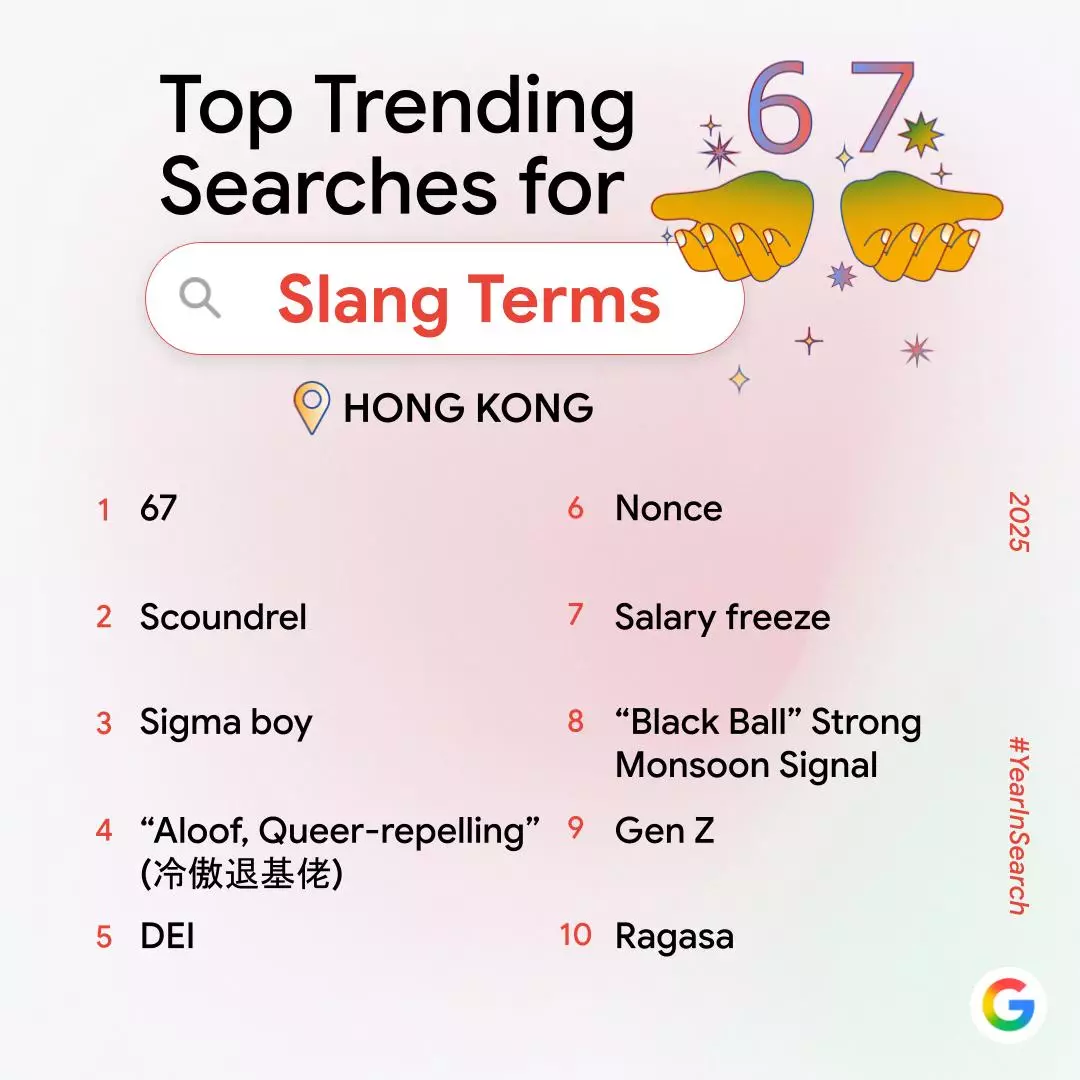
Artificial Intelligence (AI) tools captured four spots on the "Top Trending Keywords" list, including "DeepSeek" at No. 1, followed by "Grok", "Doubao”, and "Google Gemini". This reflects a significant interest among Hong Kongers in exploring and applying various AI technologies. Meanwhile, "67", a slang term popular among Gen Z and Gen Alpha globally, topped the "Top Trending Slang Terms" list.
Photo source: Google
Local News Dominated by Weather and Public Health
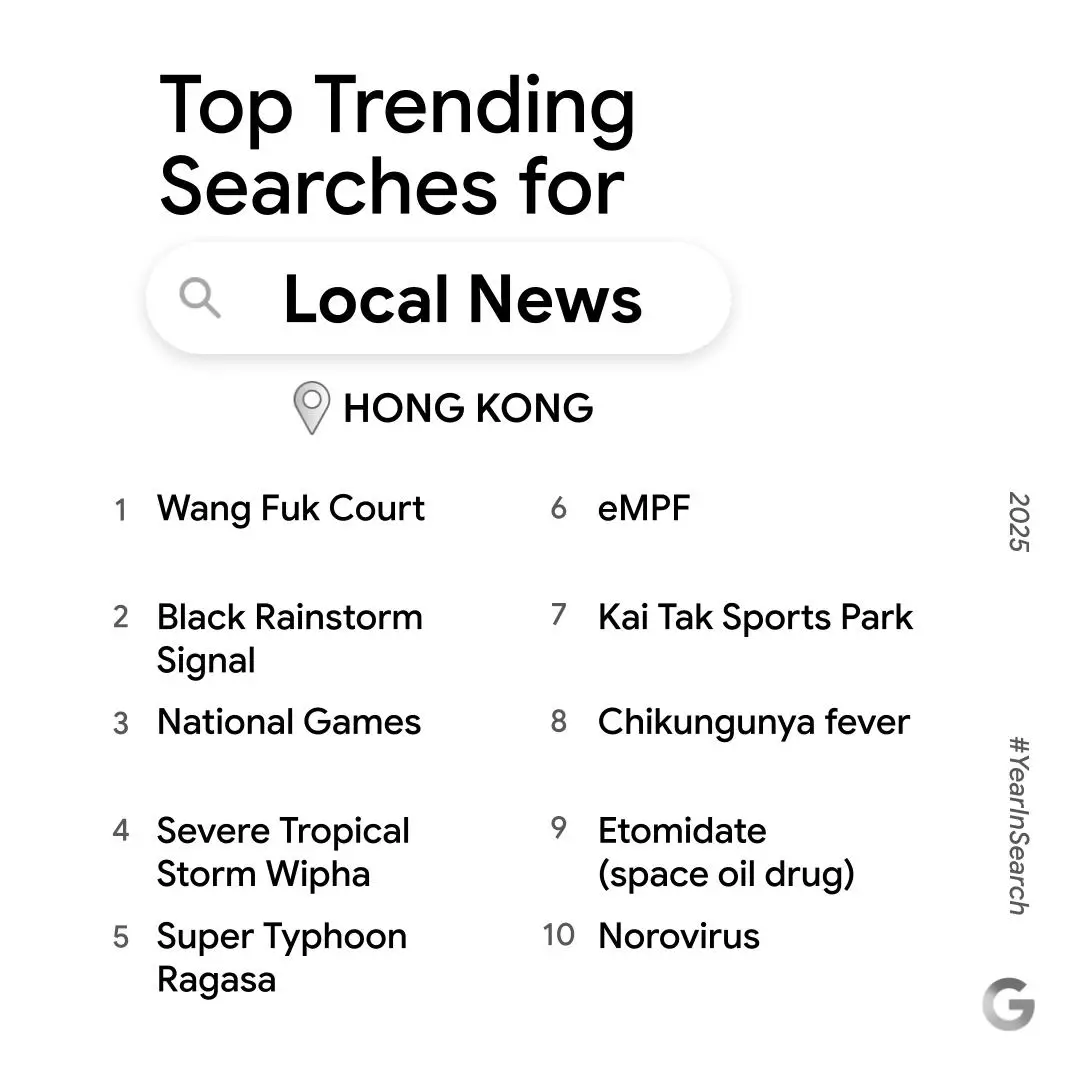
The heartbreaking "Wang Fuk Court" fire in Tai Po ranked as the No. 2 Trending Keyword and topped the "Top Trending Local News" list. Weather and public health issues accounted for another three spots each on the local news list. Faced with record-breaking tropical cyclone warnings and frequent black rainstorms, Hong Kongers turned to Google for real-time, practical information on "Black Rainstorm Signal", "Severe Tropical Storm Wipha", and "Super Typhoon Ragasa" to navigate the challenges. Infectious disease information regarding "Chikungunya fever" and "Norovirus", as well as "Etomidate (space oil drug)", also drew significant concern.
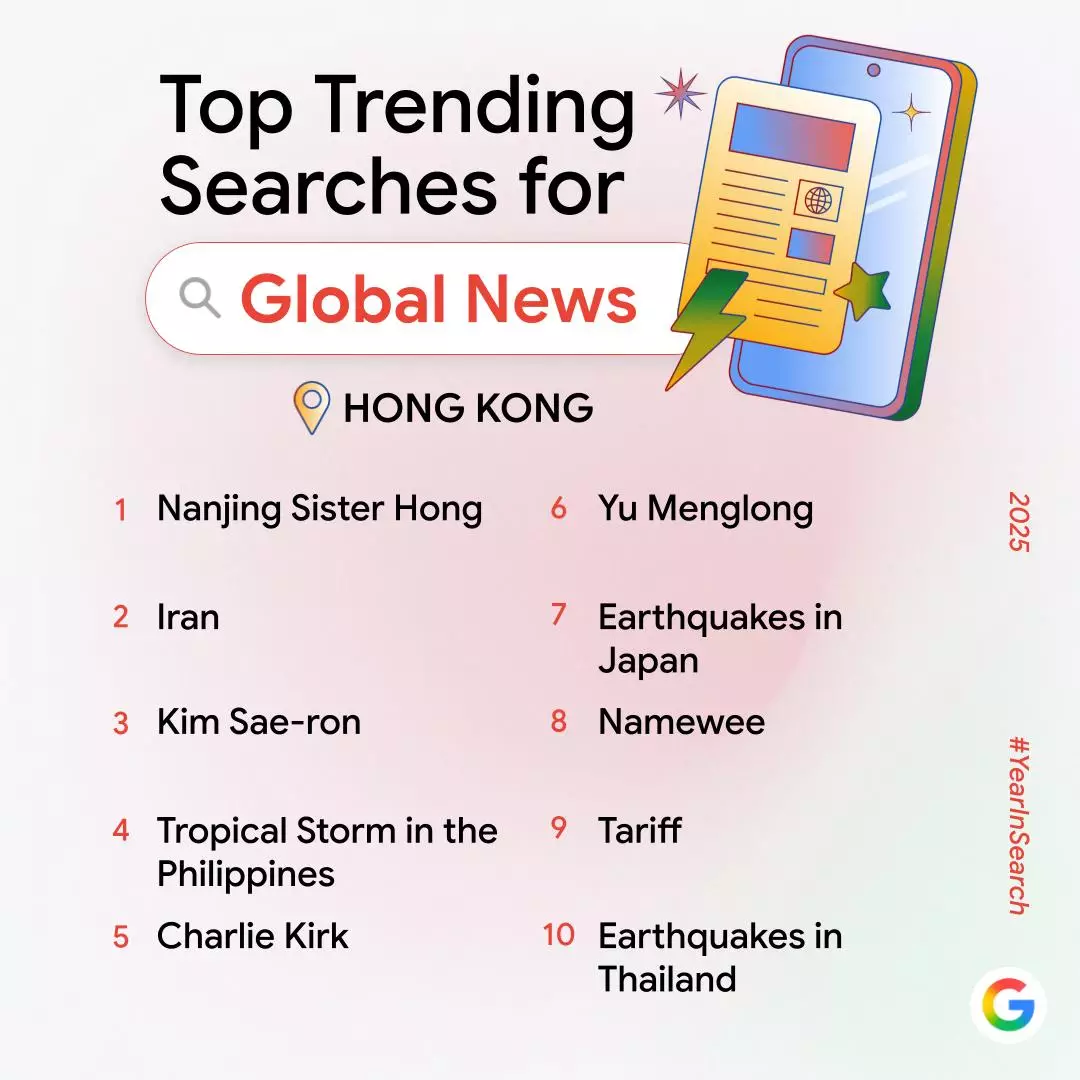
Beyond local affairs, Hong Kongers kept a close watch on global dynamics. The "Top Trending Global News" covered the viral "Nanjing Sister Hong" incident, international politics such as the situation in "Iran" and "Tariff" policies, as well as natural disasters including the "Tropical Storm in the Philippines", "Earthquakes in Japan", and "Earthquakes in Thailand".
Photo source: Google
Sports Stars and Viral Sensations Lead People Lists
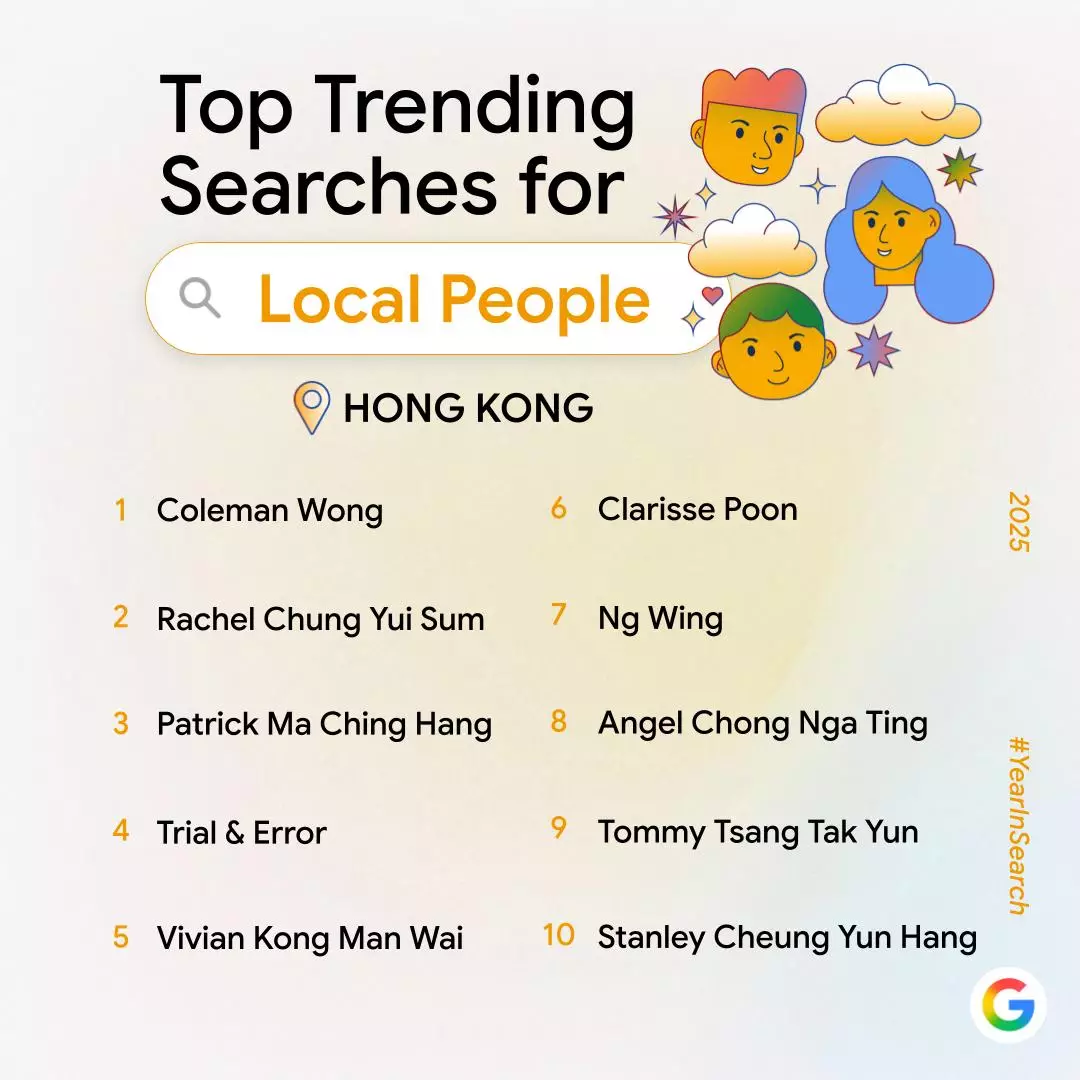
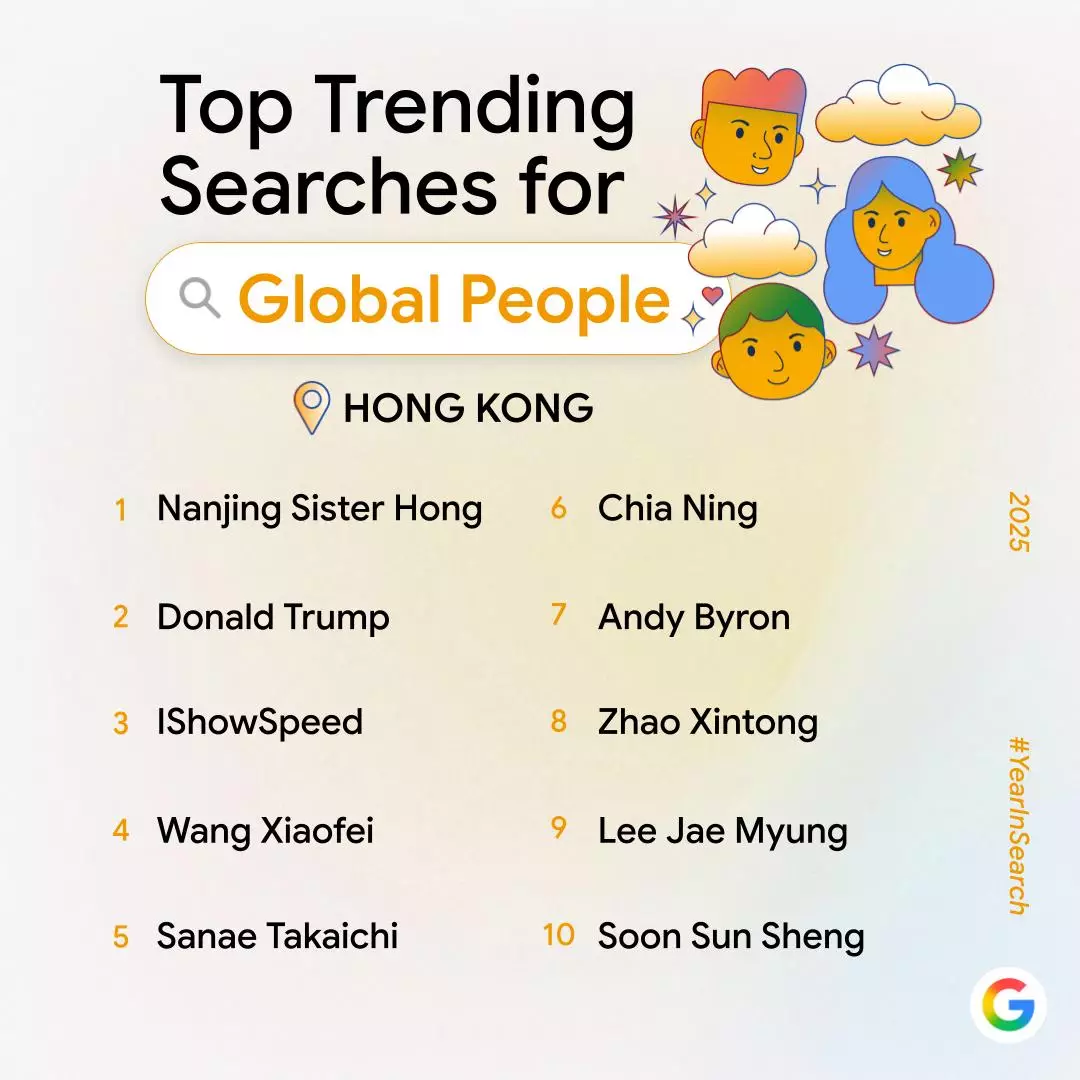
From politicians and elite athletes to content creators and newsmakers, the people Hong Kongers searched for spanned a wide spectrum. Hong Kong tennis prodigy “Coleman Wong", who made local history in international tournaments, topped the "Top Trending Local People" list. Meanwhile, "Nanjing Sister Hong", who became a viral sensation, topped both the "Top Trending Global News" and "Top Trending Global People" lists.
Photo source: Google
Kai Tak Sports Park Emerges as New Landmark for Mega Events; Nicholas Tse Takes "Double Top Spot"
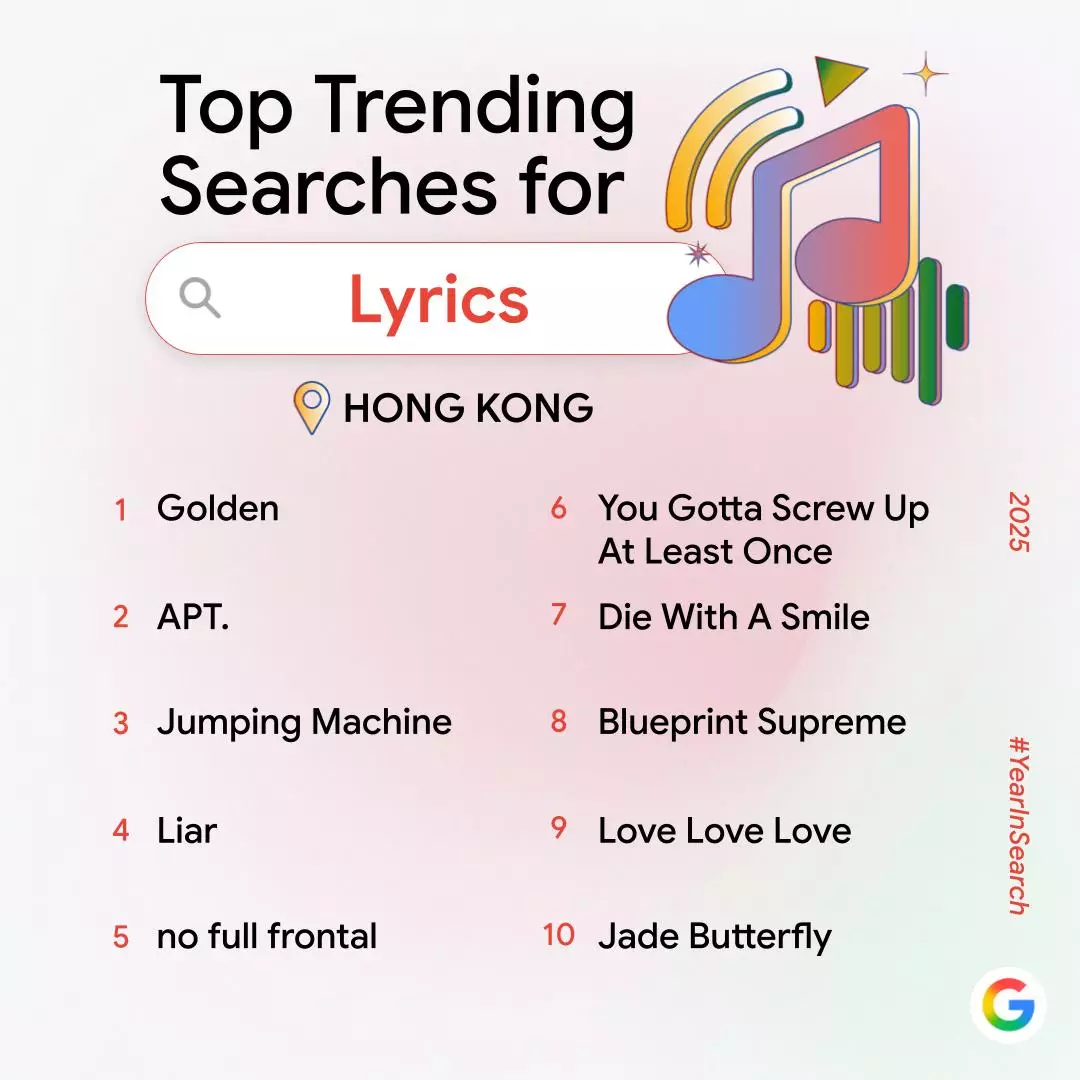
In entertainment, “Nicholas Tse”, who held a solo concert in Hong Kong after a multi-year hiatus, claimed the No. 1 spot on both the "Top Trending Local Celebrities" and "Top Trending Concerts" lists. One of his classic hits, "Jade Butterfly" also ranked No. 10 on the "Top Trending Lyrics" list. International superstars “Coldplay” topped the "Top Trending Global Celebrities" list, with their concert ranking No. 10 on the concerts list. Additionally, "Golden", the theme song from a global hit animated movie, topped the "Top Trending Lyrics" list.
Notably, with the opening of the "Kai Tak Sports Park" (No. 7 on the "Top Trending Local News" list) last year, the venue has become a new landmark for mega events including music concerts. Seven out of the top ten "Top Trending Concerts" were or are to be held at this major sports infrastructure.
Photo source: Google
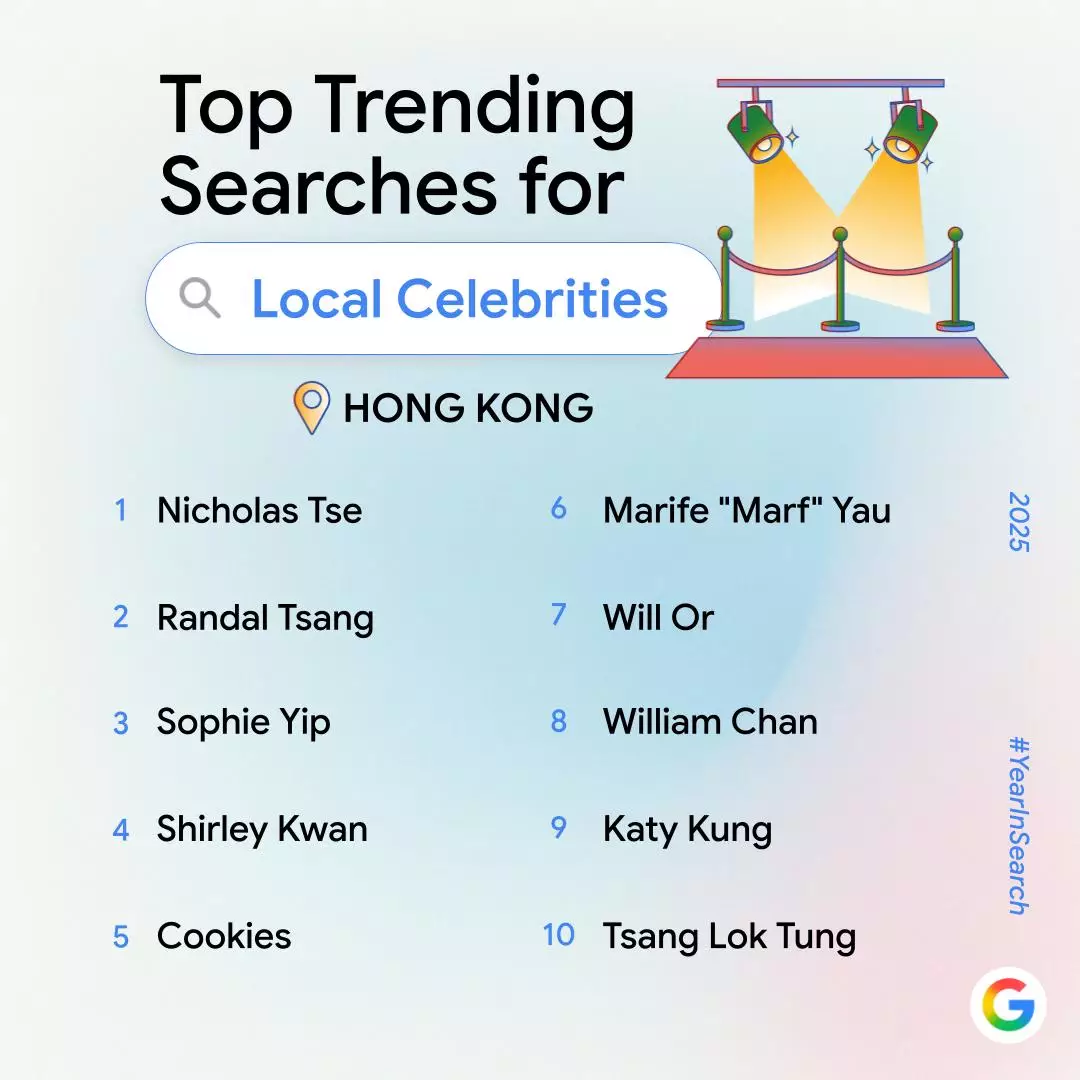
Local Films Take Half of "Top Trending Movies"; "Ne Zha 2" Takes First Place
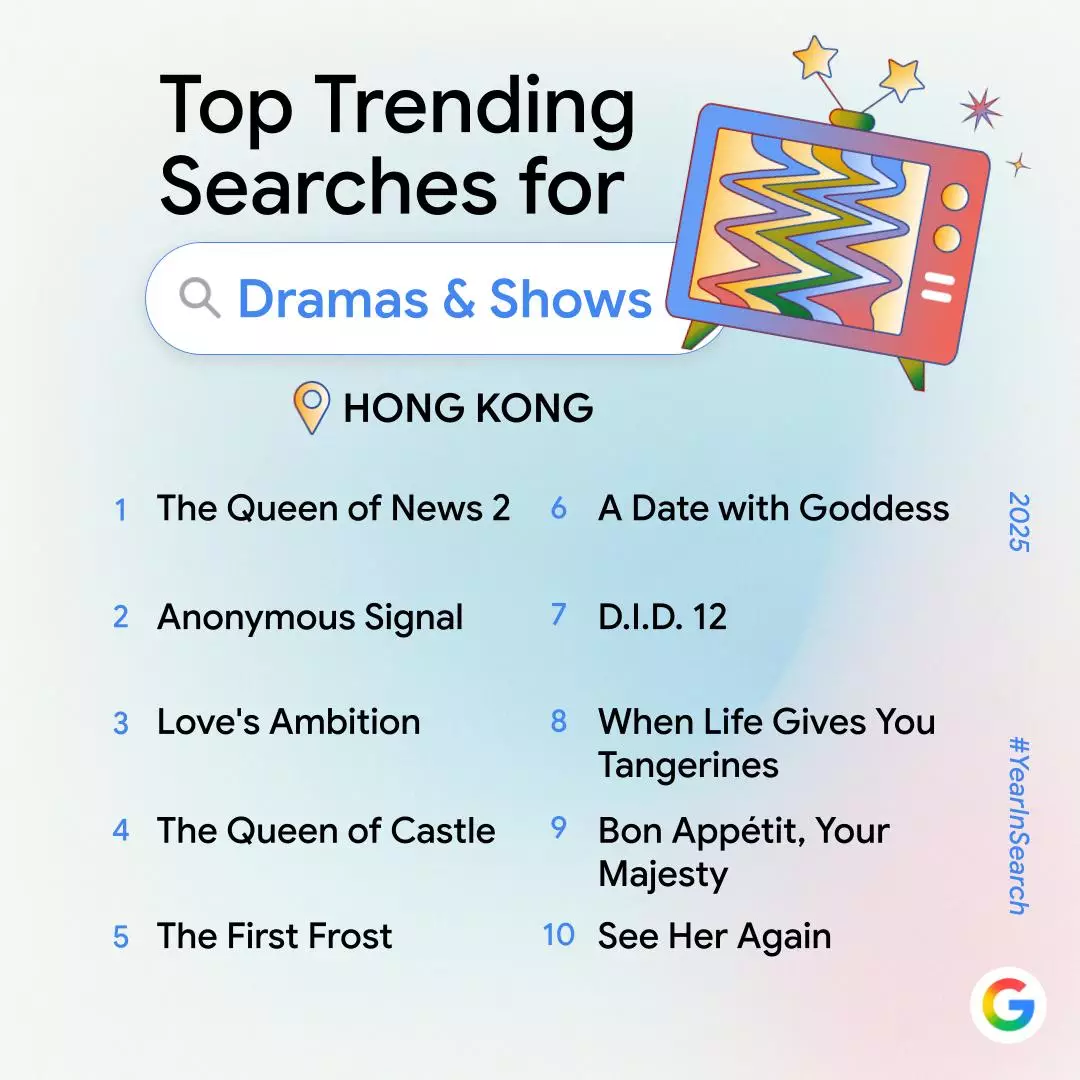
"Ne Zha 2", which ranked No. 10 on the overall keywords list, also claimed the top spot on the "Top Trending Movies" list. Local productions occupied five spots in the top ten, including the talk-of-the-town "Sons of the Neon Night" and the original local animation "Another World". "The Queen of News 2" topped the "Top Trending Dramas & Shows" list.
Photo source: Google
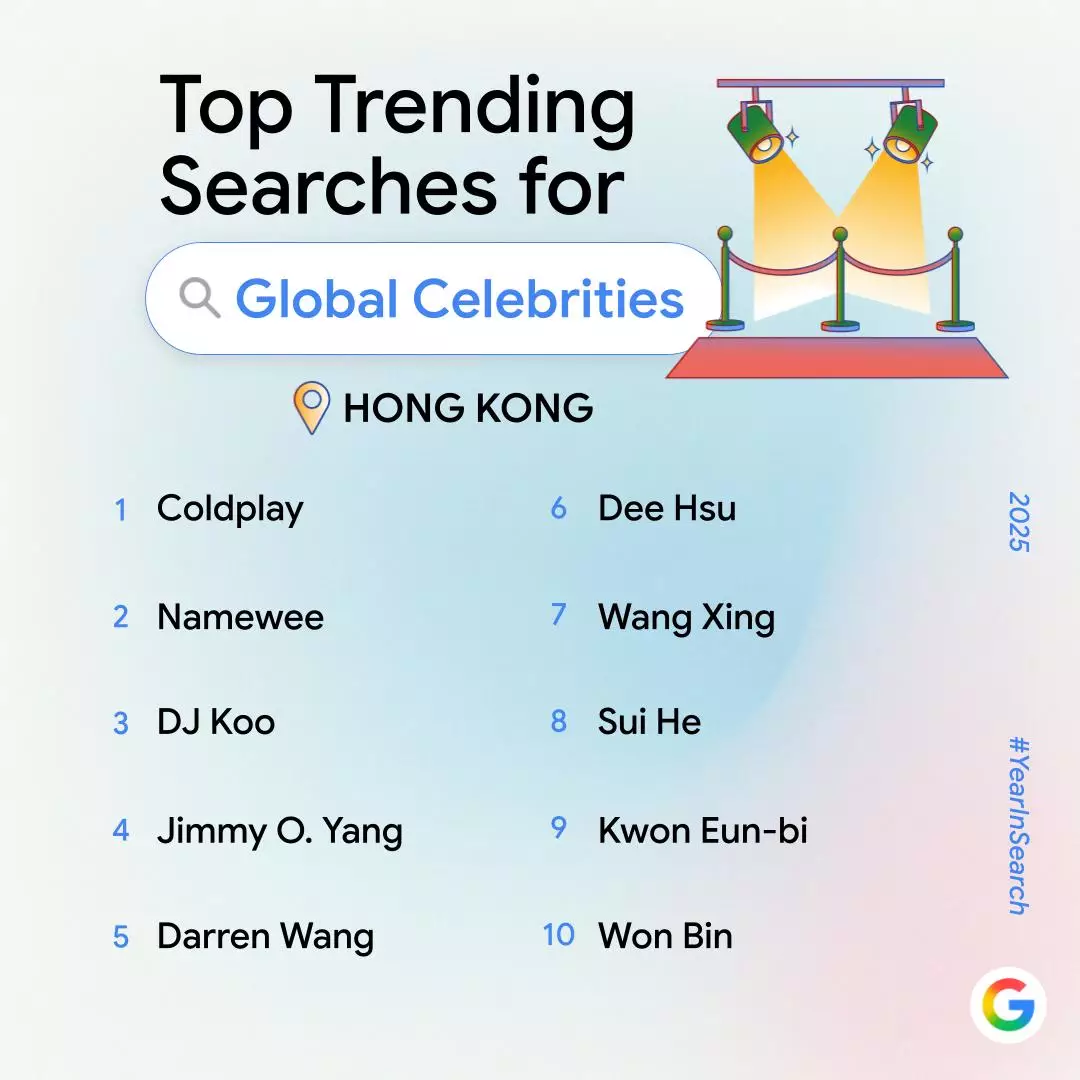
Hong Kongers Search Weather for Mainland and Japan Travel; "Peach gum" Tops Recipes
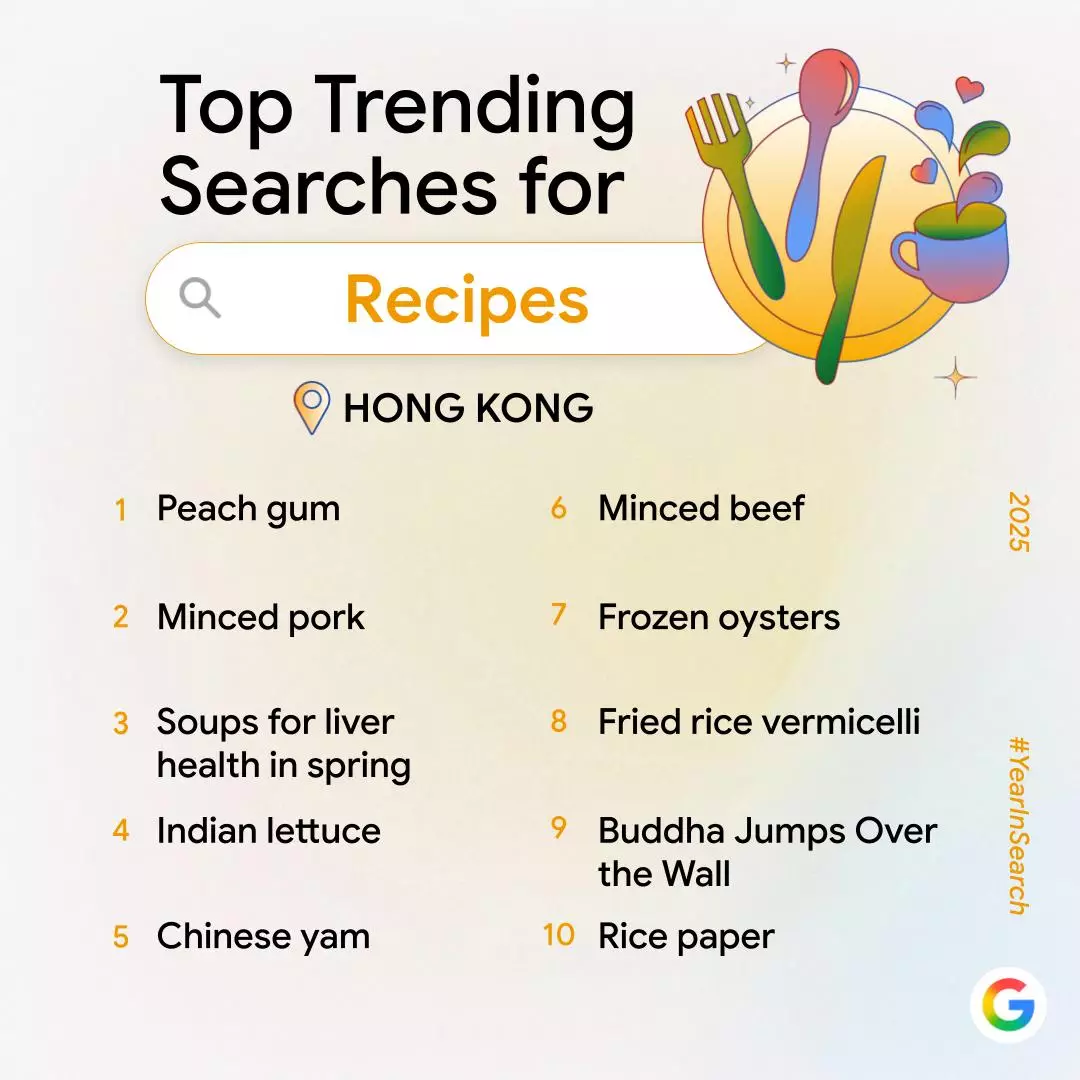
"Peach gum" topped the "Top Trending Recipes" list. Interestingly, "Soups for liver health in spring" ranked third, reflecting a shift in search habits: users are tending to include multiple conditions in a single search (such as efficacy + food category) to find the desired recipe more precisely and efficiently.
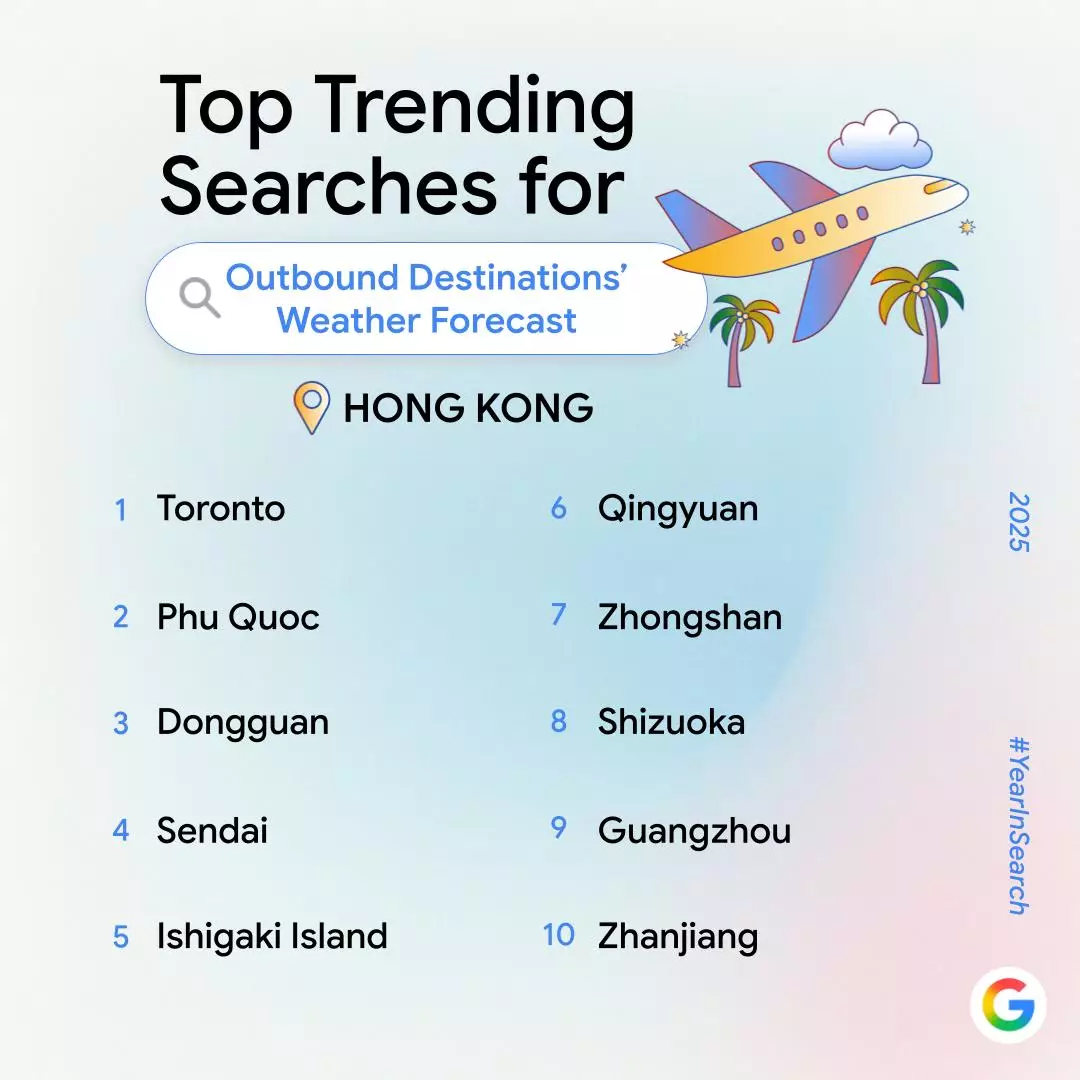
The "Top Trending Outbound Destinations' Weather Forecast" list was led by "Toronto", a popular city for Hong Kong immigrants, followed by Vietnam's rising star “Phu Quoc". The list also highlighted the dual trend of traveling northbound and to Japan, with Mainland Chinese cities taking half the spots (five) and Japanese regions taking three.
Photo source: Google
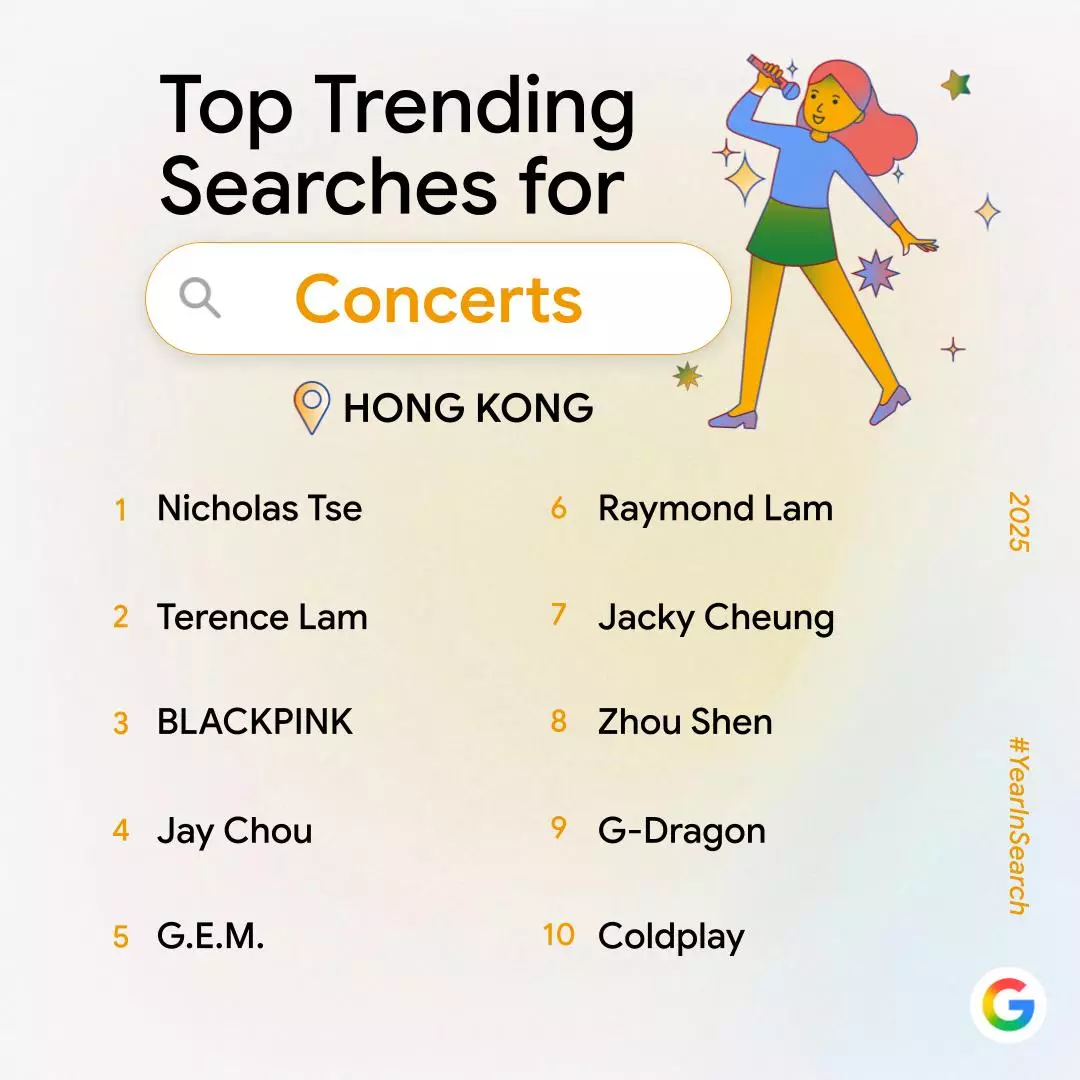
Reimagining the way we search: From "Searching for AI" to "Searching with AI"
Last year, four of the top ten trending keywords in Hong Kong were related to AI tools, reflecting a keen interest in discovering and applying AI. However, trends show that people are moving beyond just "searching for AI tools" to "using AI to search".
Conversational queries unlock new discoveries
As Google Search adds and enhances AI capabilities to better understand natural language, users are asking questions in a more conversational way, just like talking to a friend. They are not just looking for a quick answer but also wanting to understand more about the world around them.
In the US, Google data shows that searches for "tell me about..." are up 70% year over year, and queries starting with "How do I..." reached an all-time high with a 25% increase from last year (2024). The latter included trending questions like "How do I know if my Labubu is real?".
Similar search patterns are also seen in Hong Kong. For instance, when a typhoon hits and people look for weather information with the help of Google Search, it's noted from the typhoon related queries that people aren't just checking for weather warnings and signals; they use Google to plan their lives with specific, practical questions like "What time will T8 be hoisted", "What tape to use for typhoons", and "How long will the typhoon last".
This curiosity extends to current affairs, with Hong Kongers asking questions like "Why is
IShowSpeed famous" to understand the context behind headlines such as his viral visit to the city.

Shopping assistant chatbots were a novelty a year ago. Now, they’re everywhere.
After rolling out AI-powered assistants, online retailers and tech companies have been adding more artificial intelligence features to make online shopping easier and more convenient.
The latest crop of AI-powered shopping services and tools made their debut in recent weeks, just in time to kick off the holiday shopping season that begins with Black Friday.
Here’s a rundown of existing and newly released AI services that can help with your search for the perfect gift in the run-up to Christmas:
Amazon led the way by rolling out its Rufus chatbot in 2024. Other ecommerce websites followed with their own AI assistants to enhance the online shopping experience.
Walmart's Sparky chatbot is available on the retail giant’s app and can synthesize reviews or offer product recommendations based on occasions, such as Christmas. Target recently unveiled a gift finder chatbot on its app, but it's only available for the holiday season. Ralph Lauren partnered with Microsoft on the “Ask Ralph” chatbot to provide style recommendations.
The aim of deploying chatbots is to make it easier for people to find what they’re looking for. Instead of entering search terms and keywords, you can type or use voice dictation for a conversational back-and-forth.
The results, in my experience, can be mixed.
I tried Rufus recently to find a replacement aftermarket stainless steel pot for my rice cooker, as well as a protective trivet for my kitchen sink faucet. In both cases, the results weren’t quite right and didn’t seem to capture the wide range of products available. Sometimes the results were completely unsuitable.
I ended up doing a more painstaking search of product listings’ pictures and specifications to find the right items. The problem, I suspect, is partly because I was looking for generic products. Searches for name-brand products may produce better results.
Perhaps you don’t want to limit yourself to a single retailer’s website in your Christmas shopping search. Or you’re not sure where exactly to find that perfect gift.
Tech platforms have rolled out AI-powered shopping tools that can cast a wider net by searching multiple sites.
OpenAI added a new “shopping research” feature to ChatGPT last week that can provide personalized buying advice for products that are heavy on detailed specs, like electronics or appliances. The feature will activate if you ask ChatGPT a shopping-related question or manually turn it on in the chat window. OpenAI says it can go beyond simple questions, such as checking a price or feature that regular ChatGPT can easily answer.
Google users can get a similar experience when they use its search engine in AI Mode, which recently got a big update for shopping searches. The company says users can describe what they’re looking for as if talking to a friend and get an “intelligently organized response” based on 50 billion product listings, with pictures alongside prices, reviews and inventory info.
Google added similar shopping features to its Gemini AI chatbot app for U.S. users last month.
Meanwhile, Perplexity unveiled its own shopping assistant feature last week that can tailor recommendations based on previous searches.
I asked all three to find a soft cotton flannel shirt. Both ChatGPT and Perplexity asked me for specific requirements, such as budget and must-have features. ChatGPT's response was the most detailed, with options from six brands including its top pick, and included pictures, prices and point-form summaries for each shirt. It also compiled the results into a comparison table.
Results from Google, which didn't ask follow up questions after my initial request, felt the most general. Perplexity's results fell in between.
So, you think you've found a stylish cardigan for your spouse. But you're not sure about the silhouette or vibe.
Generative AI “try on” tools let users see what a piece of clothing might look like on the wearer.
Existing virtual dressing room tools have relied on complex 3D rendering, real photoshoots and augmented reality. Often, shoppers were limited to picking a model that best fit their body type to see how clothes fit.
Google is now tapping AI to allow shoppers to virtually try on garments and shoes using pictures of themselves in simple poses. Among the exceptions: accessories like hats or jewelry, bathing suits and lingerie.
To use this feature, which is available through Google's shopping desktop search and mobile app in Australia, Japan Canada and the U.S., just tap the “Try it on” button on a product's photo and then add a full-length photo of yourself. You can then save the image of yourself with the tested item or share it. The original photo is also saved to your account so you don't need to keep uploading fresh images.
If you're shopping for a gift for someone, Google says you can upload their photo, but only if you have their permission.
Now that you've figured out what exactly to get for those special people on your Christmas gift list, it's time to buy. But if you want to outsource some of the legwork involved, there are “agentic AI” tools that can help.
Amazon users can use an “AI agent” to buy a product on their behalf if the price falls to a desired level. Google has launched its own “agentic checkout” feature, which can automatically buy a product you're keeping an eye on with its price-tracking feature. Google's feature has rolled out to a small group of retailers, including Wayfair, Chewy and Quince we well as some Shopify merchants.
Both companies say they'll always confirm with you before the AI agent makes the purchase.
Amazon is taking it a step further by allowing shoppers to buy items that aren’t in stock directly from other brands’ websites. If you see a product on the Amazon Shopping app with a “Buy For Me” button, you can buy it through the usual Amazon checkout page but the AI agent will then carry out the transaction on the other brand’s website with your encrypted payment details. The feature was in test mode but is being rolled out more widely.
Prefer to buy in person? It's a good idea to make sure a bricks-and-mortar shop has the product you want before heading over. Google has launched an AI service that will call local stores to ask.
It's only available in the U.S. for toys, electronics and health and beauty products. When doing a Google search for the product you want, add “near me” to the end of your search query. Then, if you see “Let Google Call” when scrolling through the results, you can tap the “Get started” button. Answer some questions about what you’re shopping for, whether you want updates by email or text.
Google will then contact stores near your location to ask if the item is in stock.
The bot works swiftly but results might be limited. When an AP reporter in New Jersey asked Google to call around about a specific Acer monitor, the agent returned quickly with a reply from a local computer repair shop that sold refurbished monitors. It appeared to ignore nearby big-box outlets selling electronics.
According to Google's text update, the local repair shop didn't have the monitor, but did have a similar-sized one — sans the other bells and whistles — for a lower price.
Is there a tech topic that you think needs explaining? Write to us at onetechtip@ap.org with your suggestions for future editions of One Tech Tip.
JoJo Siwa greets shoppers at Mall of America for Black Friday deals, Friday, Nov. 28, 2025, in Bloomington, Minn. (AP Photo/Adam Bettcher)
Shoppers browse through stores at Mall of America for Black Friday deals, Friday, Nov. 28, 2025, in Bloomington, Minn. (AP Photo/Adam Bettcher)
Shoppers line up to get into Mall of America for Black Friday deals, Friday, Nov. 28, 2025, in Bloomington, Minn. (AP Photo/Adam Bettcher)
Black Friday shoppers queue to enter FAO Schwarz in New York on Friday, Nov. 28, 2025. (AP Photo/Angelina Katsanis)
Black Friday Shoppers wait in line to enter Macy's flagship store on Friday, Nov. 28, 2025 in New York. (AP Photo/Angelina Katsanis)
FILE - Amazon's generative AI-powered shopping assistant, Rufus, appears on a computer monitor, Dec. 1, 2024, in New York. (AP Photo/Peter Morgan, File)