The economic output of China's Yangtze River Economic Belt has more than doubled over the past decade, said Wang Changlin, vice chairman of the National Development and Reform Commission at a press conference in Beijing on Monday.
The economic belt's share of the country's gross domestic product has risen from 42.2 percent to 47.3 percent in the past ten years. Additionally, per capita disposable income has increased from 23,000 yuan (about 3,288 U.S. dollars) to 44,000 yuan (about 6,291 U.S. dollars), an increase of 91 percent, Wang said.
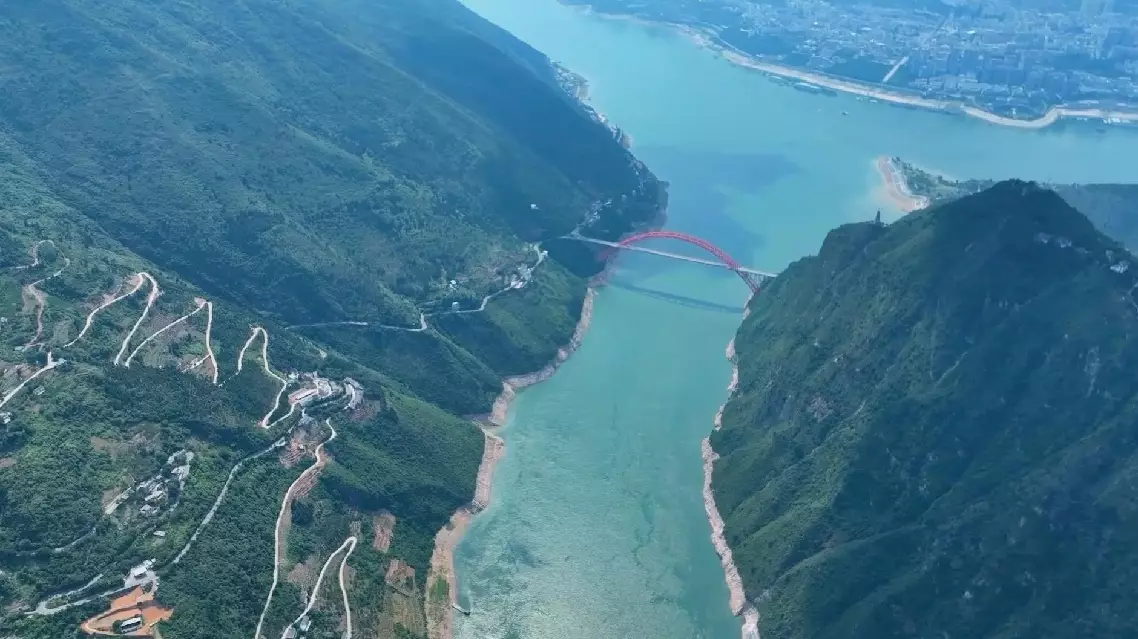
Stretching over 6,300 kilometers before emptying into the East China Sea, the Yangtze River stands as China's longest waterway. The Yangtze River Economic Belt, comprising 11 provincial-level regions, has emerged as a pivotal economic powerhouse in the nation.
In recent years, China has steadily advanced the establishment of an international science and technology innovation center in Shanghai (Yangtze River Delta) and regional centers respectively in Wuhan, the capital of Hubei Province, and the Chengdu-Chongqing Economic Circle. The country has also made efforts in nurturing emerging and future industries, leading to significant technological achievements and spurring the rise of internationally competitive innovative enterprises, along with the development of world-class industrial clusters in sectors like automotive manufacturing and electronic information.
Wang also highlighted considerable progress in pollution control along the Yangtze River in the past decade. A total of 1,361 illegal docks have been removed, effectively eliminating black and odorous water bodies in cities along the river. The proportion of river sections with good water quality has increased dramatically from 67 percent to 96.5 percent, with surface water quality improving from partially Class V to consistently Class II. The ten-year fishing ban on the Yangtze River has been strictly enforced.
In terms of cargo throughput, the trunk line of the Yangtze River has remained the world's busiest inland waterway. Over the past decade, annual cargo throughput at ports along this route has surged by 71 percent, reaching 4.2 billion tons.
"Next, we will thoroughly implement the decisions and plans of the Communist Party of China Central Committee and the State Council. We will develop and execute the 15th Five-Year program for the Yangtze River Economic Belt and advance the three-year action plan for integrated protection of the Yangtze River, to ensure the continuous progress of the Yangtze River Economic Belt," Wang said.
Economic output of China's Yangtze River Economic Belt more than doubles over past decade