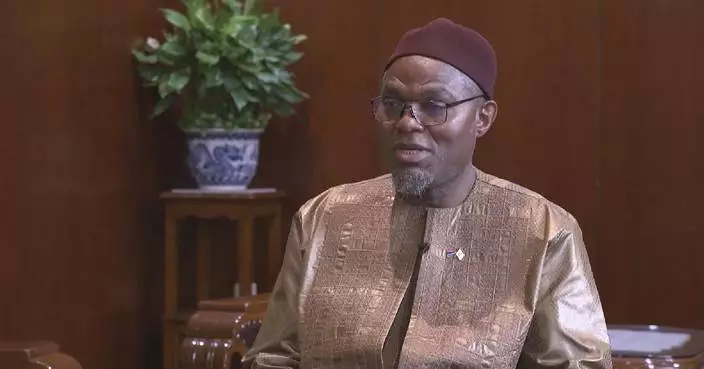
A Brazilian scholar has warned the manner of the United States' forcible seizure of Venezuelan President Nicolas Maduro could have serious regional and international repercussions, including pushing U.S. relations with Latin America toward a dynamic similar to that seen with Iraq following a U.S.-led military intervention in the Middle East over two decades ago.
Joao Carlos Jarochinski Silva, a professor of international relations at Brazil’s Federal University of Roraima, gave his assessment following the extraordinary U.S. military operation in Venezuela that has shocked the international community and sparked serious concerns worldwide.
U.S. military forces carried out attacks and bombings in Caracas and other parts of Venezuela in the early hours of Saturday and took the country's President Maduro and his wife by force, before putting them in custody in New York.
Jarochinski Silva cautioned that the nature of this U.S. action threatens to severely damage its ties with Latin American nations and could even result in a serious destabilizing impact akin to that of the Iraq War which started in 2003.
"Relations between the United States and countries in the region are likely to be guided by the Iraq-war perspective in which Washington positions itself as the dominant actor and mobilizes various instruments of power to advance its own strategy interests," he said.
While much of the focus has been on the political ramifications of the attack, Jarochinski Silva also further emphasized the urgent need to stabilize the situation in Venezuela to prevent a worsening refugee crisis from escalating.
The United Nations' refugee agency says that nearly 8 million people have left Venezuela in search of protection and a better life in recent years, with the majority settling in other Latin American and Caribbean countries.
"It's essential to strengthen regional cooperation, whether through the sharing of the best practices or by reinforcing integration dynamics that prevent refugee and migration populations from remaining in prolonged situations of vulnerability, which makes them more exposed to violence and multiple forms of precariousness," said Jarochinski Silva.

US seizure of Venezuelan president mirrors Iraq War situation: professor