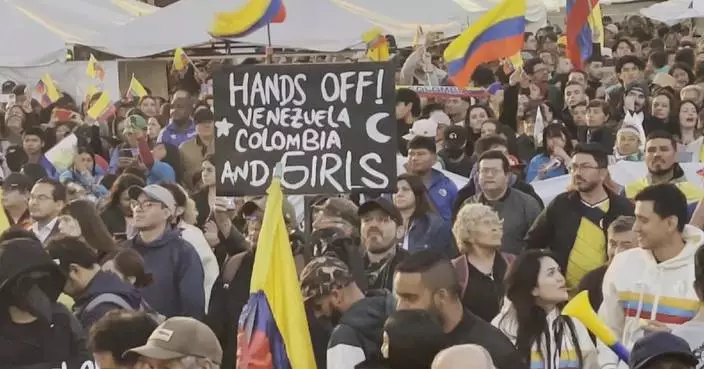
U.S. President Donald Trump's announcement about taking over Venezuela's oil reserves has sparked concerns among Cubans that their country's economy, heavily dependent on oil imports, could suffer considerably.
Following a large-scale strike on Venezuela and the seizure of Venezuelan President Nicolas Maduro, Trump said on Saturday that the U.S. will run Venezuela until a "safe, proper and judicious" transition can be ensured, claiming U.S. companies would fix Venezuela's "badly broken" oil infrastructure and "start making money for the country".
Possessing the world's largest proven oil reserves, Venezuela has supplied Cuba with oil at subsidized prices for decades to keep its economy running.
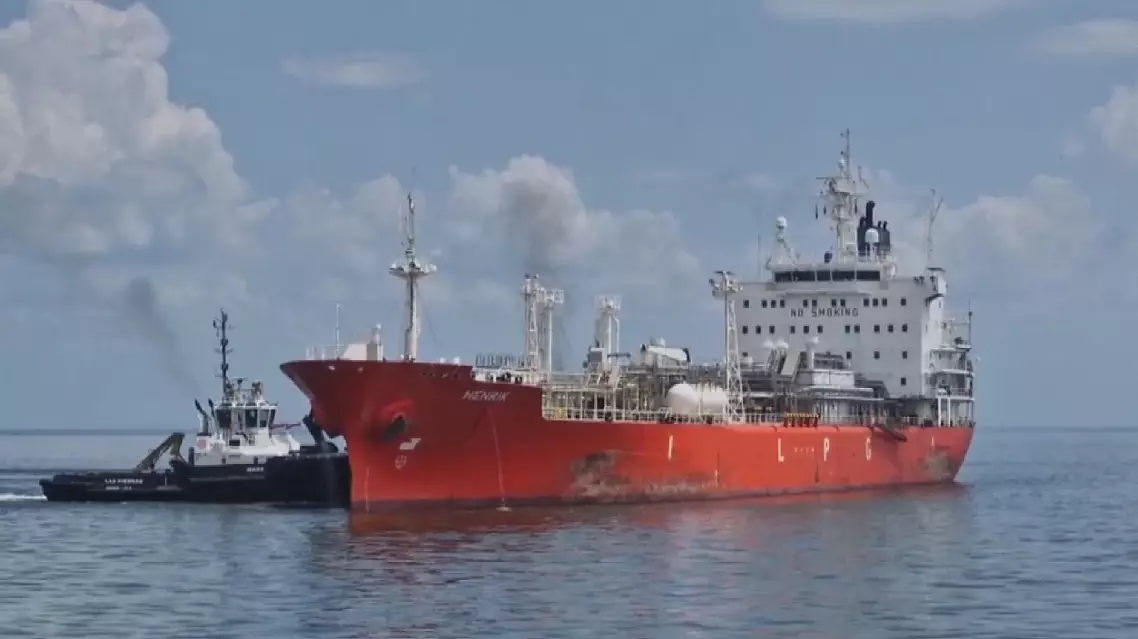
However, the shipping has been disrupted since U.S. forces launched air strikes against vessels in the Caribbean in September, claiming without providing any evidence that the vessels were trafficking drugs to the United States. Cuban officials have called the strikes an act of piracy and maritime terrorism.
Analysts note Cuba has been preparing for such a scenario and will try to buy oil from other exporters.
"No doubt. It's going to affect Cuba very much, but one must think that Cuba has been thinking about it. Now, Cuba has an opportunity. Cuba must change the way it works, and they have to work with a number of countries that might help Cuba get the supply of oil that it needs," said Carlos Alzugaray, a political analyst.
Some Cubans are concerned about the possible consequences for the country, but not over pessimistic.
"The fuel situation in the country is going to worsen, but it will be discussed, right? The government will try to find some alternatives," said Yamila Guerra, a university teacher.
Victor Hugo Leyva, a communications worker, pointed out that the U.S. attacks on Venezuela pose threats to international peace and security.
"The big problem is not that they take away our oil ships, although it is going to be a problem for the Cuban economy. The big problem is that if we allow those things to happen, now it can happen to anyone, and this world will never be a safe place again," he said.
Cubanos expresan preocupación por declaraciones de Trump sobre petróleo venezolano
Taoiseach of Ireland Micheal Martin, who wrapped up his five-day official visit to China, has praised China's progress in areas such as digital economy and green energy, saying Ireland is willing to deepen economic and trade cooperation with China in emerging sectors while enhancing cooperation on multilateral affairs.
It is Martin's first visit to China since taking office and the first by an Irish prime minister in 14 years.
Speaking during a joint interview with Chinese media outlets in Beijing, Martin spoke positively of the steady development of bilateral relations in recent years, highlighting closer people-to-people exchanges and growing ties in higher education.
"We now have a direct flight between Dublin and China and that's very important in terms of people to people. Our education links are very strong and we have many partnerships between Irish higher education institutions and Chinese higher education institutions and that's important," he said.
Martin said economic and trade ties remain a key pillar underpinning the sound development of bilateral relations.
He recalled that bilateral trade has seen exponential growth since his first visit to China 20 years ago, when he served as minister for enterprise, trade and employment.
Looking ahead, he expressed expectations for expanded cooperation with China in such emerging fields as digital economy and green transition.
"We will be embarking on a major investment in offshore renewables over the next decade. We already are in the planning process. It's a windy island, so we have a lot of wind to harness for energy. So we do see opportunities in AI as well. Ireland is a very strong location for investment, as a member of the European Union, the only English-speaking country now in the Eurozone and in the European Union. And it's a good access point to the European consumer market. We believe there's a greater opportunity for Chinese companies to locate in Ireland," he said.
As Ireland is set to assume the rotating presidency of the European Union (EU) in the second half of 2026, Martin said Ireland adopts a pragmatic policy towards China within the EU and stays committed to promoting a EU-China relationship framework that effectively manages differences while expanding mutually beneficial cooperation.
"What is important is that we continue to dialogue and see can we develop frameworks of agreement on the big picture. The WTO is also very important forum for resolving trade issues. Both Europe and China would acknowledge that industrial resilience, economic security issues are important issues, but that has to be balanced with an open free trade environment. So we are against tariffs. We think tariffs are ultimately damaging to the world economy," he said.
At the invitation of Chinese Premier Li Qiang, Martin paid an official visit to China from Jan 4 to 8. In addition to Beijing, he also visited Shanghai.

Irish Taoiseach sees broader cooperation with China in emerging sectors