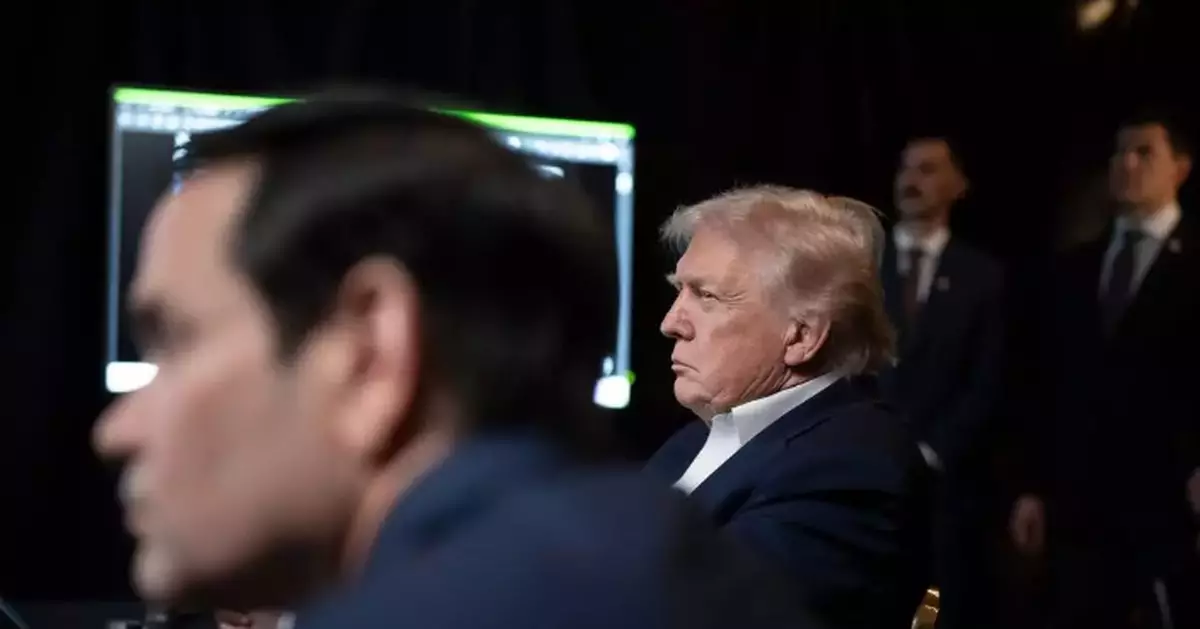
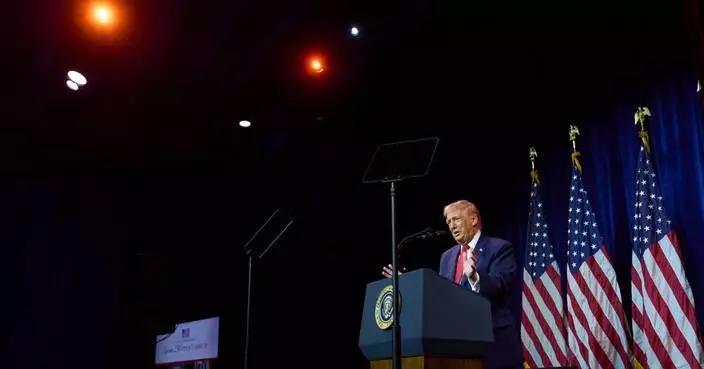
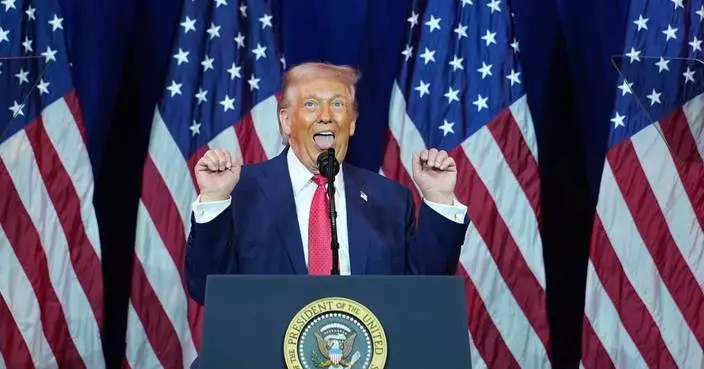
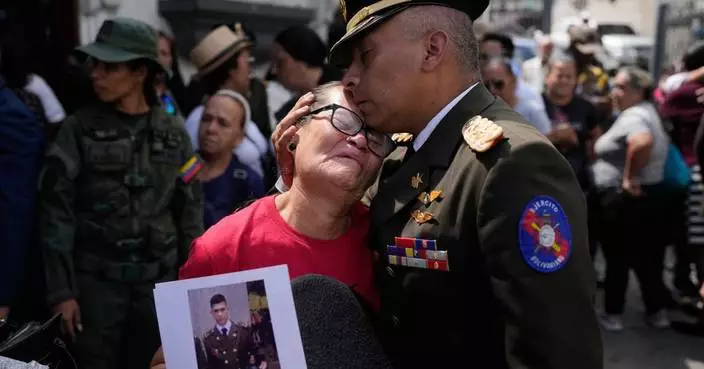
WASHINGTON (AP) — President Donald Trump has made broad but vague assertions that the United States is going to “run” Venezuela after the ouster of Nicolás Maduro but has offered almost no details about how it will do so, raising questions among some lawmakers and former officials about the administration’s level of planning for the country after Maduro was gone.
Seemingly contradictory statements from Trump and Secretary of State Marco Rubio have suggested at once that the U.S. now controls the levers of Venezuelan power or that the U.S. has no intention of assuming day-to-day governance and will allow Maduro’s subordinates to remain in leadership positions for now.
Rubio said the U.S. would rely on existing sanctions on Venezuela’s oil sector and criminal gangs to wield leverage with Maduro’s successors.
The uncertainty on definitive next steps in Venezuela contrasts with the years of discussions and planning that went into U.S. military interventions that deposed other autocratic leaders, notably in Iraq in 2003, which still did not often lead to the hoped-for outcomes.
The discrepancy between what Trump and Rubio have said publicly has not sat well with some former diplomats.
“It strikes me that we have no idea whatsoever as to what’s next,” said Dan Fried, a retired career diplomat, former assistant secretary of state and sanctions coordinator who served under both Democratic and Republican administrations.
“For good operational reasons, there were very few people who knew about the raid, but Trump’s remarks about running the country and Rubio’s uncomfortable walk back suggests that even within that small group of people, there is disagreement about how to proceed,” said Fried who is now with the Atlantic Council think tank.
Supporters of the operation, meanwhile, believe there is little confusion over the U.S. goal.
“The president speaks in big headlines and euphemisms,” said Rich Goldberg, a sanctions proponent who worked in the National Energy Dominance Council at the White House until last year and is now a senior adviser to the Foundation for Defense of Democracies, a hawkish think tank.
Goldberg does not see Rubio becoming “the superintendent of schools” but “effectively, the U.S. will be calling the shots.”
“There are people at the top who can make what we want happen or not, and we right now control their purse strings and their lives,” he said. “The president thinks it’s enough and the secretary thinks it’s enough, and if it’s not enough, we’ll know very soon and we’ll deal with it.”
If planning for the U.S. “to run” Venezuela existed prior to Maduro’s arrest and extradition to face federal drug charges, it was confined to a small group of Trump political allies, according to current U.S. officials, who note that Trump relies on a very small circle of advisers and has tossed aside much of the traditional decision-making apparatus.
These officials, who spoke on condition of anonymity to discuss their understanding of internal deliberations, said they were not aware of any preparations for either a military occupation or an interim civilian governing authority, which has been a priority for previous administrations when they contemplated going to war to oust a specific leader or government. The White House and the State Department's press office did not return messages seeking comment.
Previous military actions that deposed autocratic leaders, notably in Panama in 1989 and Iraq in 2003, were preceded by months, if not years, of interagency discussion and debate over how best to deal with power vacuums caused by the ousters of their leaders. The State Department, White House National Security Council, the Pentagon and the intelligence community all participated in that planning.
In Panama, the George H.W. Bush administration had nearly a full year of preparations to launch the invasion that ousted Panama's leader Manuel Noriega. Panama, however, is exponentially smaller than Venezuela, it had long experience as a de facto American territory, and the U.S. occupation was never intended to retake territory or natural resources.
By contrast, Venezuela is vastly larger in size and population and has a decadeslong history of animosity toward the United States.
“Panama was not successful because it was supported internationally because it wasn’t,” Fried said. “It was a success because it led to a quick, smooth transfer to a democratic government. That would be a success here, but on the first day out, we trashed someone who had those credentials, and that strikes me as daft.”
He was referring to Trump’s apparent dismissal of opposition leader Maria Corina Machado, whose party is widely believed to have won elections in 2024, results that Maduro refused to accept. Trump said Saturday that Machado “doesn’t have the support within or the respect within the country” to be a credible leader and suggested he would be OK with Maduro’s No. 2, Delcy Rodríguez, remaining in power as long as she works with the U.S.
Meanwhile, best-case scenarios like those predicted by the George W. Bush administration for a post-Saddam Hussein Iraq that it would be a beacon of democracy in the Middle East and hopes for a democratic and stable Afghanistan following the ouster of the Taliban died painfully slow deaths at the tremendous expense of American money and lives after initial euphoria over military victories.
“Venezuela looks nothing like Libya, it looks nothing like Iraq, it looks nothing like Afghanistan. It looks nothing like the Middle East,” Rubio said this weekend of Venezuela and its neighbors. “These are Western countries with long traditions at a people-to-people and cultural level, and ties to the United States, so it’s nothing like that.”
The lack of clarity on Venezuela has been even more pronounced because Trump campaigned on a platform of extricating the U.S. from foreign wars and entanglements, a position backed by his “Make America Great Again” supporters, many of whom are seeking explanations about what the president has in mind for Venezuela.
“Wake up MAGA,” Republican Rep. Thomas Massie of Kentucky, who has bucked much of his party’s lockstep agreement with Trump, posted on X after the operation. “VENEZUELA is not about drugs; it’s about OIL and REGIME CHANGE. This is not what we voted for.”
Sen. Rand Paul, also a Kentucky Republican, who often criticizes military interventions, said “time will tell if regime change in Venezuela is successful without significant monetary or human cost.”
“Easy enough to argue such policy when the action is short, swift and effective but glaringly less so when that unitary power drains of us trillions of dollars and thousands of lives, such as occurred in Afghanistan, Iraq, and Vietnam,” he wrote on social media.
In addition to the Venezuela operation, Trump is preparing to take the helm of an as-yet unformed Board of Peace to run postwar Gaza, involving the United States in yet another Mideast engagement for possibly decades to come.
And yet, as both the Iraq and Afghanistan experiences ultimately proved, no amount of planning guarantees success.
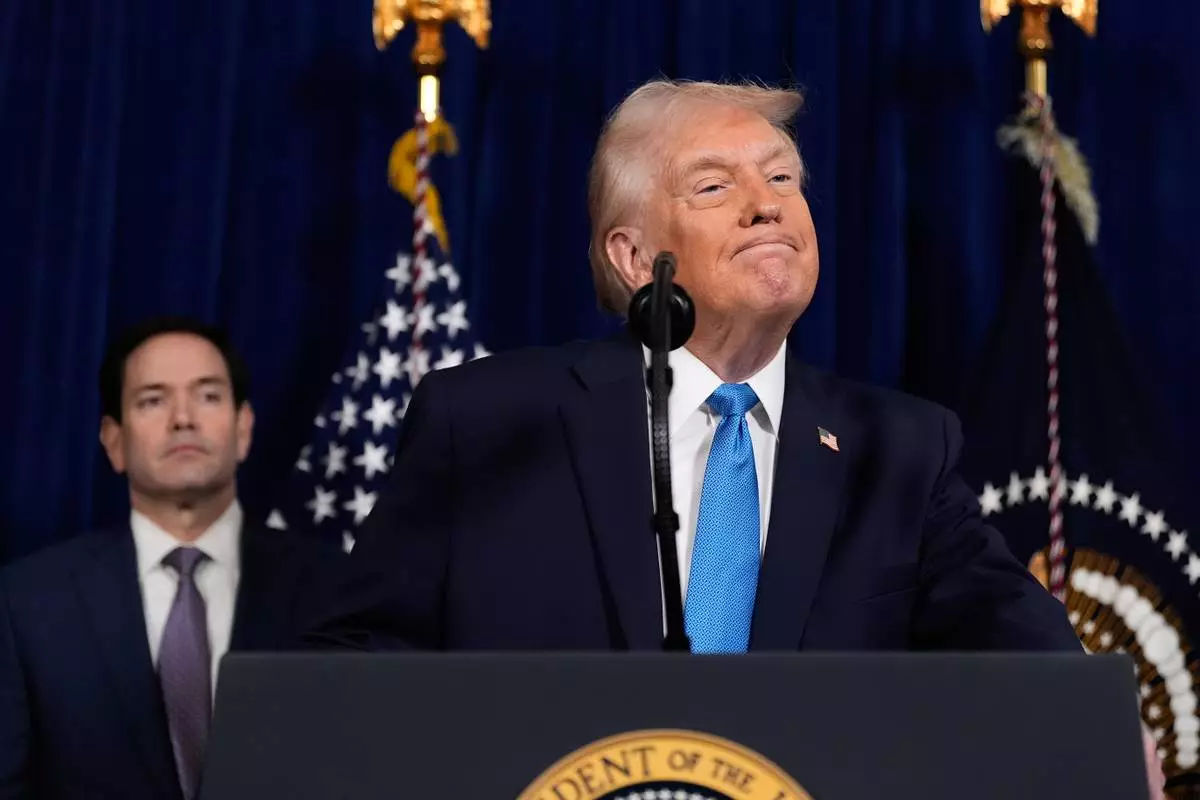
President Donald Trump listens to a question during a news conference at Mar-a-Lago, Saturday, Jan. 3, 2026, in Palm Beach, Fla., as Secretary of State Marco Rubio watches. (AP Photo/Alex Brandon)
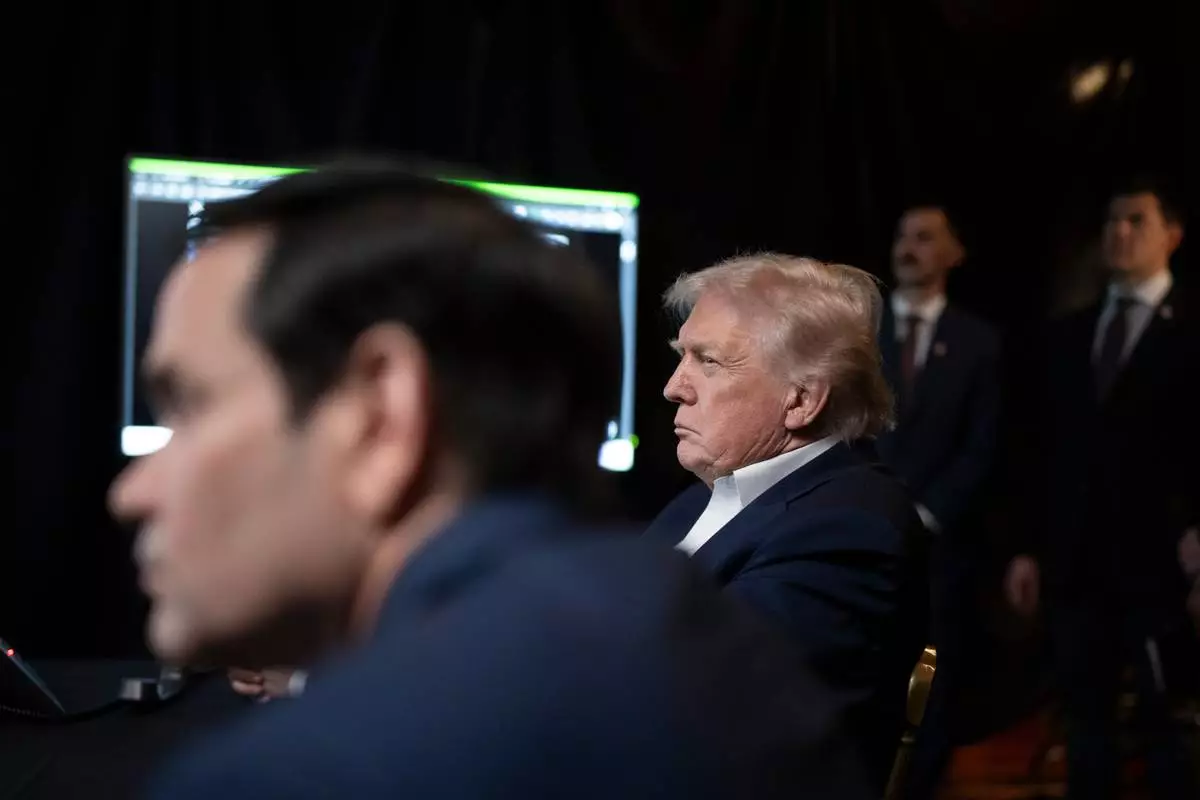
In this photo released by the White House, President Donald Trump monitors U.S. military operations in Venezuela, with Secretary of State Marco Rubio at Mar-a-Lago in Palm Beach, Fla., Saturday, Jan. 3, 2026. (Molly Riley/The White House via AP)
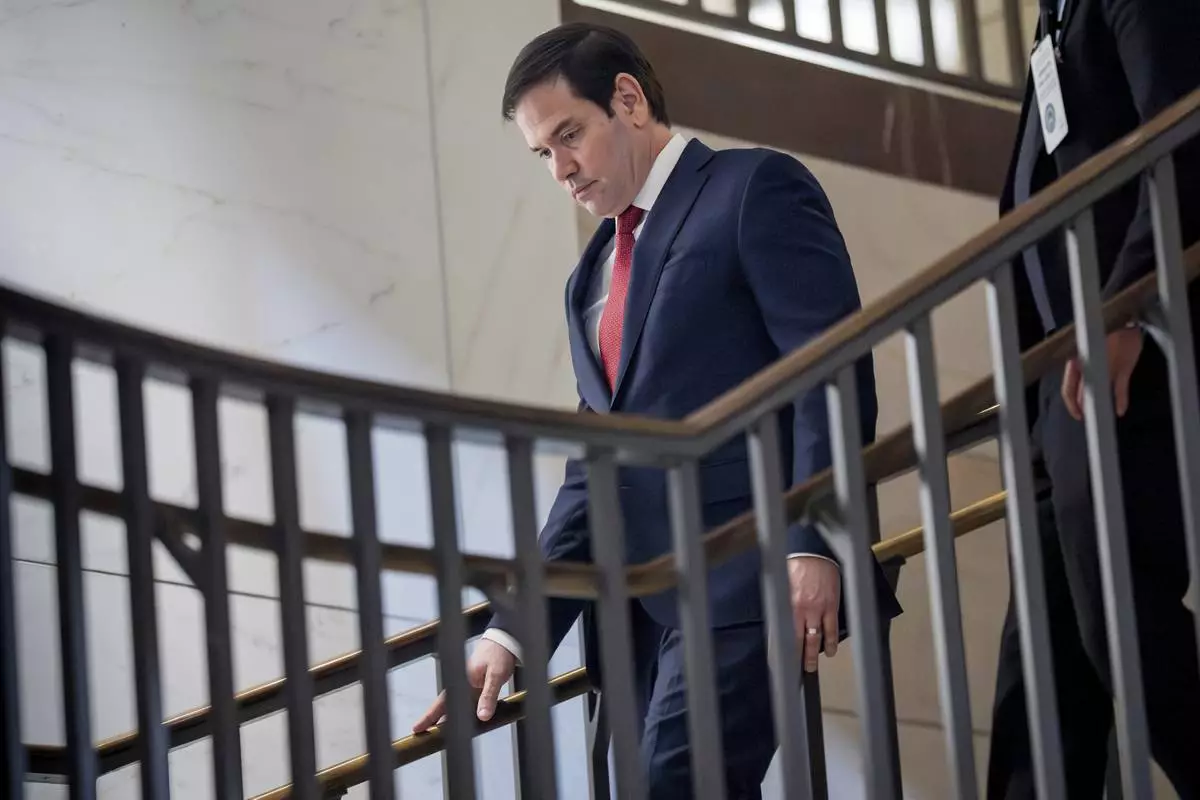
Secretary of State Marco Rubio arrives at the U.S. Capitol Monday, Jan. 5, 2026, for a closed-door briefing with top lawmakers after President Donald Trump ordered U.S. forces to capture Venezuelan President Nicolas Maduro and bring him to New York to face federal drug trafficking charges. (AP Photo/J. Scott Applewhite)
An Immigration and Customs Enforcement officer shot and killed a Minneapolis motorist on Wednesday during the Trump administration’s latest immigration crackdown on a major American city — a shooting that federal officials claimed was an act of self-defense but that the city’s mayor described as “reckless” and unnecessary.
Videos taken by bystanders with different vantage points and posted to social media show an officer approaching an SUV stopped across the middle of the road, demanding the driver open the door and grabbing the handle. The SUV begins to pull forward and a different ICE officer standing in front of the vehicle pulls his weapon and immediately fires at least two shots into the SUV at close range, jumping back as the vehicle moves toward him. It was not clear from the videos if the vehicle made contact with the officer. The SUV then sped into two cars parked on a curb nearby before crashing to a stop.
The shooting marks a dramatic escalation of the latest in a series of immigration enforcement operations in major American cities under the Trump administration. The killing was at least the fifth in a handful of states since 2024.
The Latest:
Chief Brian O’Hara briefly described the shooting to reporters. Unlike federal officials, O’Hara didn’t say the driver was trying to harm anyone. He said she had been shot in the head.
“This woman was in her vehicle and was blocking the roadway on Portland Avenue. ... At some point a federal law enforcement officer approached her on foot and the vehicle began to drive off,” the chief said.
“At least two shots were fired. The vehicle then crashed on the side of the roadway.”
The governor said he’s prepared to deploy the National Guard if necessary. He also said that like many, he is outraged about the killing, which he described as “predictable” and “avoidable.” But he called for calm.
“They want a show. We can’t give it to them. We cannot,” the governor said during a news conference.
“If you protest and express your First Amendment rights, please do so peacefully, as you always do. We can’t give them what they want.”
The president, in a social media post, said he’d viewed video footage of the incident and criticized the woman who was shot as acting “very disorderly, obstructing and resisting” and “then violently, willfully, and viciously” running over the ICE officer.
The president also described another woman seen screaming in the footage of the incident he viewed as “obviously, a professional agitator.”
“Based on the attached clip, it is hard to believe he is alive, but is now recovering in the hospital,” Trump said of the ICE officer.
“The situation is being studied, in its entirety, but the reason these incidents are happening is because the Radical Left is threatening, assaulting, and targeting our Law Enforcement Officers and ICE Agents on a daily basis. They are just trying to do the job of MAKING AMERICA SAFE.”
An immigrant rights group says on Facebook that it will hold a vigil for the woman who was shot.
“We witnessed an atrocious attack on our community today,” read the post from the Minnesota Immigrant Rights Action Committee. “Community members were taken from us and an observer was shot dead. ICE OUT OF MINNESOTA NOW.”
Minnesota initially grabbed President Donald Trump’s and Republicans’ attention over a series of fraud cases where many of the defendants had roots in Somalia. Prosecutors say that billions of dollars were stolen from federally funded health care benefits and a COVID-19 program in recent years.
Minnesota has the largest Somali population in the U.S., a group Trump called “garbage” in December and said he didn’t want them in the country.
The president has also criticized Democratic Gov. Walz for failing to catch the alleged crimes.
Late last month, a right-wing influencer posted a video claiming that a day care center in Minneapolis run by Somali residents had taken over $100 million in fraud. Homeland Security Secretary Kristi Noem and FBI Director Kash Patel then posted on social media about increased operations in the city partly targeting, as Patel put it, “large-scale fraud schemes.”
On Tuesday, DHS said it planned to deploy 2,000 federal agents and officers to the Minneapolis area.
In October, a Chicago woman was shot five times by a Border Patrol agent in a similar incident involving a vehicle, though she survived.
Almost immediately, Homeland Security officials issued a statement labeling Marimar Martinez, a 30-year-old teaching assistant at a Montessori school, as a “domestic terrorist” who had “ambushed” and “rammed” agents with her vehicle.
She was charged in federal court with assaulting a federal officer, a felony punishable by up to 20 years in prison. But federal prosecutors were later forced to dismiss the case against Martinez before trial after security camera video and bodycam footage emerged that her defense lawyers said undermined the official narrative.
The videos showed a Border Patrol agent steering his vehicle into Martinez’s truck, rather than the other way around, her attorney said.
“I’ve seen the video. Don’t believe this propaganda machine,” Walz wrote on X, responding to the U.S. Department of Homeland Security’s post alleging that a woman had “weaponized her vehicle” before she was shot and killed by an ICE officer.
The state will ensure there is a full, fair, and expeditious investigation to ensure accountability and justice,” wrote the governor.
Daniel Borgertpoepping, a spokesperson for the Hennepin County Attorney’s Office, says that “We have jurisdiction to bring charges, as do the feds.
“It’s a little bit of a complicated interplay but the bottom line is yes, we have jurisdiction to bring criminal charges.”
Secretary Kristi Noem, during a visit to Texas, says it was carried out against ICE officers by a woman who “attempted to run them over and rammed them with her vehicle. An officer of ours acted quickly and defensively, shot, to protect himself and the people around him.”
But Mayor Frey blasted that characterization as well as the federal deployment in the Twin Cities of Minneapolis and St. Paul.
“They are not here to cause safety in this city. What they are doing is not to provide safety in America. What they are doing is causing chaos and distrust,” Frey said.
The location is just a few blocks from some of the oldest immigrant markets in the area and a mile from where George Floyd was killed by police in 2020.
During a news conference in Texas on Wednesday, DHS Secretary Kristi Noem confirmed that the agency had deployed more than 2,000 officers to the Twin Cities and already made “hundreds and hundreds” of arrests.
The mayor says in a social media post that immigration agents are “causing chaos in our city.”
“We are demanding ICE leave the city and state immediately. We stand rock solid with our immigrant and refugee communities,” Frey said.
The crowd vented its anger at the local and federal officers who were there, including Gregory Bovino, a senior U.S. Customs and Border Patrol official who has been the face of crackdowns in Los Angeles, Chicago and elsewhere.
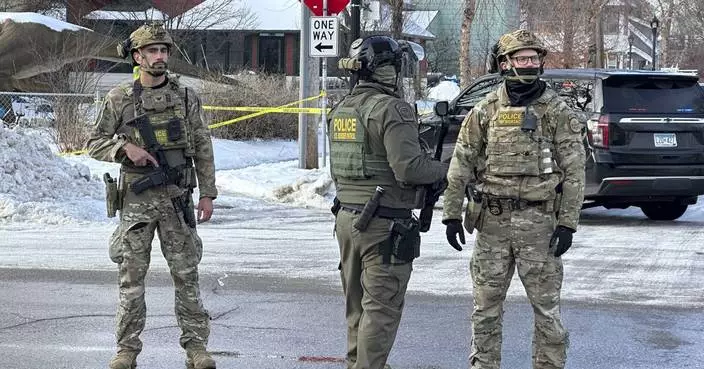
In a scene that harkened back to the Los Angeles and Chicago immigration crackdowns, bystanders heckled the officers and blew whistles that have become ubiquitous during the operations.
“Shame! Shame! Shame!” and “ICE out of Minnesota!” they loudly chanted from behind the police tape.
That’s according to a statement from department spokeswoman Tricia McLaughlin.
The shooting marks a dramatic escalation of the latest in a series of immigration enforcement operations in major American cities under the Trump administration. It’s at least the fifth person killed in a handful of states since 2024.
The twin cities of Minneapolis and St. Paul have been on edge since DHS announced Tuesday that it had launched the operation, with more than 2,000 agents and officers expected to participate in the crackdown tied in part to allegations of fraud involving Somali residents.
Minneapolis Mayor Jacob Frey said Wednesday that the Immigration and Customs Enforcement officer who shot and killed a motorist acted recklessly. Fry rejected federal officials’ claims that the officer had acted in self-defense.
During a news conference hours after the ICE officer shot the woman, an angry Frey blasted the federal immigration crackdown on the Twin Cities of Minneapolis and St. Paul.
“They are not here to cause safety in this city. What they are doing is not to provide safety in America. What they are doing is causing chaos and distrust,” Frey said. “They’re ripping families apart. They’re sowing chaos on our streets and in this case quite literally killing people.”
“They are already trying to spin this as an action of self-defense," the mayor said.
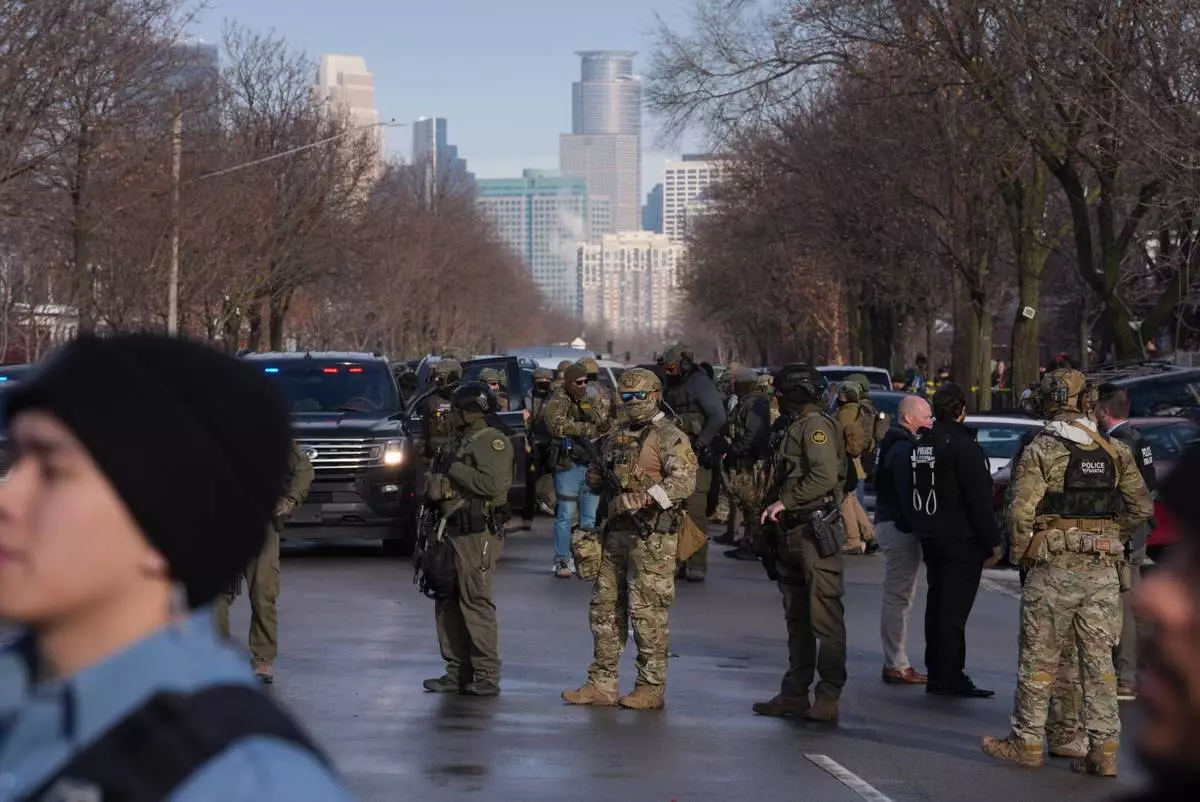
Law enforcement agents stand on the scene of a shooting in Minneapolis, on Wednesday, Jan. 7, 2026. (Alex Kormann/Star Tribune via AP)
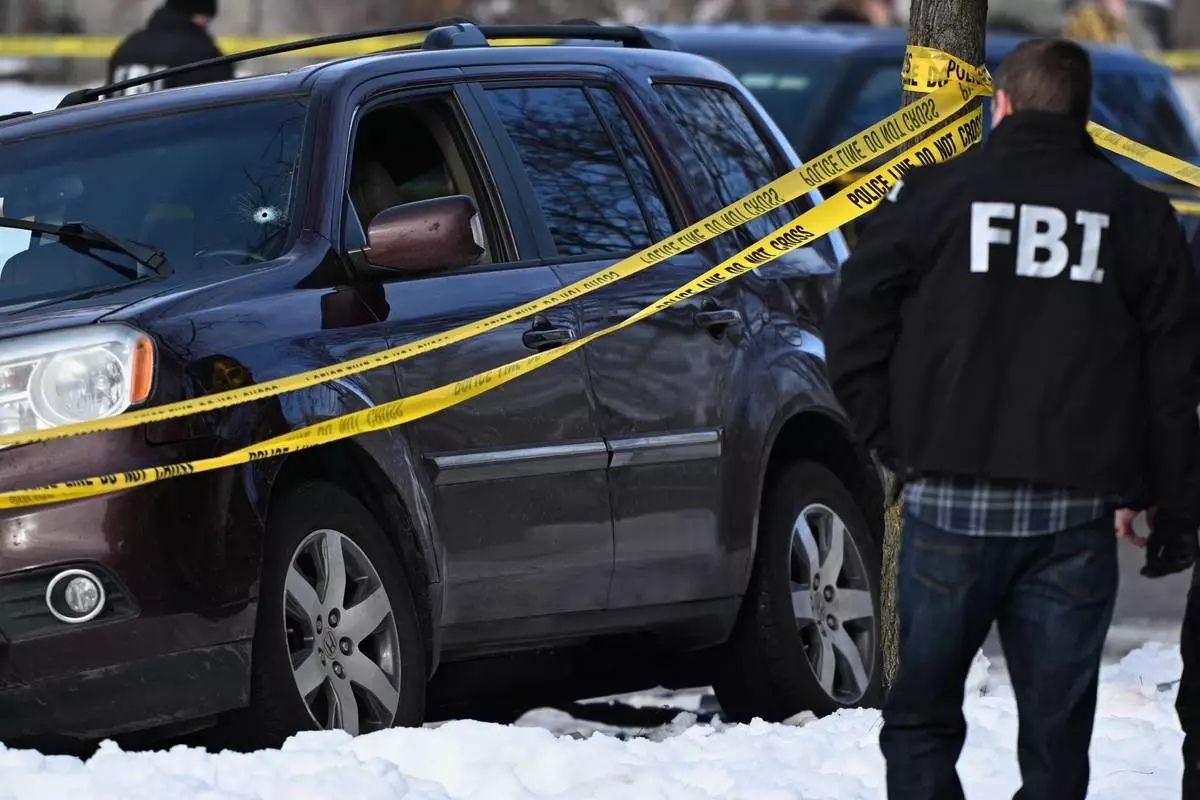
A bullet hole is seen in the windshield as law enforcement officers work the scene of a shooting involving federal law enforcement agents, Wednesday, Jan. 7, 2026, in Minneapolis. (AP Photo/Tom Baker)
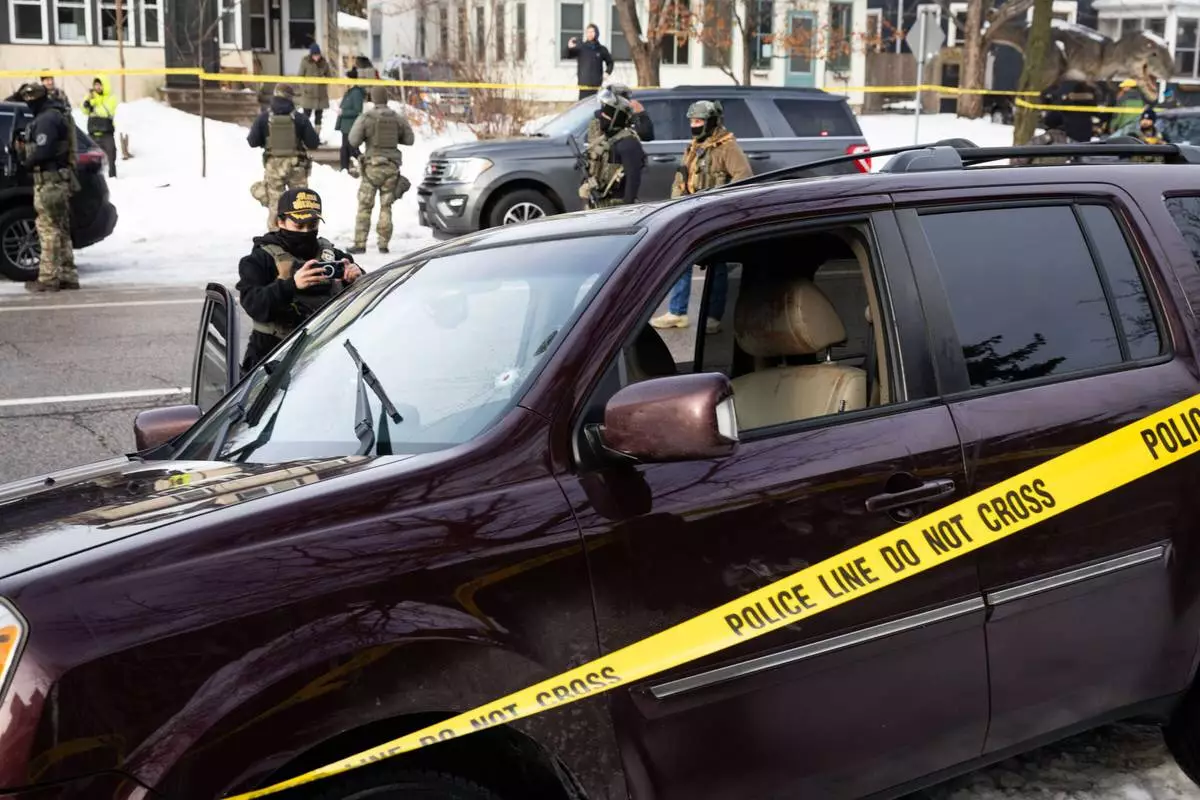
A bullet hole and blood stains are seen in a crashed vehicle on at the scene of a shooting in Minneapolis on Wednesday, Jan. 7, 2026. (Ben Hovland/Minnesota Public Radio via AP)