WASHINGTON (AP) — The U.S. population is projected to grow by 15 million people in 30 years, a smaller estimate than in previous years, due to President Donald Trump's hard-line immigration policies and an expected lower fertility rate, the Congressional Budget Office said Wednesday.
The nonpartisan budget office projected that the U.S. population will grow from 349 million people this year to 364 million people in 30 years, a 2.2% smaller gain than it had predicted in 2025. In September, the office issued a revised demographics report that showed Trump’s plans for mass deportations and other strict immigration measures would result in roughly 320,000 people removed from the United States over the next 10 years.
The country's total population is projected to stop growing in 2056 and remain roughly the same size as in the previous year, the CBO said. But without immigration, the population would begin to shrink in 2030 as deaths start to exceed births, making immigrants an increasingly important source of population growth, according to the report.
Even if the limits on immigration and increased deportations end with the Trump administration in three years, “it’s still a demographic shock,” said William Frey, a demographer at the centrist Brookings Institution.
Social Security and Medicare, which are already buckling under an aging population, will be under increasing pressure with even fewer than expected people in the labor force paying taxes. By the end of the decade, all of the nation’s baby boomers, born between 1946 and 1964, will be over age 65.
With fewer immigrants in the labor force and projections for U.S. fertility rates showing a long-term decline below replacement levels, “that reduces the number of kids who are going to be born in that four-year period” of the second Trump administration, Frey said.
The latest numbers come as Trump has pushed for the largest mass deportation campaign in history. The CBO's numbers account for the success of those efforts in the first year of his second term in office.
The administration has used a variety of methods to remove people from the country, including a visa ban on applications for immigrants from some countries and deploying Immigration and Customs Enforcement agents in U.S. cities to track down immigrants who are in the country illegally.
Trump’s tax and spending law, passed by Congress and signed in July, included roughly $150 billion to ramp up his deportation agenda over the next four years. This includes money for extending the U.S.-Mexico border wall, building detention centers and adding thousands of law enforcement staff.
When it comes to estimating the nation’s population and future growth, immigration is always the wild card because it varies much more year to year than the number of births and deaths. Immigration has fueled U.S. population growth this decade because of an aging population and fertility lower than the replacement rate. For a generation to replace itself in the absence of immigration, the fertility rate needs to be 2.1 births per woman. But it was expected to be 1.58 in 2026 and is projected to drop to 1.53 in 2036 where it will remain over the next two decades.
The U.S. Census Bureau said that immigration increased by 2.8 million people in 2024 over the previous year.
Since Trump returned to office in January 2025, though, demographers and economists have struggled to decipher the impact of his policies on immigrant growth in the United States.
The bureau’s population estimates for last year have not been released yet, but the Current Population Survey estimated that the number of adult immigrants fell by 1.8 million people from January to November 2025. But those numbers have come under scrutiny, with some experts claiming they may reflect a decline in participation by immigrants in the survey rather than a dramatic drop in immigrant numbers.
Last September, the CBO reduced its immigration estimate for 2025 by 1.6 million people, and it said Wednesday that the U.S. added 410,000 immigrants last year. Immigration is projected to gradually increase through 2030, and then grow more slowly through 2036 because of fewer international students and temporary workers, before jumping up to an average of 1.2 million people a year from 2037 to 2056, the CBO said.
“These immigrants bring both themselves and the potential for children in the near term,” Kenneth Johnson, a senior demographer at the University of New Hampshire, said in an email. “They contribute both to the labor force through their arrival but also to the potential future growth of the US population through their potential to have children in the near term.”
Schneider reported from Orlando, Fla. Follow him on the social platform Bluesky: @mikeysid.bsky.social
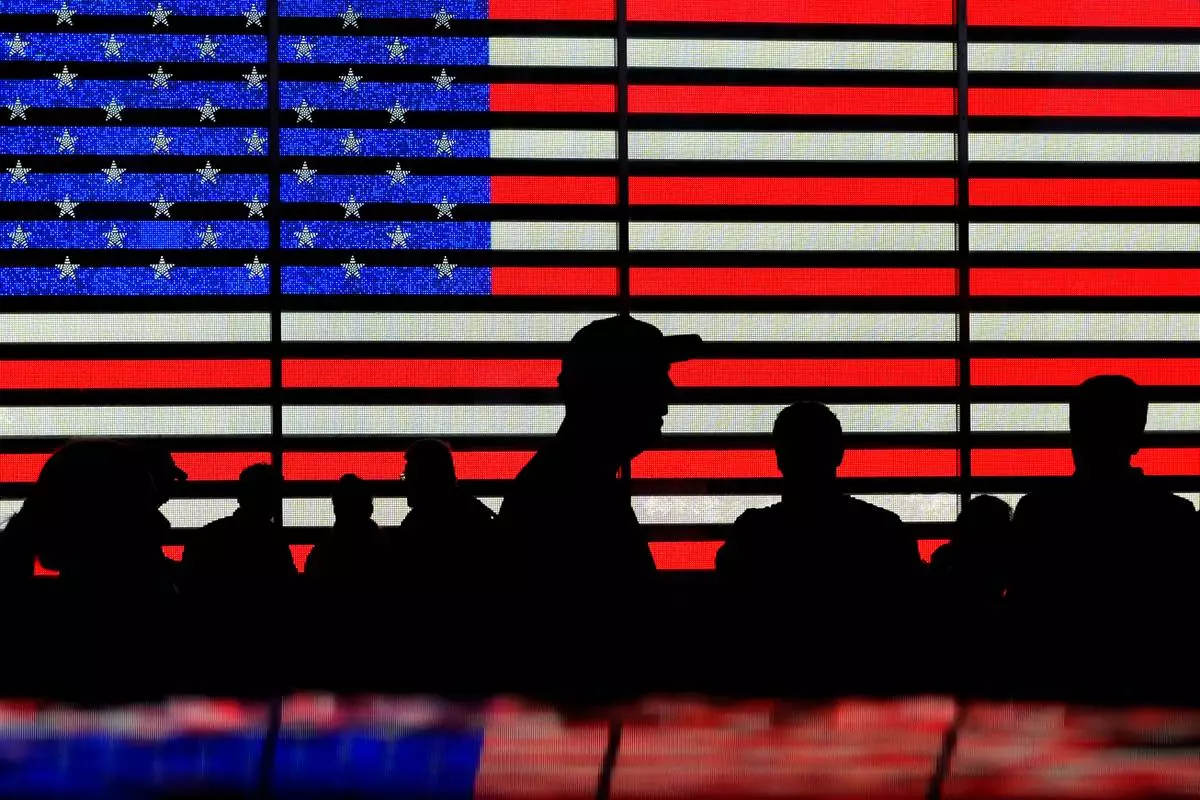
FILE - People stand in Times Square in New York, Aug. 9, 2024. (AP Photo/Pamela Smith, File)
ALEPPO, Syria (AP) — Syrian authorities warned civilians to leave a contested area in the northern city of Aleppo on Thursday and opened a corridor for them to evacuate for a second day as clashes intensified between government and Kurdish forces.
The government of Aleppo province gave residents until 1 p.m. local time to evacuate in coordination with the army. State news agency SANA, citing the army, said the military would begin “targeted operations” against the Kurdish-led Syrian Democratic Forces in the neighborhoods of Sheikh Maqsoud, Achrafieh and Bani Zaid half an hour after that deadline.
The military later issued a series of maps with the areas under evacuation order.
An Associated Press journalist at the scene heard sporadic sounds of shelling as civilians streamed out of the area Thursday morning. Nearly 140,000 people have been displaced across the province, according to Aleppo’s Directorate of Social Affairs and Labor.
“There’s a large percentage of them with difficult medical issues, elderly people, women, and children,” said Mohammad Ali, operations director with the Syrian Civil Defense in Aleppo.
The SDF has said that at least eight civilians were killed in the Kurdish-majority neighborhoods, while government officials reported at least seven civilians and one soldier have been killed in the surrounding government-controlled areas in the fighting that broke out Tuesday. Dozens more on both sides have been wounded.
Each side has accused the other of deliberately targeting civilian neighborhoods and infrastructure.
Clashes intensified in the afternoon, with exchanges of shelling and drone strikes, and tanks could be seen rolling into the contested neighborhoods.
St. Ephrem Syrian Orthodox Church in Aleppo city was hosting about 100 people who had fled the fighting. Parishioners donated mattresses, blankets and food, priest Adai Maher said.
“As soon as the problems started and we heard the sounds (of clashes), we opened our church as a shelter for people who are fleeing their homes," he said.
Among them was Georgette Lulu, who said her family is planning to travel to the city of Hasakeh in SDF-controlled northeast Syria when the security situation allows.
“There was a lot of bombing and loud noises and a shell landed next to our house,” she said. “I’ve been through these circumstances a lot so I don’t get frightened, but my niece was really afraid so we had to come to the church.”
Hassan Nader, a representative of the Ministry of Social Affairs in Aleppo said about 4,000 were staying in shelters in the city while tens of thousands had gone to other areas of the province, and the ministry was working with NGOs to supply them with food, medicine and other necessities.
The clashes come amid an impasse in political negotiations between the central state and the SDF.
The leadership in Damascus under interim President Ahmad al-Sharaa signed a deal in March with the SDF, which controls much of the northeast, for it to merge with the Syrian army by the end of 2025. There have been disagreements on how it would happen. In April, scores of SDF fighters left Sheikh Maqsoud and Achrafieh as part of the deal.
Officials from the central government and SDF met again on Sunday in Damascus, but government officials said that no tangible progress had been made.
Some of the factions that make up the new Syrian army, formed after the fall of former President Bashar Assad in a rebel offensive in December 2024, were previously Turkey-backed insurgent groups that have a long history of clashing with Kurdish forces.
In the city of Qamishli in the Kurdish-controlled northeast, thousands of protesters gathered Thursday, chanting, “SDF, we are with you until death.”
Sawsan Khalil, a protester in Qamishli who was displaced from Afrin in Aleppo province in a 2018 Turkish offensive against Kurdish forces there, called for the international community “to feel for the Syrian people who have been killed for no reason” in Aleppo.
Izzeddin Gado, co-chair of the Qamishli City Council accused the government forces of “following a foreign and regional agenda from Turkey.”
The SDF has for years been the main U.S. partner in Syria in fighting against the Islamic State group, but Turkey considers the SDF a terrorist organization because of its association with the Kurdistan Workers’ Party, or PKK, which has waged a long-running insurgency in Turkey. A peace process is now underway.
Despite the long-running U.S. support for the SDF, the Trump administration in the U.S. has also developed close ties with al-Sharaa’s government and has pushed the Kurds to implement the March deal.
A U.S. State Department official said in a statement Thursday that the U.S. “is closely monitoring the situation” and urged “restraint on all sides.” It said U.S. envoy Tom Barrack is trying to facilitate dialogue between the two sides.
“All parties should focus on how to build a peaceful, stable Syria that protects and serves the interests of all Syrians, rather than pushing the country back into a cycle of violence,” the statement said.
Turkey’s Ministry of National Defense said Thursday that the “operation is being carried out entirely by the Syrian Army” while Turkey is “closely monitoring.”
“Syria’s security is our security,” the statement said, adding that “Turkey will provide the necessary support should Syria request it.”
Turkish Foreign Minister Hakan Fidan described the SDF as the “greatest obstacle for peace in Syria.”
The United Nations expressed concern at the violence and called for de-escalation.
Associated Press writers Suzan Fraser in Ankara and Andrew Wilks in Istanbul and Hogir Al Abdo in Qamishli, Syria contributed to this report. Sewell reported from Beirut.
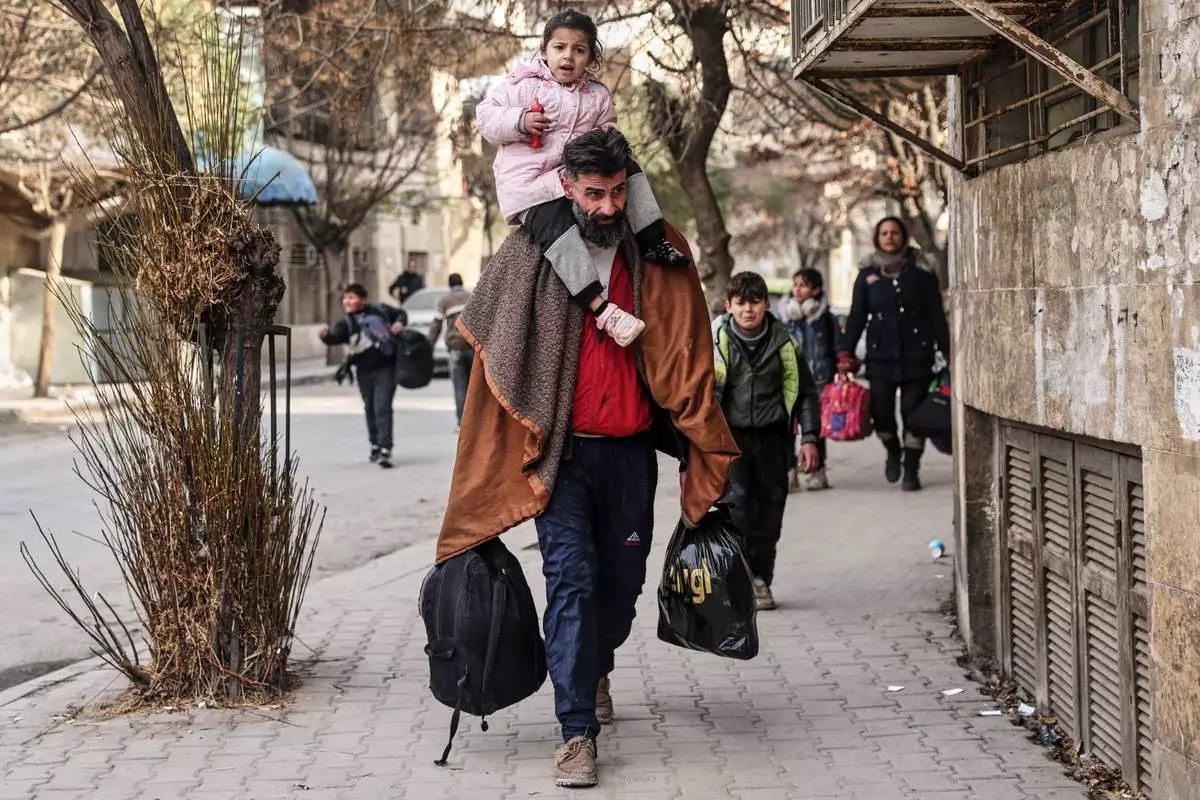
Residents flee the Sheikh Maqsoud and Achrafieh neighbourhoods after clashes erupted Tuesday between Syrian government forces and Kurdish fighters in a contested area of the northern city of Aleppo, Syria, Thursday, Jan. 8, 2026. (AP Photo/Ghaith Alsayed)
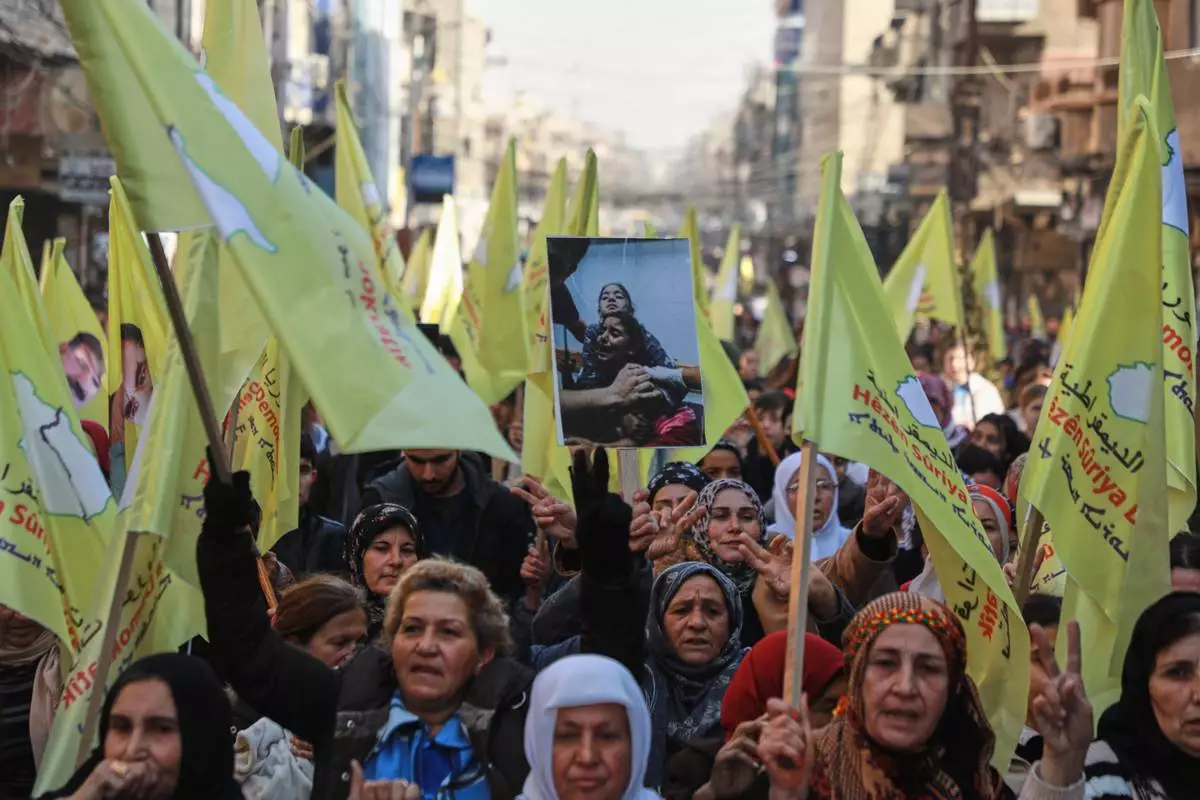
Demonstrators chant slogans in support of the Kurdish-led Syrian Democratic Forces (SDF) during a protest in Qamishli, northeastern Syria, Thursday, Jan. 8, 2026. (AP Photo/Hogir Al Abdo)
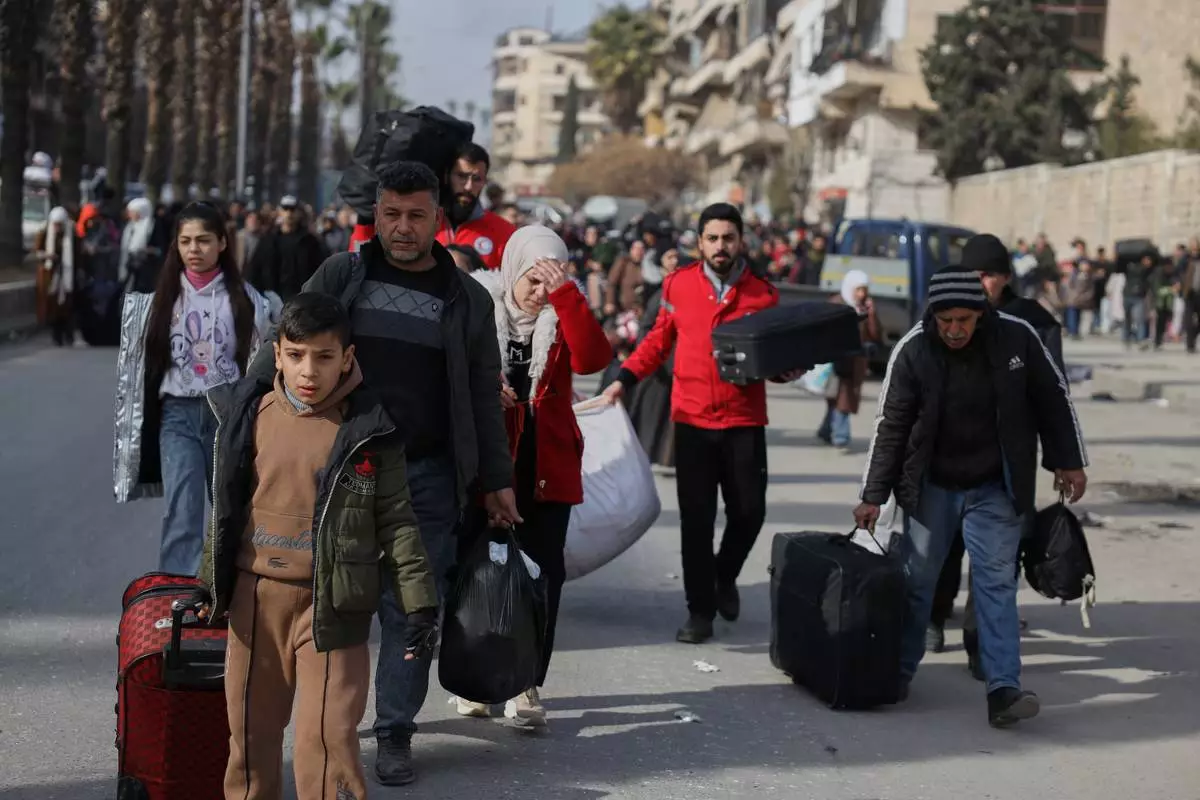
Residents flee the Sheikh Maqsoud and Achrafieh neighborhoods after clashes broke out on Tuesday between Syrian government forces and Kurdish fighters in a contested area of the northern city of Aleppo, Syria, Wednesday, Jan. 7, 2026. (AP Photo/Omar Albam)
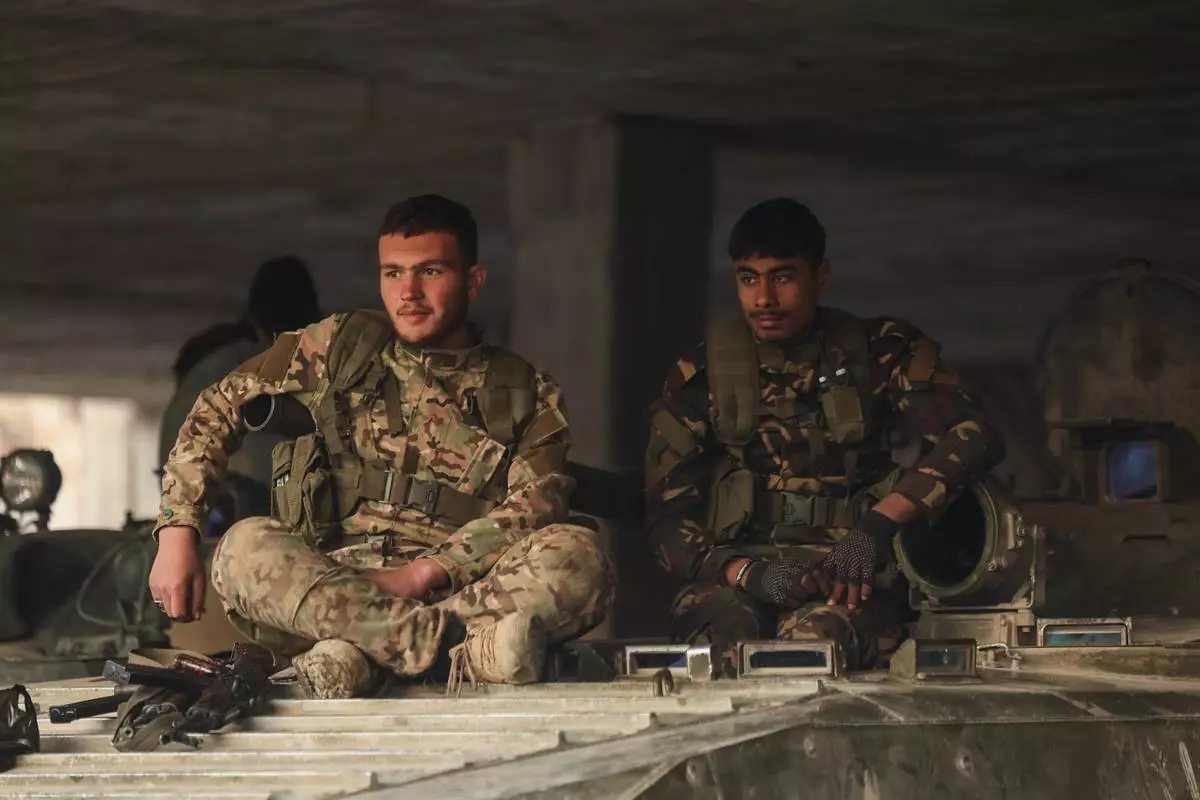
Syrian government soldiers sit on their armoured personnel carrier (APC) following clashes with Kurdish fighters in a contested area of the northern city of Aleppo, Syria, Wednesday, Jan. 7, 2026. (AP Photo/Ghaith Alsayed)
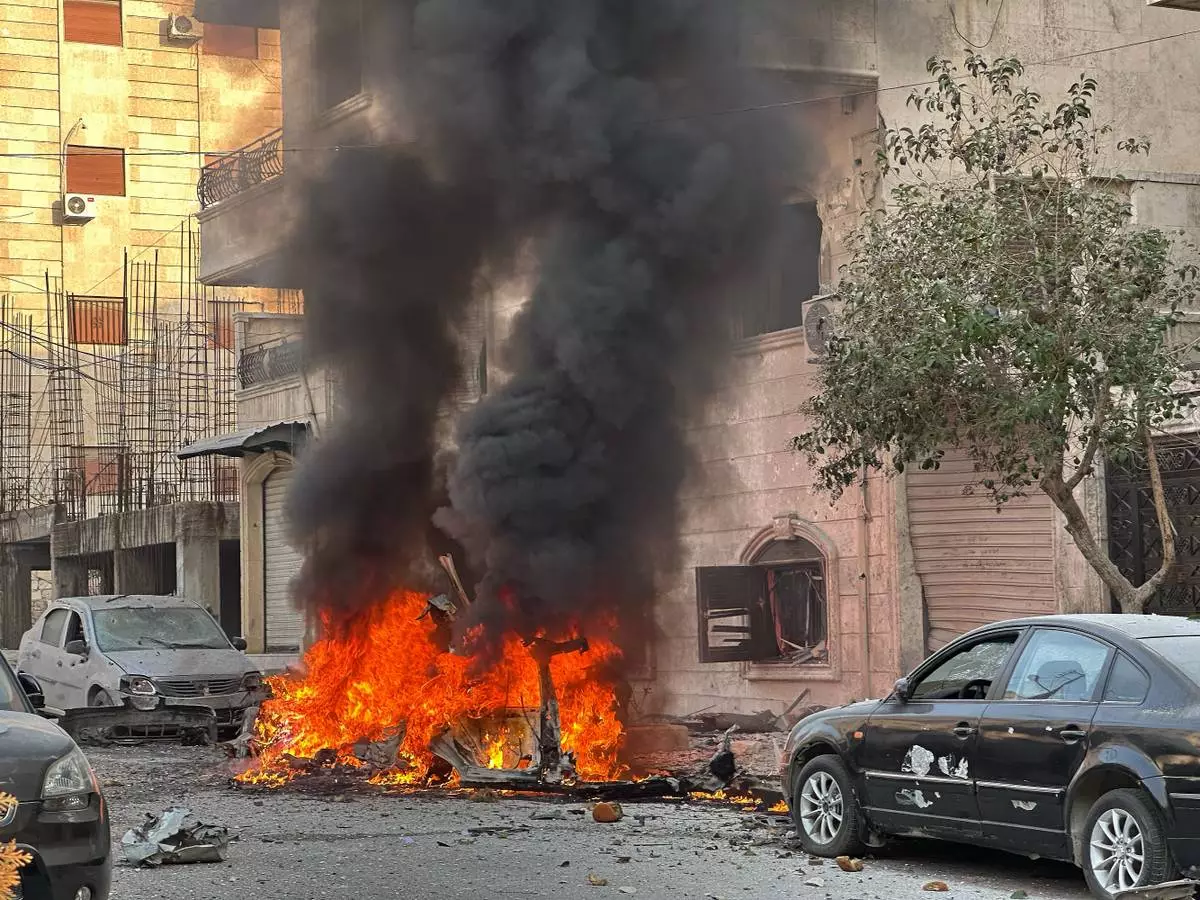
A car burns during clashes between Kurdish fighters and Syrian government forces in a contested area of the northern city of Aleppo, Syria, Wednesday, Jan. 7, 2026. (AP Photo/Omar Albam)
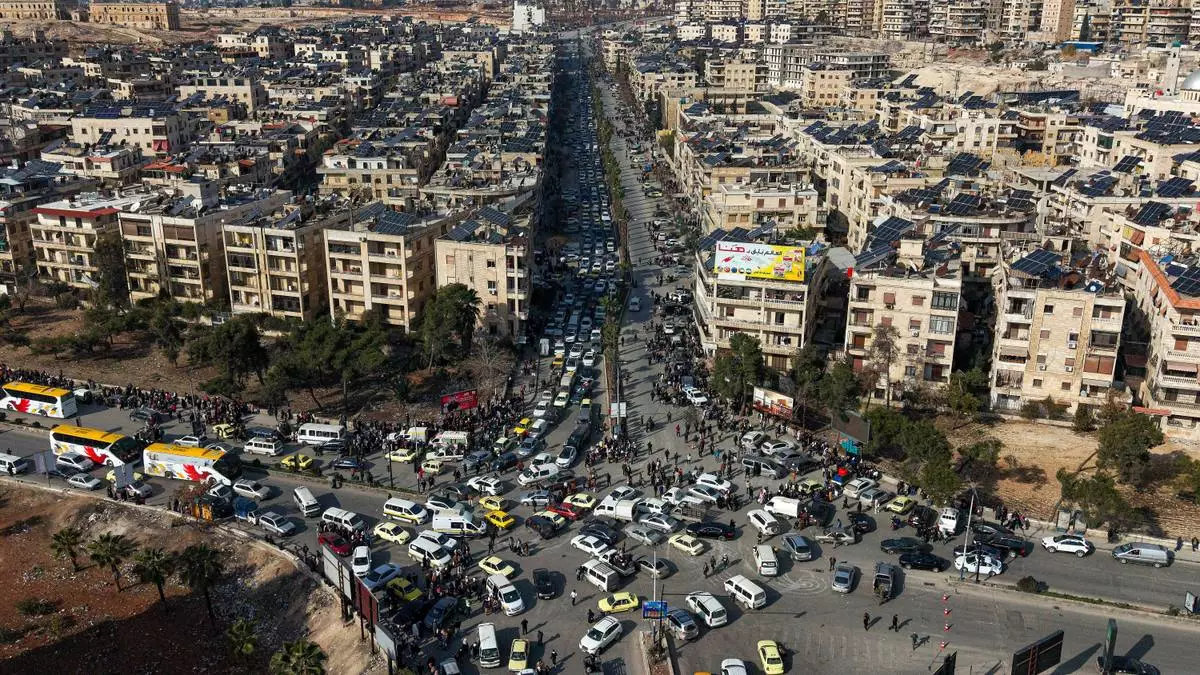
An aerial view shows Syrian residents in vehicles, queueing to flee from Sheikh Maqsoud and Achrafieh neighborhoods after clashes broke out on Tuesday between Syrian government forces and Kurdish fighters in a contested area of the northern city of Aleppo, Syria, Wednesday, Jan. 7, 2026. (AP Photo/Omar Albam)