China's Yangtze River Economic Belt, a pivotal economic powerhouse, has undergone a remarkable transformation since the implementation of a major national strategy for the high-quality development of the region started a decade ago.
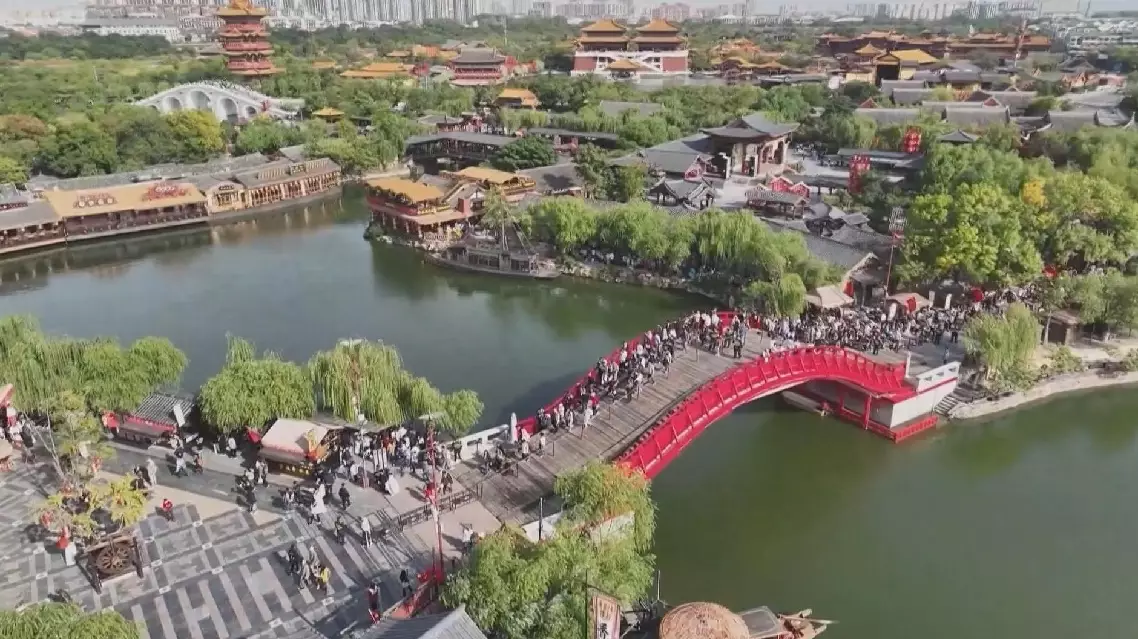
The Yangtze River Economic Belt encompasses 11 provincial-level regions along the 6,300 km-long Yangtze, China's longest waterway and the "mother river" of the Chinese nation. The belt has China's most dynamic urban clusters and the most developed industrial systems, and accounts for nearly half of the country's population and total economic output. Moreover, the Yangtze River Basin is a critical ecological lifeline, holding 35 percent of China's water resources and serving as a backbone of national ecological security.
On Jan 5, 2016, President Xi Jinping, also general secretary of the Communist Party of China Central Committee and chairman of the Central Military Commission, chaired a symposium on improving the development of the Yangtze River Economic Belt in southwest China's Chongqing Municipality.
During the symposium, Xi stressed that the belt's development must adhere to the principle of ecological priority and green development. He underscored that restoring the Yangtze River's ecological environment should take precedence, urging officials to pursue "big protection, not big development".
The 2016 meeting marked a clear break from earlier growth models that favored rapid industrial expansion over environmental protection, formally elevating the development of the Yangtze River Economic Belt to a national strategy.
Later that year, China issued the Outline of the Development Plan for the Yangtze River Economic Belt, laying out a comprehensive framework that combined ecological protection, innovation-driven industrial upgrading, integrated transport development, and improved regional coordination.
Since then, Xi has chaired three more symposiums on the Yangtze River Economic Belt, providing strategic guidance at key stages of its development.
During the subsequent symposiums held in the provinces of Hubei, Jiangsu and Jiangxi, Xi repeatedly reaffirmed the inseparable connection between environmental protection and high-quality development. At the most recent symposium, he emphasized the need to use scientific and technological innovation as a leading force, coordinating ecological conservation with economic and social progress to better support Chinese modernization.
Over the past decade, China has introduced a series of policies and legal regulations covering pollution control, ecological restoration, biodiversity protection, and integrated river basin governance, transforming the concept of green development into a set of measurable outcomes along the Yangtze River.
The Yangtze River Protection Law, the country's first basin-specific law, came into effect on March 1, 2021, providing legal support for the scientific, green and high-quality development of the Yangtze River Basin. In early 2024, the State Council approved a national territorial spatial plan for the Yangtze River Economic Belt-Yangtze River basin for the 2021-2035 period.
Ten years on, the economic belt has emerged strong as a successful testing ground for a development model that reconciles ecological protection with innovation-driven growth.
Over the years, the proportion of sections with good water quality in the Yangtze River Economic Belt has increased sharply from 67 percent to 96.5 percent. Meanwhile, ecological issues in more than 1,300 national nature reserves have been rectified, with 17 integrated ecosystem restoration projects implemented, and over 17,000 environmental management units designated, forming a zoned environmental governance framework.
Between 2021 and 2024, a total of 344 indigenous fish species were monitored in the Yangtze River Basin, an increase of 36 species compared with the period before the fishing ban.
During the period, a total of 1,361 illegal docks were dismantled, and more than 200,000 discharge outlets along the Yangtze were standardized or closed, with more than 90 percent of black and malodorous water bodies in county-level cities brought under control.
Over the past decade, the Yangtze River Economic Belt has emerged as one of China's most dynamic innovation hubs, as technological advances increasingly translate into both industrial strength and global competitiveness.
It has produced a number of internationally competitive technology companies, including AI startup DeepSeek and stellar robotics maker Unitree Robotics, alongside the rise of world-class industrial clusters in sectors such as automobile manufacturing and electronic information.
Development paces have been accelerating for the establishment of an international science and technology innovation center in Shanghai (Yangtze River Delta), a comprehensive national science center in Hefei, the provincial capital of Anhui, as well as two regional sci-tech innovation centers in Wuhan -- the provincial capital of Hubei, and the Chengdu-Chongqing economic zone.
The economic belt has built complete industrial chains in electronic information, automobiles, pharmaceuticals and chemicals. A total of 41 national-level advanced manufacturing clusters and 30 clusters focusing on strategic emerging industries have taken shape.
Significant progress has also been made in developing an integrated transportation corridor along the Yangtze. Today the Yangtze River trunk line ranks as the world's busiest inland waterway, as its annual cargo throughput has surged by 71 percent to 4.2 billion tonnes over the past decade. Construction on the Shanghai-Chongqing-Chengdu high-speed railway is accelerating and about 95 percent of cities at or above the county level are now connected by expressways.
Meanwhile, the New International Land-Sea Trade Corridor is now linked with the China-Europe freight train service and the Yangtze River waterway, together playing a more prominent role in the development of the Belt and Road Initiative.
In the first 11 months of 2025, total imports and exports of the 11 provinces and municipalities along the Yangtze River Economic Belt reached a record 19.12 trillion yuan (about 2.72 trillion U.S. dollars), accounting for 46.4 percent of the national total.
Looking ahead, China's 15th Five-Year (2026-2030) Plan proposals call for strengthening sci-tech innovation, advancing green transformation, and deepening regional coordination. In this context, the Yangtze River Economic Belt development is not merely a regional development program, but a strategic platform for testing how high-level ecological protection can reinforce high-quality growth.
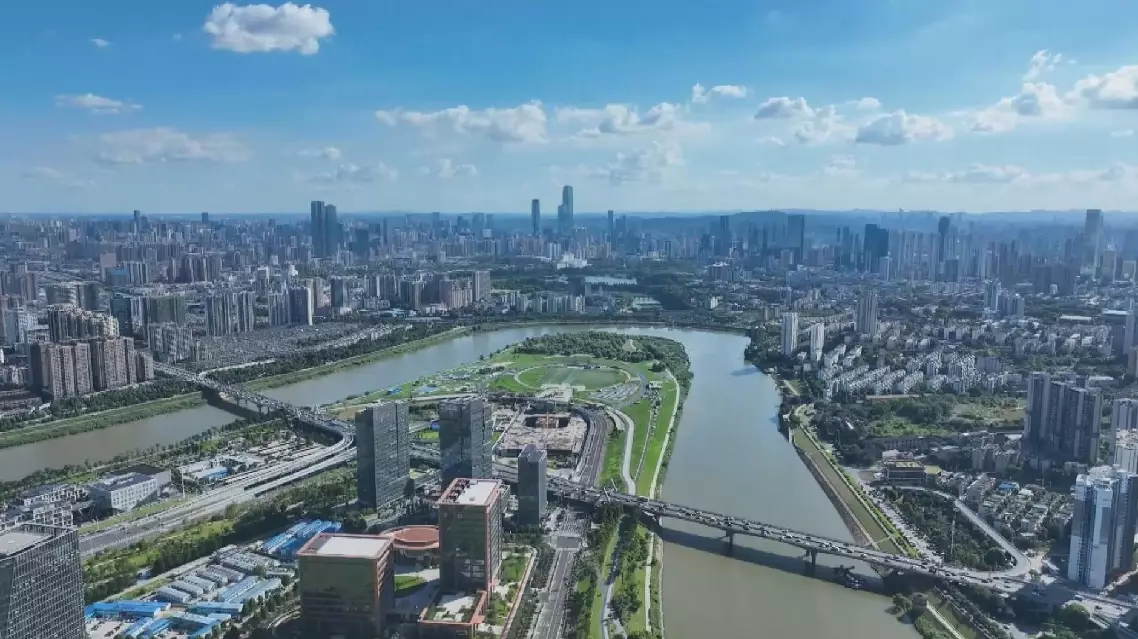
Yangtze River Economic Belt spotlights China's green, innovation-driven development