KUALA LUMPUR, Malaysia (AP) — Malaysia’s centenarian former Prime Minister Mahathir Mohamad was recovering in a hospital Wednesday from a broken right hip that his daughter said was serious but not life-threatening.
Mahathir was rushed to the National Heart Institute on Tuesday after he suffered a fall at his home. His office said he would remain hospitalized for the next few weeks for observation and treatment.
“It’s a hip fracture and we have to wait for it to heal which, due to his age, will take time,” his daughter Marina Mahathir told The Associated Press on Wednesday. “Otherwise he’s as ok as anyone with a hip fracture can be."
She dismissed rumors that her father is dying.
“It’s serious in anyone, more so a 100-year-old but it’s not life-threatening,” she said.
The centenarian fell while doing his normal morning exercise of brisk walking, according to Mahathir’s son, Mukhriz, who added that doctors ruled out surgery due to his age and therefore his recovery may take longer.
Mahathir served as prime minister from 1981 to 2003 and again from 2018 to 2020, becoming the world’s oldest head of government during his second term. Despite stepping away from frontline politics, he continues to comment publicly on political developments.
The fall adds to a series of health scares in recent years for the former leader, who has has been hospitalized several times for other conditions that were not critical.
Mahathir has a history of heart disease including two bypass surgeries, the first in 1989 after a heart attack and then a quadruple bypass in 2007. He turned 100 in July and said staying mentally and physically active kept him going.
“So long as I can function, I want to function. I want to behave almost as if I am not getting old. I try to live the same life that I lived when I was younger," he said at the time.
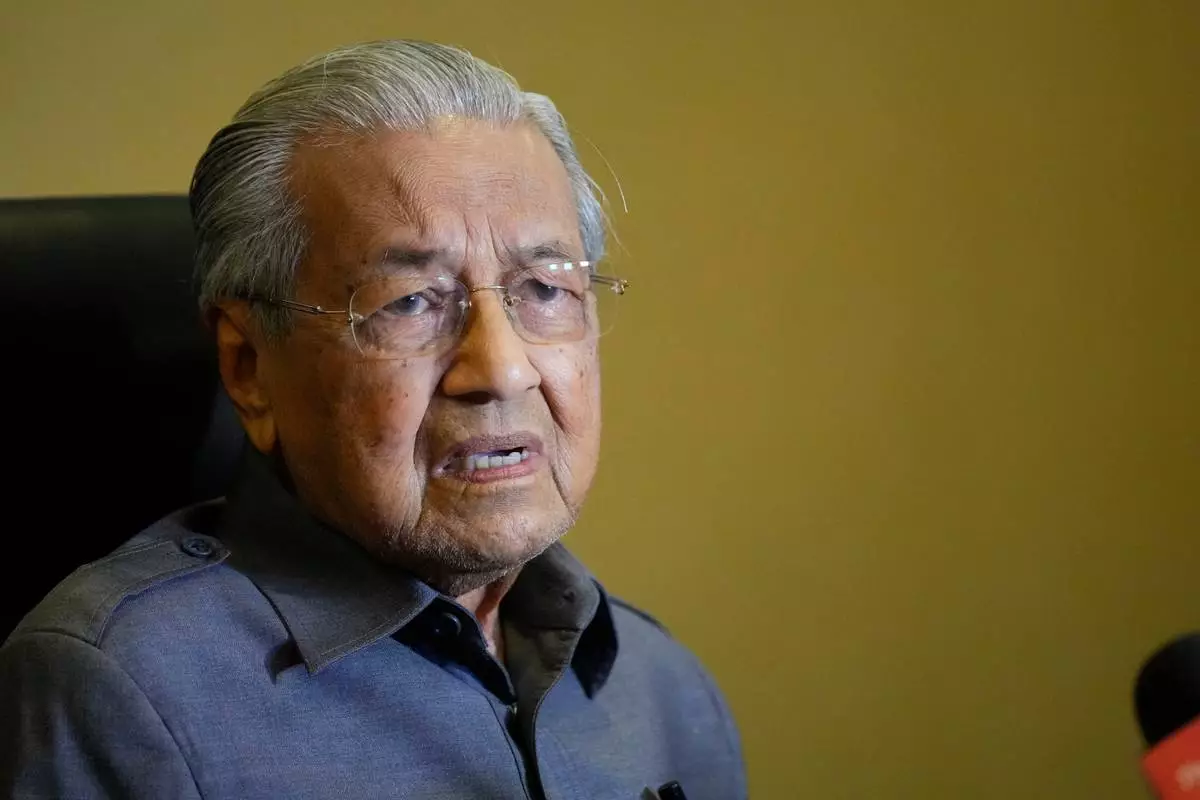
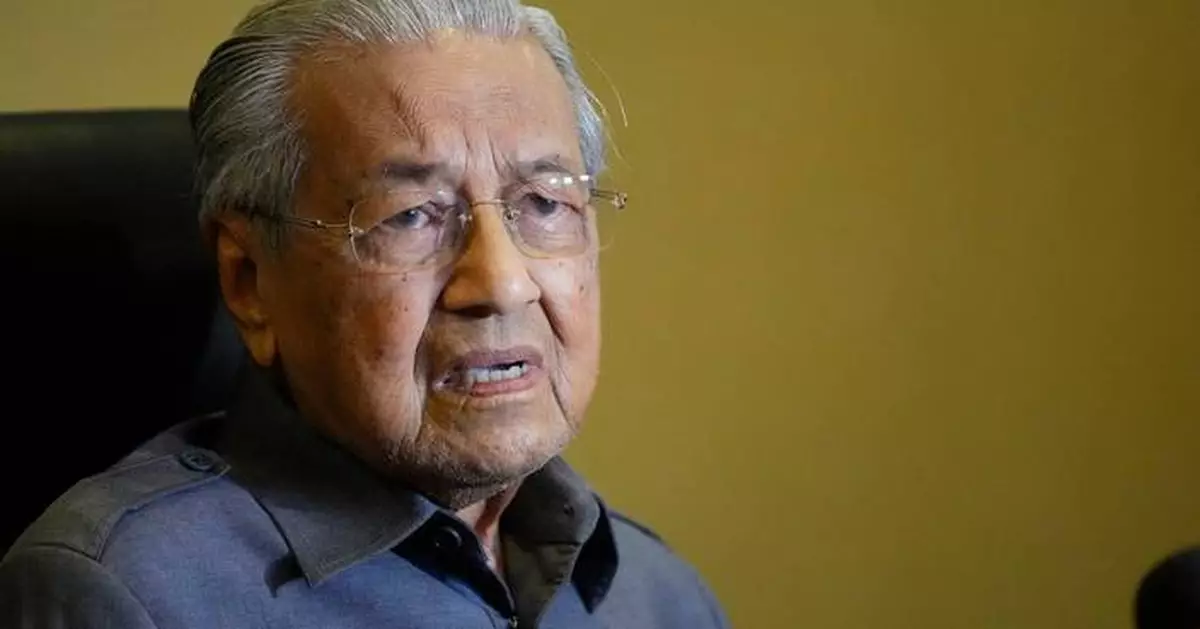
FILE -Former Malaysian Prime Minister Mahathir Mohamad speaks during a news conference at his office in Putrajaya, Malaysia, Jan. 22, 2024. (AP Photo/Vincent Thian, File)
NEW YORK (AP) — Quintin Sharpe considers it a duty to support those without means. Whether collecting food pantry goods through local service groups or helping out his parents' nonprofit music school, he regularly gives back to his small-town waterside community in southeast Wisconsin.
But the 27-year-old wealth manager encountered a situation last year that prompted another form of charity. A former classmate's father got “blindsided” in a motor vehicle accident, he said, and crowdfunding proved to be the “easiest way to help” with hospital bills. He donated more than $100 to the family's GoFundMe campaign.
“Crowdfunding can be a little bit more expedient because there’s less reporting," Sharpe said. "Funds are going directly to one site. It doesn’t have to go through a board, doesn’t have to get approval from a lot of people."
Sharpe is among the roughly 2 in 10 U.S. adults who donated money to a crowdfunding campaign last year, according to the results of a poll from The Associated Press-NORC Center for Public Affairs Research, with medical expenses proving most common.
Crowdfunding, or pooling donations online through organized platforms such as GoFundMe, has emerged as a convenient way to seek help covering costs for emergency treatment, Little League sports equipment and anything between.
But the poll also shows Americans — including crowdfunding donors — have some doubts about whether people who crowdfund really need the money and use it responsibly. Most U.S. adults don't have high confidence that crowdfunding sites charge reasonable service fees or that campaigns generally reach their goals.
Sharpe said it would be “naive” to think every campaign is “aboveboard.”
“Ultimately, it depends on the person receiving the funds, if they’re gonna do what they say they’re gonna do with it,” he said.
Participation still lags behind more formal avenues for giving.
Overall, the share of Americans who said they had given to a crowdfunding campaign was far fewer than the roughly 7 in 10 who indicated they made a charitable contribution in 2025.
These efforts lend themselves to small gifts. The AP-NORC poll found that about 6 in 10 crowdfunding donors gave $50 or less when they last supported a campaign.
The lower donation sizes underscore the importance of strong personal networks. Without offline connections, or large social media reach, campaigns can face difficulties reaching the critical mass of small-dollar contributors necessary to meet their goal.
Karla Galdamez, a former teacher from California, supported her first crowdfund when a fellow educator died by suicide. She knew him “a little bit,” she said. A group of teachers started a GoFundMe, and she didn’t see another more effective way of collecting donations for his family.
“The word spreads pretty fast like that,” Galdamez said. “Then people start sending each other links. And it works.”
Sites are often filled with requests for tens of thousands of dollars to help subsidize health care costs — or as campaigns often put it, the “long road to recovery." So ingrained is the practice that some patient advocates even recommend crowdfunding to avoid debt.
Sure enough, medical expenses and health care causes proved to be the most commonly supported category in the AP-NORC poll. About 4 in 10 U.S. adults who donated to campaigns this year said their last donation fell in this category, highlighting Americans' high levels of concern about health care costs.
Jeremy Snyder, a bioethicist who researches medical crowdfunding, said its continued prevalence reflects the persistent gap between what insurance covers and what health care costs. People might also find it easier to seek help covering medical costs — which can be justified as non-negotiable, one-off emergencies — than other expenses.
He fears more patients will be driven to crowdfunding with the recent expiration of enhanced tax credits that helped reduce the cost of health insurance for most Affordable Care Act enrollees.
“Costs keep going up,” he said. “Coverage is still a struggle and probably getting worse.”
The second most common cause for crowdfunding donors was memorials or funerals. Following that category was groceries or other daily necessities, veterinary expenses or animal causes and natural disaster relief.
There are broad doubts, though, about whether the crowdfunding sites charge reasonable service fees.
The AP-NORC poll found that only 44% of U.S. adults are at least “somewhat” confident that the sites charge reasonable service fees.
“I just think it’s kind of crappy that people are in need and they charge a service fee,” said Maria Barrett, 68. “There ought to be a way to do that without it. But I guess there isn’t.”
Major for-profit fundraising sites say they only charge transaction fees to cover payment processing costs. GoFundMe takes 2.9% plus 30 cents off individuals' U.S. donations and solicits optional tips. GiveSendGo, a Christian alternative, similarly takes 2.7% and 30 cents.
There is a “pervasive sense” that platforms have “mandatory fees," apart from processing fees, Snyder said, when they largely do not. Consumers may associate companies with the larger platform fees they previously charged. In 2017, for example, GoFundMe dropped its 5% fee on those who launch personal campaigns.
“GoFundMe's model is intentionally designed to ensure the maximum amount of help goes directly to the people and nonprofits who need help, while giving donors the choice of whether to contribute anything additional for our services,” Sarah Peck, GoFundMe's vice president of communications, said in a statement.
More than half of U.S. adults were at least “somewhat” confident that people who raise money through crowdfunding sites really need the money, and about half were at least “somewhat” confident that they use it responsibly. But only about 1 in 10 were “very” or “extremely” confident.
Barrett sends money as long as she knows the organizers or is satisfied with her research on their campaigns. The New Jersey resident recently donated to a woman with brain cancer. Her son went to high school with the patient’s partner, she said, so she knew of their situation.
There was also the survivor of a house fire. “I know that the house was on fire because it was in my town,” she said.
She occasionally finds fundraiser goals to be “a little astronomical.” But she's seen the process work firsthand. After her son died, she said, her daughter-in-law received “more money than I could ever imagine” when someone started a campaign on his family's behalf.
Barrett's greater concern is with the factors that force people to resort to such lengths.
“I just wish it wasn’t so difficult for people to get help in this country without having to crowdsource and stuff,” she said. “One illness can wipe out a family. One death can wipe out a family. And that just doesn’t seem right in this country that’s supposed to be the best country in the world.”
Sanders reported from Washington.
Associated Press coverage of philanthropy and nonprofits receives support through the AP’s collaboration with The Conversation US, with funding from Lilly Endowment Inc. The AP is solely responsible for this content. For all of the AP’s philanthropy coverage, visit https://apnews.com/hub/philanthropy.
The AP-NORC poll of 1,146 adults was conducted Dec. 4-8 using a sample drawn from NORC’s probability-based AmeriSpeak Panel, which is designed to be representative of the U.S. population. The margin of sampling error for adults overall is plus or minus 4 percentage points.
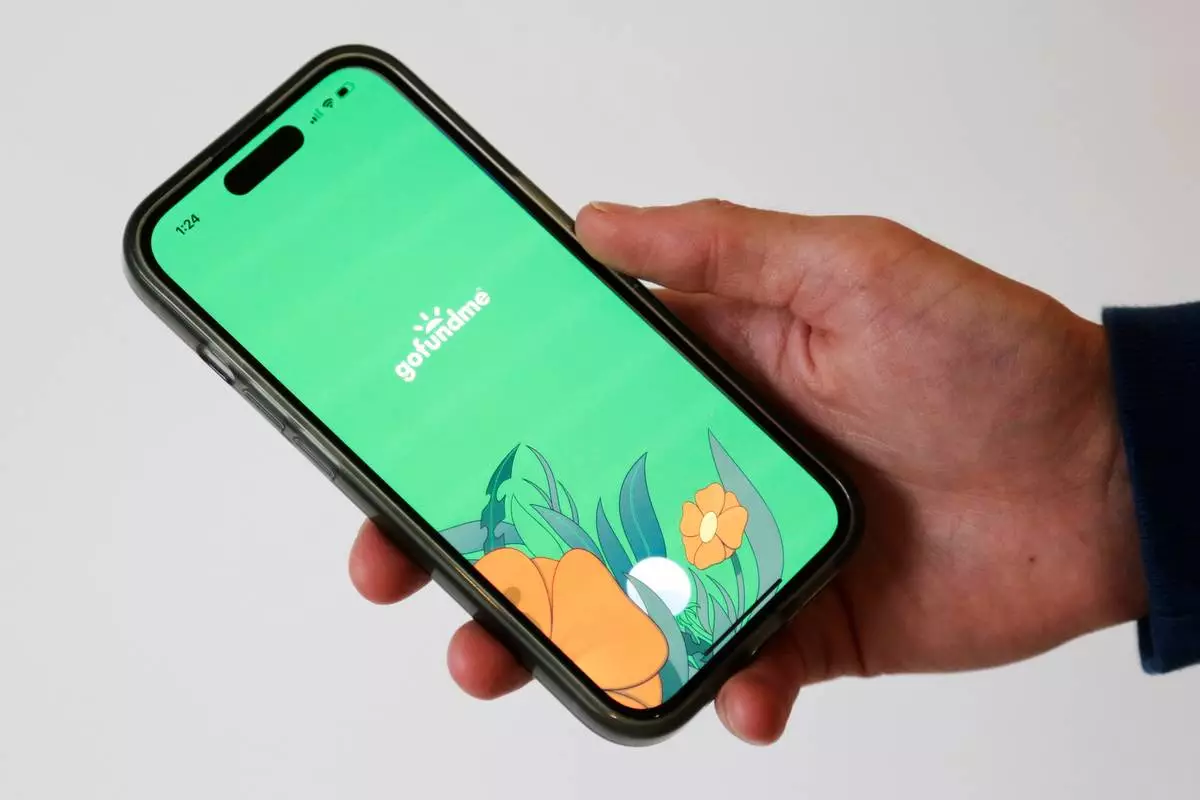
FILE - The home page for the crowdfunding platform GoFundMe is shown on a device in New York, Oct. 16, 2024. (AP Photo/Peter Morgan, File)