LOS ALTOS, Calif.--(BUSINESS WIRE)--Jan 8, 2026--
Bidgely solidified its position as the premier provider of machine learning (ML) and artificial intelligence (AI) solutions for the utility industry in 2025, driven by the evolution of its journey from foundational ML to generative AI (GenAI) to future-forward agentic AI. By expanding its intellectual property and launching a first-of-its-kind vertical AI platform that integrates directly into existing utility data environments, Bidgely has transformed how more than 35 energy providers across the U.S., India, Middle East and Europe manage the energy transition.
This press release features multimedia. View the full release here: https://www.businesswire.com/news/home/20260108284426/en/
“The utility sector is moving past the experimentation phase of AI,” said Abhay Gupta, CEO of Bidgely. “In 2025, we focused on delivering technology that allows utilities to build, buy or partner on a single AI platform. Whether it’s optimizing the grid or powering customer-facing GenAI agents, our goal is to help utilities achieve the outcomes they value most: resilience, affordability and decarbonization.”
Defining the Next-Gen Grid with Advanced AI
Bidgely’s technological evolution has journeyed from data observation to autonomous grid management. While foundational ML first decoded raw energy data into consumer insights, predictive AI advanced the company’s platform by forecasting insights like grid stress and infrastructure faults. The journey then moved into generative AI, utilizing large language models to transform complex data into conversational "Energy Assistant" tools. Looking beyond 2025, this path culminates in agentic AI, where autonomous agents transition from delivering insights to executing real-time actions without manual intervention.
Following the strategic acquisition of Grid4C, Bidgely now holds over 16 utility-focused AI data science patents. This "AI moat" includes advanced appliance fault detection, diagnostics and high-resolution load forecasting to ensure every layer of Bidgely AI is protected by world-class innovation.
UtilityAI Pro: The Industry’s "Any Cloud, Any Hyperscaler" AI Solution
Bidgely also redefined the AI landscape in 2025 by launching UtilityAI Pro —the industry’s first vertical AI platform that seamlessly integrates with a utility’s preferred data environment (i.e. AWS, Snowflake, Databricks). UtilityAI Pro enhances a utility’s existing investments in AI-powered agents and copilots and serves as a unified foundation where utilities can build their own custom models, buy off-the-shelf Bidgely solutions or integrate third-party partner applications all within the same platform.
One major Southwest U.S. investor-owned utility (IOU) is partnering with Bidgely for “UtilityAI Pro” to maximize its return on recent investments in advanced metering infrastructure (AMI) and cloud technology. By deploying Bidgely’s patented machine learning models directly within the utility’s secure cloud environment, the solution ensures data privacy while providing deep intelligence on appliance usage, electric vehicle charging, and distributed energy resources. This foundational data layer enabled the utility to develop custom AI agents and integrate insights into grid planning and customer engagement tools, targeting a five to ten times ROI through optimized demand-side management, deferred infrastructure upgrades and enhanced revenue protection.
Celebrating AI Excellence
In 2025, Bidgely’s AI-first philosophy earned numerous accolades, including 2025 Top Product of the Year from Environment+Energy Leader for its use of GenAI to simulate impact of electric vehicles on the grid with 98 percent accuracy. The company also retained its long-standing position atop Guidehouse Research’s Home Energy Management (HEMS) Leaderboard, recognized specifically for its strategy in making AI "interactive and automated."
Additionally, Bidgely’s ML and AI-based solutions collectively helped save 1.5 TWh of energy from gas, electric, dual fuel and water customers around the world.
To learn more about how utilities can deploy Bidgely’s AI to strategically support their technology investments, listen to the “Scaling AI in the Energy Industry” Electric Perspectives podcast episode featuring Arizona Public Service’s (APS) Michelle Ferrara and Bidgely’s Karthik Moorthy.
About Bidgely
Bidgely is an AI-powered SaaS Company accelerating a clean energy future by enabling energy companies and consumers to make data-driven energy-related decisions. Powered by our unique patented technology, Bidgely's UtilityAI™ Platform transforms multiple dimensions of customer data - such as energy consumption, demographics, and interactions - into deeply accurate and actionable consumer energy insights. We leverage these insights to empower each customer with personalized recommendations, tailored to their individual personality and lifestyle, usage attributes, behavioral patterns, purchase propensity, and beyond. From a distributed energy resources (DER) and grid edge perspective, Bidgely is advancing smart meter innovation with data-driven solutions for solar PVs, electric vehicle (EV) detection, EV behavioral load shifting and managed charging, energy theft, short-term load forecasting, grid analytics, and time of use (TOU) rate designs. Bidgely’s UtilityAI™ energy analytics provides deep visibility into generation and consumption for better peak load shaping and grid planning, and delivers targeted recommendations for new value-added products and services. With roots in Silicon Valley, Bidgely has over 16 energy patents, $75M+ in funding, retains 30+ data scientists, and brings a passion for AI to utilities serving residential and commercial customers around the world. For more information, please visit www.bidgely.com or the Bidgely blog at bidgely.com/blog.
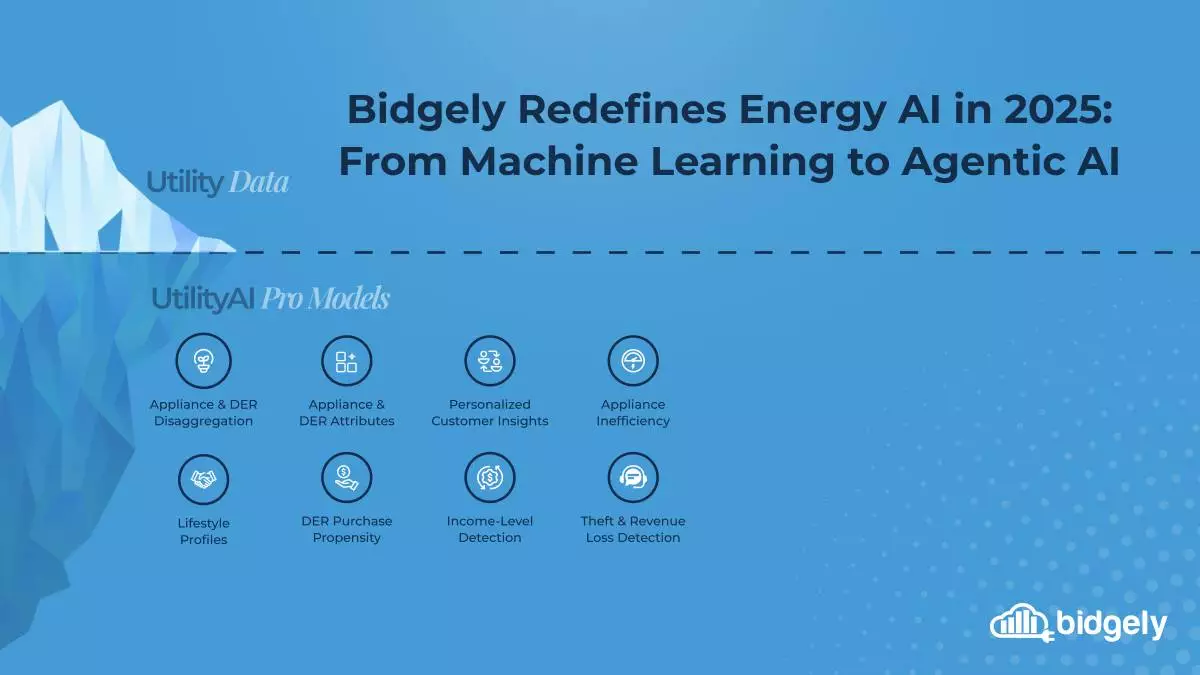
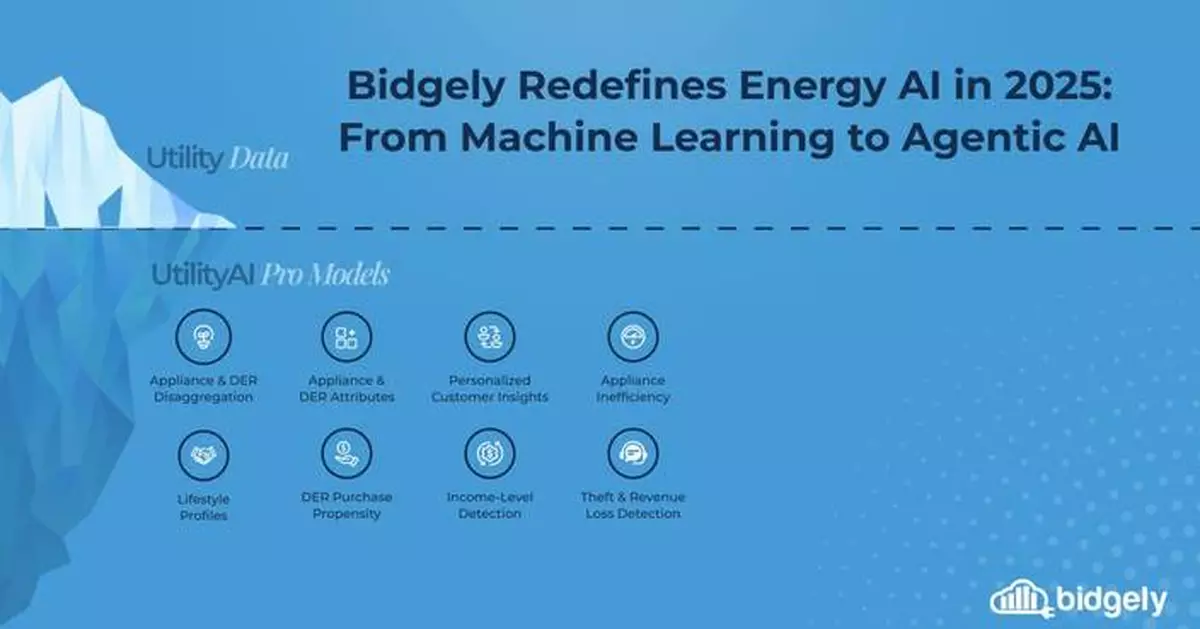
Bidgely expands its intellectual property and launches first-of-its-kind vertical AI platform in its journey foundational ML to GenAI to agentic AI.
WASHINGTON (AP) — Secretary of State Marco Rubio is a football fan — he played in college, supports the Miami Dolphins, and his son is a running back for the University of Florida Gators. Now, he is quarterbacking President Donald Trump’s foreign policy team as it navigates particularly turbulent times, notably in Venezuela and elsewhere in Latin America, longtime core interests of the child of Cuban immigrants and former Florida senator.
As the Trump administration has alarmed much of the world with its stunning military operation that captured now-former Venezuelan President Nicolás Maduro and its threats to potentially annex Greenland by force, Rubio has emerged as a voice of relative calm.
In public comments and private briefings to lawmakers, he has toned down bombastic remarks from the president and other top officials even as he offers a full-throated defense of Trump’s more audacious plans. Still, he had a key role in one of the most assertive actions — Maduro's ouster — after long pursuing leadership changes in Venezuela and Cuba, countries close to him personally and politically.
“We always prefer to settle it in different ways,” Rubio said when asked by reporters this week about a military option in Greenland. “That included in Venezuela. We tried repeatedly to reach an outcome here that did not involve having to go in and grab an indicted drug trafficker.”
Senate Foreign Relations Committee Chairman James Risch, one of his closest friends in the Senate, said Rubio's influence prompted the administration to action.
“I think all of us have been feeling that we can do a lot better in Latin America than we’ve been doing,” Risch told The Associated Press. “This is not an excuse, but a fact, and that is, the squeaky wheel gets the grease.”
Aides to Rubio compare his dual roles as secretary of state and national security adviser to those of an empowered senior traffic cop, directing a small but influential field of Trump advisers, translating the president’s often broad and vague pronouncements into digestible, even if still controversial, nuggets that can be acted upon and explained.
One top aide, who spoke on condition of anonymity to offer a personal assessment of Rubio’s role, described him as the “quarterback" of teams, which for Venezuela includes Trump’s deputy chief of staff Stephen Miller, Defense Secretary Pete Hegseth, Energy Secretary Chris Wright and Vice President JD Vance. For fragile U.S.-led peace efforts in Gaza and Ukraine, that is Vance, special envoy Steve Witkoff and Trump’s son-in-law Jared Kushner.
White House press secretary Karoline Leavitt praised Rubio for advancing Trump’s foreign policy goals in his dual roles and added: “He is a team player and everyone loves working with him in the West Wing.”
People around him often remark that Rubio was made for this moment, which Risch said often prompts the secretary, also the interim leader of the National Archives and Records Administration, to joke that he is a really good archivist. Rubio himself jokingly dismissed “online rumors” that he might want to become head coach or general manager of the Dolphins, posting on social media on Thursday that his “focus must remain on global events and also the precious archives of the United States of America.”
Following the raid to extract Maduro from Caracas, Trump proclaimed that the U.S. would “run” Venezuela but offered no clarity on what that would actually mean, leaving many to wonder if the administration planned an Iraq or Afghanistan-type of occupation. Rubio stepped in to allay those concerns, saying the U.S. would not govern day-to-day but use its leverage through oil sanctions and the threat of potential additional military action to influence Venezuelan leaders.
He also sought to temper blustery rhetoric and the White House refusal to rule out a military operation to take over Greenland, saying Trump's plan is not to invade the island controlled by NATO ally Denmark but rather purchase it.
"That’s always been the president’s intent from the very beginning,” Rubio said Wednesday.
Likewise, it has been Rubio’s moment during closed-door briefings on Capitol Hill. While the Pentagon leadership has presented details about the raid, Rubio has fielded the questions and criticisms from lawmakers.
“There’s a reason the president relies on him for so many different things,” said Rep. Mario Diaz-Balart, a fellow Florida Republican who has known Rubio for years. “Rubio’s a person who just solves problems.”
Rubio publicly outlined the three phases of the administration’s plan this week — sell seized Venezuelan oil for revenue to rebuild the country, restore other aspects of civil society and transition to a new government. Delcy Rodríguez, Maduro's vice president, has taken over as interim president with America's blessing.
But Rubio’s strategy for the region is on the clock, and some in Congress aren’t satisfied. Lawmakers from both parties are demanding more details about the path ahead in Venezuela, and Democrats in particular want public oversight hearings and more robust debate.
“On the narrow question of Venezuela, Secretary Rubio knows better about what briefings and consultations and engagement with the senators needs to happen to get and sustain bipartisan support for military action, and I'm disappointed that that hasn’t happened,” said Sen. Chris Coons, D-Del., who worked with Rubio for years on the Senate Foreign Relations Committee.
For a politician who as a young senator was often seen as a man too much in a hurry, Rubio now has a short window to deliver.
“It’s not years, it’s months,” said Rep. Carlos Gimenez, another Florida Republican. “Six, nine months.”
In the early days of Trump’s second term, ousting Maduro was not a priority as the president and his national security team largely focused on Gaza, the Russia-Ukraine war, Iran’s nuclear program and other day-to-day crises, according to a person familiar with internal White House discussions who spoke on condition of anonymity to discuss private deliberations.
Rubio, the person observed, was a key player in helping Trump fashion his policy in all those matters but seemed to be “husbanding his political capital” for Venezuela.
While Rubio could be more dispassionate in internal debates about other foreign policy issues the Trump administration was dealing with, he was notably more rigid about Venezuela and underscored that he saw Maduro “as an offshoot of the Castro movement,” the person said.
As a senator, Rubio depicted Venezuela as a vestige of the communist ideology in the Western Hemisphere and pushed for Maduro's ouster, advocated for economic sanctions, and even argued for American military intervention when many dismissed those views.
“I think that U.S. armed forces should only be used in cases of national security threats,” he said in a 2018 interview with Univision. “I think there is a strong argument that can be made right now that Venezuela and Maduro’s regime have become a threat to the region and to the U.S.”
Rubio has often tied his attention on the region to his own family history. His Cuban-born parents arrived in South Florida in 1956, a few years before Fidel Castro’s 1959 communist revolution, and he spent much of his life in Miami, where many Cubans sought refuge after Castro’s rise to power.
Criticism of Castro and other leftist leaders in the region won him support from many in the Venezuelan diaspora who made Florida their home to escape crime, economic deprivation and unrest under Maduro and his predecessor, the late Hugo Chávez, who began his self-described socialist revolution in 1999.
After Trump defeated Rubio during the 2016 GOP primary, Rubio began to exert influence over U.S. policy toward Latin America as a shadow adviser. This rivalry-turned-partnership surprised many given that Rubio’s views initially appeared at odds with Trump’s “America First” approach and campaign promise for no more foreign wars.
But there appears to be little daylight now: Trump can be heard parroting the exact rhetoric Rubio used nearly a decade ago on Venezuela.
Associated Press writer Farnoush Amiri in New York contributed to this report.
President Donald Trump, accompanied, from left to right, by Jared Kushner, Special Envoy to the Middle East Steve Witkoff, White House chief of staff Susie Wiles, Secretary of State Marco Rubio and Defense Secretary Pete Hegseth, meets with Ukraine's President Volodymyr Zelenskyy, not pictured, at his Mar-a-Lago club, Sunday, Dec. 28, 2025, in Palm Beach, Fla. (AP Photo/Alex Brandon)
President Donald Trump listens to a question during a news conference at Mar-a-Lago, Saturday, Jan. 3, 2026, in Palm Beach, Fla., as Secretary of State Marco Rubio watches. (AP Photo/Alex Brandon)
In this photo released by the White House, President Donald Trump monitors U.S. military operations in Venezuela, with Secretary of State Marco Rubio and White House deputy chief of staff Stephen Miller at Mar-a-Lago in Palm Beach, Fla., Saturday, Jan. 3, 2026. (Molly Riley/The White House via AP)
Secretary Marco Rubio meets with Belgian Foreign Minister Maxime Prévot at the State Department, Tuesday, Jan. 6, 2026 in Washington. (AP Phoro/Kevin Wolf)