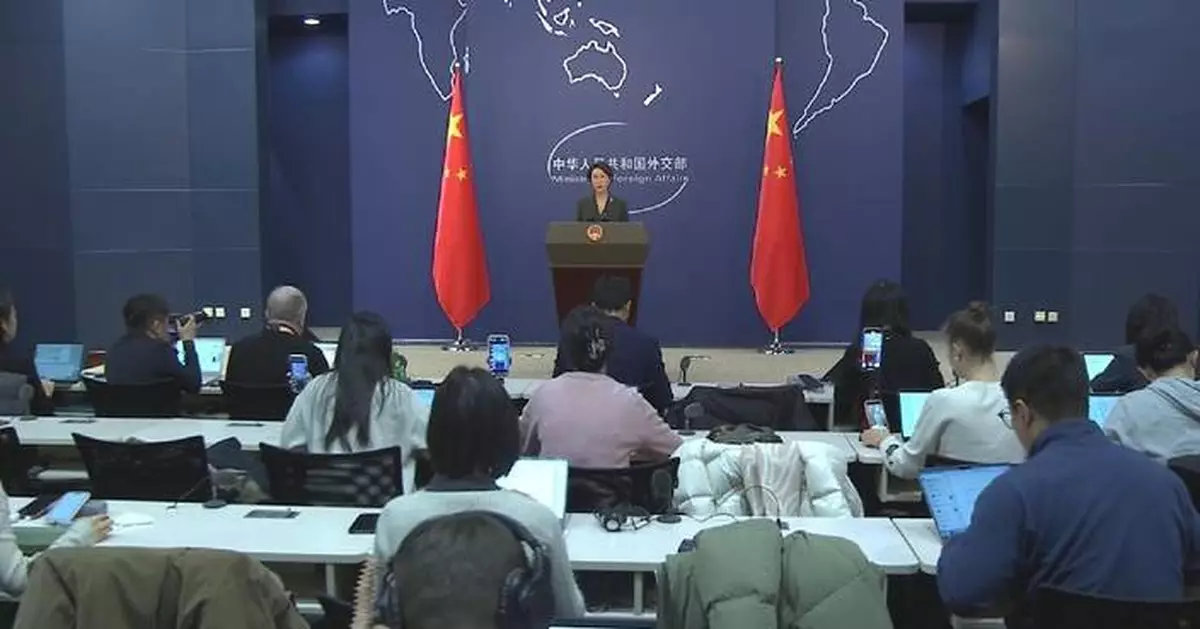
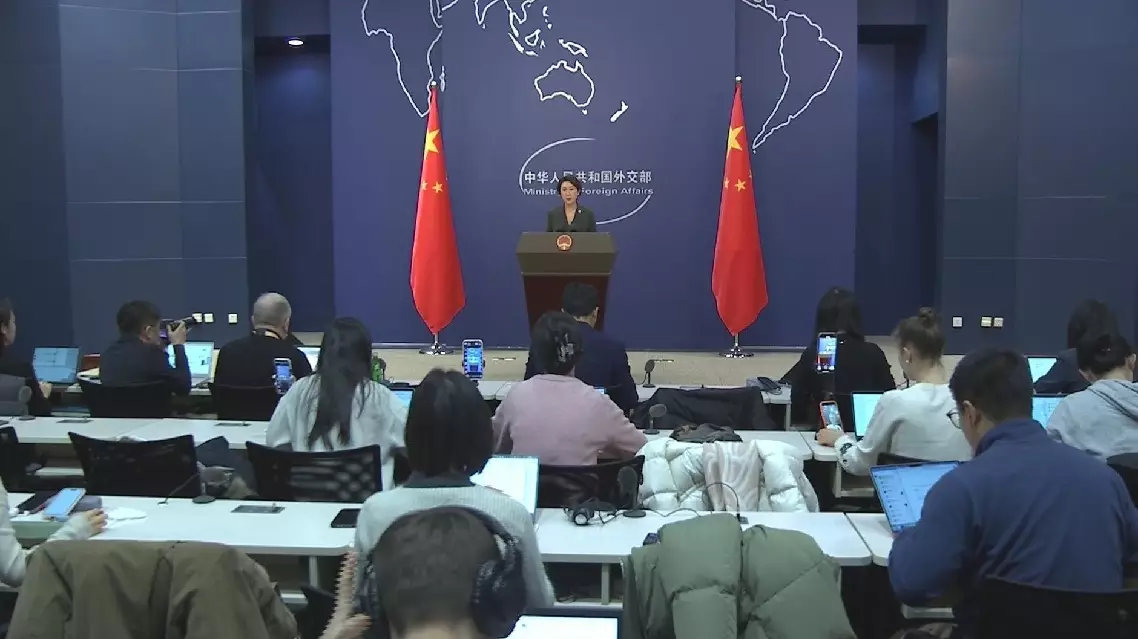
Chinese President Xi Jinping and President of the Republic of Korea (ROK) Lee Jae Myung reached consensus on multiple key issues during Lee's recent state visit to China, said Foreign Ministry spokeswoman Mao Ning at a press briefing in Beijing on Wednesday.
Mao made the remarks in response to a question regarding the significance of Lee's first state visit to China and the future outlook for China-ROK relations.
"At the invitation of President Xi Jinping, President Lee Jae Myung paid a state visit to China from January 4 to 7. During the visit, the two leaders held talks, exchanged New Year greetings, and had in-depth discussions on bilateral relations as well as regional and international issues. The two leaders set the direction for further deepening of the China-ROK strategic cooperative partnership. The two sides reached important consensus on respecting each other's core interests and major concerns, aligning development strategies, enhancing policy coordination, and strengthening cooperation in international and multilateral affairs," said Mao.
"Premier Li Qiang and Zhao Leji, chairman of China's National People's Congress Standing Committee, also held separate meetings with President Lee Jae Myung during his visit. China stands ready to work with the ROK to fully implement the consensus reached by the two presidents, enhance communication and coordination, deepen cooperation across various sectors, expand common interests, and deliver more tangible outcomes that benefit the people of both nations," said the spokeswoman.
China, ROK presidents reach broad consensus during state visit: spokeswoman
Taoiseach of Ireland Micheal Martin, who wrapped up his five-day official visit to China, has praised China's progress in areas such as digital economy and green energy, saying Ireland is willing to deepen economic and trade cooperation with China in emerging sectors while enhancing cooperation on multilateral affairs.
It is Martin's first visit to China since taking office and the first by an Irish prime minister in 14 years.
Speaking during a joint interview with Chinese media outlets in Beijing, Martin spoke positively of the steady development of bilateral relations in recent years, highlighting closer people-to-people exchanges and growing ties in higher education.
"We now have a direct flight between Dublin and China and that's very important in terms of people to people. Our education links are very strong and we have many partnerships between Irish higher education institutions and Chinese higher education institutions and that's important," he said.
Martin said economic and trade ties remain a key pillar underpinning the sound development of bilateral relations.
He recalled that bilateral trade has seen exponential growth since his first visit to China 20 years ago, when he served as minister for enterprise, trade and employment.
Looking ahead, he expressed expectations for expanded cooperation with China in such emerging fields as digital economy and green transition.
"We will be embarking on a major investment in offshore renewables over the next decade. We already are in the planning process. It's a windy island, so we have a lot of wind to harness for energy. So we do see opportunities in AI as well. Ireland is a very strong location for investment, as a member of the European Union, the only English-speaking country now in the Eurozone and in the European Union. And it's a good access point to the European consumer market. We believe there's a greater opportunity for Chinese companies to locate in Ireland," he said.
As Ireland is set to assume the rotating presidency of the European Union (EU) in the second half of 2026, Martin said Ireland adopts a pragmatic policy towards China within the EU and stays committed to promoting a EU-China relationship framework that effectively manages differences while expanding mutually beneficial cooperation.
"What is important is that we continue to dialogue and see can we develop frameworks of agreement on the big picture. The WTO is also very important forum for resolving trade issues. Both Europe and China would acknowledge that industrial resilience, economic security issues are important issues, but that has to be balanced with an open free trade environment. So we are against tariffs. We think tariffs are ultimately damaging to the world economy," he said.
At the invitation of Chinese Premier Li Qiang, Martin paid an official visit to China from Jan 4 to 8. In addition to Beijing, he also visited Shanghai.

Irish Taoiseach sees broader cooperation with China in emerging sectors