SAN MATEO, Calif.--(BUSINESS WIRE)--Jan 7, 2026--
Roblox Corporation (NYSE: RBLX), an immersive gaming and creation platform, announced that starting today, users in the U.S. will be required to complete an age check to chat with others. Over the next week, this requirement will roll out to all regions where chat is available. With this change, Roblox becomes the first large online gaming platform to require age checks for users of all ages to access chat. This marks an important investment in user safety and enables age-appropriate communication and limits conversations between adults and minors.
This press release features multimedia. View the full release here: https://www.businesswire.com/news/home/20260107986568/en/
Roblox began requiring the age check for chat access in December in Australia, New Zealand, and the Netherlands, following its phased rollout announcement in November. To date, over 50% of daily active users in Australia, New Zealand, and the Netherlands have already completed the age check. Globally, tens of millions of users have already completed the age check, and Roblox anticipates many more to follow.
“Our commitment to safety is rooted in delivering the highest level of protection for our users,” said Matt Kaufman, Chief Safety Officer at Roblox. “By building proactive, age-based barriers, we can empower users to create and connect in ways that are both safe and appropriate.”
Taking a Privacy-Focused Approach to Age Checks
Age checks are private, fast, and secure, and completed through the Roblox app using the device’s camera in seconds. Images and videos completed through Facial Age Estimation are securely processed by our vendor, Persona, and deleted immediately after processing. Users age 13 and up can also choose to verify their age through ID verification. Age checks are totally optional; however, features like chat will not be accessible unless an age check is complete.
In cases that may need correcting, Roblox has customer support systems and appeal processes for users to report inaccuracies. For example, users who want to appeal their age check can verify their age using alternative methods, including ID verification or parental controls that allow parents to update their child’s age. Roblox does not stop once the age-check process is complete. Leveraging multiple signals, Roblox is constantly evaluating user behavior to determine if someone is significantly older or younger than expected. In these situations Roblox will soon begin asking users to repeat the age-check process.
Age Groups and Chat Access
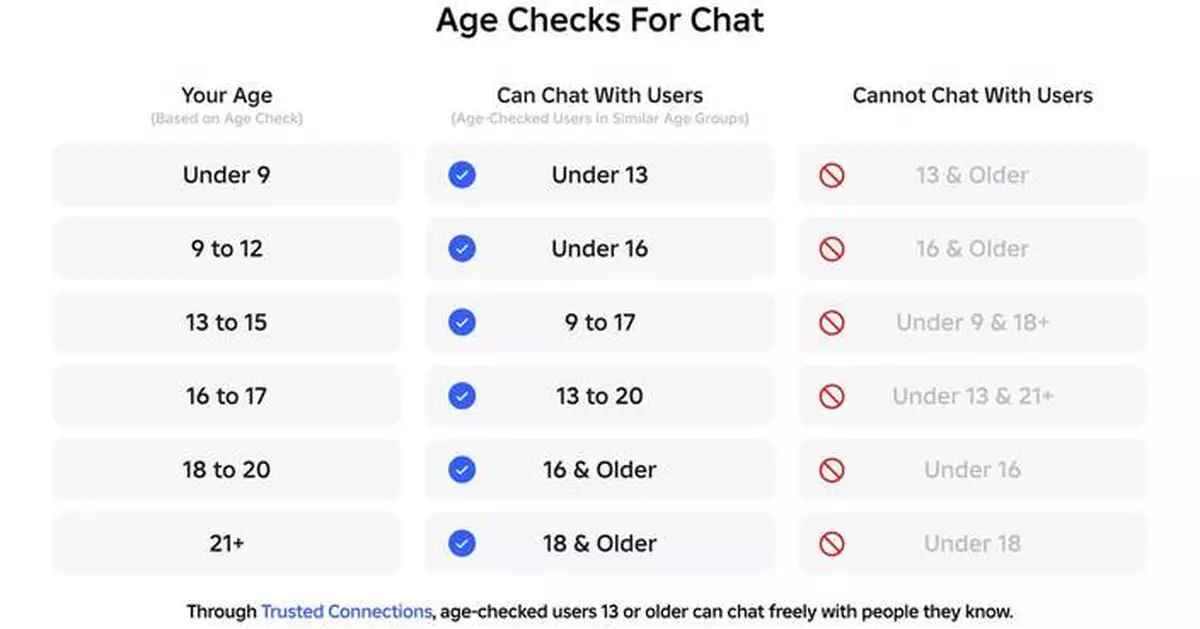
Once users complete an age check, they are assigned to one of six age groups: under 9, 9–12, 13–15, 16–17, 18–20, and 21+. By default, users in each age group can chat with users in the groups directly above and below theirs (i.e., users 9-12 can chat with users in their own group, as well as those in the under 9 and 13-15 groups.)
To safeguard Roblox’s youngest users, chat is turned off by default for children under age 9, unless a parent provides consent after an age check.
Tools for Parents and Caregivers
Parents can gain more visibility into their child’s experience on Roblox with Roblox’s parental controls, which allow them to review their child’s age-check status, update a child’s birthday, and more. Additionally, parents can visit Roblox’s Safety Center, a dedicated resource for parents and caregivers that provides clear guides and tools to help them make informed decisions, set up parental controls, and support their child’s online experience.
Multilayered Approach to Safety
Requiring age checks for chat is a key step in Roblox’s broader approach to safety, which also includes strict communication rules for minors, proactive content moderation, and robust parental controls. This work will enable several upcoming enhancements, including requiring age checks for creators to access Roblox Studio’s real-time collaboration features and systems to make it easier for children to chat with their parents and siblings in different age groups.
Resources
About Roblox
Roblox is an immersive gaming and creation platform that offers people millions of ways to be together, inviting its community to explore, create, and share endless unique experiences. Roblox’s vision is to reimagine the way people come together—in a world that’s safe, civil, and optimistic. To achieve this vision, Roblox is building an innovative company that, together with the community, has the ability to strengthen the social fabric and support economic growth for people around the world. For more about Roblox, please visit corp.Roblox.com.
Roblox and the Roblox logo are among the registered and unregistered trademarks of Roblox Corporation in the United States and other countries. © 2026 Roblox Corporation. All rights reserved.
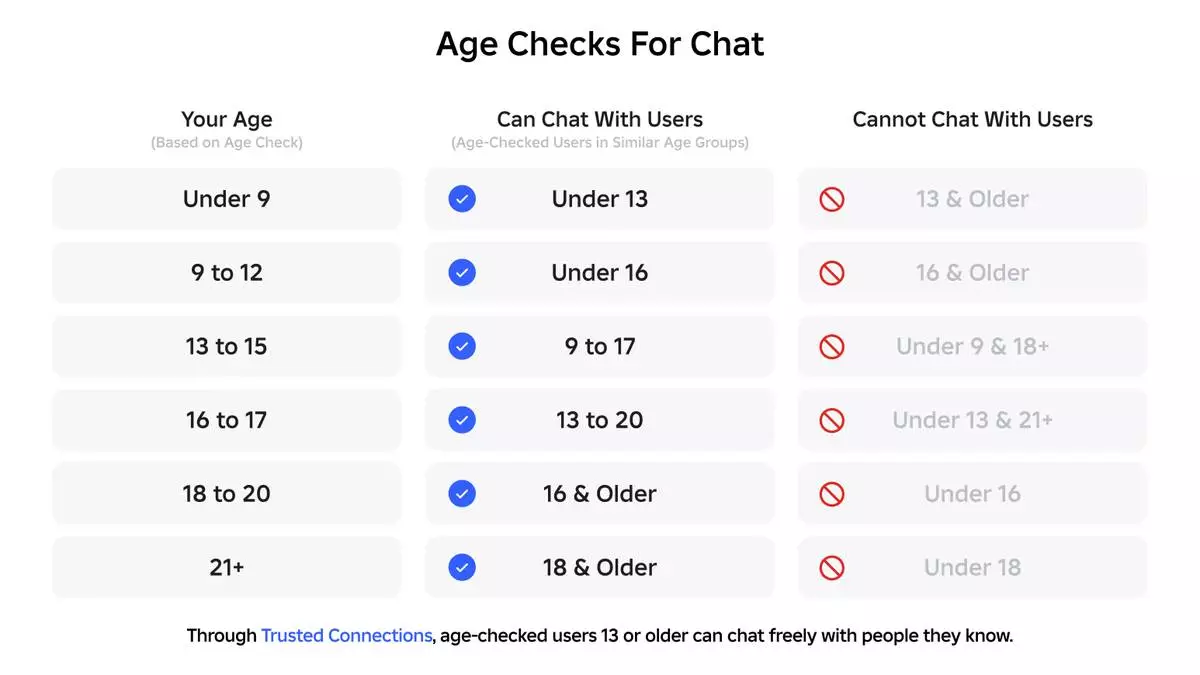
Age groups shown are for Roblox chat. Age groups may vary by region and product.
The Supreme Court on Tuesday upheld a broad conception of birthright citizenship, rejecting President Donald Trump’s executive order declaring that children born to parents who are in the United States illegally or temporarily are not American citizens.
The decision, in line with the longstanding judicial interpretation of the 14th Amendment, comes on the final day of a Supreme Court term that has centered on Trump’s expansive claims of presidential power — and largely ruled in his favor.
In its other Tuesday rulings, the court upheld laws in roughly half the states that prohibit transgender girls and women from playing on their public school and college sport teams and struck down limits on party spending in federal elections.
Here's the latest:
The conservative-leaning Institute for Free Speech hailed the decision as “a landmark victory for the First Amendment.”
“More than half the states have operated for years without restricting coordinated party expenditures, and there is no evidence of the corruption the federal government fears,” institute senior attorney Brett Nolan said. “The Court corrected a two-decade-old mistake.”
Meanwhile, Jacquelyn Lopez and Rachel Jacobs, partners in the Elias Law Group, which represents Democrats in voting rights cases and election contests, said the decision “needlessly” destroyed “a long-standing pillar” of federal campaign finance laws.
However, they also said Republicans have “pushed the boundaries” of the limits to help weak candidates. They said the Elias Law Group had anticipated the outcome for months.
“In the long run, Democratic campaigns will benefit from the level playing field this ruling provides,” they said. “Now, both parties are free to offer unlimited support to their candidates, not just the party willing to ignore the law to do so.”
Norman Wong, the great-grandson of Wong Kim Ark, the Chinese American cook at the center of the landmark 1898 Supreme Court decision establishing birthright citizenship, applauded Tuesday’s ruling.
“My great grandfather, Wong Kim Ark, never set out to become a symbol. He was one man, only a cook, and yet he stood up for what was right, and I believe that it has made a difference,” Wong said in a statement. “As a result, he stood up for the rights of all of us Americans — it just so happens that I am related to him. Today’s ruling shows that his victory remains as important now as it was in 1898.”
For a Mexican mother with six children born in the United States — ranging in age from 18 years to 18 months — the Supreme Court’s decision brought happiness.
“I am happy for our children,” the 38-year-old woman said in a telephone interview. “I am happy because they don’t face any risk like we do.”
The woman, who asked not to be identified for fear of being detained and deported, crossed the U.S.-Mexico border in 2007 in search of a better life. She has not applied for asylum or any other immigration status.
She works at a plant nursery in South Florida, where her children attend school.
The woman said one of her children called her as soon as he found out about the decision to share his joy with her.
“By the grace of God, the president does not manage to do everything he wants,” the mother said. “I was confident that, with God’s help, he would not succeed.”
The head of Global Refuge said the Supreme Court averted a catastrophe with its 6-3 opinion upholding the 14th Amendment and rejecting the Trump administration’s attempt to overturn a Reconstruction era amendment.
“Birthright citizenship survived the Chinese Exclusion Act, Jim Crow, and today, it survived an executive order that would have essentially turned the maternity ward into a customs checkpoint,” said Krish O’Mara Vignarajah, President and CEO of Global Refugee.
“The Justices rightly recognized that the U.S. Constitution is clear and unambiguous: if you are born in this country and subject to its jurisdiction, you are a citizen of this country,” she said. Vignarajah said a different outcome would have denied citizenship to more than 250,000 children born in the U.S. each year.
“This was a constitutional stress test.”
The president applauded a Supreme Court ruling that struck down a federal election law and made it easier for major donors to avoid caps on individual contributions to candidates by going through the party.
“A BIG WIN FOR REPUBLICANS and, more importantly, The First Amendment!” Trump posted on social media.
The Republican leader’s news conference was interrupted by the ruling as reporters instantly sought a real-time reaction.
“Oh dear,” Johnson said as a reporter read out the decision.
Johnson said he believes it will subject the country to “serious challenges going forward and we’ll have to deal with that.”
Johnson, who has worked as a constitutional lawyer primarily on religious issues, said the 14th Amendment is being abused by people who are coming to the U.S. to have children in a “birthing tourism trend.” It’s not illegal but is a practice the Trump administration has tried to reduce.
Sen. Eric Schmitt of Missouri called the Supreme Court’s decision “wrong, dangerous, and disastrous for American sovereignty and the American people.” He denounced the decision’s majority, including “squish conservatives,” in a post on X.
Schmitt added that Congress may need to act to restrict birthright citizenship following the court’s ruling.
“I will be announcing a forthcoming constitutional amendment to restore the sacred bond between American citizens and their government,” Schmitt wrote.
He said the amendment “will ensure that citizenship once again reflects allegiance, permanence, and membership in the American nation.”
“This decision confirms a truth that generations of Americans have lived by: a child born on this soil is a citizen of this nation,” Roman Palomares, president of the League of United Latin American Citizens, said in a statement. “The Court has made clear that no president can override the Constitution by decree.”
LULAC was one of the plaintiffs in the birthright citizenship case. The organization sued the Trump administration last year over the president’s executive order restricting birthright citizenship.
In her dissent on the West Virginia transgender athlete case, Sotomayor emphasized that Becky Pepper-Jackson, a 16-year-old high school sophomore, identified as a girl at a young age and started hormone therapy before going through puberty as a male.
That matters, Sotomayor said.
The justice did not argue that West Virginia could not set policies that set restrictions on transgender participation in girls’ sports to ensure safety and fairness. Such a policy, Sotomayor argued, could conceivably allow Pepper-Jackson to compete as she wishes. Meanwhile, the justice wrote, an absolute ban could violate the Constitution’s equal protection clause.
But the immediate issue, Sotomayor said, is that courts haven’t resolved the factual question of whether Pepper-Jackson’s circumstances put her on the same competitive level with other female athletes. Sotomayor said justices should have returned the case to lower courts to settle that question.
West Virginia Gov. Patrick Morrisey, a Republican, hailed Tuesday’s Supreme Court decision barring transgender athletes from girls’ and women’s sports, while the American Civil Liberties Union senior lawyer Joshua Block called it “heartbreaking.”
Morrisey said the decision “will be remembered as one of the most important victories for women’s athletics since the enactment of Title IX itself…We defended a simple principle most Americans instinctively understand: that women’s sports exist to provide women and girls a fair opportunity to compete and succeed.”
Block said: “The reality is that the equality of transgender women and girls takes nothing away from, and in fact promotes, the equality of all women and girls. We will continue to advance the fundamental principle that all young people deserve equal opportunity to thrive and succeed.”
Becky Pepper-Jackson is at the center of Supreme Court decision upholding states’ ban on transgender athletes participating in girls’ and women’s sports.
The teenager from Bridgeport, West Virginia, is a state-qualifying track and field athlete who placed third in the 2025 discus competition.
Six years ago, at age 11, Pepper-Jackson challenged a then-new state law banning trans athletes from competing in female sports in middle school, high school and college.
Now, in high school, Pepper-Jackson is the only trans person who’s sought to compete in girls sports in West Virginia.
Tuesday’s ruling means Pepper-Jackson’s recently completed track season will be her last in the state.
After President Trump took office for his second term, the Federal Election Commission dropped its defense of the law limiting party spending and joined with Republicans in urging that it be overturned.
Democrats had called on the court to uphold the law, even though there’s wide agreement that the spending limits have hurt political parties in an era of unlimited spending by other organizations.
Entrenched divisions between liberal and conservative justices over campaign finance restrictions were on display when the court heard arguments in December.
“Every time we interfere with the congressional design, we make matters worse,” said Justice Sonia Sotomayor, a dissenter in Citizens United and the court’s other campaign money cases.
By contrast, Justice Samuel Alito, a member of the Citizens United majority, described the decision as “much maligned, I think unfairly maligned.” The effect of the decision was to ”level the playing field,” Alito said, by expanding the right to spend freely that had previously belonged only to media companies.
“Birthright citizenship for children of illegal aliens will continue to be a ballooning negative consequence of the failure to enforce our immigration laws,” said Dale Wilcox, executive director and general counsel of the Federation for American Immigration Reform. “But that very fact makes it all the more urgent to step up enforcement to the maximum possible extent and end illegal immigration.”
The president has made his opposition to transgender athletes a key feature of his speeches and he embraced the Supreme Court decision that states can ban the athletes from girls and women’s teams.
“BIG WIN,” Trump said on social media. “Wow! That takes that ridiculous situation off the table!!!”
“The Justices rightly recognized that the U.S. Constitution is clear and unambiguous: if you are born in this country and subject to its jurisdiction, you are a citizen of this country,” Krish O’Mara Vignarajah, the head of Global Refuge, a nonprofit that works with immigrants, said in a statement. “Birthright citizenship survived the Chinese Exclusion Act, Jim Crow, and today, it survived an executive order that would have essentially turned the maternity ward into a customs checkpoint.”
“Today, the Supreme Court defended the soul of this country and the very definition of what it means to be an American,” Voto Latino President Maria Teresa Kumar said in a statement.
She added: “By reaffirming that every child born on American soil is a citizen, the court chose to embrace our multiracial and multicultural reality, rather than succumb to a political agenda rooted in the fear of it.”
“Citizenship, then and now, was the right to have rights — to freely participate in our political community. The Framers of the Fourteenth Amendment extended that promise to ‘every free-born person in this land,’” Chief Justice John Roberts wrote for the court, citing congressional debate over the amendment. “We keep that promise today.”
Unlike much of the world, birthright citizenship is common across North, Central and South America. Many legal historians believe the roots of that geographic divide reach back more than 500 years, when European nations began sending settlers to their American colonies.
Europe’s aristocrat rulers wanted to encourage people to move to the colonies, but those colonists wanted their children — even if born overseas — to hold on to their European citizenship.
The practice remained in place as independence movements began to take shape and as independent nations began to emerge.
“By then, their legal traditions had already started to form,” said César Cuauhtémoc García Hernández, a law professor at Ohio State University. “So by and large they continued some of the key legal practices of the colonial European governments that they had just severed ties with.”
“Trump’s attempted assault on the 14th Amendment was dealt a major blow today. This decision is a powerful affirmation of the Constitution and the enduring promise of equality it represents,” said NAACP President Derrick Johnson. “For over 150 years, the Fourteenth Amendment has guaranteed citizenship to everyone born in this country. Today, the court rightly rejected efforts to undermine that core protection and instead upheld a principle that is essential to our democracy.”
Many of those pages are from the dissent penned by Justice Thomas and joined by Gorsuch. The majority opinion is 26 pages long, Thomas’s dissent runs to 91 pages.
In upholding a broad conception of birthright citizenship, the court rejected President Donald Trump’s executive order declaring that children born to people who are in the United States illegally or temporarily are not American citizens.
The justices relied on a long-settled understanding of the 14th Amendment, adopted after the Civil War, and more recent federal laws in ruling that anyone born in the country, with very limited exceptions, is a citizen.
The Republican president’s restrictions had been blocked by several lower courts and had not taken effect anywhere in the U.S.
During arguments in April, both conservative and liberal justices questioned the order’s legality in a momentous case that was magnified by Trump’s unprecedented attendance in the courtroom.
▶ Read more
“Today’s news has nothing to do with safety or fairness in sports,” Trevor Project CEO Jaymes Black said in a statement. “These rulings only serve to send a message to transgender and nonbinary young people that says, ‘you don’t belong.’”
The Supreme Court on Tuesday erased limits on how much political parties can spend in coordination with candidates for Congress and president, striking down a federal election law that’s more than 50 years old.
Prodded by a Republican-led lawsuit that includes Vice President JD Vance, the court’s conservative justices were again in the majority of the latest decision that upended congressionally enacted limits on raising and spending money to influence elections. The court’s 2010 Citizens United decision opened the door to unlimited independent spending in federal elections.
The limits on party spending stem from a desire to prevent large donors from skirting caps on individual contributions to a candidate by directing unlimited sums to the party, with the understanding that the money will be spent on behalf of the candidate.
The Supreme Court had previously upheld the limits in 2001.
▶ Read more
“The Supreme Court gave cover to a campaign whose stated goal is to deny constitutional projections to trans people,” Imara Jones, CEO of TransLash Media, said in a statement. “The ultimate objective is to establish the cocktail of laws and systemic marginalization that will allow those in power to exclude larger and larger groups of Americans.”
“Sports are generally zero sum,” Kavanaugh said in the majority opinion. “Every biological male who makes the team takes a roster spot from a female athlete. Every biological male who earns playing time reduces the playing time of a female athlete. Every biological male who starts takes a starting position from a female athlete. Every biological male who wins a race takes the gold medal away from a female athlete.”
The ruling is another setback for transgender people.
The court’s conservative majority, which has repeatedly ruled against transgender Americans in the past year, ruled that state bans in Idaho and West Virginia don’t violate the Constitution or the federal law known as Title IX, which prohibits sex discrimination in education.
More than two dozen other Republican-led states have adopted bans on female transgender athletes, and the decision seems certain to extend to them as well.
Left unresolved by the outcome are lawsuits challenging state laws and regulations in Connecticut, California and elsewhere that permit transgender athletes to compete consistent with their gender identity.
▶ Read more
The justices are weighing Trump’s appeal of a lower-court ruling from New Hampshire that struck down the citizenship restrictions, one of several courts that have blocked them.
Trump signed the birthright citizenship order on the first day of his second term, but the restrictions have not taken effect anywhere in the country.
In oral arguments, Sauer, the lawyer for Trump’s administration, said that birthright citizenship encourages illegal immigration and “rewards illegal aliens who not only violate the immigration laws but also jump in front of those who follow the rules.”
The practice “demeans the priceless and profound gift of American citizenship,” he told the court.
But the American Civil Liberties Union, which is challenging Trump’s order, sees it very differently.
“It’s one of the clearest statements of who we are as a country,” the ACLU said in a statement. “No matter who your parents are, if you’re born here, you belong here.”
Most Americans say they believe in birthright citizenship, though many are conflicted about exactly who it should apply to.
An April survey by The Associated Press-NORC Center for Public Affairs Research of more than 2,500 U.S. adults found that about two-thirds say children born in the U.S. should get automatic citizenship. That number drops to 44% for Republicans.
But the poll also showed ambivalence when it came to specifics.
For example, 75% of U.S. adults support automatic citizenship for children born in the U.S. to parents in the country on work visas. Only about half, though, believe in it for children born to parents who are illegally in the country.
The 5-4 decision rejected a Republican-led attack on laws in more than half the states and the District of Columbia that permit mailed ballots to arrive and be counted some number of days after the election, provided they are postmarked by Election Day.
The outcome spares officials the headache of changing their ballot rules just a few months before the 2026 midterm congressional elections.
In just over half of those states, the more forgiving deadlines apply only to ballots cast by military and overseas voters.
During oral arguments, even many conservative justices appeared unconvinced by the government’s case.
“I can imagine it being messy in some applications,” Justice Amy Coney Barrett said, asking Solicitor General D. John Sauer about the issue of abandoned infants.
“What if you don’t know who the parents are?” she asked.
Sauer started to say that question was addressed in the U.S. code, but Barrett quickly interrupted him.
“Yeah, yeah, yeah, yeah, but what about the Constitution?” she asked.
Outside of the Americas, most countries follow the legal principle of jus sanguinis, or “right of blood,” with a child’s citizenship inherited from its parents, no matter the place of birth.
In the European Union, for example, no member states grant automatic, unconditional citizenship to children born to foreigners.
But American legal practice is descended in many ways from English common law, which had long provided for citizenship based on a child’s place of birth, the legal concept of jus soli, or “right of soil.”
The UK, though, abandoned jus soli with the British Nationality Act of 1981.
Under the new rules, people born in the UK get citizenship only if at least one parent is a British citizen or has “settled status” under the law.
The court will dive right into the remaining decisions when the justices take the bench at 10 a.m. ET.
The opinions are typically read in ascending order of seniority so that the most junior justice with an opinion goes first. Chief Justice John Roberts, who may well have the decision in the birthright citizenship case, would go last.
Other than at the Federal Reserve, with its role of setting interest rates, the court held that presidents have free rein to fire agency heads at will, despite federal laws that require a cause for such dismissals and a 91-year-old decision that had limited executive authority.
The justices allowed Fed governor Lisa Cook to stay in her job while she fights Trump’s effort to fire her over allegations of mortgage fraud, which she has denied.
With the six conservative justices in the majority, the nine-member court jettisoned its unanimous decision in Humphrey’s Executor that had limited when presidents can fire agencies’ board members — in part to try to ensure decision-making free of political influence.
“We hold that such protection from removal is contrary to the separation of powers enshrined in the Constitution,” Chief Justice John Roberts wrote for the court.
In separate cases, the court will also decide:
Whether states can prohibit transgender athletes from playing on girls’ and women’s public school and college teams.
Whether to uphold a federal law more than 50 years old limiting how much political parties can spend in coordination with candidates for Congress and the president.
Oral arguments for the case lasted more than two hours in a crowded courtroom that included Trump, the first sitting president to attend arguments at the nation’s highest court, and, in seats reserved for the justices’ guests, actor Robert De Niro.
Trump heard his administration’s top Supreme Court lawyer, Solicitor General D. John Sauer, face one skeptical question after another. Justices asked about the legal basis for the order and voiced more practical concerns.
“Is this happening in the delivery room?” Justice Ketanji Brown Jackson asked, drilling down into the logistics of how the government would actually figure out who is entitled to citizenship and who is not.
Chief Justice John Roberts suggested that Sauer was relying on quirky exceptions to citizenship to make a broad argument about people who are in the country illegally. “I’m not quite sure how you can get to that big group from such tiny and sort of idiosyncratic examples,” Roberts said.
Justice Clarence Thomas sounded the most likely among the nine justices to side with Trump.
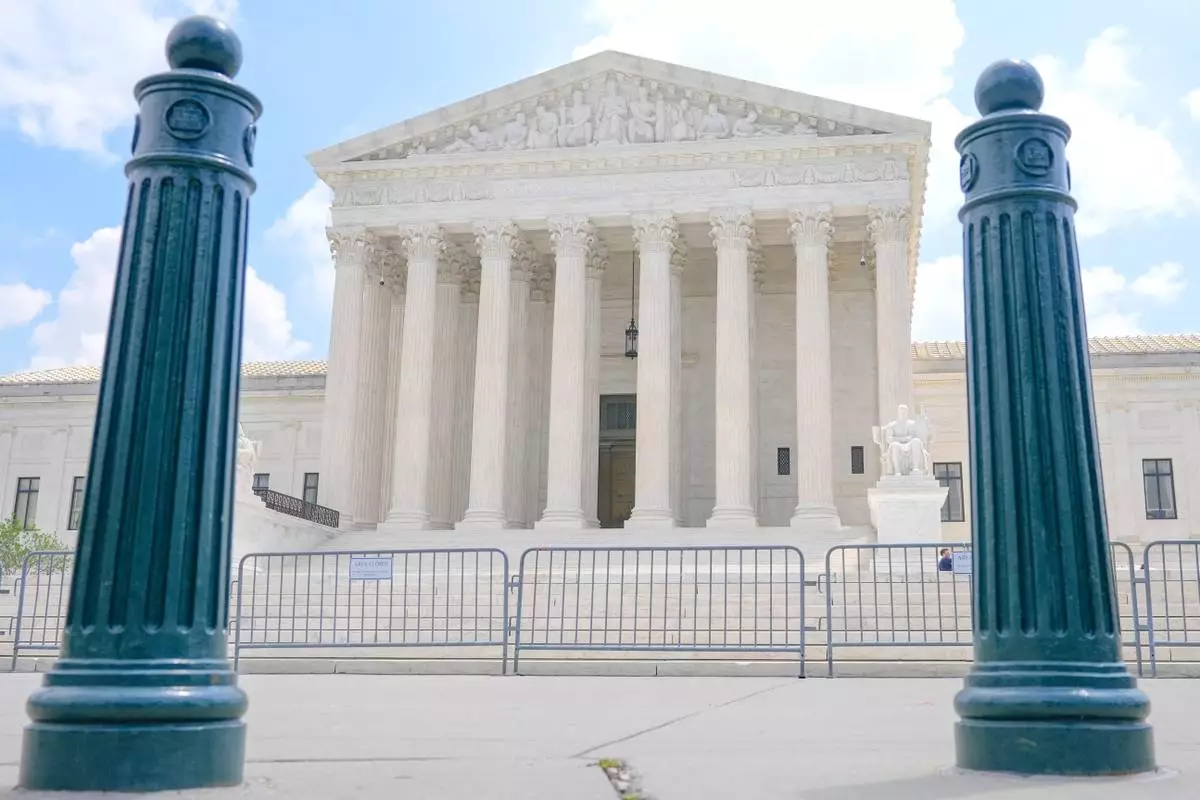
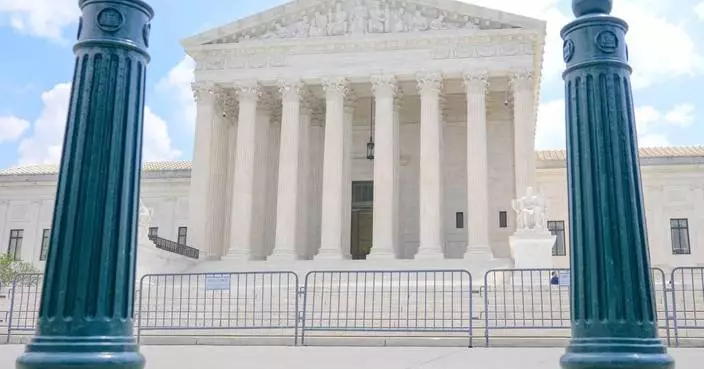
The U.S. Supreme Court is seen Monday, June 29, 2026, in Washington. (AP Photo/Mariam Zuhaib)
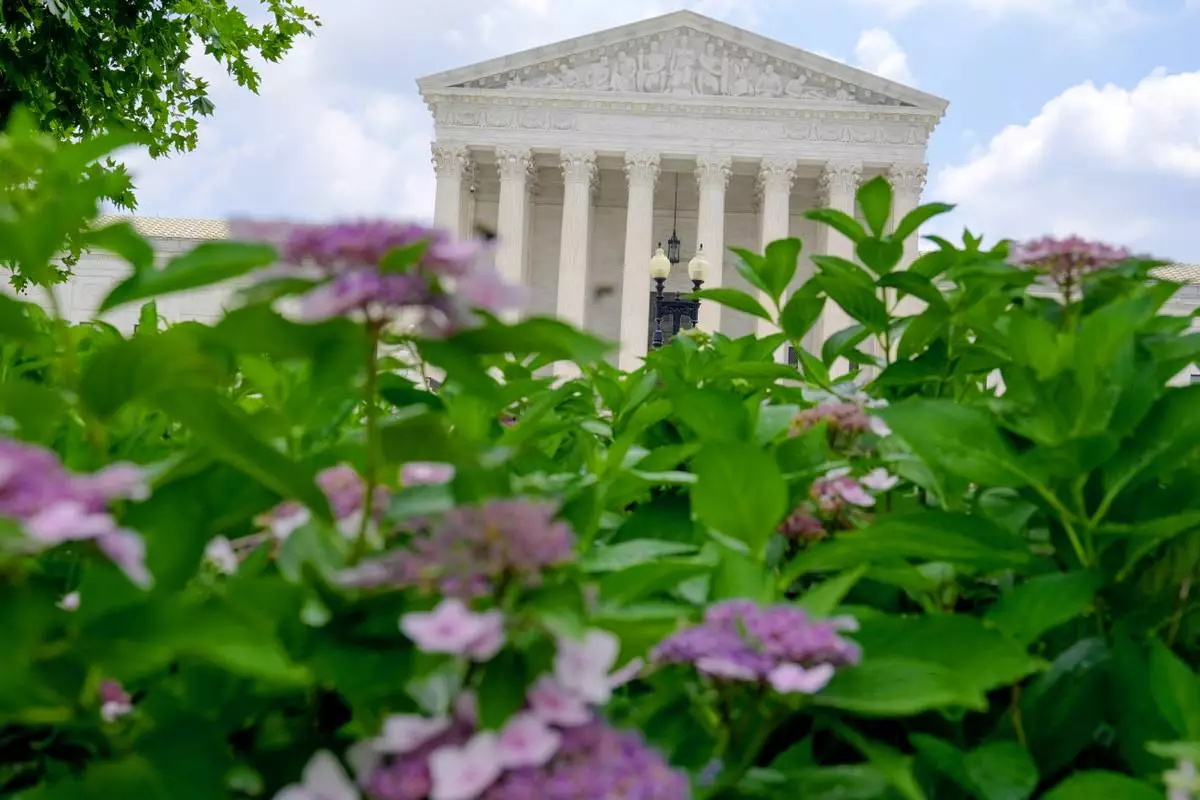
The U.S. Supreme Court is seen Monday, June 29, 2026, in Washington. (AP Photo/Mariam Zuhaib)