PALO ALTO, Calif.--(BUSINESS WIRE)--Jan 7, 2026--
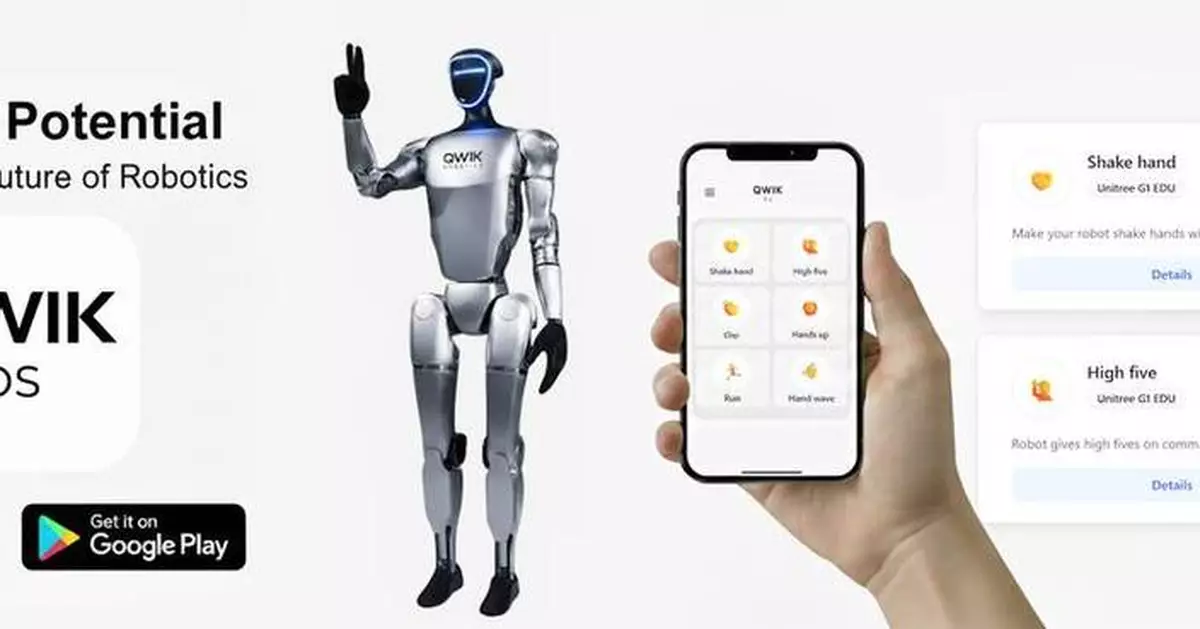
QwikOS officially launches today, introducing a universal mobile application that connects open-SDK humanoid robots and provides a single, consistent interface for accessing each robot’s available commands and community features. QwikOS is designed to complement manufacturer software, firmware, and control systems by providing developers with a universal way to integrate new features they create, while making it easier for everyday robot owners to discover and use them without needing robotics or software-development expertise.
This press release features multimedia. View the full release here: https://www.businesswire.com/news/home/20260107972443/en/
Available Now on iOS and Android
QwikOS is accessible to consumers via the Apple App Store and Google Play, representing the first hardware-agnostic humanoid operating system and app ecosystem available to end users. This release delivers secure infrastructure for the global humanoid development community to deploy, test, and scale applications across varied hardware.
Industry’s First Universal Humanoid App Store
The QwikOS App Store delivers the industry’s first and largest catalog of third-party features and actions built for humanoid robots. QwikOS addresses the prior limitation of requiring developers to commit to a single proprietary platform. Capabilities developed on QwikOS can be published and deployed across any open-SDK humanoid hardware.
Universal Humanoid Hardware
QwikOS integrates with any humanoid robot hardware offering an open-source software developer kit (SDK), standardizing the user experience while underlying robot behavior remains implemented by each device’s SDK. QwikOS has completed production validation on the Unitree Robotics G1 EDU models and is the only third-party operating system supporting the Unitree G1 series. QwikOS brings compatibility to open-source humanoid hardware available now and coming soon (including Pollen Robotics, Booster Robotics, Agibot Tech, MagicLabs Robotics, EngineAI, and LimX Dynamics).
Developer Console & Monetization
QwikOS provides a centralized developer console that enables developers to submit features across multiple humanoid hardware platforms. The platform also enables developers to earn from feature development through the QwikOS App Store, including optional paid features, licensing models, and commercial distribution opportunities where supported. These mechanisms are intended to help developers maintain, improve, and support higher-quality features over time, aligned with real adoption and usage.
Integrations
QwikOS supports integrations with third-party platforms, enabling organizations and developers to extend humanoid capabilities by integrating existing technologies—such as LLMs like ChatGPT and external hardware ecosystems like Meta Quest VR headsets—while presenting these integrations to end users within a single, unified interface for streamlined configuration and control.
Learn More
A detailed whitepaper providing an overview of the platform is available on the QwikOS website. It is designed to help developers, integration partners, and corporate stakeholders understand QwikOS core technology, including how the platform enables standardized application deployment for humanoid robots and integrates with manufacturer SDKs.
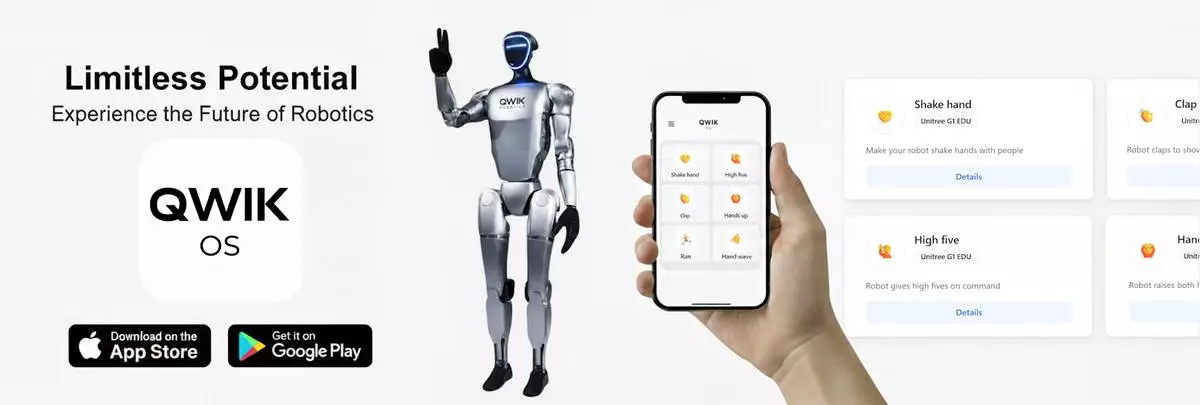
QwikOS Debuts World's First Universal Humanoid Operating System and App Store
CHALON-SUR-SAONE, France (AP) — Belgian rider Tim Merlier earned another stage win at the Tour de France while several riders fell as they sprinted to the line Thursday.
Defending champion Tadej Pogacar avoided the crash and kept his significant overall lead over second-place Jonas Vingegaard after 12 stages.
It was Merlier’s third stage win on this year’s Tour and sixth of his career. Dutch rider Olav Kooij finished second and Jasper Philipsen of Belgium was third.
With riders fighting for position on the home straight, Colombian Fernando Gaviria went down after clipping the wheel of another cyclist and fell to his left, bringing Norwegian rider Soeren Waerenskjold — Wednesday's stage winner — down with him. Just behind them, four other riders had no room to swerve around them and flew over their handlebars.
None of the riders appeared seriously injured and Gaviria eventually crossed the line with the help of a teammate.
Later Thursday, the Caja Rural-Seguros RGA team said the 31-year-old Gaviria sustained a fractured left collarbone and had pulled out of the race.
“There was a lot of chaos and a mix of teams at the front of the peloton,” teammate Stefano Oldani said, describing the crash. "I saw him lying on the road next to two Lotto (team) riders and I realized straight away that he’d taken a nasty hit.”
Four-time Tour champion Pogacar remains 3 minutes, 36 seconds ahead of two-time champion Vingegaard and 4:06 ahead of Remco Evenepoel in third place.
Pogacar had extended his overall lead Tuesday after another trademark attack in the 10th stage.
Stage 12 was a mostly flat 179-kilometer (111-mile) route starting from the Magny-Cours track, which once hosted Formula 1 races, and ending in Chalon-sur-Saône in eastern France.
Frenchman Baptiste Veistroffer forged ahead on his own until he was caught by a group of 14 riders heading into the last 30 kilometers. They were caught by the hard-chasing peloton soon after, and just before the third of three minor climbs.
With teams looking to place their sprinters into the best position to attack it was a nervy approach to the finish line.
Philipsen's Alpecin-Premier Tech team put three riders at the front to help him but they attacked too soon, as they did in previous stages, and Philipsen is still looking for his first victory at this year's race.
Merlier said having his wife and young son at the race “gave me a lot of motivation.”
"Winning for them is special,” Merlier said. “I managed to find the opening, I had to stay calm and wait. It was a finale and a finish that suited me very well.”
Friday's 13th stage is the longest of this year's race at 206 kilometers and features a sharp Category 1 climb — the second-hardest category in the Tour — toward the end.
AP sports: https://apnews.com/sports
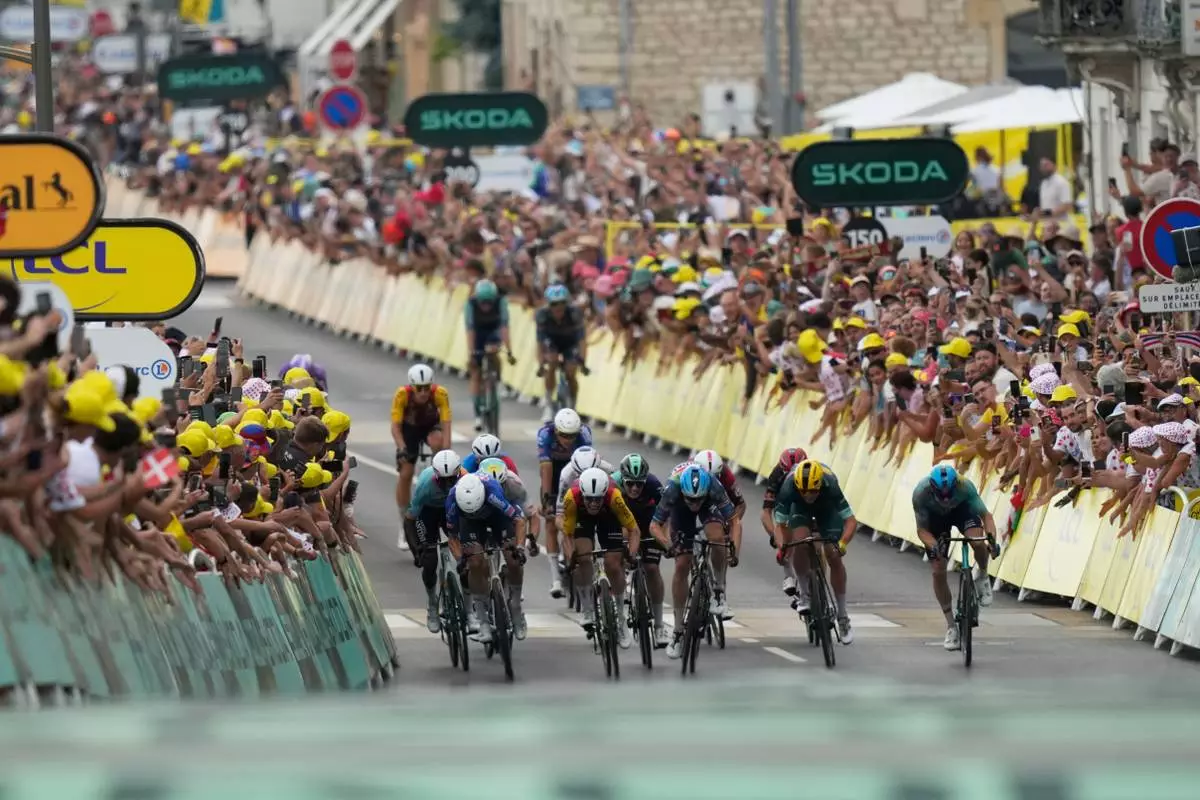
Riders sprint to the finish line of the twelfth stage of the Tour de France cycling race with start in Circuit Nevers Magny-Cours and finish in Chalon-sur-Saone, France, Thursday, July 16, 2026. (AP Photo/Mosa'ab Elshamy)
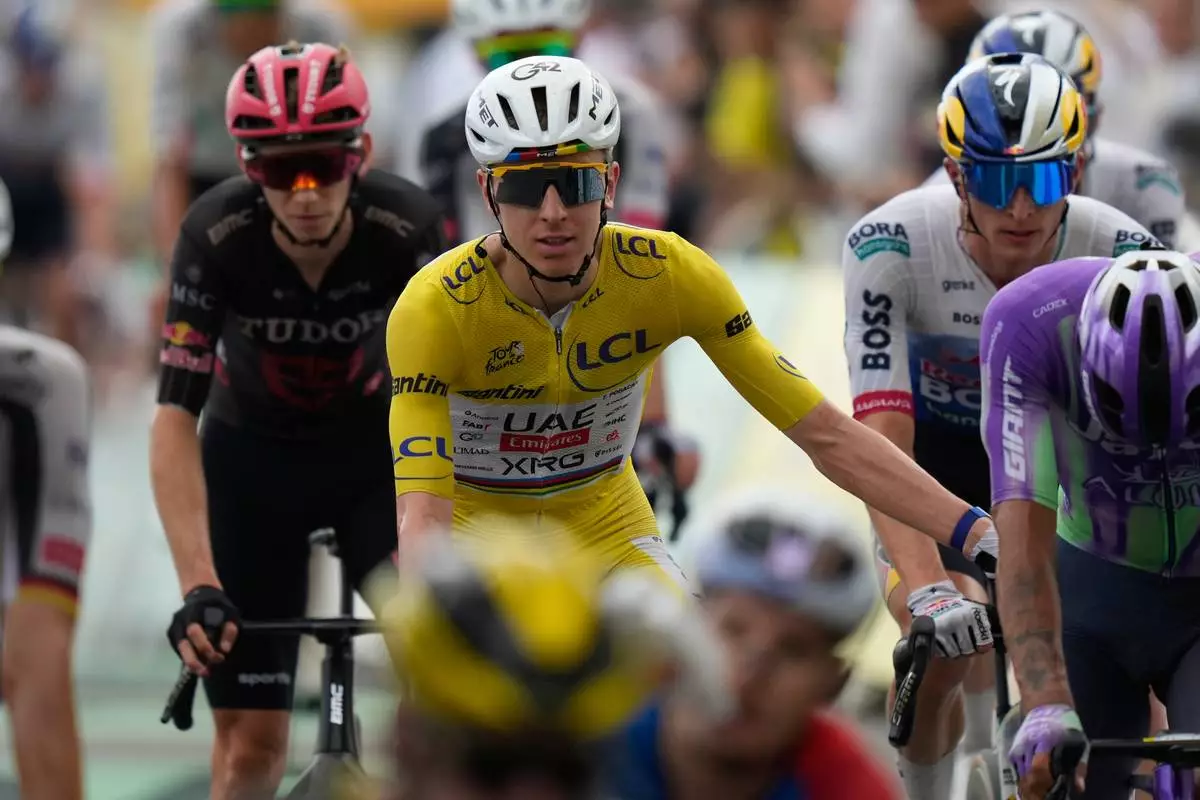
Slovenia's Tadej Pogacar, wearing the overall leader's yellow jersey crosses the finish line of the twelfth stage of the Tour de France cycling race with start in Circuit Nevers Magny-Cours and finish in Chalon-sur-Saone, France, Thursday, July 16, 2026. (AP Photo/Mosa'ab Elshamy)
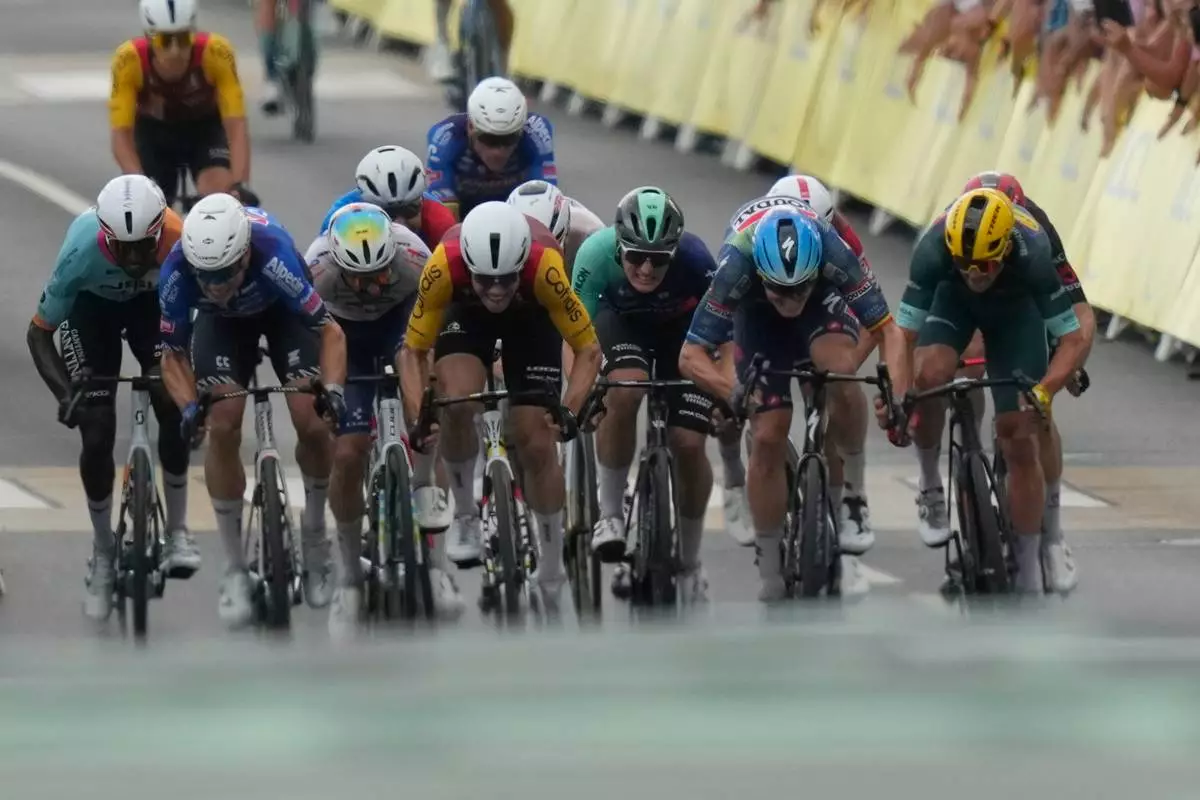
Riders sprint to the finish line of the twelfth stage of the Tour de France cycling race with start in Circuit Nevers Magny-Cours and finish in Chalon-sur-Saone, France, Thursday, July 16, 2026. (AP Photo/Mosa'ab Elshamy)
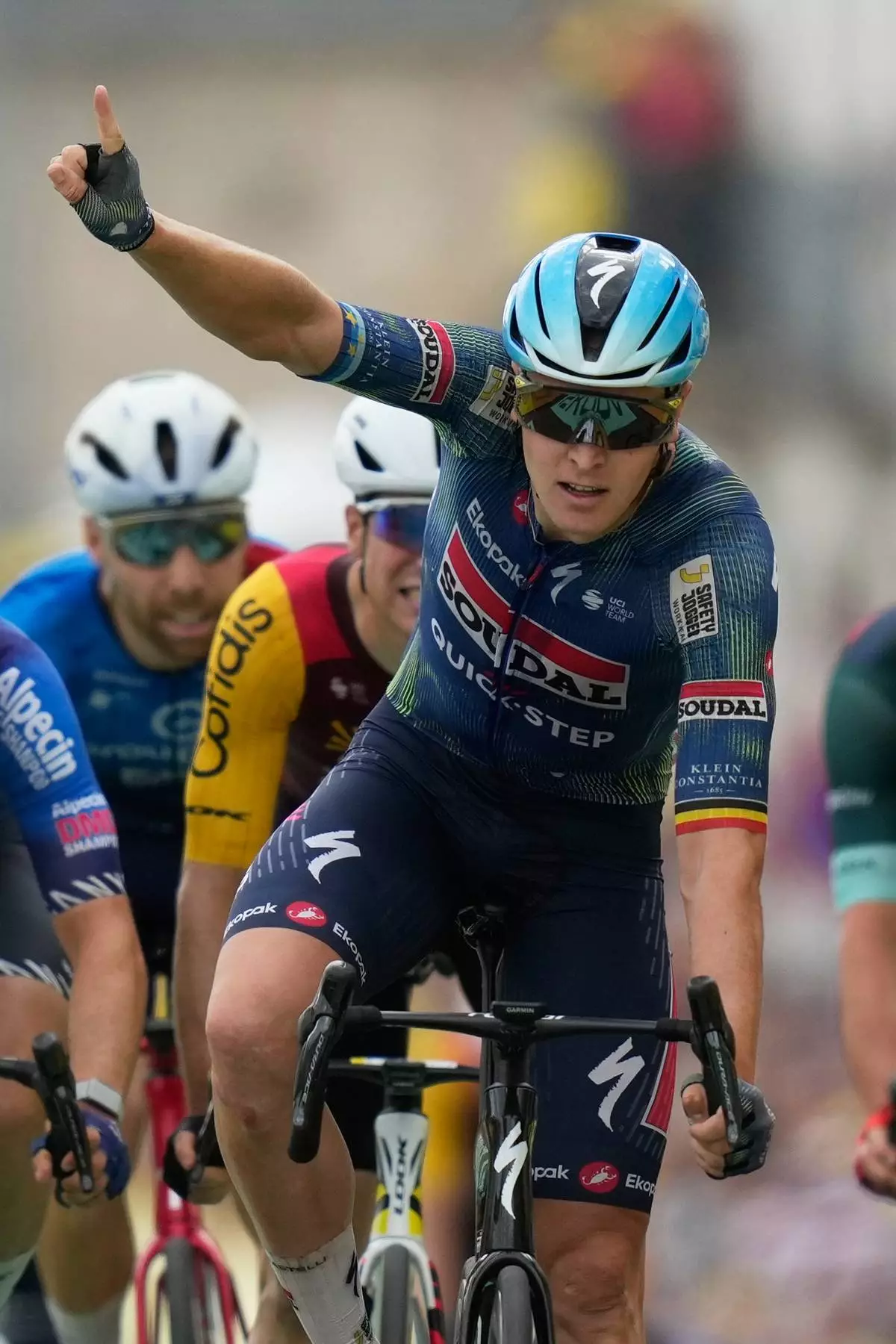
Belgium's Tim Merlier celebrates as he crosses the finish line to win the twelfth stage of the Tour de France cycling race with start in Circuit Nevers Magny-Cours and finish in Chalon-sur-Saone, France, Thursday, July 16, 2026. (AP Photo/Mosa'ab Elshamy)
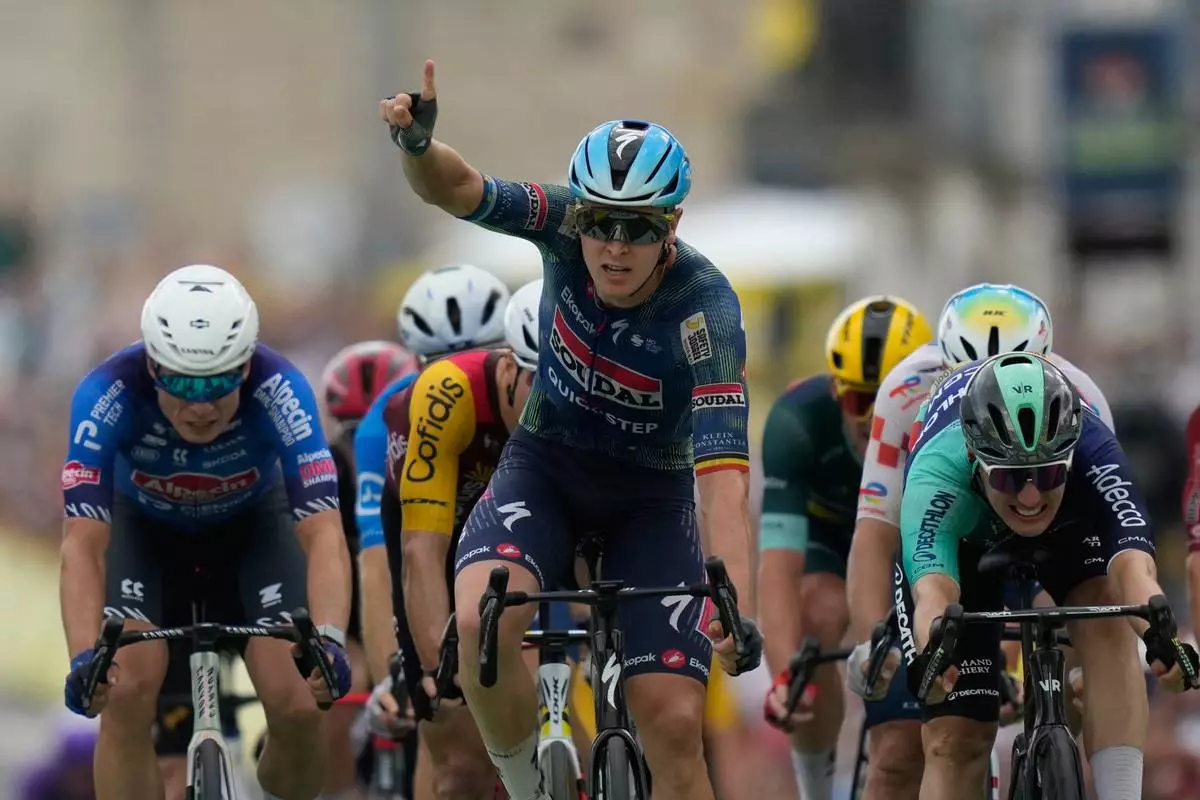
Belgium's Tim Merlier celebrates as he crosses the finish line to win the twelfth stage of the Tour de France cycling race with start in Circuit Nevers Magny-Cours and finish in Chalon-sur-Saone, France, Thursday, July 16, 2026. (AP Photo/Mosa'ab Elshamy)