Port Sudan has emerged as a vital digital lifeline for Sudan, as fighting across the country has severely crippled telecommunications infrastructure.
The Red Sea city is now essential for data traffic, government services, and banking operations, providing a crucial connection to the outside world.
Historically known as a gateway for trade and humanitarian aid, Port Sudan has taken on a critical technological role amid the conflict, keeping the nation connected as networks in multiple states are damaged or shut down.
With fiber-optic links disrupted, much of the war-torn country's international data traffic now relies on undersea cable routes that land near Port Sudan, supported by satellite backup systems designed for emergencies.
Government offices, media outlets, aid agencies, and millions of civilians depend on this fragile yet essential flow of information.
Engineers working to maintain the network face increasing challenges due to power shortages, security risks, and limited access to equipment. Despite these obstacles, core connectivity has been preserved.
"We lost all three data transformers, the Tier-4 data center that provided hosting for the state, government, and institutions, and the Abu Haraz satellite station entirely. The damage exceeded 70 million dollars. Despite this, we recovered and resumed operations by restoring the core data center, which is now fully operational and serving government bodies, private institutions, and citizens across Sudan," said Mohammed al-Rayeh al-Toum, deputy director general and chief Executive officer for Operations at Sudani Company.
Established in 2006, Sudani provides both fixed and mobile services (2G, 3G, and 4G+) through its wired and wireless infrastructure, making it the only operator in Sudan to offer these services together.
Technical teams are actively rerouting data traffic and activating satellite links when fiber connections fail, as any prolonged disruption risks cutting off entire regions from communications, banking services, and emergency coordination.
Local economist Mohamed Alnaye emphasized the telecommunications sector's resilience in cushioning the broader economic impact of the war.
"The telecommunications sector has played a crucial role during the war, coordinating with banks despite the destruction of key equipment in Khartoum. Operations temporarily moved to Port Sudan, with new equipment from abroad restoring networks efficiently. This effort eased the economic impact, revitalized banking services, and strengthened both the telecom and banking sectors as the government resumed work in Khartoum," he said.
As the conflict continues, Port Sudan's role is expanding beyond that of a port, becoming the backbone of Sudan's digital survival.
Sudan has been embroiled in an armed conflict between the Sudanese Armed Forces (SAF) and the paramilitary Rapid Support Forces (RSF) since April 15, 2023.
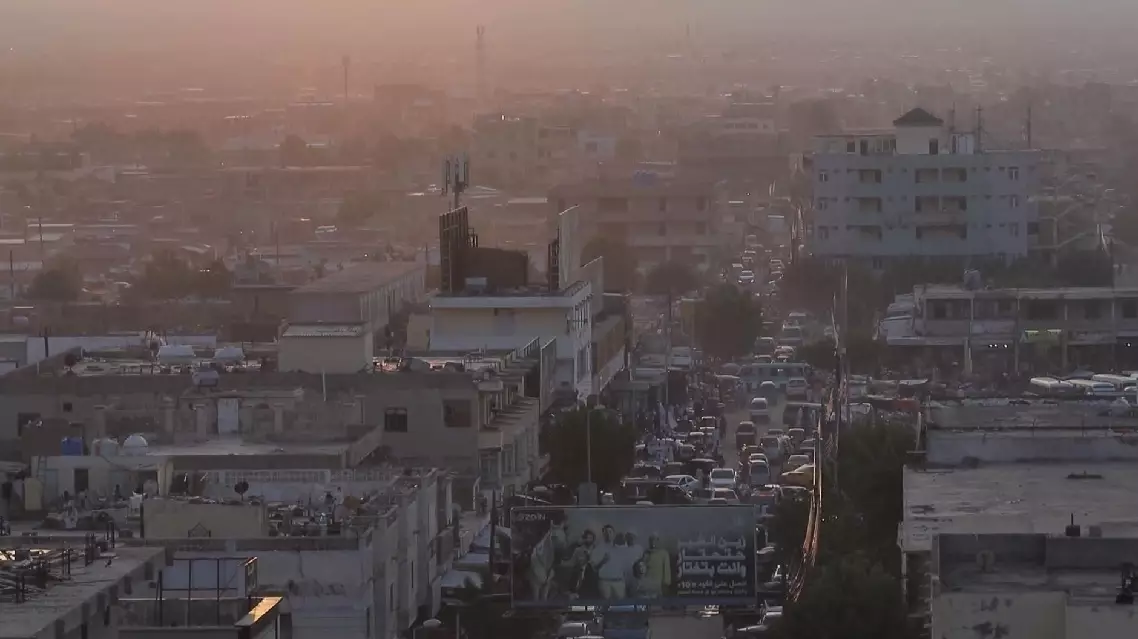
Port Sudan emerges as Sudan's digital lifeline amid ongoing conflict