LOUISVILLE, Ky.--(BUSINESS WIRE)--Jan 7, 2026--
As they make split-second decisions during life-threatening weather, National Weather Service (NWS) forecasters now have faster and seamless access to commercial radar data that strengthens real-time situational awareness.
This press release features multimedia. View the full release here: https://www.businesswire.com/news/home/20260107755294/en/
Weather technology pioneer Climavision’s proprietary gap-filling radar network is now integrated into the Advanced Weather Interactive Processing System (AWIPS II), the mission-critical software platform that forms the cornerstone of NWS warning operations. Forecasters will now be able to view Climavision’s radar returns directly alongside NEXRAD radars and other government data within the same operational environment, improving confidence, efficiency and decision-making during high-impact events.
The Climavision network is especially useful because it’s specifically designed to see where government radars can’t. Nearly 130 million people across America live in “radar gaps,” areas which sit too far from government radars for the NWS to get complete coverage, especially at lower altitudes where dangerous weather forms. Climavision is building its own network of high-resolution radars to fill these gaps and has installed 29 radars across the country since 2021. Radars are strategically placed to fill lower-atmospheric blind spots where federal radar coverage is limited due to terrain, distance, and curvature of the Earth. Integrating Climavision data into AWIPS II gives NWS meteorologists improved lower-atmosphere visibility where dangerous weather often forms, enhancing their ability to protect life and property.
“Every gap in coverage represents a community at risk,” said Chris Goode, Co-Founder and CEO of Climavision. “Our mission is to close those gaps and give NWS forecasters improved access so they can use it for the mission they fulfill so well – saving lives.”
While NWS forecasters have had access to a dozen radars from the Climavision network since 2023, they had to access it through third-party tools, making it more difficult for them to take full advantage of the supplemental data. The new integration marks a major milestone and puts Climavision’s data onto the same AWIPS II platform that forecasters use in federal warning operations – providing them fast, detailed observations from areas where they’ve had little visibility before.
Multiple private technology companies worked in lockstep to make the AWIPS integration possible. KBR is the prime contractor for NOAA’s National Mesonet Program (NMP), a commercial data buy program designed to link government systems with non-federal weather observing platforms such as Climavision’s network. KBR, together with lead subcontractor Synoptic Data PBC, has provided Climavision’s data to the National Weather Service through the NMP since 2023, and KBR’s Total Operational Weather Readiness – Satellites (TOWR-S) group has integrated this new dataset into the AWIPS system.
Under NMP, the KBR team delivers meteorological observation data sourced from non-federal observing networks, including 50,000 observing platforms covering all 50 states. This data supports the NWS and NOAA in forecasting, severe-weather warning and climate monitoring.
“In a rapidly evolving world, it’s critical for government agencies to leverage the power of commercial innovation and agility,” said Ellen Cousins, KBR’s NMP program manager. “We’re proud to help integrate public- and private-sector technology through work like this.”
“Our goal at Synoptic is to get data into the hands of those who need it the most,” said Elizabeth Wilson, Director of Weather Programs at Synoptic. “Facilitating data access to Climavision’s network for the NWS to keep communities safe is exactly what our mission, and the NMP, are all about.”
The integration is launching as a pilot program with select NWS Weather Forecast Offices (WFOs) over the next few months. Following successful pilot evaluation, access will be expanded to more than 30 WFOs. This public-private partnership will continue to expand as Climavision builds out its network and extends its relationship with the federal government to enhance severe weather preparedness nationwide.
About Climavision
Climavision brings together the power of a proprietary, high resolution supplemental weather radar network with its cutting-edge Horizon AI forecasting technology suite to close significant weather observation gaps and drastically improve forecast speed and accuracy. Climavision’s revolutionary approach to climate technology is poised to help reduce the economic risks of volatile weather on companies, governments, and communities alike. Climavision is backed by The Rise Fund, the world’s largest global impact platform committed to achieving measurable, positive social and environmental outcomes alongside competitive financial returns. The company is headquartered in Louisville, KY, with research and development operations in Raleigh, NC. To learn more, visit www.Climavision.com.
About Synoptic Data
Synoptic Data is building the world’s largest real-time environmental data platform. As a Data-as-a-Service (DaaS) provider, we deliver high-resolution, real-time and historical weather and environmental data at scale, supporting critical decisions across public safety, infrastructure, research, and operations. Our platform combines cutting-edge cloud architecture, scalable APIs, and a robust data integration framework to turn complex environmental data into actionable insights. Our intuitive tools—such as the Synoptic Data Viewer and Weather API—make complex environmental data easily accessible and reliable across diverse industries. Trusted by businesses, government agencies, and researchers, Synoptic enables faster, smarter responses to weather and climate-related challenges. Synoptic is a certified B Corp and Public Benefit Corporation, committed to advancing environmental data accessibility and resilience. Learn more at www.synopticdata.com.
About KBR, Inc.
We deliver science, technology and engineering solutions to governments and companies around the world. KBR employs approximately 37,000 people worldwide with customers in more than 80 countries and operations in over 29 countries. KBR is proud to work with its customers across the globe to provide technology, value-added services, and long-term operations and maintenance services to ensure consistent delivery with predictable results. At KBR, We Deliver.
Visit www.kbr.com
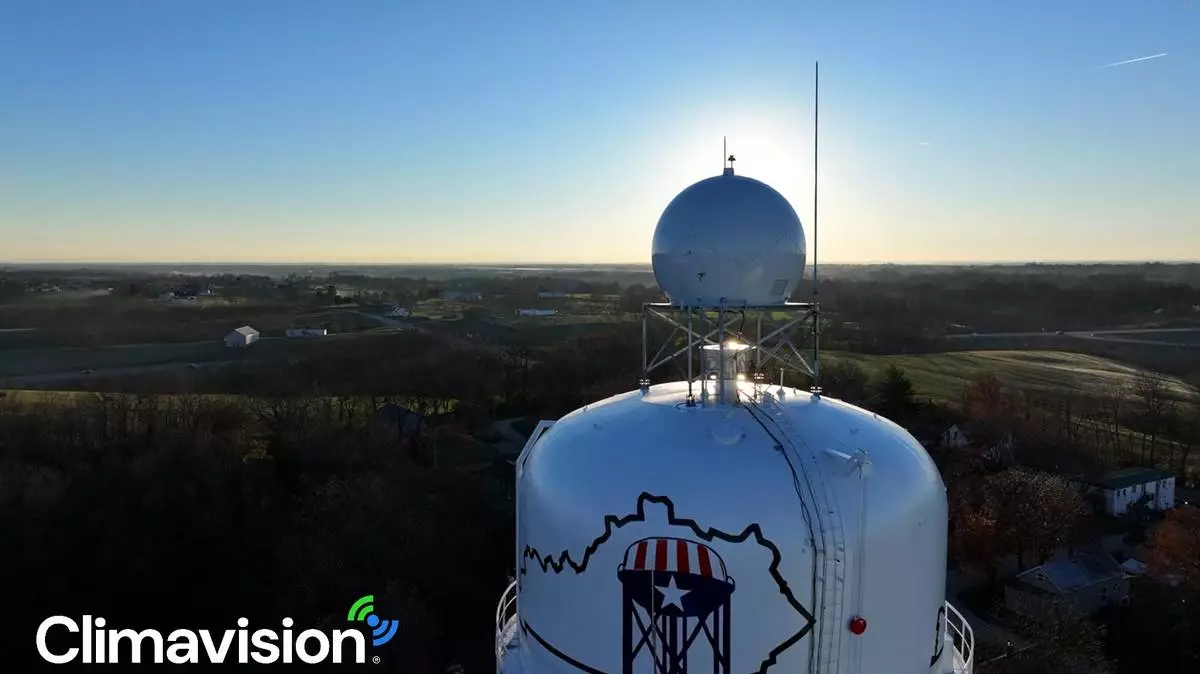
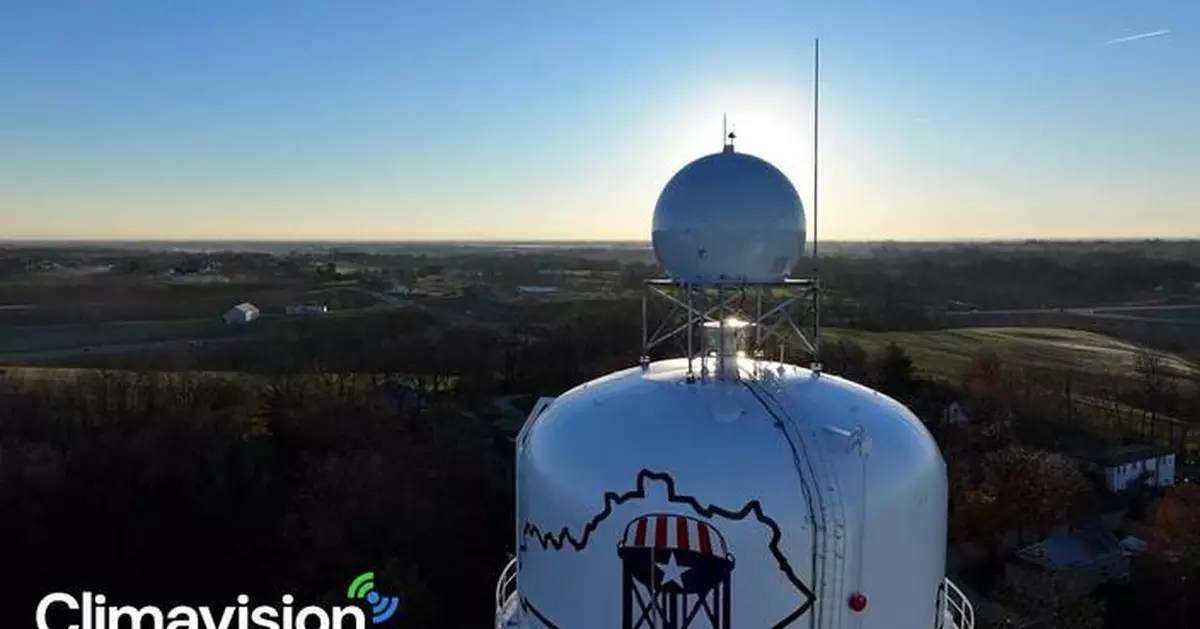
A Climavision radar in Dry Ridge, KY.