
BROOKLYN, N.Y.--(BUSINESS WIRE)--Jan 7, 2026--
Acme Smoked Fish Corp., a leading producer of premium smoked and cured seafood since 1906, today announced that Rob Snyder has officially assumed the role of Chief Executive Officer, effective January 1, 2026. Snyder succeeds Eduardo Carbajosa, who has retired following nearly two decades of leadership with the company.
This press release features multimedia. View the full release here: https://www.businesswire.com/news/home/20260106892946/en/
Snyder has spent the past six months leading strategic planning and operational alignment across Acme’s U.S. headquarters and international operations. He previously served as the company’s Chief People & Sustainability Officer for nearly five years and, before joining Acme, was President of the Island Institute in Rockland, Maine. He brings more than 20 years of experience across the seafood and food industries.
“I’d like to thank the outgoing CEO, Eduardo Carbajosa, and the Caslow Family for building a strategically networked global business with an incredible team behind it,” said Snyder. “Over the past six months, I’ve worked closely with our leadership team to position Acme for growth and operational excellence. 2026 will be a year of value realization, as we leverage recent investments in technology, people, and infrastructure to navigate a fast-changing marketplace. I’m honored to take the helm at this important moment in Acme’s long history.”
Carbajosa joined Acme in 2007 as Chief Financial Officer and went on to serve as President and CEO. During his tenure, he helped strengthen the company’s financial foundation, expand its production footprint, and guide transformative growth across the U.S. and international markets.
“We are incredibly grateful to Eduardo for his leadership and his deep commitment to Acme’s mission,” said David Caslow, Chairman and member of Acme’s founding family. “He leaves behind a remarkable legacy, and we thank him for his many contributions. As we look to the future, Rob’s values-driven leadership, operational expertise, and passion for our people and products make him the ideal person to guide Acme into its next chapter.”
Snyder’s appointment marks the start of a new phase of investment, innovation, and long-term growth as Acme continues to strengthen its position as a global leader in ready-to-eat seafood.
About Acme Smoked Fish Corporation
Acme Smoked Fish is a fourth-generation, family-owned and operated smoked fish company based in Brooklyn since 1906, dedicated to bringing people together through great food experiences. Tradition and innovation meet at Acme, where their smoked fish experts are on a mission to smoke and cure the highest quality seafood with a commitment to top food safety standards. Acme is also dedicated to sustainability and education through the Acme Smoked Fish Foundation, which supports groundbreaking climate projects across the industry and provides educational grants in local communities. In addition to its Brooklyn headquarters, Acme smokes fish in Massachusetts, North Carolina, Florida, Chile, and Denmark. Its growing product line can be found in supermarkets, specialty stores, bagel shops, and restaurants nationwide. Learn more at acmesmokedfish.com and follow @acmesmokedfish.
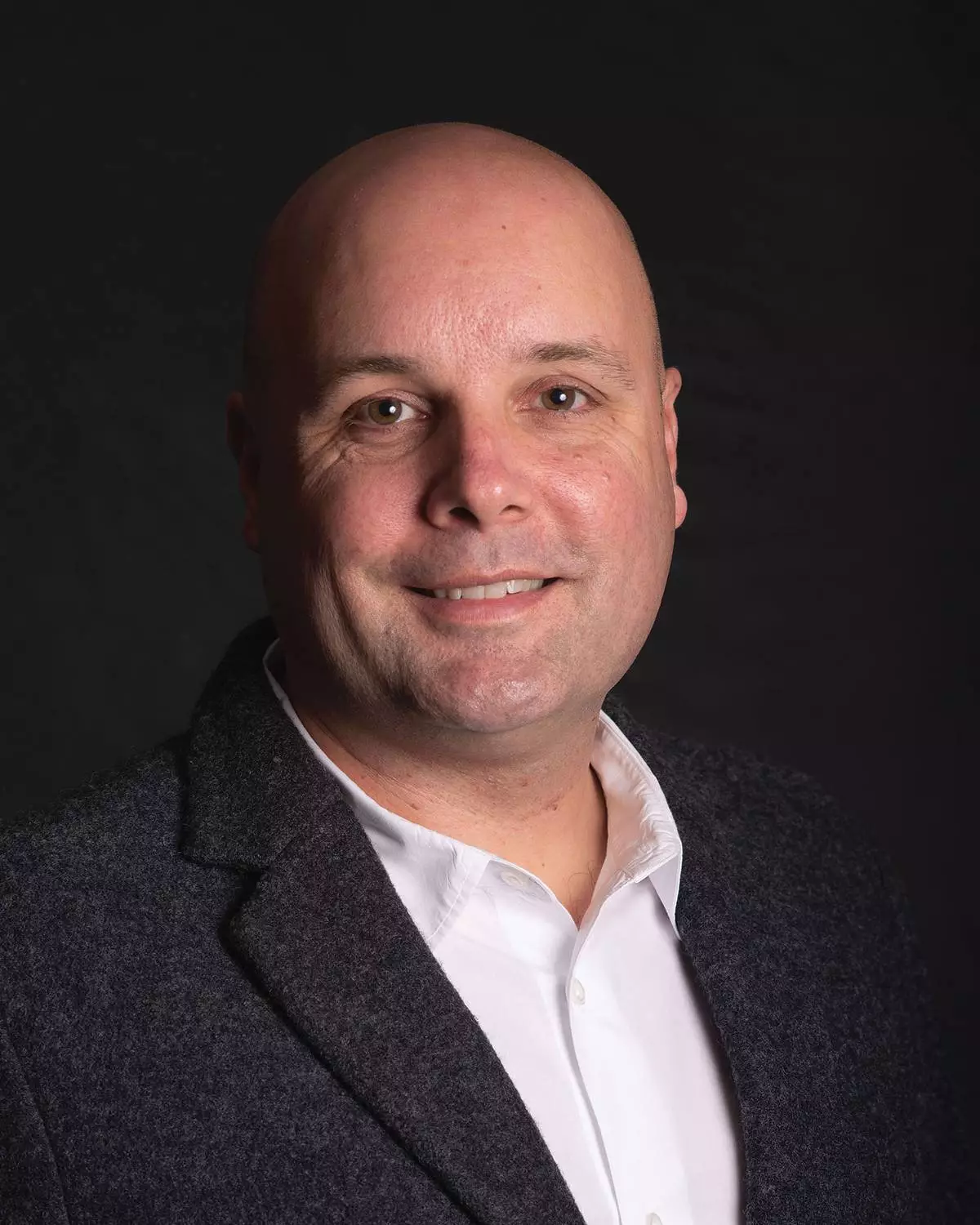
Rob Snyder, CEO

KUALA LUMPUR, Malaysia (AP) — Cambodia’s arrest and extradition of a powerful tycoon accused of running a vast online scam network marks a rare strike against an industry that has stolen tens of billions of dollars worldwide. U.S. and U.K. authorities say Chen Zhi led a transnational criminal enterprise that exploited trafficked workers and defrauded victims worldwide.
For victims, the scams often start small: a text offering a part-time job, asking about weekend availability or simply saying “hello.” On the other end is often a laborer halfway around the world, forced to work 12- to 16-hour days, sending message after message until someone responds.
That human toll is immense. Hundreds of thousands of people are believed to be trapped in forced labor, housed in sprawling compounds across Southeast Asia and compelled to run scams whose sole purpose is to take your money.
Even with a high-profile arrest, dismantling the industry remains extraordinarily difficult. Here’s why:
The Myanmar military last October moved into one of the most well-known scam compounds — the massive KK Park, along the border with Thailand — and announced it had shut the operation down. However, work has continued uninterrupted at other scam centers in Myanmar, where people trafficked from around the world still wait to be rescued.
The raid triggered a mass flight of workers. About 1,500 laborers crossed into Thailand, including hundreds from India as well as citizens from China, the Philippines, Vietnam, Ethiopia and Kenya. Thai military officials said troops later demolished several structures within the massive complex.
KK Park was only one of dozens of such centers along the Thai-Myanmar border — and hundreds more scattered across Southeast Asia — underscoring how difficult it is to dismantle an industry that can quickly shift operations when under pressure.
Scam compounds are often sprawling complexes in rural areas, complete with sleeping quarters, shops and entertainment venues for workers. Developers typically build a single property and lease space inside to multiple companies, allowing numerous operations to run side by side.
Many operate with the protection of local elites. Smaller setups also exist, tucked into a single floor of a legitimate office building or even a rented house in an urban neighborhood.
The centers trace their roots to casinos — both physical and online — that proliferated across Southeast Asia over the past decade. The United Nations Office on Drugs and Crime counted more than 340 licensed and unlicensed casinos in the region in 2021 alone.
Those casinos, often paired with junket tours, catered to high-rollers from China, where gambling is illegal, and were frequently run by Chinese criminal groups.
When the COVID-19 pandemic and strict travel restrictions cut off customers, some online casinos pivoted. With revenue drying up, operators shifted to a new model: using the same infrastructure and labor to defraud targets around the world through digital scams.
An estimated 120,000 people in Myanmar are being forced to work in online scam operations, along with another 100,000 in Cambodia, according to a 2023 report by the U.N. Office of the High Commissioner for Human Rights.
Those figures are rough estimates, but investigators say scam centers rely on a mix of trafficked victims and workers who arrive willingly — lured by false promises of relatively high pay and easy office jobs.
Early on, most workers came from China and Chinese-speaking countries. Today, the U.N. Office on Drugs and Crime says laborers are recruited from at least 56 countries, ranging from Indonesia to Liberia.
For many, the reality is far harsher than advertised. Workers say their passports are often confiscated to prevent them from leaving the compounds. Only senior managers and trusted lieutenants are allowed to move freely. Those who fail to meet targets risk beatings or other physical punishment.
Scammers cast a wide net, targeting victims around the world and increasingly relying on artificial intelligence-powered translation tools to overcome language barriers.
In the Philippines, authorities raided a compound in March 2024 where workers were targeting Chinese nationals with a fake investment scheme. Using scripted messages, scammers posed as senior employees of the state-owned China National Petroleum Corp. and persuaded victims to invest in crude oil futures, according to a script seen by The Associated Press.
Elsewhere, the impact has been just as far-reaching. Last year, about 50 South Koreans were repatriated from Cambodia after being arrested over several months on allegations they worked for online scam operations.
U.S. prosecutors have also targeted the networks behind the schemes. Prosecutors in an indictment against Chen Zhi last year said his organization had scammed at least 250 Americans out of millions of dollars, including one victim who lost $400,000 in cryptocurrency. Americans lost at least $10 billion to scams tied to Southeast Asia in 2024 alone, according to the U.S. Treasury Department.
Cambodian authorities said Wednesday that Chen Zhi and two other Chinese citizens were extradited to China on Tuesday. Chen has dual nationality and his Cambodian citizenship was revoked in December, it said.
The scams take many forms, ranging from cryptocurrency investment schemes to so-called “task scams,” in which victims are asked to pay to unlock the next assignment. In some cases, small amounts of real money are paid out early on to build trust before losses escalate.
Scammers often manufacture urgency, warning targets they will miss out on an opportunity unless they invest by a specific deadline.
Despite government crackdowns and raids that have freed some workers and shut down individual compounds, activists say the people behind the operations largely remain untouched. New scam centers continue to surface across Southeast Asia and beyond.
A United Nations report last year said scammers have extracted billions of dollars from victims using fake romantic relationships, bogus investment pitches and illegal gambling schemes, with operations reported as far away as Africa and Latin America.
“If we only rescue the victims and don’t arrest anybody — especially the Chinese mafia and transnational syndicates — then there will be no point,” said Jay Kritiya, coordinator of the Civil Society Network for Victim Assistance in Human Trafficking.
“They can get more victims. They can scam anytime,” Kritiya said.
FILE - A boy plays near a building, where some people trafficked under false pretenses are being forced to work in online scams targeting people all over the world, in Phnom Penh, Cambodia, Feb. 9, 2025. (AP Photo/Heng Sinith, File)
FILE - People from China, Vietnam and Ethiopia, believed to have been trafficked and forced to work in scam centers, sit with their faces masked while in detention after being released from the centers in Myawaddy district in eastern Myanmar, Feb. 26, 2025. (AP Photo/Thanaphon Wuttison, File)
FILE -India nationals, believed to have worked at scam center in Myanmar, board a plane at Thailand's Mae Sot International Airport in Tak, before being sent back to India Nov. 6, 2025. (AP Photo/Sarot Meksophawannakul, File)