Skip to Content Facebook Feature Image

BC Transit Partners with Vancouver-Based Spare to Modernize handyDART Transportation Across 29 B.C. Communities

News

BC Transit Partners with Vancouver-Based Spare to Modernize handyDART Transportation Across 29 B.C. Communities
News

News

BC Transit Partners with Vancouver-Based Spare to Modernize handyDART Transportation Across 29 B.C. Communities

2026-01-08 01:30 Last Updated At:01:40

VANCOUVER, British Columbia--(BUSINESS WIRE)--Jan 7, 2026--

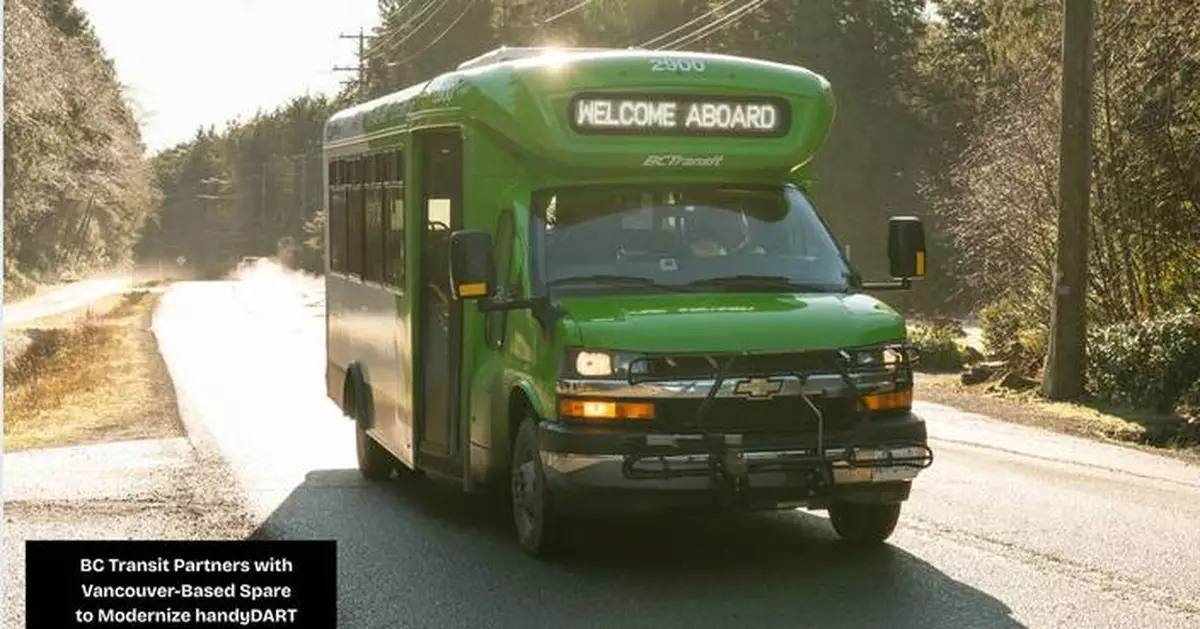
Spare, a leading transit technology company and provider of accessible mobility systems for public transit agencies, today announced a partnership with BC Transit to deliver the first unified digital platform for handyDART transportation across the province. Spare will work with BC Transit to introduce a standardized model across the 28 transit systems with handyDART, giving riders from urban centers to rural towns the same access to booking tools and real-time trip information. Upon implementation of the system, individuals who rely on handyDART transit will be able to book and manage rides directly through a mobile app, without needing to call a reservations line.

This press release features multimedia. View the full release here: https://www.businesswire.com/news/home/20260107360466/en/

“Standardizing an entire province’s accessible transit network is a major milestone,” said Kristoffer Vik Hansen, CEO and Co-founder of Spare. “We’re proud to support BC Transit in improving mobility for the people who depend on these services the most, including family and friends of our own team members. This project shows how thoughtful innovation can make public transit more equitable for everyone.”

A B.C.-based partnership that is breaking new ground

Founded in British Columbia, Spare has built its business working closely with public transit agencies and communities across the world. The company’s founders and many employees live and work in the same regions served by BC Transit, giving the team firsthand insight into the realities of delivering accessible transportation in large and geographically diverse jurisdictions. Spare’s platform is designed to support the unique needs of transit agencies and their riders, offering tools for trip coordination, service oversight and rider-facing digital options, while maintaining local control and governance. For BC Transit, the new system will provide additional data to help forecast demand, plan for the future and advocate for funding where it is needed most.

How the Spare platform supports riders and helps BC Transit meet its goals

Spare’s technology enables BC Transit to coordinate trips, track key operational metrics and manage service quality across 28 transit systems through a single interface. Its role-based access controls ensure transparency, privacy and secure information sharing among staff and local operators. By unifying its data and operations, BC Transit will be able to compare services across regions and optimize operations through modern technology, while improving reliability and rider experience.

This collaboration positions Spare as a national leader in modern paratransit technology and provides a blueprint for other provincial and statewide agencies seeking to unify fragmented systems across wide geographies.

About BC Transit

BC Transit is the provincial Crown agency charged with coordinating the delivery of public transportation across British Columbia, except for those areas serviced by TransLink (Metro Vancouver). More than 1.9 million British Columbians in over 130 communities across the province have access to BC Transit local and regional transit services. For more information, visit BCTransit.com.

About Spare

Vancouver-based Spare is the modern operations platform that helps government agencies deliver more reliable, efficient and community-focused mobility. Founded in British Columbia, Spare has deep roots in the province, with founders and team members who live and work in the communities they serve. That local perspective shapes how the company partners with agencies to improve access, reliability and rider experience across Canada.

Spare integrates transit operations with advanced asset management and maintenance tools to give agencies real-time visibility and proactive decision support with the flexibility to adapt services on the fly and manage costs in an economically sustainable way. By consolidating back-end operations into a single system, Spare helps agencies deliver safer fleets, lower costs, improve on-time performance and meet rising expectations for digital self-service, while supporting staff with tools that reduce manual work.

With major use cases across provinces, Spare supports accessible and innovative transit for Canadians from coast to coast. Spare works with transit agencies including Brampton Transit, Hamilton Street Railway (City of Hamilton), Medicine Hat Transit, Oakville Transit, Saint John Transit Commission, Saskatoon Transit, Winnipeg Transit and Milton Transit. Agencies rely on Spare to scale proven service models, including coordinated multimodal operations and sustainable same-day paratransit, strengthening mobility as a public service that connects people to work, healthcare and daily life.
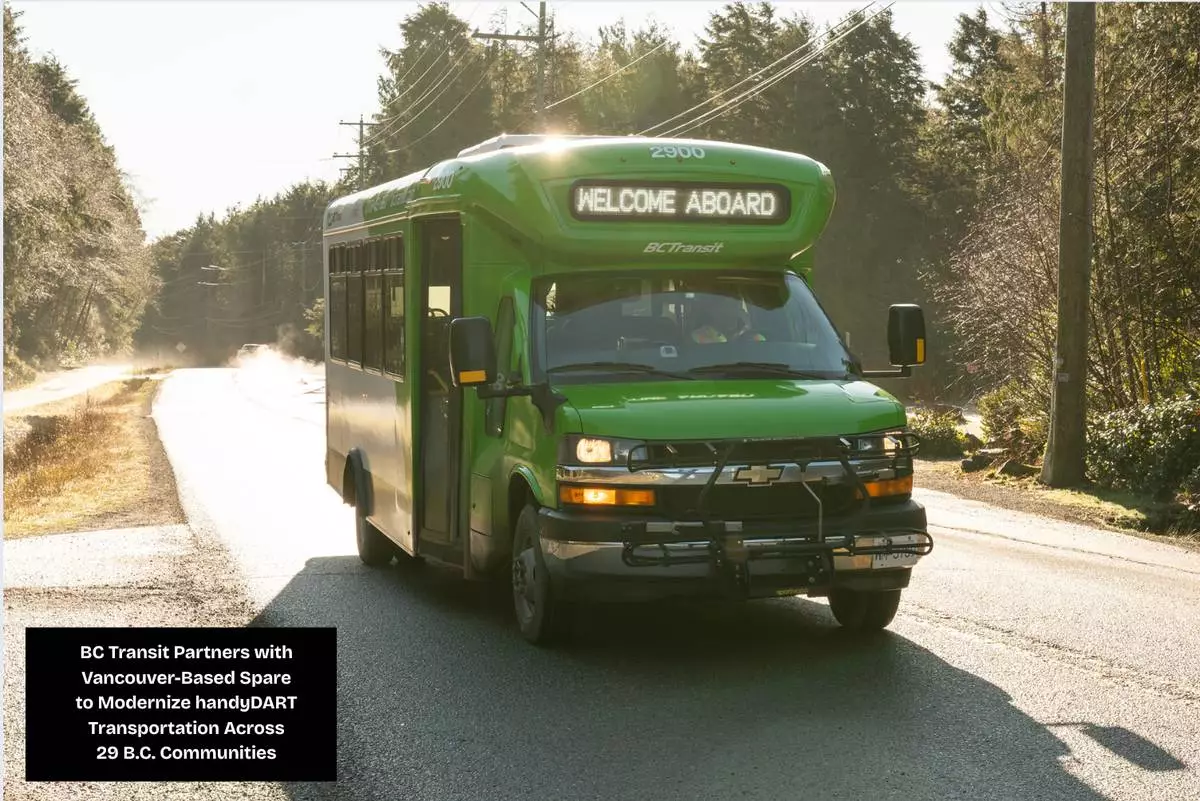
Spare will work with BC Transit to introduce a standardized model across the 28 transit systems with handyDART, giving riders from urban centers to rural towns the same access to booking tools and real-time trip information.


Spare will work with BC Transit to introduce a standardized model across the 28 transit systems with handyDART, giving riders from urban centers to rural towns the same access to booking tools and real-time trip information.

SACRAMENTO, Calif. (AP) — California Gov. Gavin Newsom said the state must stand up to Republican President Donald Trump 's “assault on our values,” warning democracy is at stake in his final State of the State address Thursday.

The Democratic is eyeing a presidential run in 2028 and is conscious of his legacy as he nears the end of eight years governing the nation’s most populous state. In his speech, he highlighted California’s work fighting homelessness and high health care costs. He pointed out the state has sued the Trump administration more than 50 times.

“The federal government, respectfully, it’s unrecognizable, protecting the powerful at the expense of the vulnerable," the Democrat said to lawmakers at the state Capitol in Sacramento. "Their credo seems to be about fear — fear of the future, fear of the stranger, fear of change.”

He chided the Trump administration's “carnival of chaos on the national stage," and its efforts over the past year to withhold food aid from states, send the National Guard into Democratic-led cities, and cut funding for medical research.

California, by contrast, should be seen as a blueprint for the rest of the nation as it defends the state's progressive policies against federal government overreach, Newsom said.

Over the years, Newsom has used the annual address to tout California’s economic growth and technological innovation and push back against critiques of its high cost of living and having the largest homeless population in the country. This year, he derided critics as suffering from “California Derangement Syndrome,” a reference to Trump’s use of the term “Trump Derangement Syndrome" to call out his political opponents.

Newsom's speech comes a day after the state marked a year since the devastating Los Angeles-area fires erupted, ripping through neighborhoods and killing 31 people.

In the months since, Newsom has asked Congress and Trump for billions of dollars in funding to help the region recover from the blazes, some of the most destructive in state history. Trump has not answered that call — one of the many disputes between him and the governor during his first year back in the presidency.

The two have sparred over everything from Trump's deployment of National Guard troops in L.A. to the federal government's blocking of California's first-in-the-nation ban on the sale of new gas-powered cars by 2035.

The speech comes a day before he's set to unveil his proposed budget for the next fiscal year after years facing budget shortfalls.

Newsom has spent the past seven years trying to solve some of California’s most relentless issues, including the impacts of climate change, the state’s homelessness crisis, and its high gas and utility prices.

The governor will announce that unsheltered homelessness in California dropped 9% last year, according to a preview from his office, which didn’t immediately provide the data to back up the decrease.

He will highlight the state’s cleanup work from the L.A.-area fires and its push to provide mortgage relief to survivors, while noting “we need to turbo-charge our efforts” to rebuild communities.

He previously requested that Trump send the state nearly $34 billion in disaster aid to recover from the fires. He’ll criticize Trump for refusing to meet that ask.

In the speech, the governor called on on the state to go after large investors buying up affordable homes, saying the practice is “putting pressure on rents and crushing dreams of homeownership.”

Newsom plans to celebrate homicide rates being at their lowest in decades in Oakland and San Francisco. He’ll cite the $267 million in funding the state sent to law enforcement agencies across the state in 2023 to help them fight retail and property crime. He’ll tout the California Highway Patrol’s work to curb crime in Bakersfield, San Bernardino, Stockton and other cities.

This is the first time Newsom has delivered the State of the State to lawmakers in person since 2022. He has said he does not like formal speeches because his dyslexia makes it difficult to read from a teleprompter live.

Instead he has submitted a written address to lawmakers in the years since, fulfilling a constitutional requirement that he report to the Legislature in some form.

He also tried other approaches that have departed from tradition, including posting a prerecorded speech online and touring the state to announce policies aimed at tackling homelessness and mental health crises.

Under the state constitution, Newsom is barred from seeking a third term.

California Gov. Gavin Newsom arrives for his State of the State address Thursday, Jan. 8, 2026, in Sacramento, Calif. (AP Photo/Godofredo A. Vásquez)

California Gov. Gavin Newsom arrives for his State of the State address Thursday, Jan. 8, 2026, in Sacramento, Calif. (AP Photo/Godofredo A. Vásquez)

California Gov. Gavin Newsom, left, takes part in a moment of silence for the victim of a fatal shooting involving federal law enforcement agents in Minnesota, alongside California Assembly Speaker Robert Rivas, right, before his State of the State address Thursday, Jan. 8, 2026, in Sacramento, Calif. (AP Photo/Godofredo A. Vásquez)

California Gov. Gavin Newsom, left, takes part in a moment of silence for the victim of a fatal shooting involving federal law enforcement agents in Minnesota, alongside California Assembly Speaker Robert Rivas, right, before his State of the State address Thursday, Jan. 8, 2026, in Sacramento, Calif. (AP Photo/Godofredo A. Vásquez)

California Gov. Gavin Newsom speaks during his State of the State address Thursday, Jan. 8, 2026, in Sacramento, Calif. (AP Photo/Godofredo A. Vásquez)

California Gov. Gavin Newsom speaks during his State of the State address Thursday, Jan. 8, 2026, in Sacramento, Calif. (AP Photo/Godofredo A. Vásquez)

California Gov. Gavin Newsom arrives for his State of the State address Thursday, Jan. 8, 2026, in Sacramento, Calif. (AP Photo/Godofredo A. Vásquez)

California Gov. Gavin Newsom arrives for his State of the State address Thursday, Jan. 8, 2026, in Sacramento, Calif. (AP Photo/Godofredo A. Vásquez)

FILE - California Gov. Gavin Newsom walks through the venue for the COP30 U.N. Climate Summit, Tuesday, Nov. 11, 2025, in Belem, Brazil. (AP Photo/Andre Penner, File)

FILE - California Gov. Gavin Newsom walks through the venue for the COP30 U.N. Climate Summit, Tuesday, Nov. 11, 2025, in Belem, Brazil. (AP Photo/Andre Penner, File)

Recommended Articles