SAN ANTONIO, Texas--(BUSINESS WIRE)--Jan 7, 2026--
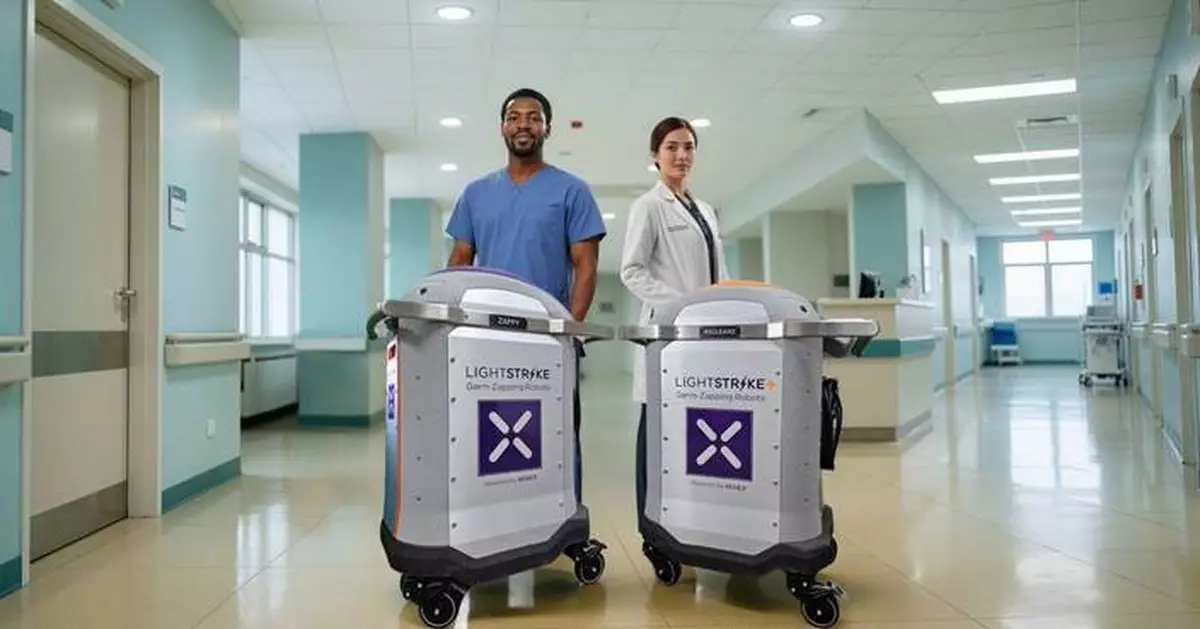
Xenex Disinfection Services today announced that its LightStrike6™ (LS6) UV-C whole room sanitizing robot has received Registration from Health Canada for sale and distribution to healthcare facilities across Canada. The Health Canada Registration for LightStrike6 builds on the U.S. Food and Drug Administration (FDA) authorization of the LightStrike+ ™ as a no-touch “Whole Room Microbial Reduction” device. With the Health Canada Registration, Xenex becomes the first and only company with ultraviolet (UVC) room technology authorized in both Canada and the United States. Together, these authorizations create a new regulatory benchmark for validated, hospital grade UV room technology.
This press release features multimedia. View the full release here: https://www.businesswire.com/news/home/20260107894470/en/
With antimicrobial resistance (AMR) accelerating at an alarming rate, the need for validated tools has never been greater. In the United States alone, antimicrobial-resistant infections cause millions of transmission events annually. Global and multilateral organizations—including the World Health Organization (WHO), Africa Centres for Disease Control and Prevention (Africa CDC), the Pan American Health Organization (PAHO), and the One Health Commission—have established commitments and action plans to combat antimicrobial resistance. Xenex will support healthcare facilities across Canada and beyond by providing an additional, science-backed tool to help reduce pathogen transmission and address the growing global threat of AMR.
LightStrike robots have been used in more than 1,200 facilities worldwide and are supported by 48+ peer reviewed studies showing significant reductions in microbial contamination and pathogen transmission on high-touch hospital surfaces when used after standard cleaning. LightStrike6 delivers the highest intensity broad spectrum UV light to sanitize patient rooms, operating rooms and other clinical areas to significantly reduce the number of pathogens that survive traditional chemical cleaning on high-touch surfaces such as bed rails, overbed tables, call buttons and bathroom fixtures.
LightStrike technology provides an additional evidence-based tool to support hospital whole room terminal disinfection programs, with a focus on persistent organisms such as C. difficile, MRSA, VRE, and other harmful pathogens.
As environmental services (EVS) staff face pressure to turn rooms quickly while managing staffing constraints, validated UV technology has become a critical component of a hospital’s infection prevention program. LightStrike6 was engineered to integrate into Canadian EVS and IPAC workflows with its ease of use, short room sanitizing times, and support for monitoring utilization and performance.
Important considerations when evaluating a UV system should include:
1. Whole room coverage
2. Minimal impact on room turnover time
3. Regulatory authorization and validation against common hospital pathogens.
With FDA authorization in the United States for LightStrike+ and Health Canada Registration for LightStrike6, Xenex is the only company with UV-C robots authorized for healthcare use across North America. Manufactured in San Antonio, TX, LightStrike+ and LightStrike6 robots are available. Infection prevention, EVS and procurement leaders can learn more or request a LightStrike demonstration at www.xenex.com.
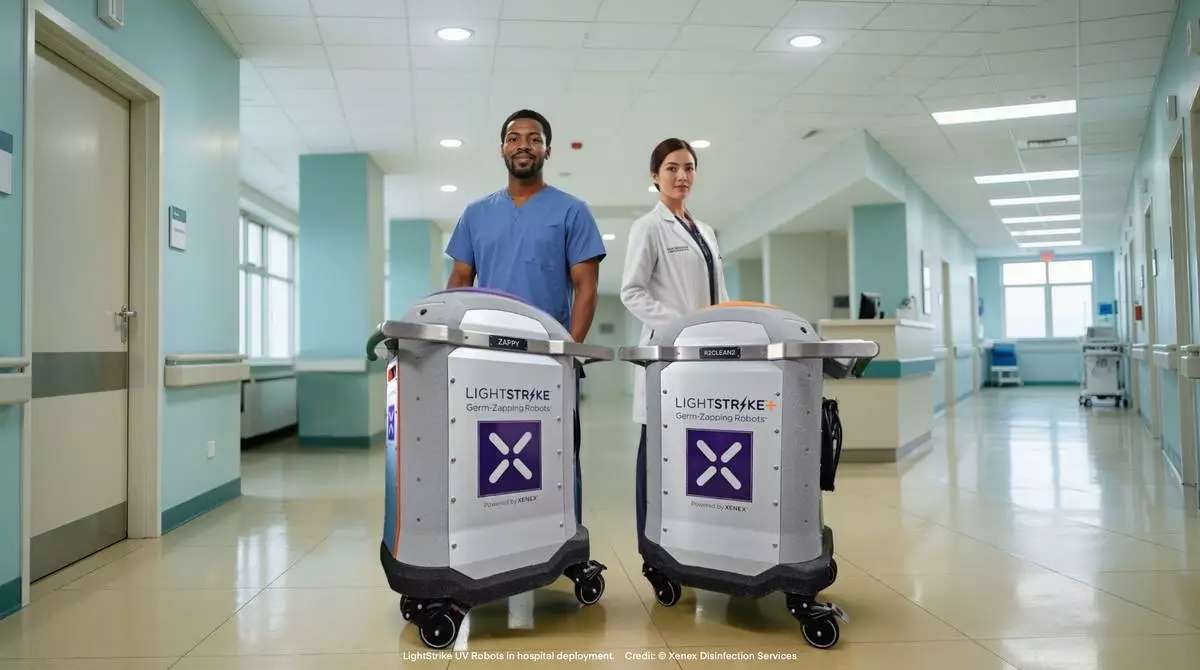
The Xenex LightStrike6 is now registered with Health Canada for utilization in Canadian hospitals.

Minnesota’s investigations agency said Thursday that the U.S. attorney’s office has prevented it from taking part in the investigation into an Immigration and Customs Enforcement officer’s fatal shooting of Minneapolis woman Renee Good, a 37-year-old mother of three.
“The investigation would now be led solely by the FBI, and the BCA would no longer have access to the case materials, scene evidence or investigative interviews necessary to complete a thorough and independent investigation,” Minnesota Bureau of Criminal Apprehension Superintendent Drew Evans said in a statement.
It had been decided that the BCA would investigate Good’s shooting death along with the FBI, but the U.S. attorney’s office changed that, according to Evans.
The announcement came as protestors and law enforcement clashed Thursday morning outside a Minneapolis immigration court, with the governor urging restraint and schools canceling classes as a precaution. Asked about the development, Homeland Security Secretary Kristi Noem said Thursday that Minnesota authorities “don’t have any jurisdiction in this investigation.”
The Latest:
Federal court documents show the agent who shot Good was seriously injured in a prior incident in June in which he used force against the driver of another moving vehicle in Bloomington, Minnesota.
The agent got his arm stuck in the window of a vehicle of a driver who was fleeing arrest on an immigration violation, and was dragged roughly 100 yards down a street before he was knocked free. During the incident, the agent fired his Taser and prongs struck the driver but did not incapacitate him, according to prosecutors.
The driver later claimed he did not know the man trying to stop him was a federal agent. A jury rejected that argument last month and found the driver guilty of assaulting a federal officer with a dangerous or deadly weapon.
Vance says the ICE officer “deserves a debt of gratitude,” citing an earlier incident in which he was injured by a moving vehicle.
“This is a guy who’s actually done a very, very important job for the United States of America,” Vance said. “He’s been assaulted. He’s been attacked. He’s been injured because of it.”
DHS Secretary Kristi Noem said Wednesday that the officer who shot Good had been “dragged” by a vehicle during a previous incident in June.
According to court documents, the officer was part of a team trying to apprehend a man in the country illegally. He broke a window and reached into the vehicle, attempting to open the door when the driver sped off, dragging the officer the length of a football field in 12 seconds.
The officer’s right arm was bleeding, and an FBI agent applied a tourniquet. Eventually, he was transported to a hospital, where he received more than 50 stitches. Prosecutors said he had “suffered multiple large cuts, and abrasions to his knee, elbow, and face.”
Vance says the ICE officer was clearly justified in shooting Good and he’s not worried about prejudging an investigation that is just getting underway.
“What you see is what you get in this case,” Vance said in the White House press briefing room, downplaying ambiguity about the circumstances that led to the shooting.
The officer was clearly acting in self-defense, Vance said. He framed Good as “a victim of left-wing ideology” who was spurred by an alleged network of politically motivated groups to interfere with law enforcement.
“I can believe that her death is a tragedy while also recognizing that it is a tragedy of her own making,” Vance said.
Bernice King, who leads the King Center for Nonviolent Social Change, said politicians and protesters must be intentional after an ICE agent’s killing 37-year-old Renee Good.
“We in this nation have got to find a way to change the climate of things,” she told reporters in Atlanta. Asked about Trump blaming Good, King noted differing conclusions from video of the incident and said “we need leaders to speak to the difficulty in these moments.”
King said she has watched video and believes Good was trying to leave and not escalate the situation.
“Why did she have to be a victim?” King asked.
She said “protest is essential” in a free society. But, citing lessons from her father and the Civil Rights Movement, King urged protesters to be “thoughtful about the process” and have a “strategy to elevate” the issues at stake.
“It’s not easy,” she said.
Appearing in the White House briefing room, the vice president’s voice rose as he decried what he called the “corporate media” for its coverage of a U.S. Immigration and Customs Enforcement officer having shot and killed a woman in Minneapolis.
“This was an attack on law and order. This was an attack on the American people,” said Vance, who maintained it has not been portrayed that way by many journalists.
“The way that the media, by and large, has reported this story has been an absolute disgrace,” he added. “And it puts our law enforcement officers at risk every single day.”
Minnesota Gov. Tim Walz criticized the Trump administration Thursday for freezing Minnesota out of the investigation into the fatal shooting in Minneapolis of a woman by a federal officer.
“It feels very, very difficult that we will get a fair outcome,” Walz said at a briefing for reporters. “And I say that only because people in positions of power have already passed judgment, from the president to the vice president to (Homeland Security Secretary Kristi Noem, have stood and told you things that are verifiably false, verifiably inaccurate.”
Public Safety Commissioner Bob Jacobson said he’d welcome the chance to get his agents back involved in the search for answers.
“For us to be able to do that, it would be it would be extremely difficult, if not impossible, without cooperation from the federal government,” Jacobson said.
Former Chicago Mayor Lori Lightfoot ’s effort, dubbed The ICE Accountability Project, allows users to upload photos and descriptions of incidents, including the use of chemical agents.
She says it will help identify officers, most of whom wear masks.
“We aim to preserve evidence, to facilitate transparent accountability,” she said.
It’s the latest effort of its kind. Illinois launched a commission last year to document incidents, while California has an online portal to file complaints.
The racial and economic justice organization also is calling for a “full and transparent investigation” into Good’s killing.
“For more than 50 years, law enforcement policy has explicitly prohibited shooting at moving vehicles—a principle established in 1972 and widely recognized as best practiced,” reads a joint statement from National Urban League President Marc Morial and Urban League Twin Cities President Marquita Stephens.
“ICE agents’ decision to ignore this standard represents a dangerous and unacceptable escalation of force, rooted in outdated and reckless tactics,” the statement continued.
In an unrelated news conference in New York, she said that while there would be an investigation into the officer’s use of force, she believed he followed his training and the shooting was justified. She again called the incident “domestic terrorism.”
“This vehicle was used to hit this officer,” Noem said. “It was used as a weapon, and the officer feels as though his life was in jeopardy. It was used to perpetuate a violent act, and this officer took action to protect himself and to protect his fellow law enforcement officers.
Noem also said that law enforcement authorities in Minnesota have not been shut out of the probe into the shooting.
“They don’t have any jurisdiction in this investigation,” she said.
— When can officers fire at a moving vehicle? There is no universal training standard for law enforcement. But most police departments and federal guidance bar shooting at a moving vehicle unless the driver poses an imminent threat of deadly force beyond the car itself.
— Why are shootings at vehicles restricted? Experts say firing at a moving car is one of the riskiest forms of lethal force, increasing the chance of stray gunfire or a loss of vehicle control that can endanger bystanders.
— Are officers expected to move out of the way? Yes. Justice Department policy says deadly force is allowed only when no reasonable alternative exists, including stepping out of the vehicle’s path.
▶ Read more about regulations on using deadly force in these situations
Outraged by Good’s death, Democratic leaders in Congress pledged to conduct strong oversight of what happened in Minneapolis, but stopped short Thursday of immediate calls to defund ICE or impeach Noem.
House Democratic Leader Hakeem Jeffries called the killing of Good an “abomination, a disgrace.”
“We all are outraged by what took place in Minneapolis, and we will respond decisively,” said Jeffries of New York. “Blood is clearly on the hands of those individuals within the administration that have been pushing an extreme policy,” he said.
“We support the removal of violent felons in this country who are here illegally — but that’s not what this administration has been doing,” he added.
Senate Democratic Leader Chuck Schumer said he watched the video and “you felt like your stomach was being punched.”
Schumer said senators are discussing next steps as they consider funding in the annual Homeland Security bill, and he demanded a “full investigation.”
The head of Minnesota’s state investigations agency says the U.S. attorney’s office has cut off its access in the fatal shooting of a Minneapolis woman by an ICE agent.
“The investigation would now be led solely by the FBI, and the BCA would no longer have access to the case materials, scene evidence or investigative interviews necessary to complete a thorough and independent investigation,” Minnesota Bureau of Criminal Apprehension Superintendent Drew Evans said in a statement.
It had been decided that the Bureau of Criminal Apprehension would investigate Good’s shooting death along with the FBI, but that later was changed by the U.S. Attorney’s office, according to Evans.
The BCA “has reluctantly withdrawn from the investigation,” Evans wrote.
Beyond Minneapolis, citizens also took to the streets or were expected to do so in New York City, Seattle, Detroit, Washington, D.C., Los Angeles, San Antonio, New Orleans and Chicago.
Protests are also scheduled in smaller cities later this week in Arizona, North Carolina, and New Hampshire.
Renee Nicole Macklin Good was a 37-year-old mother of three who had recently moved to Minnesota.
She was a U.S. citizen born in Colorado and appears to never have been charged with anything involving law enforcement beyond a traffic ticket.
In social media accounts, Macklin Good described herself as a “poet and writer and wife and mom.” She said she was currently “experiencing Minneapolis,” displaying a pride flag emoji on her Instagram account. A profile picture posted to Pinterest shows her smiling and holding a young child against her cheek, along with posts about tattoos, hairstyles and home decorating.
▶ Read more about who Macklin Good was
The fatal shooting of a woman by a federal immigration officer in Minneapolis on Wednesday has thrust a long-running and deeply contested question back into the national spotlight: When is a law enforcement officer justified in using lethal force against someone in a moving vehicle?
At the center of the debate are policies that for years have limited when officers may fire at vehicles, generally barring gunfire at fleeing cars unless the driver poses an imminent threat of deadly force beyond the vehicle itself. Those restrictions, embraced by many police departments and reflected in federal guidance, were intended to curb what experts long warned was among the most dangerous and unpredictable uses of lethal force.
▶ Read more about why police agencies moved to restrict shootings at moving vehicles
Patrick Riley was one of the people who came out Thursday morning at the federal building to express outrage after the death of Macklin Good on Wednesday.
“We are peacefully demonstrating. We’re trying to let this organization know that they’re not welcome,” said Riley.
Riley questioned why the Trump administration had made the Minneapolis area such a high priority.
“Why this big flood here now? This is our place. This is our country. This is our freedom to to protest,” Riled added.
Police at one point threw devices releasing smoke to break up the crowd, which carried signs and shouted profanities at them.
The crowd was directed farther away from the entrance as the protest reached the two-hour mark on Thursday.
In a post on the Facebook pages of the Red Lake Band of Chippewa Indians tribal council and the tribe’s embassy in Minneapolis, the council said tribal citizens should expect ICE agents to detain and harm them.
“We all need to be careful, and we must assume that ICE will not protect us,” the post stated. “We realize that we will not receive compassionate treatment by anyone associated with the Trump administration.”
In the warning to citizens, the tribal council said it sees the “obvious purpose of ICE is to terrorize Americans who do not agree with the administration’s policies, and actions” and called for “an end to the president’s blatant lies.”
There are about 8,000 Red Lake Band of Chippewa Indians citizens in the Twin Cities and surrounding areas, according to the post. The council asked tribal members to document interactions with ICE by contacting the tribe directly. The tribe’s embassy in Minneapolis has also been closed for the rest of the week.
Protesters are carrying signs and chanting, including some signs that say, “ICE Out Now,” “We deserve to be safe in our community,” and “Resist Fascism.”
Chants include “We Keep Us Safe,” “ICE Out Now,” “ICE Go Home,” “Quit Your Job” and “Justice Now!”
Scores of people bundled up in heavy coats gathered as dawn began to break Thursday in a parking lot near the Bishop Henry Whipple Federal Building at Fort Snelling. The building houses several federal agencies, including an immigration court.
The crowd was chanting and holding American flags and signs calling on ICE to leave Minnesota.
Protesters confront federal agents outside the Bishop Henry Whipple Federal Building, Thursday, Jan. 8, 2026, in Minneapolis, Minn. (AP Photo/Tom Baker)
A protester receives aid after confronting law enforcement outside the Bishop Henry Whipple Federal Building, Thursday, Jan. 8, 2026, in Minneapolis, Minn. (AP Photo/Tom Baker)
A bullet hole and blood stains are seen in a crashed vehicle on at the scene of a shooting in Minneapolis on Wednesday, Jan. 7, 2026. (Ben Hovland/Minnesota Public Radio via AP)
People gather for a vigil after an Immigration and Customs Enforcement officer shot and killed a woman earlier in the day, Wednesday, Jan. 7, 2026, in Minneapolis. (AP Photo/Bruce Kluckhohn)
Protesters gather outside the Bishop Henry Whipple Federal Building, Thursday, Jan. 8, 2026, in Minneapolis, Minn. (AP Photo/Tom Baker)